Bars and Rods of Iron or Non Alloy Steel
CN → US| HS编码 | 关税税率 | 原产国 | 目的国 | 文档 |
|---|---|---|---|---|
| 7216500000 | 35.0% | CN | US | 官方文档 |
| 7215905000 | 10.0% | CN | US | 官方文档 |
| 7214990060 | 10.0% | CN | US | 官方文档 |
| 7216990090 | 35.0% | CN | US | 官方文档 |
| 7215500090 | 35.0% | CN | US | 官方文档 |
| 7214990075 | 10.0% | CN | US | 官方文档 |
商品图片
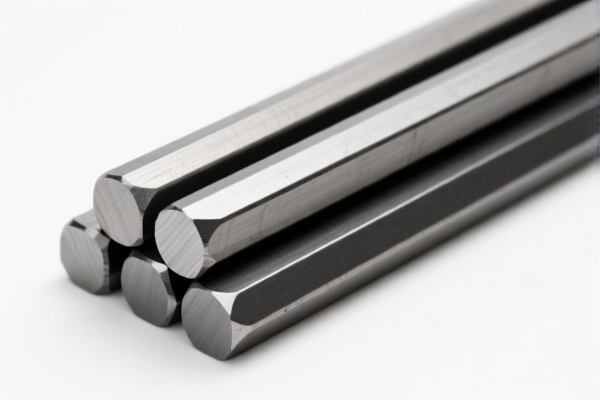
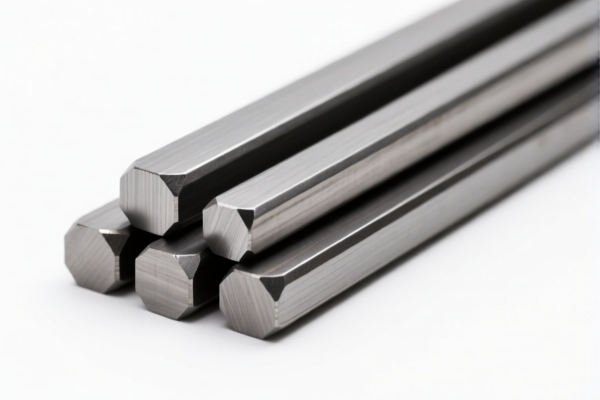
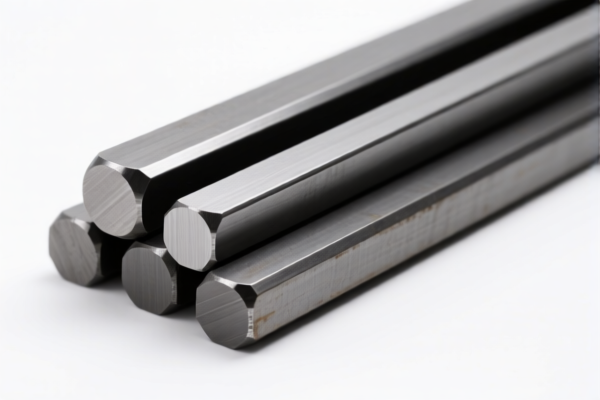
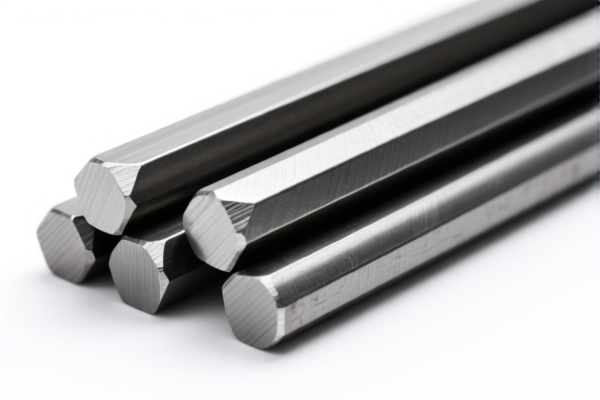
AI分析
🏗️ Bars and Rods of Iron or Non-Alloy Steel (Iron/Steel Profiles)
🌐 HS Code Reference & Customs Clearance Guide | 2026 Latest Tariff Analysis | Professional Clearance Strategy
📌 I. Product Definition & Classification: What Exactly Are "Iron/Steel Bars and Rods"?
Bars and rods of iron or non-alloy steel are fundamental raw materials and semi-finished products in the global metal industry. In international trade, these products are categorized based on their cross-sectional shape and processing state. The key distinction lies between specific standard shapes (like angles, channels) and generic "other" categories.
Common Forms: - Angles, Channels, I-Beams, T-Bars: Specific structural profiles. - Round, Square, Hexagonal Bars: Cylindrical or polygonal solid sections. - Hot-rolled, Cold-finished, Forged: Different manufacturing processes affecting classification.
⚠️ Key Distinction:
- Products with specific standardized cross-sections (like angle bars) often fall under 7216.
- Products described as "other bars/rods" or generic sections often fall under 7215 or 7214.
- Material Constraint: Must be Iron or Non-Alloy Steel. Alloy steels (stainless, tool steel, etc.) are excluded from this specific data set.
📦 II. HS Code Classification Details (2026 Latest Tariff Data)
Based on the provided dataset, here are the exact HS codes, descriptions, and tax implications.
| HS Code | Product Summary (Chinese) | Summary Translation | Total Tax Rate | Tax Detail Breakdown |
|---|---|---|---|---|
7216.50.00.00 |
材质为铁或非合金钢,形态包含角材、型材等截面材 | Iron/Non-Alloy Steel, Shapes: Angles, Profiles, Sectional Materials | 35.0% | Base: 0.0%, Section 301: 25.0%, Section 122: 10% |
7215.90.50.00 |
材质为铁或非合金钢,形态属于棒材范畴的其他类目细分 | Iron/Non-Alloy Steel, Other Bars/Rods (Specific Sub-category) | 10.0% | Base: 0.0%, Section 301: 0.0%, Section 122: 10% |
7214.99.00.60 |
材质为铁或非合金钢,形态为条、杆、角材、型材等棒材范畴 | Iron/Non-Alloy Steel, Bars/Rods/Angles/Profiles (Other) | 10.0% | Base: 0.0%, Section 301: 0.0%, Section 122: 10% |
7216.99.00.90 |
材质为铁或非合金钢,形态涵盖条、杆、角材、型材及异型材的非特定加工形态 | Iron/Non-Alloy Steel, Other Profiles/Sections (Non-Specific) | 35.0% | Base: 0.0%, Section 301: 25.0%, Section 122: 10% |
7215.50.00.90 |
材质为铁或非合金钢,形态为条、杆、角材等钢棒/型材范畴 | Iron/Non-Alloy Steel, Bars/Rods/Angles (Steel Bars/Profiles) | 35.0% | Base: 0.0%, Section 301: 25.0%, Section 122: 10% |
🔍 Critical Insight:
- High Tariff Group (35%): Includes7216.50,7216.99, and7215.50. These are heavily impacted by the 25% Section 301 tariff + 10% Section 122 tariff.
- Lower Tariff Group (10%): Includes7215.90and7214.99. These are exempt from Section 301 but still subject to the 10% Section 122 tariff.
- Why the Difference? The 25% Section 301 tariff applies to specific "steel products" listed in the USITC decision. If your HS code is not on that specific list, you only pay the 10% Section 122 tariff. Precision in HS code selection is critical to save 25% in duties.
💰 III. 2026 Latest Tariff Rate Detailed Explanation
✅ Applicable Country: United States (US)
✅ Country of Origin: China (CN)
✅ Effective Time: Current trade policy (2026)
🎯 1. High-Tariff Category: 7216.50.00.00, 7216.99.00.90, 7215.50.00.90
(Total: 35.0%)
| Item | Detail |
|---|---|
| Base Tariff | 0% (ad valorem) |
| Section 301 Tariff (USITC) | +25% |
| Section 122 Tariff (IEEPA) | +10% |
| Total Effective Rate | 35% |
| Tax Calculation | CIF Value × 35% |
| De Minimis Exemption | ❌ Not Eligible (Denied) |
| Legal Basis | USITC:7216.50.00.00 → FOOTNOTE:301 → IEEPA:122 |
📌 Explanation:
- These products are explicitly listed under the Section 301 trade action against Chinese steel.
- The 25% surcharge is applied on top of any base duty (here 0%).
- The 10% Section 122 tariff is applied under the International Emergency Economic Powers Act (IEEPA), specifically targeting certain steel imports for national security reasons.
- Result: You pay 35% total duty. This is a significant cost driver.
🎯 2. Lower-Tariff Category: 7215.90.50.00, 7214.99.00.60
(Total: 10.0%)
| Item | Detail |
|---|---|
| Base Tariff | 0% (ad valorem) |
| Section 301 Tariff (USITC) | 0% (Exempt) |
| Section 122 Tariff (IEEPA) | +10% |
| Total Effective Rate | 10% |
| Tax Calculation | CIF Value × 10% |
| De Minimis Exemption | ❌ Not Eligible (Denied) |
| Legal Basis | USITC:7215.90.50.00 → IEEPA:122 |
📌 Explanation:
- These specific sub-headings are NOT subject to the Section 301 additional duty.
- They ARE subject to the Section 122 tariff (10%).
- Savings: By correctly classifying into these codes, you save 25% in duties compared to the high-tariff group.
- Caution: Misclassification is risky. The product must strictly match the summary descriptions (e.g., "other bars" vs. "angles/profiles").
🛠️ IV. Customs Clearance Practical Advice (Actionable Pitfall Avoidance)
✅ 1. Preparation Checklist (Mandatory)
| Document | Required | Notes |
|---|---|---|
| ✅ Product Specification Sheet | ✔️ | Must detail: Material (Non-Alloy Steel/Iron), Cross-Section Shape, Dimensions, Surface Finish. |
| ✅ Product Photos | ✔️ | Clear images of the bar/rod, ends (cut face), and any markings/stamps. |
| ✅ Commercial Invoice | ✔️ | Must clearly state "Bars/Rods of Iron/Non-Alloy Steel" and HS Code. |
| ✅ Packing List | ✔️ | Weight, quantity, packaging type. |
| ✅ Certificate of Origin | ✔️ | Required to prove CN origin for tariff application. |
| ✅ Material Test Report | ✔️ | Optional but recommended to prove "Non-Alloy" status if challenged. |
✅ 2. Classification Strategy (Key Rule)
🔥 "Shape Determines Tax, Section 301 is the Trap!"
| Scenario | Correct HS Code | Tax Rate | Incorrect Classification Risk |
|---|---|---|---|
| Angle Bars, Channels, I-Beams | 7216.50.00.00 or 7216.99.00.90 |
35% | If misclassified as "other bars" (7215), risk of penalty + back taxes + 25% difference. |
| Generic Round/Square Bars | Check if 7215.90.50.00 applies |
10% | If misclassified as 7215.50.00.90, you overpay 25%. |
| Other Steel Profiles | 7214.99.00.60 |
10% | Ensure it's not a "standard structural section" which might fall under 7216. |
| Alloy Steel (e.g., Stainless) | NOT IN DATA | Varies | Do not use these codes. Misclassification leads to severe penalties. |
✅ 3. Special Handling Tips
| Situation | Advice |
|---|---|
| OEM Custom Shapes | Provide detailed engineering drawings to prove they are "non-standard" and may qualify for the 10% tier (7215.90 or 7214.99). |
| Mixed Shipments | Do not mix 35% and 10% items in one BL without clear separation. Custom may audit the whole shipment. |
| "Iron" vs. "Steel" | Both are included, but ensure it is non-alloy. If it contains significant alloying elements (Cr, Ni, Mo), it is alloy steel and these HS codes are invalid. |
| Section 122 Applicability | The 10% tariff is based on the value. Ensure no hidden costs in CIF calculation affect the base. |
🌍 V. Global Market Comparison (2026)
| Country/Region | Recommended HS Code | Tariff (China Origin) | Key Certification | Notes |
|---|---|---|---|---|
| 🇺🇸 USA | 7216.50, 7215.90, etc. |
35% or 10% | N/A | Highest barrier. Section 301 & 122 apply. |
| 🇨🇳 China | 7216, 7215, 7214 | 0% | N/A | Exports benefit from no import duty. |
| 🇪🇺 EU | 7213-7216 range | 0% - 6.5% | CE (if applicable) | No Section 301. Generally lower tariffs. |
| 🇮🇳 India | 7213-7216 range | 7.5% - 15% | BIS (sometimes) | Anti-dumping duties may apply. |
| 🇲🇽 Mexico | 7216, 7215 | 0% - 5% | N/A | USMCA may apply for origin-qualified goods. |
📌 Conclusion:
- The US market is the most challenging due to the layered tariffs (301 + 122).
- EU and other markets do not have the equivalent of Section 301, making them more cost-effective for Chinese steel exports.
- Strategy: If shipping to the US, invest in precise HS classification to secure the 10% rate where possible.
📌 VI. Common Mistakes & Pitfalls (Lessons Learned)
❌ Mistake 1: Classifying all steel bars as 7215 to avoid the 25% tax.
👉 Consequence: If the product is actually an "Angle Bar" or "Profile" (7216), Customs will reclassify it, apply 25% + penalties + interest.
❌ Mistake 2: Ignoring the 10% Section 122 tariff.
👉 Consequence: Even the "cheaper" 10% tariff is not free. Many importers mistakenly think 0% base = 0% total.
❌ Mistake 3: Misidentifying Alloy Steel as Non-Alloy.
👉 Consequence: Using these HS codes for Stainless Steel leads to rejection, fines, and potential fraud allegations.
❌ Mistake 4: Combining "Bars" and "Structural Shapes" without clear documentation.
👉 Consequence: Customs may demand proof of shape cross-section. If unavailable, they may apply the highest applicable duty (35%).
✅ Correct Approach:
"Define Shape First, Check Section 301 List, Confirm Non-Alloy Status, Apply Correct HS."
🎯 VII. Conclusion: Precision Saves Money
🎯 Key Takeaway:
🔹 "35% vs 10%: A $25 Difference on Every $100."
🔹 "Section 301 is the killer; Section 122 is the constant."
🔹 "Know your shape: Angle/Profile = 35%, Other Bar = 10%."
📌 Pro Tip:
If your product is a standard structural steel section (I-beam, H-beam, Angle), expect 35%.
If it is a generic round/square bar or non-standard profile, aggressively pursue the7215.90or7214.99classification to secure the 10% rate.
Request an Advance Ruling from US Customs and Border Protection (CBP) before the first shipment to lock in the lower rate.
📣 Immediate Action:
📞 Engage a Customs Broker to review your product drawings.
📄 Verify Material Composition (ensure non-alloy).
🚀 Optimize HS Code Selection to minimize duty liability.
✨ Accurate Classification is the First Step to Profitable Trade!
💼 Don't Let Duty Risks Erode Your Margins!
用户评价
关于 HS 编码归类
协调制度(HS)是由世界海关组织(WCO)制定的国际贸易商品分类标准。全球 200 多个国家采用 HS 系统作为海关关税、贸易统计和进出口监管的基础。
每个 HS 编码遵循以下层级结构:
- 章(2 位)——商品大类(例如:第 84 章:机器和机械设备)
- 品目(4 位)——章内的更具体分类
- 子目(6 位)——国际通用细分,所有 WCO 成员国统一使用
- 本国细分(8-10 位)——各国自行扩展的细分编码,如美国 HTSUS 10 位编码
正确的 HS 编码归类对于顺利通关、准确缴纳关税和遵守贸易法规至关重要。错误归类可能导致海关延误、多缴关税或罚款。
从CN进口到US时,适用的关税税率可能包括:
- 最惠国(MFN)税率——适用于 WTO 成员国的标准关税税率
- 普通税率——适用于无贸易协定国家
- 贸易救济关税——附加关税,如 301 条款(反倾销)、232 条款(国家安全)或反补贴税
本页内容仅供参考。如需正式归类,请咨询当地海关或持牌报关代理。