Bathroom Folding Stool
CN → US| HS编码 | 关税税率 | 原产国 | 目的国 | 文档 |
|---|---|---|---|---|
| 9403608093 | 35.0% | CN | US | 官方文档 |
| 9401696031 | 35.0% | CN | US | 官方文档 |
| 9401804046 | 35.0% | CN | US | 官方文档 |
| 3926305000 | 22.8% | CN | US | 官方文档 |
| 3926909989 | 22.8% | CN | US | 官方文档 |
商品图片
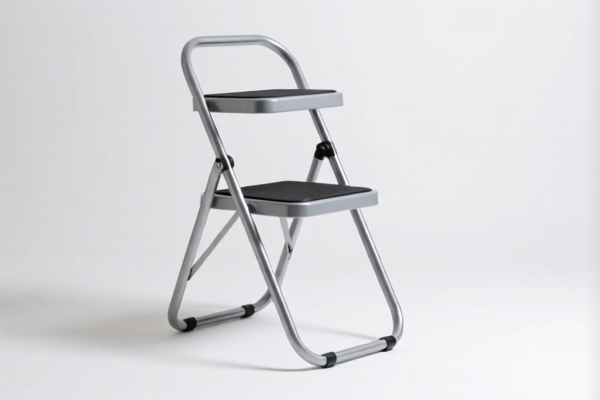
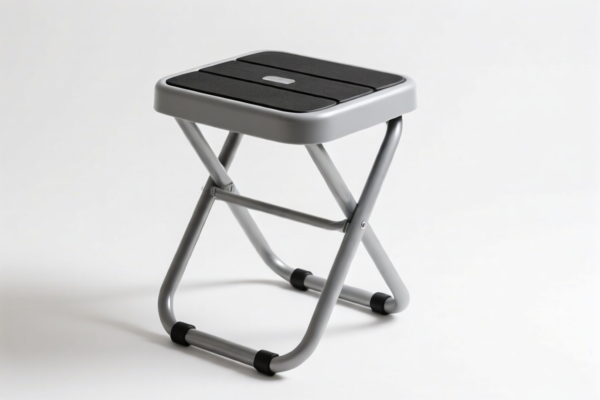
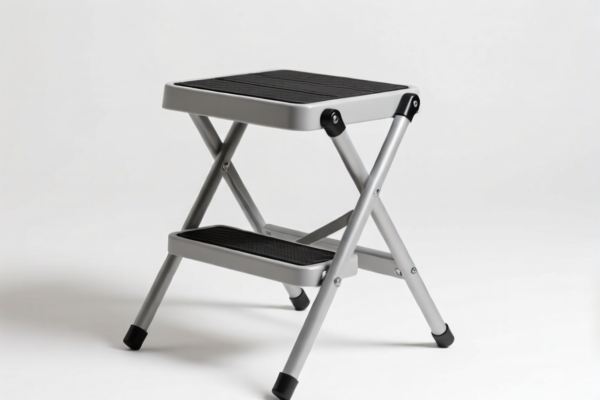
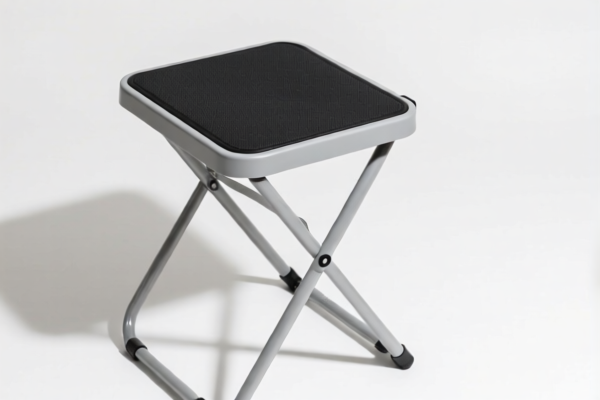
AI分析
🚿 Bathroom Folding Stool (Bathroom Bench)
🌐 HS Code Reference & Customs Clearance Guide | 2026 Latest Tariff Analysis | Professional-Level Compliance Strategy
📌 I. Product Definition & Classification: Do You Really Understand the "Bathroom Folding Stool"?
A Bathroom Folding Stool is a multifunctional aid used in bathrooms for sitting, showering, or bathing. It combines the attributes of furniture and plastic/composite goods. In international trade, its classification depends heavily on: 1. Primary Material (Plastic vs. Wood/Metal); 2. Primary Function (Seat vs. General Use); 3. Construction Type (Foldable mechanisms).
⚠️ Key Distinction Points:
- If the hinges/connectors are plastic and the item is viewed as a general plastic artifact → Chapter 39.
- If it is viewed as a seat (even if made of plastic/composite) → Chapter 94 (9401).
- If it is viewed as other furniture (e.g., wooden frame with plastic parts) → Chapter 94 (9403).
📦 II. HS Code Classification Details (2026 Latest Tariff Authority Comparison)
| HS Code | Product Description | Application Scenario | Tax Rate (Total) |
|---|---|---|---|
3926.30.50.00 |
Other articles of plastic: Toilet seats, covers, and bidets; other plastic articles (specifically cited as "Bathroom folding stool belongs to furniture-type products, connector part made of plastic") | Plastic-dominated stools, where plastic connectors define the nature | 22.8% |
3926.90.99.89 |
Other articles of plastic and articles of other materials of heading 3901 to 3914 (Fallback category for plastic/composite products) | Plastic or composite-made stools fitting the "fallback" logic for non-specific plastic goods | 22.8% |
9403.60.80.93 |
Other furniture (e.g., wood, metal, or mixed materials not specifically classified elsewhere) | Wooden or mixed-material stools classified broadly as "other furniture" | 35.0% |
9401.69.60.31 |
Seats with wooden frames (or other frames) – "Other seats" (Fallback for seat category) | Classified as a seat, fitting the "fallback" logic for the seat category | 35.0% |
9401.80.40.46 |
Other seats (e.g., material may be rubber, plastic, or other) | Clearly classified as a seat, regardless of material (rubber/plastic) | 35.0% |
🔍 Critical Reminder:
- Plastic-centric classification (3926) results in a lower tax (22.8%) but requires proving plastic components are dominant or defining.
- Furniture/Seat-centric classification (9401/9403) results in a higher tax (35.0%) because it triggers the 25% Section 301 tariff + 10% IEEPA tariff.
- Do not mix: If you declare as "Plastic Article" but customs determines it is primarily a "Seat," you may face reclassification and higher duties.
💰 III. 2026 Latest Tariff Rate Breakdown (Including Surcharges & Policy Add-ons)
✅ Applicable Country: United States (US)
✅ Origin: China (CN)
✅ Effective Date: November 10, 2025 onwards (including subsequent imports)
🎯 1. 3926.30.50.00 & 3926.90.99.89 – Plastic Articles (The "Lower Tax" Route)
| Item | Content |
|---|---|
| Base Duty | 5.3% (Ad valorem) |
| Section 301 Additional Tariff | +7.5% (List 4A items) |
| IEEPA Additional Tariff | +10% (Targeting China/HK products under 122 Proclamation) |
| Total Tax Rate | 22.8% |
| Tax Calculation | CIF Value × 22.8% |
| De Minimis Exemption | ❌ Not Applicable (High-value items or specific exclusions apply) |
| Legal Basis Path | USITC:3926.30.50.00 → FOOTNOTE:122 → IEEPA:122 |
📌 Explanation:
- "Base Duty 5.3%" is the standard MFN rate for plastic articles.
- "Section 301 Additional Tariff 7.5%" applies to specific plastic goods under List 4A.
- "IEEPA 10%" is a separate surcharge under Proclamation 122 for certain Chinese goods.
- Total 22.8% is significantly lower than the furniture classification.
🎯 2. 9403.60.80.93, 9401.69.60.31, 9401.80.40.46 – Furniture & Seats (The "Higher Tax" Route)
| Item | Content |
|---|---|
| Base Duty | 0.0% (Many furniture/seat items have 0% base duty) |
| Section 301 Additional Tariff | +25.0% (List 4C or general China surcharge) |
| IEEPA Additional Tariff | +10% (Targeting China/HK products under 122 Proclamation) |
| Total Tax Rate | 35.0% |
| Tax Calculation | CIF Value × 35.0% |
| De Minimis Exemption | ❌ Not Applicable |
| Legal Basis Path | USITC:9401/9403 → FOOTNOTE:301 → IEEPA:122 |
📌 Explanation:
- Although the Base Duty is 0%, the Section 301 tariff (25%) is much higher than the plastic category.
- Combined with the IEEPA 10%, the total hits 35.0%.
- This represents a $12.2% higher cost compared to the plastic classification.
🛠️ IV. Customs Clearance Practical Advice (Real-World Pitfall Avoidance Guide)
✅ 1. Preparation Checklist (All Mandatory)
| Material | Required | Description |
|---|---|---|
| ✅ Product Specifications | ✔️ | Include dimensions, weight, max load, folding mechanism type. |
| ✅ Material Breakdown | ✔️ | Specify % of plastic vs. metal/wood. Critical for HS Code choice. |
| ✅ Product Photos | ✔️ | Clear images of hinges, connectors, and overall structure. |
| ✅ Commercial Invoice | ✔️ | Must explicitly state: "Bathroom Folding Stool, Plastic Connectors" or "Wooden Frame Seat". |
| ✅ Packing List | ✔️ | Ensure no mixed materials confuse the "Primary Character" rule. |
✅ 2. Declaration Strategy (Key Mnemonics)
🔥 "Material Dictates Code, Seat vs. Plastic, Tax Gap is Wide!"
| Scenario | Correct Declaration Approach | Wrong Approach |
|---|---|---|
| Stool with Plastic Hinges/Connectors | Use 3926.30.50.00 or 3926.90.99.89 (22.8%) |
Declare as "Seat" → 35.0% |
| Stool with Wooden/Metal Frame, Plastic Seat | Use 9401.69.60.31 or 9403.60.80.93 (35.0%) |
Declare as "Plastic Article" → Risk of reclassification & penalty |
| Fully Plastic/Molded Stool | Use 3926.90.99.89 (22.8%) |
Split components → Higher total tax |
| Seat for Elderly/Disabled | Still classified under 9401/9403 if primarily a seat | No automatic exemption unless specifically designated medical device |
✅ 3. Special Cases Handling
| Situation | Handling Advice |
|---|---|
| OEM Custom Colors/Logos | Provide design files to prove it's a standardized plastic article if possible. |
| Mixed Material (Plastic + Metal) | If plastic connectors are key to functionality, argue for 3926. If metal frame is structural, argue for 9401. |
| Bundled Sales (Stool + Mat) | Declare separately. Mat might have different HS code. Avoid bundling into one line item unless identical classification. |
| Pre-Arbitration (Advance Ruling) | Strongly Recommended to lock in the 22.8% rate if plastic components are dominant. |
🌍 V. Global Market Comparison (2026 Latest)
| Country/Region | Recommended HS Code | Tariff (China Origin) | Certification Requirements | Notes |
|---|---|---|---|---|
| 🇺🇸 USA | 3926.90.99.89 |
22.8% | None specific | Cheapest option if plastic-dominated. |
| 🇺🇸 USA | 9401.80.40.46 |
35.0% | None specific | Higher tax if classified as seat. |
| 🇨🇳 China | 3926.90.99.89 |
5.3% | CCC (if applicable) | Low import duty, no extra tariffs. |
| 🇪🇺 EU | 3926.90.99 |
0% | CE + RoHS | No Section 301 equivalent. |
| 🇬🇧 UK | 3926.90.99 |
0% | UKCA | Post-Brexit alignment with EU. |
📌 Conclusion:
- USA is the critical market where HS Code choice directly impacts 12.2% of the product value.
- Plastic classification (22.8%) is significantly more profitable than Furniture/Seat classification (35.0%).
- Strategy: Emphasize plastic connectors and plastic-dominated assembly to qualify for Chapter 39.
📌 VI. Common Mistakes & Pitfall Guide (Blood & Tears Lessons)
❌ Mistake 1: Declaring a plastic-hinged stool as "Furniture" (9403)
👉 Result: Paying 35% instead of 22.8%. Loss of 12.2% margin.
❌ Mistake 2: Declaring a wooden-frame stool as "Plastic Article" (3926)
👉 Result: Customs reclassifies to 9401 or 9403 → Back taxes + Penalties + Delay.
❌ Mistake 3: Ignoring the "122 Proclamation" (IEEPA)
👉 Result: Forgetting the 10% surcharge on both categories → Underpayment & Audit Risk.
❌ Mistake 4: Using vague names like "Bathroom Chair"
👉 Result: Customs ambiguity → Higher scrutiny, potential misclassification.
✅ Correct Practice:
"Bathroom Folding Stool, Plastic Hinges/Connectors, PVC Seat, Plastic-Dominated Assembly, Model XYZ"
🎯 VII. Conclusion: Professional Declaration Saves Money!
🎯 Remember the Mnemonic:
🔹 "Plastic Connectors = Chapter 39 (22.8%); Frame/Seat = Chapter 94 (35.0%).
🔹 "Choose wisely, save 12%, avoid customs surprise!"
🔹 "Base Duty 0% doesn't mean Free Tax! 301 + IEEPA = 35%!"
📌 Pro Tip:
If your stool is primarily plastic (even with minor metal pins), strive for 3926.30.50.00 or 3926.90.99.89.
If it is wooden or metal-framed, accept 9401/9403 at 35%.
Apply for an Advance Ruling from CBP to lock in the favorable classification.
📣 Immediate Action:
📞 Contact a licensed customs broker.
📸 Provide high-res photos of connectors and hinges.
📄 Request HS Code Pre-Ruling to confirm 22.8% vs. 35.0%.
✨ Professional Customs Clearance Starts with Accurate Classification!
💼 Every Percentage Point Saved is Pure Profit!
用户评价
关于 HS 编码归类
协调制度(HS)是由世界海关组织(WCO)制定的国际贸易商品分类标准。全球 200 多个国家采用 HS 系统作为海关关税、贸易统计和进出口监管的基础。
每个 HS 编码遵循以下层级结构:
- 章(2 位)——商品大类(例如:第 84 章:机器和机械设备)
- 品目(4 位)——章内的更具体分类
- 子目(6 位)——国际通用细分,所有 WCO 成员国统一使用
- 本国细分(8-10 位)——各国自行扩展的细分编码,如美国 HTSUS 10 位编码
正确的 HS 编码归类对于顺利通关、准确缴纳关税和遵守贸易法规至关重要。错误归类可能导致海关延误、多缴关税或罚款。
从CN进口到US时,适用的关税税率可能包括:
- 最惠国(MFN)税率——适用于 WTO 成员国的标准关税税率
- 普通税率——适用于无贸易协定国家
- 贸易救济关税——附加关税,如 301 条款(反倾销)、232 条款(国家安全)或反补贴税
本页内容仅供参考。如需正式归类,请咨询当地海关或持牌报关代理。