Bathroom Folding Stool
CN → US| HS Code | Tariff Rate | Origin | Destination | Doc |
|---|---|---|---|---|
| 9403608093 | 35.0% | CN | US | Official Doc |
| 9401696031 | 35.0% | CN | US | Official Doc |
| 9401804046 | 35.0% | CN | US | Official Doc |
| 3926305000 | 22.8% | CN | US | Official Doc |
| 3926909989 | 22.8% | CN | US | Official Doc |
Product Images
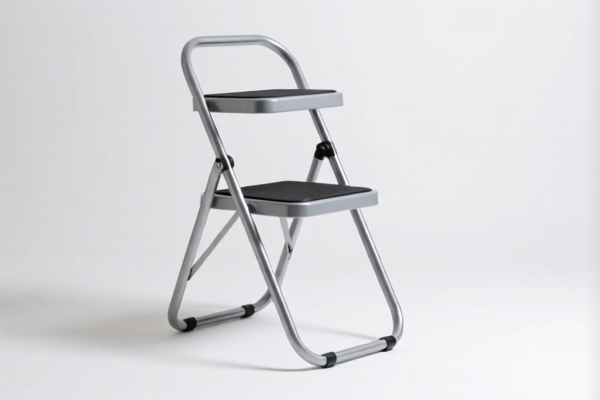
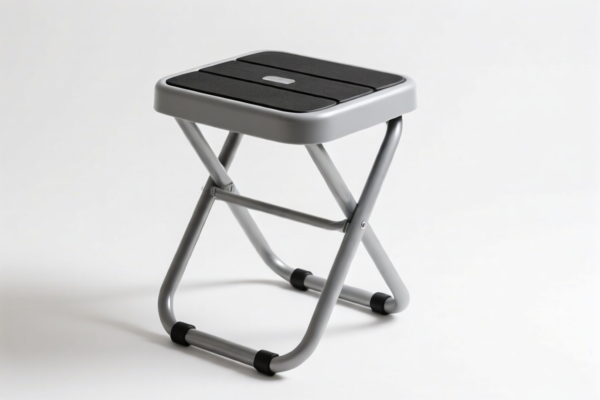
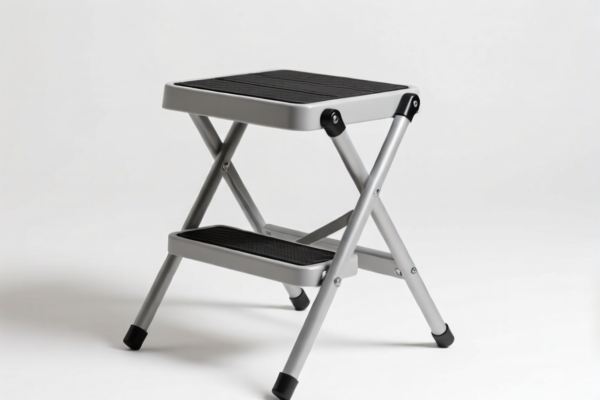
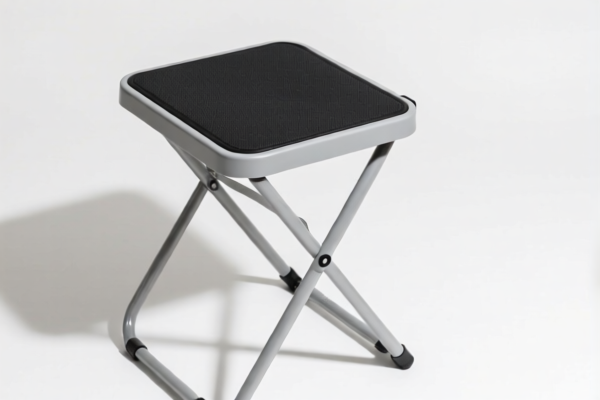
AI Analysis
🚿 Bathroom Folding Stool (Bathroom Bench)
🌐 HS Code Reference & Customs Clearance Guide | 2026 Latest Tariff Analysis | Professional-Level Compliance Strategy
📌 I. Product Definition & Classification: Do You Really Understand the "Bathroom Folding Stool"?
A Bathroom Folding Stool is a multifunctional aid used in bathrooms for sitting, showering, or bathing. It combines the attributes of furniture and plastic/composite goods. In international trade, its classification depends heavily on: 1. Primary Material (Plastic vs. Wood/Metal); 2. Primary Function (Seat vs. General Use); 3. Construction Type (Foldable mechanisms).
⚠️ Key Distinction Points:
- If the hinges/connectors are plastic and the item is viewed as a general plastic artifact → Chapter 39.
- If it is viewed as a seat (even if made of plastic/composite) → Chapter 94 (9401).
- If it is viewed as other furniture (e.g., wooden frame with plastic parts) → Chapter 94 (9403).
📦 II. HS Code Classification Details (2026 Latest Tariff Authority Comparison)
| HS Code | Product Description | Application Scenario | Tax Rate (Total) |
|---|---|---|---|
3926.30.50.00 |
Other articles of plastic: Toilet seats, covers, and bidets; other plastic articles (specifically cited as "Bathroom folding stool belongs to furniture-type products, connector part made of plastic") | Plastic-dominated stools, where plastic connectors define the nature | 22.8% |
3926.90.99.89 |
Other articles of plastic and articles of other materials of heading 3901 to 3914 (Fallback category for plastic/composite products) | Plastic or composite-made stools fitting the "fallback" logic for non-specific plastic goods | 22.8% |
9403.60.80.93 |
Other furniture (e.g., wood, metal, or mixed materials not specifically classified elsewhere) | Wooden or mixed-material stools classified broadly as "other furniture" | 35.0% |
9401.69.60.31 |
Seats with wooden frames (or other frames) – "Other seats" (Fallback for seat category) | Classified as a seat, fitting the "fallback" logic for the seat category | 35.0% |
9401.80.40.46 |
Other seats (e.g., material may be rubber, plastic, or other) | Clearly classified as a seat, regardless of material (rubber/plastic) | 35.0% |
🔍 Critical Reminder:
- Plastic-centric classification (3926) results in a lower tax (22.8%) but requires proving plastic components are dominant or defining.
- Furniture/Seat-centric classification (9401/9403) results in a higher tax (35.0%) because it triggers the 25% Section 301 tariff + 10% IEEPA tariff.
- Do not mix: If you declare as "Plastic Article" but customs determines it is primarily a "Seat," you may face reclassification and higher duties.
💰 III. 2026 Latest Tariff Rate Breakdown (Including Surcharges & Policy Add-ons)
✅ Applicable Country: United States (US)
✅ Origin: China (CN)
✅ Effective Date: November 10, 2025 onwards (including subsequent imports)
🎯 1. 3926.30.50.00 & 3926.90.99.89 – Plastic Articles (The "Lower Tax" Route)
| Item | Content |
|---|---|
| Base Duty | 5.3% (Ad valorem) |
| Section 301 Additional Tariff | +7.5% (List 4A items) |
| IEEPA Additional Tariff | +10% (Targeting China/HK products under 122 Proclamation) |
| Total Tax Rate | 22.8% |
| Tax Calculation | CIF Value × 22.8% |
| De Minimis Exemption | ❌ Not Applicable (High-value items or specific exclusions apply) |
| Legal Basis Path | USITC:3926.30.50.00 → FOOTNOTE:122 → IEEPA:122 |
📌 Explanation:
- "Base Duty 5.3%" is the standard MFN rate for plastic articles.
- "Section 301 Additional Tariff 7.5%" applies to specific plastic goods under List 4A.
- "IEEPA 10%" is a separate surcharge under Proclamation 122 for certain Chinese goods.
- Total 22.8% is significantly lower than the furniture classification.
🎯 2. 9403.60.80.93, 9401.69.60.31, 9401.80.40.46 – Furniture & Seats (The "Higher Tax" Route)
| Item | Content |
|---|---|
| Base Duty | 0.0% (Many furniture/seat items have 0% base duty) |
| Section 301 Additional Tariff | +25.0% (List 4C or general China surcharge) |
| IEEPA Additional Tariff | +10% (Targeting China/HK products under 122 Proclamation) |
| Total Tax Rate | 35.0% |
| Tax Calculation | CIF Value × 35.0% |
| De Minimis Exemption | ❌ Not Applicable |
| Legal Basis Path | USITC:9401/9403 → FOOTNOTE:301 → IEEPA:122 |
📌 Explanation:
- Although the Base Duty is 0%, the Section 301 tariff (25%) is much higher than the plastic category.
- Combined with the IEEPA 10%, the total hits 35.0%.
- This represents a $12.2% higher cost compared to the plastic classification.
🛠️ IV. Customs Clearance Practical Advice (Real-World Pitfall Avoidance Guide)
✅ 1. Preparation Checklist (All Mandatory)
| Material | Required | Description |
|---|---|---|
| ✅ Product Specifications | ✔️ | Include dimensions, weight, max load, folding mechanism type. |
| ✅ Material Breakdown | ✔️ | Specify % of plastic vs. metal/wood. Critical for HS Code choice. |
| ✅ Product Photos | ✔️ | Clear images of hinges, connectors, and overall structure. |
| ✅ Commercial Invoice | ✔️ | Must explicitly state: "Bathroom Folding Stool, Plastic Connectors" or "Wooden Frame Seat". |
| ✅ Packing List | ✔️ | Ensure no mixed materials confuse the "Primary Character" rule. |
✅ 2. Declaration Strategy (Key Mnemonics)
🔥 "Material Dictates Code, Seat vs. Plastic, Tax Gap is Wide!"
| Scenario | Correct Declaration Approach | Wrong Approach |
|---|---|---|
| Stool with Plastic Hinges/Connectors | Use 3926.30.50.00 or 3926.90.99.89 (22.8%) |
Declare as "Seat" → 35.0% |
| Stool with Wooden/Metal Frame, Plastic Seat | Use 9401.69.60.31 or 9403.60.80.93 (35.0%) |
Declare as "Plastic Article" → Risk of reclassification & penalty |
| Fully Plastic/Molded Stool | Use 3926.90.99.89 (22.8%) |
Split components → Higher total tax |
| Seat for Elderly/Disabled | Still classified under 9401/9403 if primarily a seat | No automatic exemption unless specifically designated medical device |
✅ 3. Special Cases Handling
| Situation | Handling Advice |
|---|---|
| OEM Custom Colors/Logos | Provide design files to prove it's a standardized plastic article if possible. |
| Mixed Material (Plastic + Metal) | If plastic connectors are key to functionality, argue for 3926. If metal frame is structural, argue for 9401. |
| Bundled Sales (Stool + Mat) | Declare separately. Mat might have different HS code. Avoid bundling into one line item unless identical classification. |
| Pre-Arbitration (Advance Ruling) | Strongly Recommended to lock in the 22.8% rate if plastic components are dominant. |
🌍 V. Global Market Comparison (2026 Latest)
| Country/Region | Recommended HS Code | Tariff (China Origin) | Certification Requirements | Notes |
|---|---|---|---|---|
| 🇺🇸 USA | 3926.90.99.89 |
22.8% | None specific | Cheapest option if plastic-dominated. |
| 🇺🇸 USA | 9401.80.40.46 |
35.0% | None specific | Higher tax if classified as seat. |
| 🇨🇳 China | 3926.90.99.89 |
5.3% | CCC (if applicable) | Low import duty, no extra tariffs. |
| 🇪🇺 EU | 3926.90.99 |
0% | CE + RoHS | No Section 301 equivalent. |
| 🇬🇧 UK | 3926.90.99 |
0% | UKCA | Post-Brexit alignment with EU. |
📌 Conclusion:
- USA is the critical market where HS Code choice directly impacts 12.2% of the product value.
- Plastic classification (22.8%) is significantly more profitable than Furniture/Seat classification (35.0%).
- Strategy: Emphasize plastic connectors and plastic-dominated assembly to qualify for Chapter 39.
📌 VI. Common Mistakes & Pitfall Guide (Blood & Tears Lessons)
❌ Mistake 1: Declaring a plastic-hinged stool as "Furniture" (9403)
👉 Result: Paying 35% instead of 22.8%. Loss of 12.2% margin.
❌ Mistake 2: Declaring a wooden-frame stool as "Plastic Article" (3926)
👉 Result: Customs reclassifies to 9401 or 9403 → Back taxes + Penalties + Delay.
❌ Mistake 3: Ignoring the "122 Proclamation" (IEEPA)
👉 Result: Forgetting the 10% surcharge on both categories → Underpayment & Audit Risk.
❌ Mistake 4: Using vague names like "Bathroom Chair"
👉 Result: Customs ambiguity → Higher scrutiny, potential misclassification.
✅ Correct Practice:
"Bathroom Folding Stool, Plastic Hinges/Connectors, PVC Seat, Plastic-Dominated Assembly, Model XYZ"
🎯 VII. Conclusion: Professional Declaration Saves Money!
🎯 Remember the Mnemonic:
🔹 "Plastic Connectors = Chapter 39 (22.8%); Frame/Seat = Chapter 94 (35.0%).
🔹 "Choose wisely, save 12%, avoid customs surprise!"
🔹 "Base Duty 0% doesn't mean Free Tax! 301 + IEEPA = 35%!"
📌 Pro Tip:
If your stool is primarily plastic (even with minor metal pins), strive for 3926.30.50.00 or 3926.90.99.89.
If it is wooden or metal-framed, accept 9401/9403 at 35%.
Apply for an Advance Ruling from CBP to lock in the favorable classification.
📣 Immediate Action:
📞 Contact a licensed customs broker.
📸 Provide high-res photos of connectors and hinges.
📄 Request HS Code Pre-Ruling to confirm 22.8% vs. 35.0%.
✨ Professional Customs Clearance Starts with Accurate Classification!
💼 Every Percentage Point Saved is Pure Profit!
Customer Reviews
About HS Code Classification
The Harmonized System (HS) is an internationally standardized nomenclature developed by the World Customs Organization (WCO) to classify traded products. Over 200 countries use the HS system as the basis for customs tariffs, trade statistics, and import/export regulations.
Each HS code follows a hierarchical structure:
- Chapter (2 digits) — Broad category of goods (e.g., Chapter 84: Machinery and Mechanical Appliances)
- Heading (4 digits) — More specific grouping within the chapter
- Subheading (6 digits) — Internationally standardized breakdown, used by all WCO member countries
- National subdivisions (8-10 digits) — Country-specific extensions for further classification, such as US HTSUS 10-digit codes
Correct HS code classification is essential for smooth customs clearance, accurate duty payment, and compliance with trade regulations. Misclassification can lead to customs delays, overpayment of duties, or penalties.
When importing from CN to US, the applicable tariff rates may include:
- Most-Favored-Nation (MFN) rate — The standard duty rate applied to WTO members
- General rate — Applied to countries without trade agreements
- Trade remedy duties — Additional tariffs such as Section 301 (anti-dumping), Section 232 (national security), or countervailing duties
The information provided on this page is for reference purposes only. For official classification, please consult with your local customs authority or a licensed customs broker.