Battery powered Shunting Locomotive
CN → US| HS编码 | 关税税率 | 原产国 | 目的国 | 文档 |
|---|---|---|---|---|
| 8426410005 | 35.0% | CN | US | 官方文档 |
| 8426410010 | 35.0% | CN | US | 官方文档 |
| 8709110030 | 35.0% | CN | US | 官方文档 |
| 8709110060 | 35.0% | CN | US | 官方文档 |
| 8705900080 | 35.0% | CN | US | 官方文档 |
商品图片
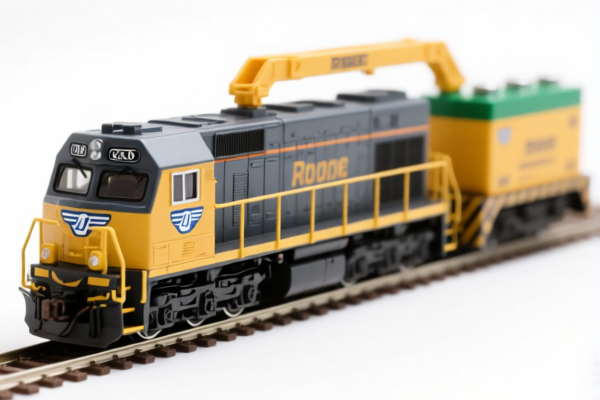
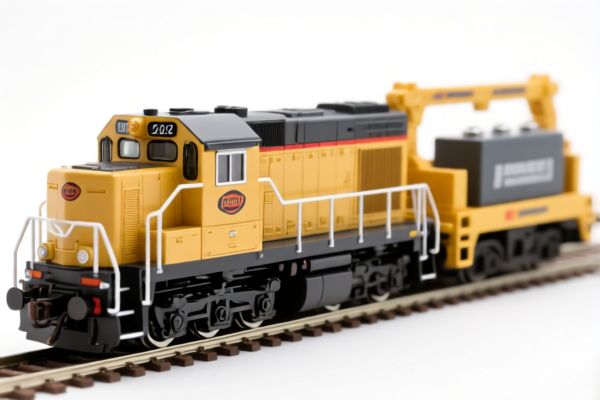
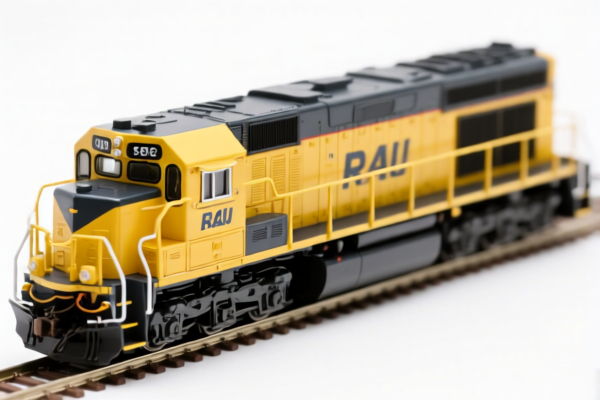
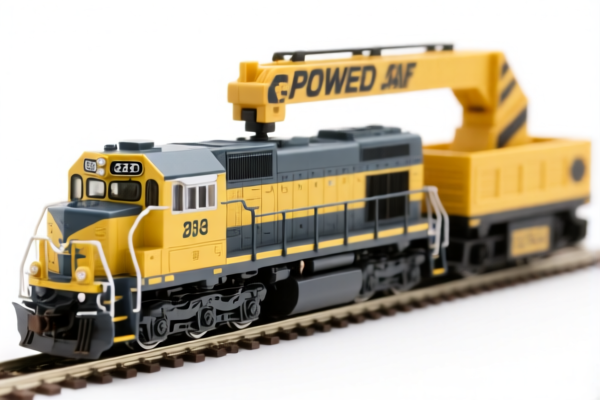
AI分析
🚂 Battery Powered Shunting Locomotive (Industrial Battery-Electric Shunters)
🌐 HS Code Reference & Customs Clearance Guide | 2026 Latest Tariff Analysis | Professional Entry Strategy for US Imports
📌 I. Product Definition & Classification: What Exactly is a "Battery Shunter"?
A Battery Powered Shunting Locomotive is a specialized industrial electric vehicle designed for moving freight cars (shunting) or short-distance heavy cargo transport within confined spaces such as factories, warehouses, docks, and rail yards. Unlike standard road vehicles, these are often classified based on their mechanical function (crane/lifting) or their specific utility as industrial transport.
In international trade, these vehicles are tricky to classify because they sit at the intersection of cranes/lifting machinery (Chapter 84) and industrial electric vehicles (Chapter 87). The correct HS Code depends heavily on whether the primary function involves lifting/crane operations or pure horizontal transport.
⚠️ Key Classification Distinction:
- If the vehicle is equipped with a crane, hoist, or mechanical lifting device, it often falls under Chapter 84 (Machinery for lifting/handling).
- If it is a pure ground vehicle for short-distance transport without lifting mechanisms, it falls under Chapter 87 (Vehicles).
- Crucially, for imports from China to the US, all categories listed below are subject to heavy punitive tariffs.
📦 II. HS Code Classification Details (2026 Latest Tariff Authority Mapping)
Based on the provided data, here are the specific HS Codes for Battery Powered Shunting Locomotives and their corresponding technical descriptions:
| HS Code | Product Description (Summary) | Key Characteristics | Primary Function |
|---|---|---|---|
8426.41.00.05 |
Battery powered shunter equipped with crane/mechanical device | Includes lifting apparatus; operates on rails or ground | Lifting & Transport |
8426.41.00.10 |
Battery powered shunter; other wheeled/cable/electric powered lifting/handling machinery | Specialized lifting/handling mech; not standard transport | Lifting/Handling |
8709.11.00.30 |
Battery powered shunter; electric vehicles for short-distance freight transport in factories/warehouses/docks | Pure transport; no lifting gear; battery-powered | Short-distance Transport |
8709.11.00.60 |
Battery powered shunter; electric vehicles for short-distance freight in factories/warehouses | Pure transport; industrial utility focus | Short-distance Transport |
8705.90.00.80 |
Battery powered shunter; special motor vehicle powered by batteries | Special purpose vehicle; non-standard classification | Special Purpose |
🔍 Critical Insight:
- Chapter 84 Codes (8426.41...): These classify the shunter primarily as a crane or lifting machine. Even if it has wheels, if it has a crane attachment, customs may prefer this heading.
- Chapter 87 Codes (8709...): These classify the shunter as an industrial vehicle. This is the most common classification for standard battery-electric shunters used solely for moving trailers or containers on the ground.
-8705.90.00.80: A catch-all for "special motor vehicles" if the product doesn't fit neatly into8709. Use with caution and detailed justification.
💰 III. 2026 Latest Tariff Rate Breakdown (Including Surcharges & Policy Add-ons)
✅ Applicable Country: United States (US)
✅ Origin: China (CN)
✅ Effective Time: 2025/2026 Regimes
All HS Codes listed in the source data carry the exact same tariff structure:
🎯 1. Universal Tariff Structure for All Listed HS Codes
| Component | Rate | Description |
|---|---|---|
| Base Duty | 0.0% | Standard MFN (Most Favored Nation) duty rate for these machinery/vehicle categories. |
| Section 301 / Additional Duty | +25.0% | "Section 301" additional duty targeting Chinese imports. |
| Section 122 Tariff | +10.0% | Specific additional tariff clause (likely referencing recent executive orders or specific trade remedies). |
| TOTAL EFFECTIVE TARIFF | 35.0% | Sum of Base (0%) + Sec 301 (25%) + Sec 122 (10%) |
📌 Detailed Explanation of Tariff Components:
1. Base Duty (0.0%): The Harmonized Tariff Schedule (HTS) base rate for these specific subheadings is currently zero. However, this is NOT the final cost.
2. Additional Duty (25.0%): This is the standard Section 301 punitive tariff applied to a vast array of Chinese goods. It is non-negotiable for standard imports.
3. Section 122 Tariff (10.0%): This is a critical, newer or specific add-on mentioned in your data. Do not ignore this. It stacks on top of the 25%.
4. Total Tax Burden: 35% of the CIF (Cost, Insurance, Freight) value. This is a high-cost barrier that significantly impacts profit margins.⚠️ No De Minimis Exemption:
These are industrial machines/vehicles. They DO NOT qualify for the de minimis (Section 321) exemption for shipments under $800. Full duty calculation applies per shipment.
🛠️ IV. Customs Clearance Practical Advice (Real-World Pitfall Avoidance)
✅ 1. Required Documentation Checklist (Mandatory)
| Document | Required? | Purpose |
|---|---|---|
| Product Specification Sheet | ✔️ | Must clearly state: Voltage, Battery Capacity, Load Capacity, Speed, Presence/Absence of Crane. |
| Technical Drawings | ✔️ | To prove function. If you claim 8709 (Transport), you must prove it cannot lift. If you claim 8426 (Crane), show the crane mechanism. |
| Commercial Invoice | ✔️ | Must accurately describe goods as "Battery Powered Shunting Locomotive" or "Electric Industrial Transport Vehicle". Avoid vague terms like "Cart". |
| Packing List | ✔️ | Detail batteries separately (Li-ion/Lead-acid) for DG (Dangerous Goods) compliance. |
| Certificate of Origin | ✔️ | Essential to confirm Chinese origin for tariff calculation. |
| Battery Safety Data Sheet (MSDS) | ✔️ | Critical for shipping and customs clearance due to lithium content. |
✅ 2. Declaration Strategy & Tips
🔥 "Function Determines Code, Code Determines Cost!"
| Scenario | Recommended HS Code | Why? |
|---|---|---|
| Shunter with a mounted crane/hoist | 8426.41.00.05 |
Primary function is lifting. Even if it moves, the crane defines the machinery classification. |
| Pure battery-electric yard truck (no lift) | 8709.11.00.30 or 8709.11.00.60 |
Primary function is short-distance transport in industrial settings. |
| Specialized/Unique Design | 8705.90.00.80 |
If it doesn't fit standard transport or lifting definitions, use this "special vehicle" code. Must provide strong justification. |
🚫 Common Mistake:
Labeling a battery shunter as a "Forklift" (often8427) or "Truck" (often8704).
- Consequence: Misclassification can lead to audits, penalties, and delays. While rates might vary slightly, the 35% surcharge structure remains similar for Chinese origin, but accuracy is key for legal compliance.
- Better Approach: Use the specific8709.11codes provided, which are tailored for "Electric vehicles for short-distance freight transport in factories/warehouses/docks."
✅ 3. Special Considerations for Batteries
- Lithium-ion Batteries: Classified as Class 9 Dangerous Goods.
- Shipping: Must be shipped via IATA DGR compliant methods.
- Customs: CBP may request proof of battery safety standards (UL, IEC) to ensure they meet US safety regulations.
🌍 V. Market Comparison & Strategic Insight
| Market | HS Code Focus | Approx. Total Duty (China Origin) | Notes |
|---|---|---|---|
| 🇺🇸 USA | 8426.41 / 8709.11 / 8705.90 |
35.0% | High punitive tariffs (25% + 10%). No free trade agreement benefits. |
| 🇪🇺 EU | 87.09 / 84.26 |
~5-8% | No 301 tariffs. CE Certification required. |
| 🇨🇳 China (Import) | Similar codes | ~0-5% | Domestic consumption or re-export. |
📌 Conclusion:
The US market is the most challenging for importing Battery Powered Shunters from China due to the 35% effective tariff.
Strategy:
1. Cost Absorption: Ensure your pricing model accounts for the full 35% duty.
2. Third-Country Assembly: Consider assembling final units in Vietnam/Mexico (if origin rules are met) to potentially avoid Section 301/122 tariffs.
3. Pre-Submission: Use Binding Ruling Requests with CBP to lock in the HS Code (8709.11.00.30is often the most straightforward for pure transport shunters) before shipping.
📌 VI. Common Errors & Pitfall Guide (Lessons Learned)
❌ Error 1: Ignoring the 10% Section 122 Tariff.
👉 Result: Underpaying duties by 10%, leading to back-taxes, interest, and penalties upon audit.
✅ Fix: Always calculate Total Tax = 0% + 25% + 10% = 35%.
❌ Error 2: Misclassifying a Lift Truck as a Shunter (8709).
👉 Result: If the device lifts, CBP may reclassify it to 8427 or 8426. While rates are similar, it triggers an Amended Entry process and delays.
✅ Fix: Clearly define "Lifting" vs. "Transporting" in the invoice description.
❌ Error 3: Vague Description: "Battery Vehicle".
👉 Result: CBP rejects the entry for lack of detail, causing hold at port.
✅ Fix: Use full description: "Battery Powered Shunting Locomotive, Model XYZ, 5-Ton Capacity, Electric, For Warehouse Use."
🎯 VII. Conclusion: Professional Declaration, Cost Control, Risk Mitigation
🎯 Key Takeaway:
🔹 "Shunter Classification: Crane vs. Transport. 35% Duty is Non-Negotiable. Accuracy is Mandatory."
🔹 "HS Code8709.11.00.30is often the safest bet for pure transport shunters."
🔹 "Budget for 35% Total Tax: 0% Base + 25% Sec 301 + 10% Sec 122."
📌 Pro Tip:
If your battery shunters are not purely for "short-distance freight" but include complex lifting mechanisms, 8426.41.00.05 might be more appropriate. Consult a customs broker to review your technical drawings before filing.
📣 Immediate Action Required:
📞 Contact a Licensed US Customs Broker
📄 Provide Technical Specs + Photos
🚀 Calculate Landed Cost with 35% Duty to Verify Profitability
✨ Precision in Classification, Power in Cost Control!
💼 Your Battery Shunter, Cleared Efficiently, Profit Protected!
用户评价
关于 HS 编码归类
协调制度(HS)是由世界海关组织(WCO)制定的国际贸易商品分类标准。全球 200 多个国家采用 HS 系统作为海关关税、贸易统计和进出口监管的基础。
每个 HS 编码遵循以下层级结构:
- 章(2 位)——商品大类(例如:第 84 章:机器和机械设备)
- 品目(4 位)——章内的更具体分类
- 子目(6 位)——国际通用细分,所有 WCO 成员国统一使用
- 本国细分(8-10 位)——各国自行扩展的细分编码,如美国 HTSUS 10 位编码
正确的 HS 编码归类对于顺利通关、准确缴纳关税和遵守贸易法规至关重要。错误归类可能导致海关延误、多缴关税或罚款。
从CN进口到US时,适用的关税税率可能包括:
- 最惠国(MFN)税率——适用于 WTO 成员国的标准关税税率
- 普通税率——适用于无贸易协定国家
- 贸易救济关税——附加关税,如 301 条款(反倾销)、232 条款(国家安全)或反补贴税
本页内容仅供参考。如需正式归类,请咨询当地海关或持牌报关代理。