Battery powered Shunting Locomotive
CN → US| HS Code | Tariff Rate | Origin | Destination | Doc |
|---|---|---|---|---|
| 8426410005 | 35.0% | CN | US | Official Doc |
| 8426410010 | 35.0% | CN | US | Official Doc |
| 8709110030 | 35.0% | CN | US | Official Doc |
| 8709110060 | 35.0% | CN | US | Official Doc |
| 8705900080 | 35.0% | CN | US | Official Doc |
Product Images
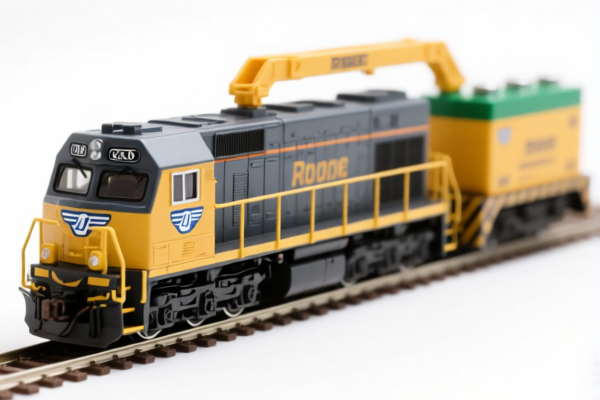
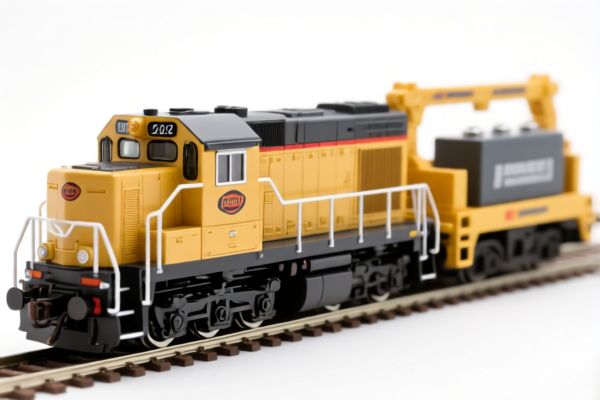
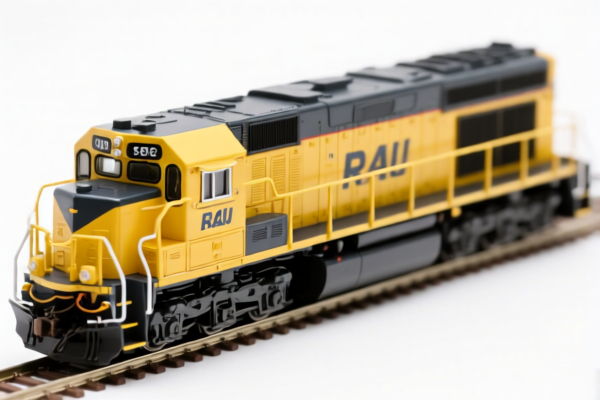
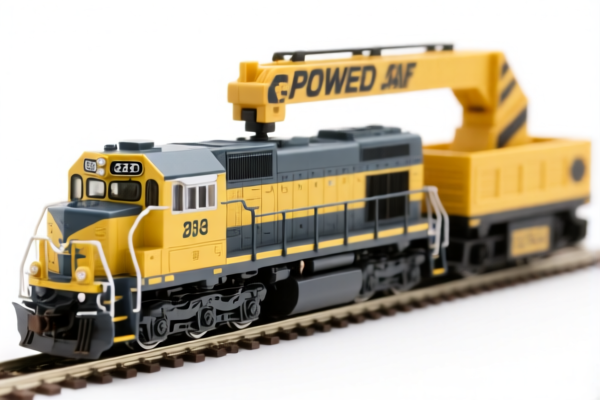
AI Analysis
🚂 Battery Powered Shunting Locomotive (Industrial Battery-Electric Shunters)
🌐 HS Code Reference & Customs Clearance Guide | 2026 Latest Tariff Analysis | Professional Entry Strategy for US Imports
📌 I. Product Definition & Classification: What Exactly is a "Battery Shunter"?
A Battery Powered Shunting Locomotive is a specialized industrial electric vehicle designed for moving freight cars (shunting) or short-distance heavy cargo transport within confined spaces such as factories, warehouses, docks, and rail yards. Unlike standard road vehicles, these are often classified based on their mechanical function (crane/lifting) or their specific utility as industrial transport.
In international trade, these vehicles are tricky to classify because they sit at the intersection of cranes/lifting machinery (Chapter 84) and industrial electric vehicles (Chapter 87). The correct HS Code depends heavily on whether the primary function involves lifting/crane operations or pure horizontal transport.
⚠️ Key Classification Distinction:
- If the vehicle is equipped with a crane, hoist, or mechanical lifting device, it often falls under Chapter 84 (Machinery for lifting/handling).
- If it is a pure ground vehicle for short-distance transport without lifting mechanisms, it falls under Chapter 87 (Vehicles).
- Crucially, for imports from China to the US, all categories listed below are subject to heavy punitive tariffs.
📦 II. HS Code Classification Details (2026 Latest Tariff Authority Mapping)
Based on the provided data, here are the specific HS Codes for Battery Powered Shunting Locomotives and their corresponding technical descriptions:
| HS Code | Product Description (Summary) | Key Characteristics | Primary Function |
|---|---|---|---|
8426.41.00.05 |
Battery powered shunter equipped with crane/mechanical device | Includes lifting apparatus; operates on rails or ground | Lifting & Transport |
8426.41.00.10 |
Battery powered shunter; other wheeled/cable/electric powered lifting/handling machinery | Specialized lifting/handling mech; not standard transport | Lifting/Handling |
8709.11.00.30 |
Battery powered shunter; electric vehicles for short-distance freight transport in factories/warehouses/docks | Pure transport; no lifting gear; battery-powered | Short-distance Transport |
8709.11.00.60 |
Battery powered shunter; electric vehicles for short-distance freight in factories/warehouses | Pure transport; industrial utility focus | Short-distance Transport |
8705.90.00.80 |
Battery powered shunter; special motor vehicle powered by batteries | Special purpose vehicle; non-standard classification | Special Purpose |
🔍 Critical Insight:
- Chapter 84 Codes (8426.41...): These classify the shunter primarily as a crane or lifting machine. Even if it has wheels, if it has a crane attachment, customs may prefer this heading.
- Chapter 87 Codes (8709...): These classify the shunter as an industrial vehicle. This is the most common classification for standard battery-electric shunters used solely for moving trailers or containers on the ground.
-8705.90.00.80: A catch-all for "special motor vehicles" if the product doesn't fit neatly into8709. Use with caution and detailed justification.
💰 III. 2026 Latest Tariff Rate Breakdown (Including Surcharges & Policy Add-ons)
✅ Applicable Country: United States (US)
✅ Origin: China (CN)
✅ Effective Time: 2025/2026 Regimes
All HS Codes listed in the source data carry the exact same tariff structure:
🎯 1. Universal Tariff Structure for All Listed HS Codes
| Component | Rate | Description |
|---|---|---|
| Base Duty | 0.0% | Standard MFN (Most Favored Nation) duty rate for these machinery/vehicle categories. |
| Section 301 / Additional Duty | +25.0% | "Section 301" additional duty targeting Chinese imports. |
| Section 122 Tariff | +10.0% | Specific additional tariff clause (likely referencing recent executive orders or specific trade remedies). |
| TOTAL EFFECTIVE TARIFF | 35.0% | Sum of Base (0%) + Sec 301 (25%) + Sec 122 (10%) |
📌 Detailed Explanation of Tariff Components:
1. Base Duty (0.0%): The Harmonized Tariff Schedule (HTS) base rate for these specific subheadings is currently zero. However, this is NOT the final cost.
2. Additional Duty (25.0%): This is the standard Section 301 punitive tariff applied to a vast array of Chinese goods. It is non-negotiable for standard imports.
3. Section 122 Tariff (10.0%): This is a critical, newer or specific add-on mentioned in your data. Do not ignore this. It stacks on top of the 25%.
4. Total Tax Burden: 35% of the CIF (Cost, Insurance, Freight) value. This is a high-cost barrier that significantly impacts profit margins.⚠️ No De Minimis Exemption:
These are industrial machines/vehicles. They DO NOT qualify for the de minimis (Section 321) exemption for shipments under $800. Full duty calculation applies per shipment.
🛠️ IV. Customs Clearance Practical Advice (Real-World Pitfall Avoidance)
✅ 1. Required Documentation Checklist (Mandatory)
| Document | Required? | Purpose |
|---|---|---|
| Product Specification Sheet | ✔️ | Must clearly state: Voltage, Battery Capacity, Load Capacity, Speed, Presence/Absence of Crane. |
| Technical Drawings | ✔️ | To prove function. If you claim 8709 (Transport), you must prove it cannot lift. If you claim 8426 (Crane), show the crane mechanism. |
| Commercial Invoice | ✔️ | Must accurately describe goods as "Battery Powered Shunting Locomotive" or "Electric Industrial Transport Vehicle". Avoid vague terms like "Cart". |
| Packing List | ✔️ | Detail batteries separately (Li-ion/Lead-acid) for DG (Dangerous Goods) compliance. |
| Certificate of Origin | ✔️ | Essential to confirm Chinese origin for tariff calculation. |
| Battery Safety Data Sheet (MSDS) | ✔️ | Critical for shipping and customs clearance due to lithium content. |
✅ 2. Declaration Strategy & Tips
🔥 "Function Determines Code, Code Determines Cost!"
| Scenario | Recommended HS Code | Why? |
|---|---|---|
| Shunter with a mounted crane/hoist | 8426.41.00.05 |
Primary function is lifting. Even if it moves, the crane defines the machinery classification. |
| Pure battery-electric yard truck (no lift) | 8709.11.00.30 or 8709.11.00.60 |
Primary function is short-distance transport in industrial settings. |
| Specialized/Unique Design | 8705.90.00.80 |
If it doesn't fit standard transport or lifting definitions, use this "special vehicle" code. Must provide strong justification. |
🚫 Common Mistake:
Labeling a battery shunter as a "Forklift" (often8427) or "Truck" (often8704).
- Consequence: Misclassification can lead to audits, penalties, and delays. While rates might vary slightly, the 35% surcharge structure remains similar for Chinese origin, but accuracy is key for legal compliance.
- Better Approach: Use the specific8709.11codes provided, which are tailored for "Electric vehicles for short-distance freight transport in factories/warehouses/docks."
✅ 3. Special Considerations for Batteries
- Lithium-ion Batteries: Classified as Class 9 Dangerous Goods.
- Shipping: Must be shipped via IATA DGR compliant methods.
- Customs: CBP may request proof of battery safety standards (UL, IEC) to ensure they meet US safety regulations.
🌍 V. Market Comparison & Strategic Insight
| Market | HS Code Focus | Approx. Total Duty (China Origin) | Notes |
|---|---|---|---|
| 🇺🇸 USA | 8426.41 / 8709.11 / 8705.90 |
35.0% | High punitive tariffs (25% + 10%). No free trade agreement benefits. |
| 🇪🇺 EU | 87.09 / 84.26 |
~5-8% | No 301 tariffs. CE Certification required. |
| 🇨🇳 China (Import) | Similar codes | ~0-5% | Domestic consumption or re-export. |
📌 Conclusion:
The US market is the most challenging for importing Battery Powered Shunters from China due to the 35% effective tariff.
Strategy:
1. Cost Absorption: Ensure your pricing model accounts for the full 35% duty.
2. Third-Country Assembly: Consider assembling final units in Vietnam/Mexico (if origin rules are met) to potentially avoid Section 301/122 tariffs.
3. Pre-Submission: Use Binding Ruling Requests with CBP to lock in the HS Code (8709.11.00.30is often the most straightforward for pure transport shunters) before shipping.
📌 VI. Common Errors & Pitfall Guide (Lessons Learned)
❌ Error 1: Ignoring the 10% Section 122 Tariff.
👉 Result: Underpaying duties by 10%, leading to back-taxes, interest, and penalties upon audit.
✅ Fix: Always calculate Total Tax = 0% + 25% + 10% = 35%.
❌ Error 2: Misclassifying a Lift Truck as a Shunter (8709).
👉 Result: If the device lifts, CBP may reclassify it to 8427 or 8426. While rates are similar, it triggers an Amended Entry process and delays.
✅ Fix: Clearly define "Lifting" vs. "Transporting" in the invoice description.
❌ Error 3: Vague Description: "Battery Vehicle".
👉 Result: CBP rejects the entry for lack of detail, causing hold at port.
✅ Fix: Use full description: "Battery Powered Shunting Locomotive, Model XYZ, 5-Ton Capacity, Electric, For Warehouse Use."
🎯 VII. Conclusion: Professional Declaration, Cost Control, Risk Mitigation
🎯 Key Takeaway:
🔹 "Shunter Classification: Crane vs. Transport. 35% Duty is Non-Negotiable. Accuracy is Mandatory."
🔹 "HS Code8709.11.00.30is often the safest bet for pure transport shunters."
🔹 "Budget for 35% Total Tax: 0% Base + 25% Sec 301 + 10% Sec 122."
📌 Pro Tip:
If your battery shunters are not purely for "short-distance freight" but include complex lifting mechanisms, 8426.41.00.05 might be more appropriate. Consult a customs broker to review your technical drawings before filing.
📣 Immediate Action Required:
📞 Contact a Licensed US Customs Broker
📄 Provide Technical Specs + Photos
🚀 Calculate Landed Cost with 35% Duty to Verify Profitability
✨ Precision in Classification, Power in Cost Control!
💼 Your Battery Shunter, Cleared Efficiently, Profit Protected!
Customer Reviews
About HS Code Classification
The Harmonized System (HS) is an internationally standardized nomenclature developed by the World Customs Organization (WCO) to classify traded products. Over 200 countries use the HS system as the basis for customs tariffs, trade statistics, and import/export regulations.
Each HS code follows a hierarchical structure:
- Chapter (2 digits) — Broad category of goods (e.g., Chapter 84: Machinery and Mechanical Appliances)
- Heading (4 digits) — More specific grouping within the chapter
- Subheading (6 digits) — Internationally standardized breakdown, used by all WCO member countries
- National subdivisions (8-10 digits) — Country-specific extensions for further classification, such as US HTSUS 10-digit codes
Correct HS code classification is essential for smooth customs clearance, accurate duty payment, and compliance with trade regulations. Misclassification can lead to customs delays, overpayment of duties, or penalties.
When importing from CN to US, the applicable tariff rates may include:
- Most-Favored-Nation (MFN) rate — The standard duty rate applied to WTO members
- General rate — Applied to countries without trade agreements
- Trade remedy duties — Additional tariffs such as Section 301 (anti-dumping), Section 232 (national security), or countervailing duties
The information provided on this page is for reference purposes only. For official classification, please consult with your local customs authority or a licensed customs broker.