Bearing Housing
CN → US| HS编码 | 关税税率 | 原产国 | 目的国 | 文档 |
|---|---|---|---|---|
| 8482105012 | 44.0% | CN | US | 官方文档 |
| 8482105068 | 44.0% | CN | US | 官方文档 |
| 8482105004 | 44.0% | CN | US | 官方文档 |
| 7326190080 | 87.9% | CN | US | 官方文档 |
| 7326908688 | 87.9% | CN | US | 官方文档 |
商品图片
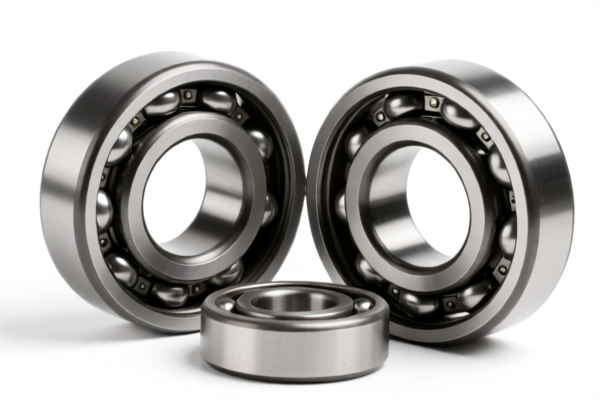
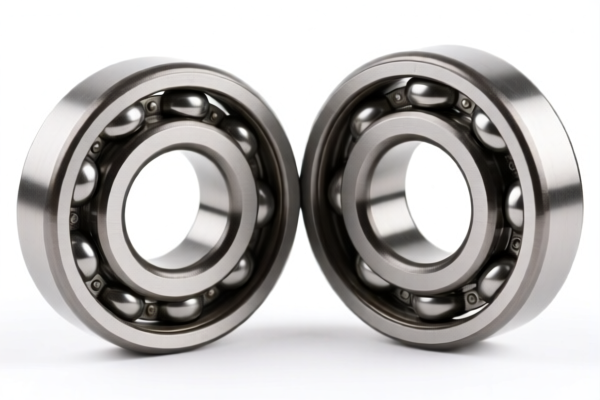
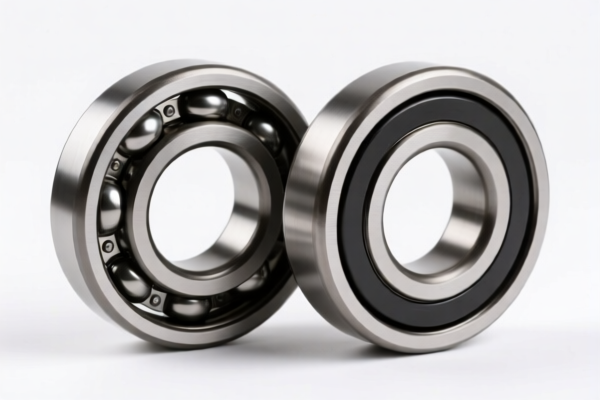
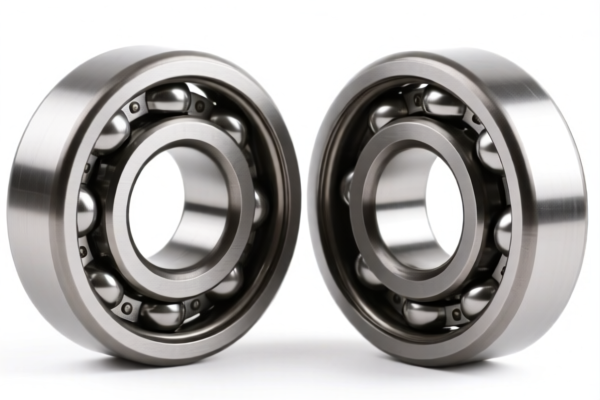
AI分析
🔩 Bearing Housing (Bearings & Precision Parts)
🌐 HS Code Reference & Customs Clearance Guide | 2026 Latest Tariff Analysis | Professional-Level Entry Strategy 📌 I. Product Definition & Classification: Do You Really Understand "Bearing Housing"?
A Bearing Housing is a critical mechanical component used to support a rotating shaft or journal. In international trade, its classification depends heavily on its primary function (is it a bearing itself?) and its material composition.
Bearings (Precision Rolling Elements): Ball bearings, roller bearings, and needle rollers designed to reduce friction. These generally fall under Chapter 84. Housings/Parts (Structural/Support): Packed bearings, split bearings, or housings made of steel/iron that do not function as the rolling element itself. These often fall under Chapter 73 or specific subheadings in 8482.
⚠️ Key Distinction Point: - If the product is a self-contained rolling bearing (balls/rings/rollers) →归入 8482.10 series. - If the product is a steel housing/casing/pack without rolling elements, or a generic steel part supporting bearings → 归入 7326 series.
📦 II. HS Code Classification Details (2026 Latest Tariff Authority Mapping)
Based on the provided data, there are 5 potential HS Codes for "Bearing Housing" depending on the specific structural definition and material.
| HS Code | Product Description | Application Scenario | Material/Type |
|--------|--------------------------|----------|
| 8482.10.50.12 | Bearings, Classification Based on Core Name Consistency | Standard ball bearings or integrated bearing units where the name matches core bearing definitions. | Rolling Bearing |
| 8482.10.50.68 | Bearings, Classification Based on Ball Bearing Type & No Material Conflict | Ball bearings identified by type, using a fallback principle when no other specific material conflict exists. | Ball Bearing |
| 8482.10.50.04 | Bearings, Classification Based on Ball Bearing Name & Spare Parts Attribute | Treated as a spare part or accessory to a ball bearing system. | Ball Bearing / Spare Part |
| 7326.19.00.80 | Bearings, Classification Based on Steel Material & Spare Parts Attribute | Steel housing or casing, classified as a steel manufactured article due to material dominance. | Steel Spare Part |
| 7326.90.86.88 | Bearings, Classification Based on Other Iron/Steel Articles | Generic iron/steel制品 (articles) inferred as bearing housing/support structures. | Iron/Steel Article |
🔍 Critical Reminder: - Chapter 84 (Codes ending in 8482...) implies the item is considered a functional bearing or primary bearing component. Tax rate is 44.0%. - Chapter 73 (Codes ending in 7326...) implies the item is a structural steel/iron part (housing/casing). Tax rate is 87.9%. - Mistake Warning: Misclassifying a steel housing as a bearing (or vice versa) leads to significant duty discrepancies.
💰 III. 2026 Latest Tariff Rate Breakdown (Including Surtaxes & Policy Add-ons)
✅ Applicable Country: United States (US)
✅ Origin: China (CN)
✅ Effective Time: Current Trade Policies (Section 301, Section 232, etc.)
🎯 1. 8482.10.50.12 / .68 / .04 —— Bearings (Ball/Rolling Type)
| Item | Content |
|---|---|
| Base Tariff | 9.0% |
| Section 301 Surtax | +25.0% (Trade War Tariff) |
| Section 122 Tariff | +10.0% (Specific Trade Remedy) |
| Total Effective Rate | 44.0% |
| Calculation Basis | CIF Value × 44% |
| De Minimis Exemption? | ❌ NO (Denied for Chinese origin under these sections) |
| Legal Basis Path | USITC:8482.10 → Section 301 Footnote → Section 122 Footnote |
📌 Explanation: - These codes are grouped together in the source data with identical tax structures. - Total Tax = 44%. This is a high tariff burden. - The 25% is the standard Section 301 tariff on industrial machinery/parts. - The 10% is the additional Section 122 tariff on certain steel/aluminum or specific mechanical items.
🎯 2. 7326.19.00.80 / 7326.90.86.88 —— Steel/Iron Housing & Parts
| Item | Content |
|---|---|
| Base Tariff | 2.9% |
| Section 301 Surtax | +25.0% (Trade War Tariff) |
| Section 122 Tariff | +10.0% (Specific Trade Remedy) |
| Steel/Aluminum/Copper Surtax | +50.0% (Section 232 Tariff on Steel Products) |
| Total Effective Rate | 87.9% |
| Calculation Basis | CIF Value × 87.9% |
| De Minimis Exemption? | ❌ NO |
| Legal Basis Path | USITC:7326 → Section 301 → Section 122 → Section 232 (Steel) |
📌 Explanation: - Total Tax = 87.9%. This is an extremely high tariff. - The base rate is low (2.9%), but the Section 232 Tariff (+50%) applies to steel products. - Since "Bearing Housing" is often a steel casing, it triggers this massive 50% add-on. - Combined with 25% (Sec 301) and 10% (Sec 122), the total hits nearly 88%.
🛠️ IV. Customs Clearance Practical Advice (Real-World Pitfall Guide)
✅ 1. Preparation Checklist (All Documents Required)
| Document | Required? | Description |
|---|---|---|
| ✅ Product Specification Sheet | ✔️ | Must specify: Material (Steel/Aluminum/Plastic), Function (Housing vs. Bearing), Dimensions. |
| ✅ Technical Drawings | ✔️ | Crucial to distinguish if it contains rolling elements (Bearing) or is just a case (Housing). |
| ✅ Product Photos | ✔️ | Clear shots of the item, showing if balls/rollers are present inside. |
| ✅ Commercial Invoice | ✔️ | Must clearly state: "Bearing Housing (Steel Casing)" or "Ball Bearing Unit". Do not use vague terms. |
| ✅ Bill of Lading | ✔️ | Ensure weight and volume match the invoice. |
| ✅ Origin Certificate | ✔️ | Proof of Chinese origin is likely; triggers surtaxes. |
✅ 2. Declaration Strategy (Key Mnemonics)
🔥 "Check Material, Check Function, Avoid the 50% Trap!"
| Scenario | Correct HS Code | Why? | Risk if Wrong |
|---|---|---|---|
| Item is a Ball Bearing | 8482.10.xxxx |
It is a precision rolling element. | Misclassifying as Steel (7326) = 87.9% duty instead of 44%. |
| Item is a Steel Housing/Casing | 7326.xxxx |
It is a structural steel part. | Misclassifying as Bearing (8482) = 44% duty instead of 87.9%. |
| Item is a Packed Bearing | 8482.10.xxxx |
Packed bearings are classified as bearings. | See above. |
| Item is a Plastic Housing | Check 3926 or 8482 |
If non-metallic, Section 232 (Steel) may not apply. | Critical! If not steel, you might save the 50% surtax. |
💡 Pro Tip: - If your bearing housing is made of Plastic or Aluminum, confirm if Section 232 (Steel) applies. (Note: Section 232 applies to Steel and Aluminum. Aluminum also has a 25% surtax in many cases, but the 50% steel-specific penalty might differ. Verify material carefully!). - Do not declare as "Bearing" if it is just a "Housing" unless it is a packed bearing unit. Customs can seize goods for misclassification.
✅ 3. Special Case Handling
| Situation | Advice |
|---|---|
| Steel Housing | Expect 87.9% total tax. Factor this into cost. Consider if aluminum (25% Sec 301 + 25% Sec 232?) or plastic (0-5% base) is a better option. |
| Plastic Housing | Check Chapter 39. Likely no Section 232. Tax may be significantly lower (check base + 301). |
| Aluminum Housing | Section 232 applies to Aluminum (+25%). Section 301 (+25%). Section 122 (+10%). Base ~5-7%. Total ~65-70%? (Verify with latest Al rules). Still high, but maybe lower than 87.9%. |
| Packed Bearing | Always declare under 8482. Do not split parts. |
🌍 V. Global Market Comparison (2026 Outlook)
| Market | Likely HS Code | Est. Total Tax (China Origin) | Notes |
|---|---|---|---|
| 🇺🇸 USA | 8482.10 or 7326 |
44% (Bearing) / 87.9% (Steel Housing) | Highest cost due to multiple surtaxes (301+232+122). |
| 🇨🇳 China | 8482.10 or 7326 |
~5-10% | No Section 301/232. Standard MFN rate. |
| 🇪🇺 EU | 8482.10 or 7326 |
~2-5% | No broad Section 301 equivalents. Retaliatory tariffs possible. |
| 🇬🇧 UK | 8482.10 or 7326 |
~2-5% | Similar to EU. |
| 🇻🇳 Vietnam | 8482.10 |
0-5% | If assembled/substantially transformed in Vietnam, may avoid US tariffs. |
📌 Conclusion: - USA is the most expensive market for bearing components due to overlapping tariffs. - Steel Housing (7326) is the most expensive category due to the 50% Section 232 steel tariff. - Strategic Suggestion: If exporting to the US, consider if the housing can be made of Plastic or Aluminum (verify Al tariffs) to potentially reduce the 87.9% steel penalty. Alternatively, substantial transformation in a third country (e.g., Vietnam, Mexico) may be required to bypass US origin rules.
📌 VI. Common Errors & Pitfalls (Blood & Tears Lessons)
❌ Error 1: Declaring a Steel Housing as a Bearing (8482) |
👉 Consequence: You pay 44% instead of 87.9%. Wait, this looks like a benefit!
👉 Reality Check: Customs will inspect. If it's clearly a housing (no balls, just a case), they will reclassify it to 7326 and charge 87.9% + penalties + back taxes. Do not try to evade steel tariffs by mislabeling.
❌ Error 2: Declaring a Bearing as a Steel Part (7326) |
👉 Consequence: You pay 87.9% instead of 44%. Overpayment! |
👉 Reality: Always ensure accurate classification. If it’s a bearing, use 8482.
❌ Error 3: Ignoring the Section 122 (10%) |
👉 Consequence: Many brokers forget the 10% Section 122 add-on. |
👉 Reality: It applies to most 8482 and 7326 items from China. Budget for it.
❌ Error 4: Assuming Aluminum Housings are tax-free | 👉 Consequence: Section 232 applies to Aluminum too (+25%). | 👉 Reality: Check if Aluminum housing falls under the 25% Section 301 + 25% Section 232 + 10% Section 122. Total could be ~60-70%.
✅ Correct Approach:
"Bearing Housing, Steel, Split Type, Model XYZ. Not a bearing. Not a packed bearing."
OR
"Ball Bearing Unit, Sealed, Model ABC. Includes rolling elements."
🎯 VII. Conclusion: Professional Declaration, Cost Control, Efficiency!
🎯 Remember the Mnemonic:
🔹 "Steel Housing = 88% Pain. Bearing = 44% Pain. Plastic = Maybe Lower. Always Verify!" 🔹 "Material Determines the 50%. Function Determines the 25%."
📌 Pro Tip:
- If you are a US Importer, calculate the Landed Cost carefully. 87.9% duty can kill margins.
- Consider Supply Chain Diversification: Moving assembly to Vietnam, Thailand, or Mexico can avoid US Section 301/232 tariffs.
- Consult a Customs Broker: Before shipping, get a Binding Tariff Information (BTI) or US Customs Ruling for your specific item design.
📣 Immediate Action:
📞 Contact your Customs Broker with product photos and material specs.
🚀 Optimize your HS Code selection to avoid the 87.9% steel trap if possible.
💼 Protect your profit margins with precise classification!
✨ Professional Customs Clearance Starts with Accurate Classification!
💼 Every percentage point of duty matters in 2026!
用户评价
关于 HS 编码归类
协调制度(HS)是由世界海关组织(WCO)制定的国际贸易商品分类标准。全球 200 多个国家采用 HS 系统作为海关关税、贸易统计和进出口监管的基础。
每个 HS 编码遵循以下层级结构:
- 章(2 位)——商品大类(例如:第 84 章:机器和机械设备)
- 品目(4 位)——章内的更具体分类
- 子目(6 位)——国际通用细分,所有 WCO 成员国统一使用
- 本国细分(8-10 位)——各国自行扩展的细分编码,如美国 HTSUS 10 位编码
正确的 HS 编码归类对于顺利通关、准确缴纳关税和遵守贸易法规至关重要。错误归类可能导致海关延误、多缴关税或罚款。
从CN进口到US时,适用的关税税率可能包括:
- 最惠国(MFN)税率——适用于 WTO 成员国的标准关税税率
- 普通税率——适用于无贸易协定国家
- 贸易救济关税——附加关税,如 301 条款(反倾销)、232 条款(国家安全)或反补贴税
本页内容仅供参考。如需正式归类,请咨询当地海关或持牌报关代理。