Bearing Housing
CN → US| HS Code | Tariff Rate | Origin | Destination | Doc |
|---|---|---|---|---|
| 8482105012 | 44.0% | CN | US | Official Doc |
| 8482105068 | 44.0% | CN | US | Official Doc |
| 8482105004 | 44.0% | CN | US | Official Doc |
| 7326190080 | 87.9% | CN | US | Official Doc |
| 7326908688 | 87.9% | CN | US | Official Doc |
Product Images
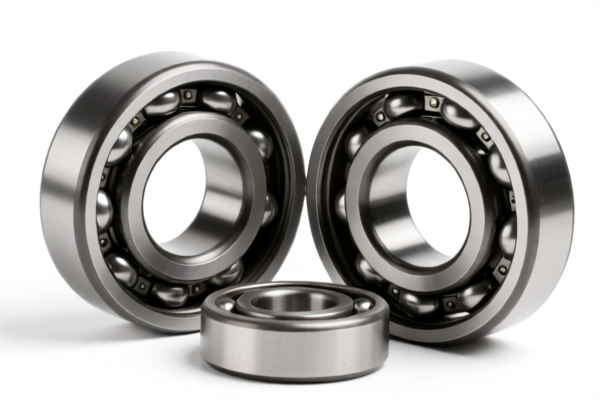
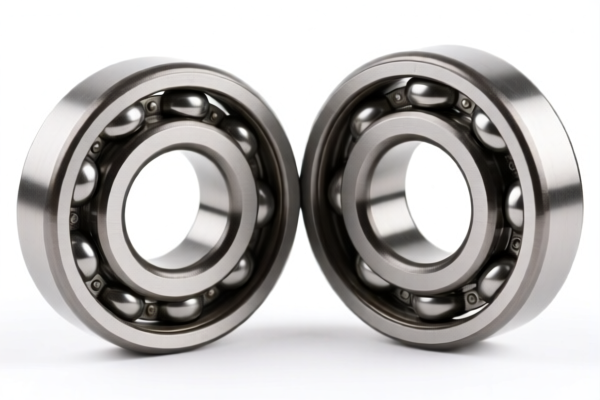
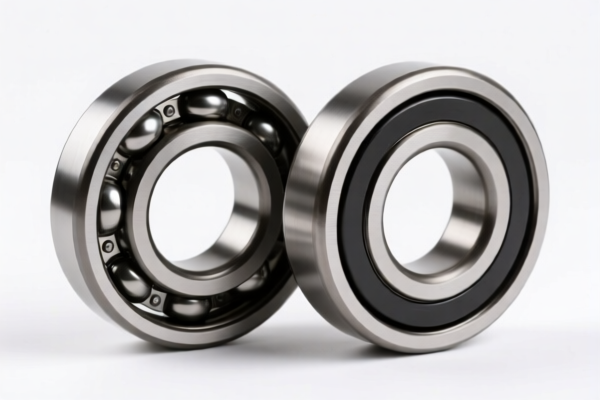
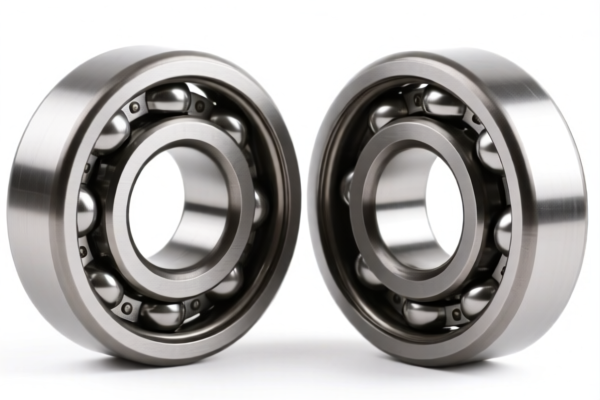
AI Analysis
🔩 Bearing Housing (Bearings & Precision Parts)
🌐 HS Code Reference & Customs Clearance Guide | 2026 Latest Tariff Analysis | Professional-Level Entry Strategy 📌 I. Product Definition & Classification: Do You Really Understand "Bearing Housing"?
A Bearing Housing is a critical mechanical component used to support a rotating shaft or journal. In international trade, its classification depends heavily on its primary function (is it a bearing itself?) and its material composition.
Bearings (Precision Rolling Elements): Ball bearings, roller bearings, and needle rollers designed to reduce friction. These generally fall under Chapter 84. Housings/Parts (Structural/Support): Packed bearings, split bearings, or housings made of steel/iron that do not function as the rolling element itself. These often fall under Chapter 73 or specific subheadings in 8482.
⚠️ Key Distinction Point: - If the product is a self-contained rolling bearing (balls/rings/rollers) →归入 8482.10 series. - If the product is a steel housing/casing/pack without rolling elements, or a generic steel part supporting bearings → 归入 7326 series.
📦 II. HS Code Classification Details (2026 Latest Tariff Authority Mapping)
Based on the provided data, there are 5 potential HS Codes for "Bearing Housing" depending on the specific structural definition and material.
| HS Code | Product Description | Application Scenario | Material/Type |
|--------|--------------------------|----------|
| 8482.10.50.12 | Bearings, Classification Based on Core Name Consistency | Standard ball bearings or integrated bearing units where the name matches core bearing definitions. | Rolling Bearing |
| 8482.10.50.68 | Bearings, Classification Based on Ball Bearing Type & No Material Conflict | Ball bearings identified by type, using a fallback principle when no other specific material conflict exists. | Ball Bearing |
| 8482.10.50.04 | Bearings, Classification Based on Ball Bearing Name & Spare Parts Attribute | Treated as a spare part or accessory to a ball bearing system. | Ball Bearing / Spare Part |
| 7326.19.00.80 | Bearings, Classification Based on Steel Material & Spare Parts Attribute | Steel housing or casing, classified as a steel manufactured article due to material dominance. | Steel Spare Part |
| 7326.90.86.88 | Bearings, Classification Based on Other Iron/Steel Articles | Generic iron/steel制品 (articles) inferred as bearing housing/support structures. | Iron/Steel Article |
🔍 Critical Reminder: - Chapter 84 (Codes ending in 8482...) implies the item is considered a functional bearing or primary bearing component. Tax rate is 44.0%. - Chapter 73 (Codes ending in 7326...) implies the item is a structural steel/iron part (housing/casing). Tax rate is 87.9%. - Mistake Warning: Misclassifying a steel housing as a bearing (or vice versa) leads to significant duty discrepancies.
💰 III. 2026 Latest Tariff Rate Breakdown (Including Surtaxes & Policy Add-ons)
✅ Applicable Country: United States (US)
✅ Origin: China (CN)
✅ Effective Time: Current Trade Policies (Section 301, Section 232, etc.)
🎯 1. 8482.10.50.12 / .68 / .04 —— Bearings (Ball/Rolling Type)
| Item | Content |
|---|---|
| Base Tariff | 9.0% |
| Section 301 Surtax | +25.0% (Trade War Tariff) |
| Section 122 Tariff | +10.0% (Specific Trade Remedy) |
| Total Effective Rate | 44.0% |
| Calculation Basis | CIF Value × 44% |
| De Minimis Exemption? | ❌ NO (Denied for Chinese origin under these sections) |
| Legal Basis Path | USITC:8482.10 → Section 301 Footnote → Section 122 Footnote |
📌 Explanation: - These codes are grouped together in the source data with identical tax structures. - Total Tax = 44%. This is a high tariff burden. - The 25% is the standard Section 301 tariff on industrial machinery/parts. - The 10% is the additional Section 122 tariff on certain steel/aluminum or specific mechanical items.
🎯 2. 7326.19.00.80 / 7326.90.86.88 —— Steel/Iron Housing & Parts
| Item | Content |
|---|---|
| Base Tariff | 2.9% |
| Section 301 Surtax | +25.0% (Trade War Tariff) |
| Section 122 Tariff | +10.0% (Specific Trade Remedy) |
| Steel/Aluminum/Copper Surtax | +50.0% (Section 232 Tariff on Steel Products) |
| Total Effective Rate | 87.9% |
| Calculation Basis | CIF Value × 87.9% |
| De Minimis Exemption? | ❌ NO |
| Legal Basis Path | USITC:7326 → Section 301 → Section 122 → Section 232 (Steel) |
📌 Explanation: - Total Tax = 87.9%. This is an extremely high tariff. - The base rate is low (2.9%), but the Section 232 Tariff (+50%) applies to steel products. - Since "Bearing Housing" is often a steel casing, it triggers this massive 50% add-on. - Combined with 25% (Sec 301) and 10% (Sec 122), the total hits nearly 88%.
🛠️ IV. Customs Clearance Practical Advice (Real-World Pitfall Guide)
✅ 1. Preparation Checklist (All Documents Required)
| Document | Required? | Description |
|---|---|---|
| ✅ Product Specification Sheet | ✔️ | Must specify: Material (Steel/Aluminum/Plastic), Function (Housing vs. Bearing), Dimensions. |
| ✅ Technical Drawings | ✔️ | Crucial to distinguish if it contains rolling elements (Bearing) or is just a case (Housing). |
| ✅ Product Photos | ✔️ | Clear shots of the item, showing if balls/rollers are present inside. |
| ✅ Commercial Invoice | ✔️ | Must clearly state: "Bearing Housing (Steel Casing)" or "Ball Bearing Unit". Do not use vague terms. |
| ✅ Bill of Lading | ✔️ | Ensure weight and volume match the invoice. |
| ✅ Origin Certificate | ✔️ | Proof of Chinese origin is likely; triggers surtaxes. |
✅ 2. Declaration Strategy (Key Mnemonics)
🔥 "Check Material, Check Function, Avoid the 50% Trap!"
| Scenario | Correct HS Code | Why? | Risk if Wrong |
|---|---|---|---|
| Item is a Ball Bearing | 8482.10.xxxx |
It is a precision rolling element. | Misclassifying as Steel (7326) = 87.9% duty instead of 44%. |
| Item is a Steel Housing/Casing | 7326.xxxx |
It is a structural steel part. | Misclassifying as Bearing (8482) = 44% duty instead of 87.9%. |
| Item is a Packed Bearing | 8482.10.xxxx |
Packed bearings are classified as bearings. | See above. |
| Item is a Plastic Housing | Check 3926 or 8482 |
If non-metallic, Section 232 (Steel) may not apply. | Critical! If not steel, you might save the 50% surtax. |
💡 Pro Tip: - If your bearing housing is made of Plastic or Aluminum, confirm if Section 232 (Steel) applies. (Note: Section 232 applies to Steel and Aluminum. Aluminum also has a 25% surtax in many cases, but the 50% steel-specific penalty might differ. Verify material carefully!). - Do not declare as "Bearing" if it is just a "Housing" unless it is a packed bearing unit. Customs can seize goods for misclassification.
✅ 3. Special Case Handling
| Situation | Advice |
|---|---|
| Steel Housing | Expect 87.9% total tax. Factor this into cost. Consider if aluminum (25% Sec 301 + 25% Sec 232?) or plastic (0-5% base) is a better option. |
| Plastic Housing | Check Chapter 39. Likely no Section 232. Tax may be significantly lower (check base + 301). |
| Aluminum Housing | Section 232 applies to Aluminum (+25%). Section 301 (+25%). Section 122 (+10%). Base ~5-7%. Total ~65-70%? (Verify with latest Al rules). Still high, but maybe lower than 87.9%. |
| Packed Bearing | Always declare under 8482. Do not split parts. |
🌍 V. Global Market Comparison (2026 Outlook)
| Market | Likely HS Code | Est. Total Tax (China Origin) | Notes |
|---|---|---|---|
| 🇺🇸 USA | 8482.10 or 7326 |
44% (Bearing) / 87.9% (Steel Housing) | Highest cost due to multiple surtaxes (301+232+122). |
| 🇨🇳 China | 8482.10 or 7326 |
~5-10% | No Section 301/232. Standard MFN rate. |
| 🇪🇺 EU | 8482.10 or 7326 |
~2-5% | No broad Section 301 equivalents. Retaliatory tariffs possible. |
| 🇬🇧 UK | 8482.10 or 7326 |
~2-5% | Similar to EU. |
| 🇻🇳 Vietnam | 8482.10 |
0-5% | If assembled/substantially transformed in Vietnam, may avoid US tariffs. |
📌 Conclusion: - USA is the most expensive market for bearing components due to overlapping tariffs. - Steel Housing (7326) is the most expensive category due to the 50% Section 232 steel tariff. - Strategic Suggestion: If exporting to the US, consider if the housing can be made of Plastic or Aluminum (verify Al tariffs) to potentially reduce the 87.9% steel penalty. Alternatively, substantial transformation in a third country (e.g., Vietnam, Mexico) may be required to bypass US origin rules.
📌 VI. Common Errors & Pitfalls (Blood & Tears Lessons)
❌ Error 1: Declaring a Steel Housing as a Bearing (8482) |
👉 Consequence: You pay 44% instead of 87.9%. Wait, this looks like a benefit!
👉 Reality Check: Customs will inspect. If it's clearly a housing (no balls, just a case), they will reclassify it to 7326 and charge 87.9% + penalties + back taxes. Do not try to evade steel tariffs by mislabeling.
❌ Error 2: Declaring a Bearing as a Steel Part (7326) |
👉 Consequence: You pay 87.9% instead of 44%. Overpayment! |
👉 Reality: Always ensure accurate classification. If it’s a bearing, use 8482.
❌ Error 3: Ignoring the Section 122 (10%) |
👉 Consequence: Many brokers forget the 10% Section 122 add-on. |
👉 Reality: It applies to most 8482 and 7326 items from China. Budget for it.
❌ Error 4: Assuming Aluminum Housings are tax-free | 👉 Consequence: Section 232 applies to Aluminum too (+25%). | 👉 Reality: Check if Aluminum housing falls under the 25% Section 301 + 25% Section 232 + 10% Section 122. Total could be ~60-70%.
✅ Correct Approach:
"Bearing Housing, Steel, Split Type, Model XYZ. Not a bearing. Not a packed bearing."
OR
"Ball Bearing Unit, Sealed, Model ABC. Includes rolling elements."
🎯 VII. Conclusion: Professional Declaration, Cost Control, Efficiency!
🎯 Remember the Mnemonic:
🔹 "Steel Housing = 88% Pain. Bearing = 44% Pain. Plastic = Maybe Lower. Always Verify!" 🔹 "Material Determines the 50%. Function Determines the 25%."
📌 Pro Tip:
- If you are a US Importer, calculate the Landed Cost carefully. 87.9% duty can kill margins.
- Consider Supply Chain Diversification: Moving assembly to Vietnam, Thailand, or Mexico can avoid US Section 301/232 tariffs.
- Consult a Customs Broker: Before shipping, get a Binding Tariff Information (BTI) or US Customs Ruling for your specific item design.
📣 Immediate Action:
📞 Contact your Customs Broker with product photos and material specs.
🚀 Optimize your HS Code selection to avoid the 87.9% steel trap if possible.
💼 Protect your profit margins with precise classification!
✨ Professional Customs Clearance Starts with Accurate Classification!
💼 Every percentage point of duty matters in 2026!
Customer Reviews
About HS Code Classification
The Harmonized System (HS) is an internationally standardized nomenclature developed by the World Customs Organization (WCO) to classify traded products. Over 200 countries use the HS system as the basis for customs tariffs, trade statistics, and import/export regulations.
Each HS code follows a hierarchical structure:
- Chapter (2 digits) — Broad category of goods (e.g., Chapter 84: Machinery and Mechanical Appliances)
- Heading (4 digits) — More specific grouping within the chapter
- Subheading (6 digits) — Internationally standardized breakdown, used by all WCO member countries
- National subdivisions (8-10 digits) — Country-specific extensions for further classification, such as US HTSUS 10-digit codes
Correct HS code classification is essential for smooth customs clearance, accurate duty payment, and compliance with trade regulations. Misclassification can lead to customs delays, overpayment of duties, or penalties.
When importing from CN to US, the applicable tariff rates may include:
- Most-Favored-Nation (MFN) rate — The standard duty rate applied to WTO members
- General rate — Applied to countries without trade agreements
- Trade remedy duties — Additional tariffs such as Section 301 (anti-dumping), Section 232 (national security), or countervailing duties
The information provided on this page is for reference purposes only. For official classification, please consult with your local customs authority or a licensed customs broker.