Bias Tire for Passenger Cars (13 inch Rim Diameter)
CN → US| HS编码 | 关税税率 | 原产国 | 目的国 | 文档 |
|---|---|---|---|---|
| 4011101010 | 39.0% | CN | US | 官方文档 |
| 4011105000 | 38.4% | CN | US | 官方文档 |
商品图片
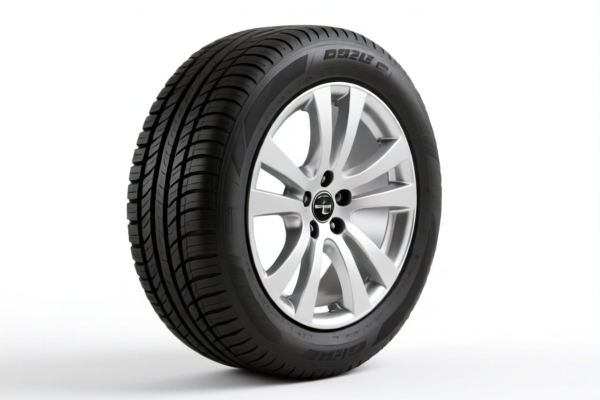
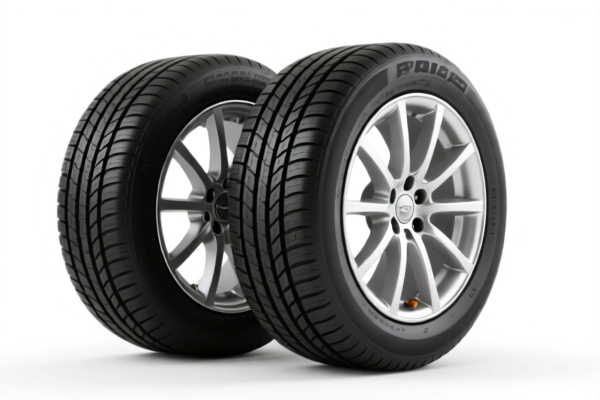
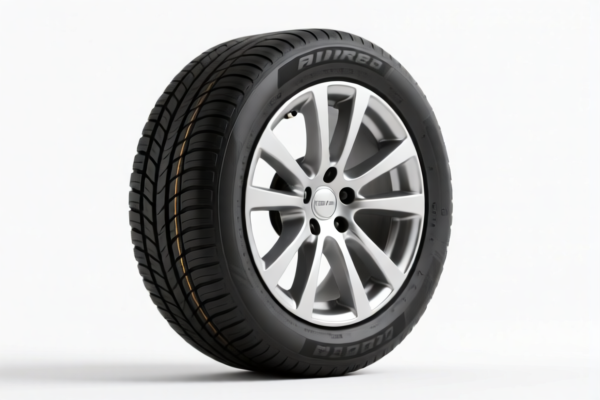
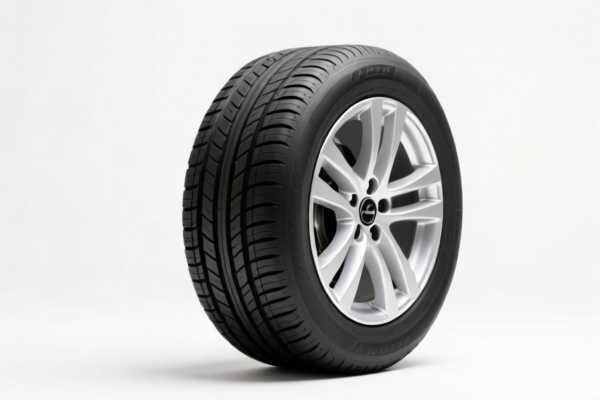
AI分析
🚗 Bias-Ply Tires for Passenger Cars (13-Inch Rim Diameter)
🌐 HS Code Reference & Customs Clearance Guide | 2026 Latest Tariff Analysis | Strategic Clearance Strategy
📌 Part 1: Product Definition & Classification: What Exactly Is a "Bias Tire"?
Bias-ply tires (also known as "cross-ply tires") are a type of pneumatic tire where the cord layers run diagonally across each other. Unlike radial tires (which are the industry standard for most modern cars), bias tires are characterized by: * Structure: Cord plies extend from bead to bead at an angle (typically 30–40 degrees) relative to the centerline. * Application: Commonly found in older vehicles, classic cars, heavy-duty trucks, agricultural machinery, and some racing cars. * Rim Size: The input specifies a 13-inch rim diameter (approx. 33.02 cm).
⚠️ Critical Classification Point:
- If the tire is Radial (plies run perpendicular to the centerline) → It falls under 4011.10.10.10.
- If the tire is Non-Radial (Bias) → It falls under 4011.10.50.00.
Note: In international trade, "Bias" is explicitly the opposite of "Radial." Misclassification here leads to severe penalties due to the massive tariff difference.
📦 Part 2: HS Code Classification Details (2026 Official Tariff Data)
Based on the provided data, there are only two relevant HS codes for new pneumatic tires for passenger cars with a 13-inch rim.
| HS Code | Product Description | Structure Type | Rim Diameter Constraint |
|---|---|---|---|
4011.10.10.10 |
New pneumatic tires, of rubber: Of a kind used on motor cars (including station wagons and racing cars): Radial | ✅ Radial | ≤ 13 inches (≤ 33.02 cm) |
4011.10.50.00 |
New pneumatic tires, of rubber: Of a kind used on motor cars (including station wagons and racing cars): Other | ❌ Non-Radial (Bias) | Any (including ≤ 13 inches) |
🔍 Key Insight:
- The user input specifies "Bias Tire."
- Therefore, the correct HS Code is4011.10.50.00("Other" implies non-radial/bias in this subheading).
- Do NOT use4011.10.10.10unless the tire is actually radial.
💰 Part 3: 2026 Latest Tariff Rate Breakdown (Detailed Tax Clauses)
✅ Applicable Country: United States (US)
✅ Origin: China (CN) (Implied by the presence of "Additional Tax" data)
✅ Validity: Current effective rates as per provided data
🎯 1. 4011.10.10.10 —— Radial Tires (≤ 13 Inches)
(Included for comparison only. NOT the correct code for Bias tires.)
| Item | Content |
|---|---|
| Base Tariff Rate | 4.0% |
| Additional Tariff (Section 301) | +25.0% |
| Total Effective Tax Rate | 29.0% |
| Calculation Basis | CIF Value × 29% |
| De Minimis Exemption | ❌ Not Eligible (Deemed de minimis: No) |
| Legal Basis Path | HTSUS: 4011.10.10.10 → Section 301 Footnote |
📌 Why it matters:
- Even radial tires face a 29% duty burden.
- If you mistakenly classify a Bias tire as Radial, you might underpay by 29% vs 0%, leading to back taxes + penalties.
🎯 2. 4011.10.50.00 —— Bias/Non-Radial Tires (Your Product)
| Item | Content |
|---|---|
| Base Tariff Rate | 0.0% |
| Additional Tariff (Section 301) | 0.0% |
| Total Effective Tax Rate | 0.0% |
| Calculation Basis | CIF Value × 0% = $0 |
| De Minimis Exemption | ❌ Not Eligible (Even if tax is 0, de minimis rules may still apply for procedural reasons, but financially it's free) |
| Legal Basis Path | HTSUS: 4011.10.50.00 → No Section 301 Footnote |
📌 Why it matters:
- Bias tires enjoy 0% total duty for Chinese origin in this specific subheading.
- This is a strategic advantage over radial tires (29%).
- However, customs officers scrutinize "Other" classifications heavily. You MUST prove the tire is non-radial.
🛠️ Part 4: Customs Clearance Practical Advice (Avoiding Pitfalls)
✅ 1. Essential Documentation Checklist
| Document | Required? | Reason |
|---|---|---|
| ✅ Product Specification Sheet | ✔️ | Must explicitly state "Bias Ply" or "Cross-Ply" construction. |
| ✅ Technical Diagram/Cross-Section | ✔️ | Visual proof of diagonal cord layers vs. radial layers. |
| ✅ Label Photos | ✔️ | Show sidewall markings (e.g., "Bias," "Non-Radial," or specific tread/cord type codes). |
| ✅ Commercial Invoice | ✔️ | Clearly state: "New Pneumatic Bias Tire for Passenger Cars, 13-inch, Non-Radial Construction." |
| ✅ Packing List | ✔️ | Match quantities and weights precisely. |
✅ 2. Declaration Tips (Golden Rules)
🔥 "Bias is 'Other,' Radial is '10.10.' Prove the angle!"
| Scenario | Correct Declaration | Wrong Declaration | Consequence |
|---|---|---|---|
| Bias Tire | HS Code: 4011.10.50.00Desc: "Bias tire, non-radial" |
HS Code: 4011.10.10.10Desc: "Car tire" |
⚠️ Overpayment Risk: If declared as radial, you pay 29%. If correctly Bias, you pay 0%. |
| Radial Tire | HS Code: 4011.10.10.10Desc: "Radial tire" |
HS Code: 4011.10.50.00 |
⚠️ Penalty Risk: Undervaluation of tax. Customs may fine for misclassification. |
| Ambiguous Tire | Provide Cross-section diagram | Just write "Tire" | 🚫 Customs Hold: Lack of detail leads to classification dispute and delays. |
✅ 3. Special Considerations for Bias Tires
| Situation | Recommendation |
|---|---|
| Vintage/Classic Car Tires | Clearly mark as "For Restoration/Classic Vehicles" to emphasize non-standard (non-radial) nature. |
| Racing Car Bias Tires | Still fall under 4011.10.50.00 if non-radial. Provide race series certification if applicable. |
| Mixed Shipments | If shipping both Radial and Bias tires, separate line items in the commercial invoice to avoid confusion. |
| Origin Marking | Ensure each tire is marked "Made in China" to align with the tariff data provided. |
🌍 Part 5: Global Market Comparison (2026 Snapshot)
| Country/Region | Recommended HS Code | Tariff (China Origin) | Notes |
|---|---|---|---|
| 🇺🇸 United States | 4011.10.50.00 |
0% | Best market for Bias tires due to 0% duty. Radial tires face 29%. |
| 🇨🇳 China (Import) | Check Local Tariff | Varies | Bias tires may have different duties in China. |
| 🇪🇺 European Union | 4011.10 |
~6% | No Section 301 equivalent, but standard EU tariff applies. |
| 🇯🇵 Japan | 4011.10 |
~10% | Standard tariff applies. |
📌 Conclusion:
- The US is the most favorable market for Bias tires from China (0% duty).
- For Radial tires, the US market is heavily taxed (29%).
- Strategy: If possible, ensure your supply chain leverages Bias construction for the US market to save 29% in duties.
📌 Part 6: Common Mistakes & Pitfalls (Blood Lessons)
❌ Mistake 1: Assuming all car tires are "Radial"
👉 Result: If you declare Bias tires as Radial (4011.10.10.10), you pay 29% tax unnecessarily.
👉 Fix: Always verify construction type. Bias = Non-Radial = "Other" (4011.10.50.00).
❌ Mistake 2: Vague Description on Invoice
👉 Result: Customs asks for technical drawings, causing 7–14 day delays.
👉 Fix: Use precise language: "Bias-ply, non-radial, 13-inch rim."
❌ Mistake 3: Confusing "13-inch" Constraint
👉 Result: Radial tires >13 inches fall under different codes.
👉 Fix: Confirm rim diameter. For Bias tires, rim size doesn't change the "Other" classification, but always declare it for accuracy.
✅ Correct Declaration Example:
"New Pneumatic Bias Tire for Passenger Cars, 13-inch Rim Diameter, Non-Radial Construction, Made in China, Model XYZ, DOT Certified"
🎯 Part 7: Conclusion: Smart Classification Saves 29%
🎯 Key Takeaway:
🔹 Bias Tire =
4011.10.50.00= 0% Tax
🔹 Radial Tire =4011.10.10.10= 29% Tax🔹 "Structure is King: Don't guess. Prove it's Bias to save 29%!"
📌 Pro Tip:
- Request a Pre-Ruling from US Customs if this is a high-volume shipment.
- Keep technical drawings of the tire's ply angle in your files.
- Profit Margin Boost: For Bias tires, the 0% duty is a significant competitive advantage over radial alternatives in the US market.
📣 Immediate Action Required:
📞 Verify Construction: Confirm with your manufacturer: "Are these tires Bias or Radial?"
📝 Update Invoice: If Bias, change HS Code to4011.10.50.00and description to include "Non-Radial/Bias."
🚀 Clear Customs Smoothly: Avoid 29% tax leakage by accurate classification.
✨ Precision in Classification = Profit in Your Pocket!
💼 Every percentage point counts in global trade.
用户评价
关于 HS 编码归类
协调制度(HS)是由世界海关组织(WCO)制定的国际贸易商品分类标准。全球 200 多个国家采用 HS 系统作为海关关税、贸易统计和进出口监管的基础。
每个 HS 编码遵循以下层级结构:
- 章(2 位)——商品大类(例如:第 84 章:机器和机械设备)
- 品目(4 位)——章内的更具体分类
- 子目(6 位)——国际通用细分,所有 WCO 成员国统一使用
- 本国细分(8-10 位)——各国自行扩展的细分编码,如美国 HTSUS 10 位编码
正确的 HS 编码归类对于顺利通关、准确缴纳关税和遵守贸易法规至关重要。错误归类可能导致海关延误、多缴关税或罚款。
从CN进口到US时,适用的关税税率可能包括:
- 最惠国(MFN)税率——适用于 WTO 成员国的标准关税税率
- 普通税率——适用于无贸易协定国家
- 贸易救济关税——附加关税,如 301 条款(反倾销)、232 条款(国家安全)或反补贴税
本页内容仅供参考。如需正式归类,请咨询当地海关或持牌报关代理。