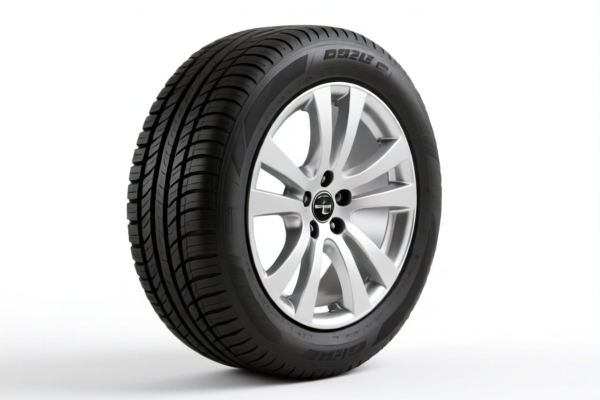
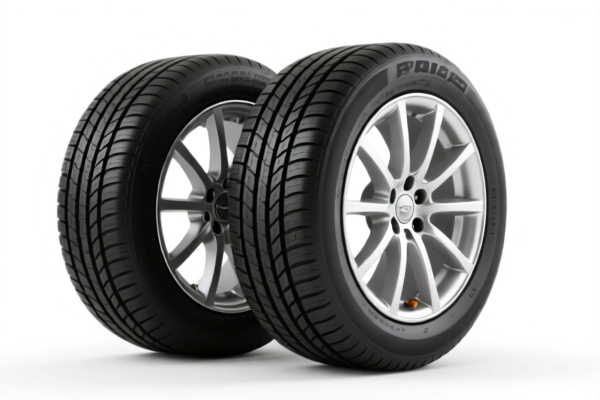
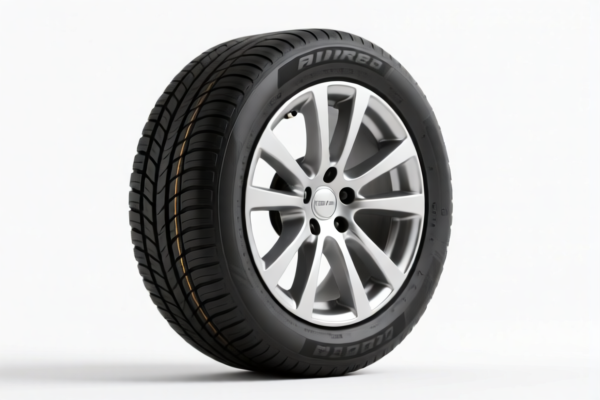
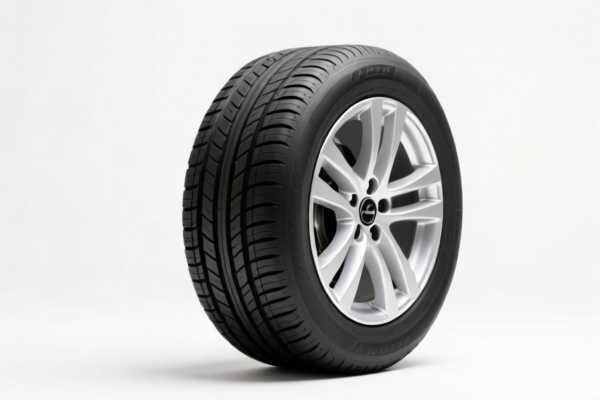
Bias Tire for Passenger Cars (13 inch Rim Diameter)
CN → US| HS Code | Tariff Rate | Origin | Destination | Doc |
|---|---|---|---|---|
| 4011101010 | 39.0% | CN | US | Official Doc |
| 4011105000 | 38.4% | CN | US | Official Doc |
Product Images
AI Analysis
🚗 Bias-Ply Tires for Passenger Cars (13-Inch Rim Diameter)
🌐 HS Code Reference & Customs Clearance Guide | 2026 Latest Tariff Analysis | Strategic Clearance Strategy
📌 Part 1: Product Definition & Classification: What Exactly Is a "Bias Tire"?
Bias-ply tires (also known as "cross-ply tires") are a type of pneumatic tire where the cord layers run diagonally across each other. Unlike radial tires (which are the industry standard for most modern cars), bias tires are characterized by: * Structure: Cord plies extend from bead to bead at an angle (typically 30–40 degrees) relative to the centerline. * Application: Commonly found in older vehicles, classic cars, heavy-duty trucks, agricultural machinery, and some racing cars. * Rim Size: The input specifies a 13-inch rim diameter (approx. 33.02 cm).
⚠️ Critical Classification Point:
- If the tire is Radial (plies run perpendicular to the centerline) → It falls under 4011.10.10.10.
- If the tire is Non-Radial (Bias) → It falls under 4011.10.50.00.
Note: In international trade, "Bias" is explicitly the opposite of "Radial." Misclassification here leads to severe penalties due to the massive tariff difference.
📦 Part 2: HS Code Classification Details (2026 Official Tariff Data)
Based on the provided data, there are only two relevant HS codes for new pneumatic tires for passenger cars with a 13-inch rim.
| HS Code | Product Description | Structure Type | Rim Diameter Constraint |
|---|---|---|---|
4011.10.10.10 |
New pneumatic tires, of rubber: Of a kind used on motor cars (including station wagons and racing cars): Radial | ✅ Radial | ≤ 13 inches (≤ 33.02 cm) |
4011.10.50.00 |
New pneumatic tires, of rubber: Of a kind used on motor cars (including station wagons and racing cars): Other | ❌ Non-Radial (Bias) | Any (including ≤ 13 inches) |
🔍 Key Insight:
- The user input specifies "Bias Tire."
- Therefore, the correct HS Code is4011.10.50.00("Other" implies non-radial/bias in this subheading).
- Do NOT use4011.10.10.10unless the tire is actually radial.
💰 Part 3: 2026 Latest Tariff Rate Breakdown (Detailed Tax Clauses)
✅ Applicable Country: United States (US)
✅ Origin: China (CN) (Implied by the presence of "Additional Tax" data)
✅ Validity: Current effective rates as per provided data
🎯 1. 4011.10.10.10 —— Radial Tires (≤ 13 Inches)
(Included for comparison only. NOT the correct code for Bias tires.)
| Item | Content |
|---|---|
| Base Tariff Rate | 4.0% |
| Additional Tariff (Section 301) | +25.0% |
| Total Effective Tax Rate | 29.0% |
| Calculation Basis | CIF Value × 29% |
| De Minimis Exemption | ❌ Not Eligible (Deemed de minimis: No) |
| Legal Basis Path | HTSUS: 4011.10.10.10 → Section 301 Footnote |
📌 Why it matters:
- Even radial tires face a 29% duty burden.
- If you mistakenly classify a Bias tire as Radial, you might underpay by 29% vs 0%, leading to back taxes + penalties.
🎯 2. 4011.10.50.00 —— Bias/Non-Radial Tires (Your Product)
| Item | Content |
|---|---|
| Base Tariff Rate | 0.0% |
| Additional Tariff (Section 301) | 0.0% |
| Total Effective Tax Rate | 0.0% |
| Calculation Basis | CIF Value × 0% = $0 |
| De Minimis Exemption | ❌ Not Eligible (Even if tax is 0, de minimis rules may still apply for procedural reasons, but financially it's free) |
| Legal Basis Path | HTSUS: 4011.10.50.00 → No Section 301 Footnote |
📌 Why it matters:
- Bias tires enjoy 0% total duty for Chinese origin in this specific subheading.
- This is a strategic advantage over radial tires (29%).
- However, customs officers scrutinize "Other" classifications heavily. You MUST prove the tire is non-radial.
🛠️ Part 4: Customs Clearance Practical Advice (Avoiding Pitfalls)
✅ 1. Essential Documentation Checklist
| Document | Required? | Reason |
|---|---|---|
| ✅ Product Specification Sheet | ✔️ | Must explicitly state "Bias Ply" or "Cross-Ply" construction. |
| ✅ Technical Diagram/Cross-Section | ✔️ | Visual proof of diagonal cord layers vs. radial layers. |
| ✅ Label Photos | ✔️ | Show sidewall markings (e.g., "Bias," "Non-Radial," or specific tread/cord type codes). |
| ✅ Commercial Invoice | ✔️ | Clearly state: "New Pneumatic Bias Tire for Passenger Cars, 13-inch, Non-Radial Construction." |
| ✅ Packing List | ✔️ | Match quantities and weights precisely. |
✅ 2. Declaration Tips (Golden Rules)
🔥 "Bias is 'Other,' Radial is '10.10.' Prove the angle!"
| Scenario | Correct Declaration | Wrong Declaration | Consequence |
|---|---|---|---|
| Bias Tire | HS Code: 4011.10.50.00Desc: "Bias tire, non-radial" |
HS Code: 4011.10.10.10Desc: "Car tire" |
⚠️ Overpayment Risk: If declared as radial, you pay 29%. If correctly Bias, you pay 0%. |
| Radial Tire | HS Code: 4011.10.10.10Desc: "Radial tire" |
HS Code: 4011.10.50.00 |
⚠️ Penalty Risk: Undervaluation of tax. Customs may fine for misclassification. |
| Ambiguous Tire | Provide Cross-section diagram | Just write "Tire" | 🚫 Customs Hold: Lack of detail leads to classification dispute and delays. |
✅ 3. Special Considerations for Bias Tires
| Situation | Recommendation |
|---|---|
| Vintage/Classic Car Tires | Clearly mark as "For Restoration/Classic Vehicles" to emphasize non-standard (non-radial) nature. |
| Racing Car Bias Tires | Still fall under 4011.10.50.00 if non-radial. Provide race series certification if applicable. |
| Mixed Shipments | If shipping both Radial and Bias tires, separate line items in the commercial invoice to avoid confusion. |
| Origin Marking | Ensure each tire is marked "Made in China" to align with the tariff data provided. |
🌍 Part 5: Global Market Comparison (2026 Snapshot)
| Country/Region | Recommended HS Code | Tariff (China Origin) | Notes |
|---|---|---|---|
| 🇺🇸 United States | 4011.10.50.00 |
0% | Best market for Bias tires due to 0% duty. Radial tires face 29%. |
| 🇨🇳 China (Import) | Check Local Tariff | Varies | Bias tires may have different duties in China. |
| 🇪🇺 European Union | 4011.10 |
~6% | No Section 301 equivalent, but standard EU tariff applies. |
| 🇯🇵 Japan | 4011.10 |
~10% | Standard tariff applies. |
📌 Conclusion:
- The US is the most favorable market for Bias tires from China (0% duty).
- For Radial tires, the US market is heavily taxed (29%).
- Strategy: If possible, ensure your supply chain leverages Bias construction for the US market to save 29% in duties.
📌 Part 6: Common Mistakes & Pitfalls (Blood Lessons)
❌ Mistake 1: Assuming all car tires are "Radial"
👉 Result: If you declare Bias tires as Radial (4011.10.10.10), you pay 29% tax unnecessarily.
👉 Fix: Always verify construction type. Bias = Non-Radial = "Other" (4011.10.50.00).
❌ Mistake 2: Vague Description on Invoice
👉 Result: Customs asks for technical drawings, causing 7–14 day delays.
👉 Fix: Use precise language: "Bias-ply, non-radial, 13-inch rim."
❌ Mistake 3: Confusing "13-inch" Constraint
👉 Result: Radial tires >13 inches fall under different codes.
👉 Fix: Confirm rim diameter. For Bias tires, rim size doesn't change the "Other" classification, but always declare it for accuracy.
✅ Correct Declaration Example:
"New Pneumatic Bias Tire for Passenger Cars, 13-inch Rim Diameter, Non-Radial Construction, Made in China, Model XYZ, DOT Certified"
🎯 Part 7: Conclusion: Smart Classification Saves 29%
🎯 Key Takeaway:
🔹 Bias Tire =
4011.10.50.00= 0% Tax
🔹 Radial Tire =4011.10.10.10= 29% Tax🔹 "Structure is King: Don't guess. Prove it's Bias to save 29%!"
📌 Pro Tip:
- Request a Pre-Ruling from US Customs if this is a high-volume shipment.
- Keep technical drawings of the tire's ply angle in your files.
- Profit Margin Boost: For Bias tires, the 0% duty is a significant competitive advantage over radial alternatives in the US market.
📣 Immediate Action Required:
📞 Verify Construction: Confirm with your manufacturer: "Are these tires Bias or Radial?"
📝 Update Invoice: If Bias, change HS Code to4011.10.50.00and description to include "Non-Radial/Bias."
🚀 Clear Customs Smoothly: Avoid 29% tax leakage by accurate classification.
✨ Precision in Classification = Profit in Your Pocket!
💼 Every percentage point counts in global trade.
Customer Reviews
About HS Code Classification
The Harmonized System (HS) is an internationally standardized nomenclature developed by the World Customs Organization (WCO) to classify traded products. Over 200 countries use the HS system as the basis for customs tariffs, trade statistics, and import/export regulations.
Each HS code follows a hierarchical structure:
- Chapter (2 digits) — Broad category of goods (e.g., Chapter 84: Machinery and Mechanical Appliances)
- Heading (4 digits) — More specific grouping within the chapter
- Subheading (6 digits) — Internationally standardized breakdown, used by all WCO member countries
- National subdivisions (8-10 digits) — Country-specific extensions for further classification, such as US HTSUS 10-digit codes
Correct HS code classification is essential for smooth customs clearance, accurate duty payment, and compliance with trade regulations. Misclassification can lead to customs delays, overpayment of duties, or penalties.
When importing from CN to US, the applicable tariff rates may include:
- Most-Favored-Nation (MFN) rate — The standard duty rate applied to WTO members
- General rate — Applied to countries without trade agreements
- Trade remedy duties — Additional tariffs such as Section 301 (anti-dumping), Section 232 (national security), or countervailing duties
The information provided on this page is for reference purposes only. For official classification, please consult with your local customs authority or a licensed customs broker.