Bicycle Seat Cover
CN → US| HS编码 | 关税税率 | 原产国 | 目的国 | 文档 |
|---|---|---|---|---|
| 4015900050 | 39.0% | CN | US | 官方文档 |
| 4015900010 | 39.0% | CN | US | 官方文档 |
| 3926904800 | 13.4% | CN | US | 官方文档 |
| 3926909989 | 22.8% | CN | US | 官方文档 |
| 4015900050 | 39.0% | CN | US | 官方文档 |
商品图片
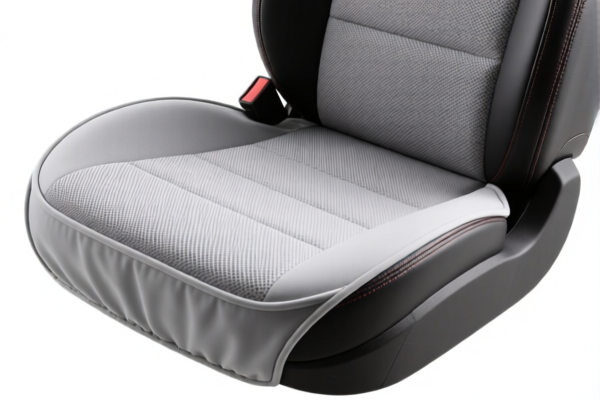
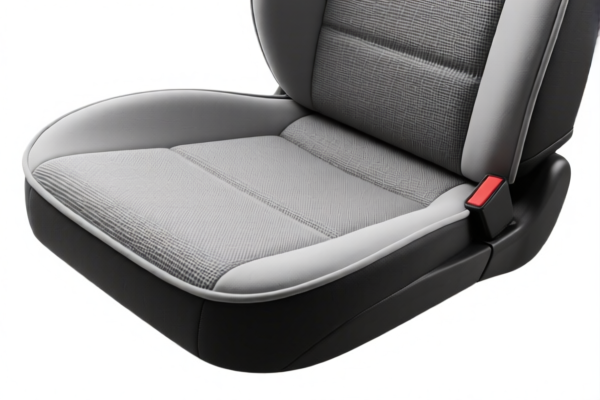
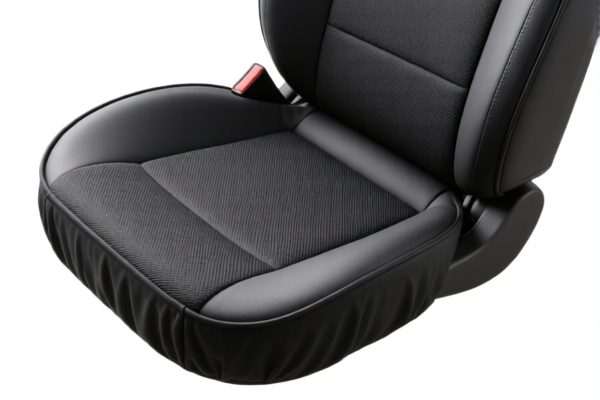
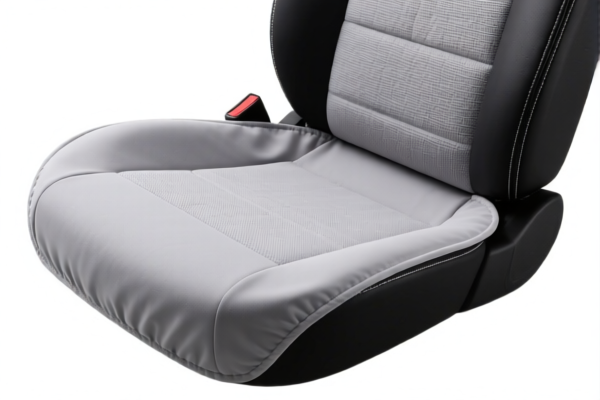
AI分析
🚴♂️ Bicycle Seat Cover (Saddle Cover)
🌐 HS Code Reference & Customs Clearance Guide | 2026 Latest Tariff Analysis | Professional Compliance Strategy
📌 I. Product Definition & Classification: What is a "Bicycle Seat Cover"?
A bicycle seat cover (often called a saddle cover) is an accessory designed to protect, cushion, or decorate the bicycle saddle. In international trade, classification depends heavily on material composition and functional purpose.
- Rubber/Synthetic Rubber Covers: Often made of PVC, thermoplastic rubber (TPR), or silicone. These are flexible, waterproof, and primarily used for weather protection.
- Plastic/Hard Shell Covers: Rigid covers made of ABS or other synthetic resins, less common for simple "covers" but possible for specific hard-shell accessories.
⚠️ Critical Distinction:
- If the material is Rubber or Synthetic Rubber (e.g., PVC, TPR) and used as an apparel accessory → Chapter 40
- If the material is Plastic (e.g., hard resin, non-rubberized plastic) → Chapter 39
📦 II. HS Code Classification Details (Based on Provided Data)
Based on the input data, there are 4 distinct HS Codes applicable depending on the specific material inference. Note that two codes are duplicates in the provided list, so we consolidate them into 3 unique categories.
| HS Code | Product Description | Material Inference | Tax Rate (Total) |
|---|---|---|---|
4015.90.00.50 |
Other made-up articles of vulcanized rubber, apparel & accessories | Rubber / Synthetic Rubber (Vulcanized) | 39.0% |
4015.90.00.10 |
Other apparel accessories, vulcanized rubber | Rubber / Synthetic Rubber (Specific Accessory Category) | 39.0% |
3926.90.48.00 |
Other articles of plastic, protective/decorative | Plastic / Synthetic Resin (Protective/Decorative) | 13.4% |
3926.90.99.89 |
Other articles of plastic, not elsewhere specified | Plastic / Synthetic Material (General "Other") | 22.8% |
🔍 Key Insight:
- Rubber-based covers (4015.xx) face a higher total tariff (39%).
- Plastic-based covers (3926.xx) have a lower total tariff (13.4% - 22.8%), but the classification must strictly match "Plastic" and not "Rubber."
- Misclassification between Rubber (Ch 40) and Plastic (Ch 39) is a common audit risk.
💰 III. 2026 Tariff Rate Breakdown (Including Surcharge Policies)
✅ Applicable Country: United States (US)
✅ Origin: China (CN)
✅ Effective Date: Post-November 2025 (Current Policy)
🎯 1. 4015.90.00.50 & 4015.90.00.10 — Rubber/Synthetic Rubber Seat Covers
| Item | Detail |
|---|---|
| Base Tariff | 4.0% |
| USITC Surcharge (Section 301) | +25.0% |
| IEEPA Surcharge (Section 122) | +10.0% |
| Total Tariff Rate | 39.0% |
| De Minimis Exemption | ❌ Not Eligible (deny_de_minimis) |
| Legal Basis Path | Base: 4015 → USITC: 301-Clause → IEEPA: 122-Clause |
📌 Explanation:
- Rubber-based automotive/bicycle accessories from China are subject to Section 301 tariffs (25%) and Section 122 tariffs (10%).
- The 39% rate is significant and must be factored into landed cost calculations.
- Warning: These codes are considered "high-risk" for Section 301 compliance. Ensure the product is indeed classified under Chapter 40 (Rubber) and not Chapter 39 (Plastic) to avoid penalties if mislabeled.
🎯 2. 3926.90.48.00 — Plastic Protective/Decorative Seat Covers
| Item | Detail |
|---|---|
| Base Tariff | 3.4% |
| USITC Surcharge (Section 301) | 0.0% |
| IEEPA Surcharge (Section 122) | +10.0% |
| Total Tariff Rate | 13.4% |
| De Minimis Exemption | ❌ Not Eligible (deny_de_minimis) |
| Legal Basis Path | Base: 3926 → IEEPA: 122-Clause |
📌 Explanation:
- This code attracts a lower tariff (13.4%) because it is not subject to the 25% Section 301 surcharge (only the 10% IEEPA/122 surcharge applies).
- Crucial Condition: The product must be definitively classified as Plastic (e.g., rigid or non-vulcanized plastic) and not rubber. If the product is flexible PVC, customs may reclassify it as rubber (4015), leading to back taxes and fines.
🎯 3. 3926.90.99.89 — Other Plastic Articles (General)
| Item | Detail |
|---|---|
| Base Tariff | 5.3% |
| USITC Surcharge (Section 301) | +7.5% |
| IEEPA Surcharge (Section 122) | +10.0% |
| Total Tariff Rate | 22.8% |
| De Minimis Exemption | ❌ Not Eligible (deny_de_minimis) |
| Legal Basis Path | Base: 3926 → USITC: 301-Clause (7.5%) → IEEPA: 122-Clause |
📌 Explanation:
- This is a "catch-all" plastic category. It applies a 7.5% Section 301 surcharge (lower than the 25% for rubber) plus the 10% IEEPA surcharge.
- Suitable for seat covers made of specific plastic compositions not covered by3926.90.48.00.
🛠️ IV. Customs Clearance Practical Advice (Pitfall Avoidance Guide)
✅ 1. Essential Documentation Checklist
| Document | Required? | Purpose |
|---|---|---|
| ✅ Product Composition Statement | ✔️ | Must explicitly state material: "100% PVC (Plastic)" vs. "Vulcanized Rubber". This determines Ch 39 vs. Ch 40. |
| ✅ Product Photos | ✔️ | Show texture, flexibility, and any labels indicating material. |
| ✅ Commercial Invoice | ✔️ | Must use precise description: "Plastic Bicycle Saddle Cover" or "Rubber Bicycle Saddle Cover". |
| ✅ Packing List | ✔️ | Ensure no mixed HS codes in one shipment unless properly declared. |
| ✅ Certification | ✔️ | If applicable, provide PVC-free or Non-Toxic certificates (for Ch 39) or Rubber composition reports. |
✅ 2. Classification Strategy (Critical Decision Matrix)
| Material Type | Recommended HS Code | Total Tax | Risk Level |
|---|---|---|---|
| Soft, Flexible, Rubber-like (PVC/TPR) | 4015.90.00.50 |
39.0% | ⚠️ High (301 + 122) |
| Rigid Plastic or Non-Vulcanized Plastic | 3926.90.48.00 |
13.4% | ✅ Lower Tax |
| Other Plastic (Not Protective/Decorative Specific) | 3926.90.99.89 |
22.8% | ✅ Moderate |
🔥 Golden Rule:
"Check the Material! Rubber is Expensive (39%), Plastic is Cheaper (13-22%). But don't lie about material!"
- If you declare Plastic but it is Rubber, Customs may seize the goods or issue a penalty.
- If you declare Rubber but it is Plastic, you overpay taxes unnecessarily.
✅ 3. Special Case Handling
| Scenario | Recommendation |
|---|---|
| OEM Custom Colors | Provide color swatches and material certs to prove consistency. |
| Mixed Materials (e.g., Rubber Cover + Plastic Buckle) | Declare the principal component (usually the rubber cover). Do not split unless instructed. |
| Small B2C Orders (De Minimis) | ❌ Not Eligible. All listed codes are deny_de_minimis. You must pay duties. |
| Pre-Arrival Review Program (PARP) | ✅ Highly Recommended. Apply for a Binding Ruling if volume is high to lock in the HS Code and tax rate. |
🌍 V. Global Market Comparison (2026 Outlook)
| Country/Region | Preferred HS Code | Est. Total Tax (China Origin) | Notes |
|---|---|---|---|
| 🇺🇸 USA | 3926.90.48.00 (if plastic) |
13.4% | Avoid Ch 40 if possible due to 25% Section 301. |
| 🇨🇳 China | 3926.90.99.90 |
~5-7% | Lower base tariffs, no US-style surcharges. |
| 🇪🇺 EU | 3926.90.97 |
0-4% | Generally low duty, but strict REACH chemical compliance required. |
| 🇬🇧 UK | 3926.90.97 |
0-4% | Similar to EU post-Brexit. |
📌 Conclusion:
- US Market: The 25% Section 301 tariff on rubber products (4015) makes plastic alternatives (3926) significantly more cost-effective if the product composition allows.
- Strategy: If your product can be formulated as non-vulcanized plastic (e.g., TPE that is not classified as rubber), consider reclassifying to3926.90.48.00to save 25.6% in duties.
📌 VI. Common Errors & Pitfalls (Lessons Learned)
❌ Error 1: Declaring "Rubber Cover" as "Plastic Cover" to save taxes.
👉 Result: Customs inspection reveals rubber composition → Back taxes + 25% penalty + Potential seizure.
❌ Error 2: Using vague descriptions like "Bicycle Accessory" without material specification.
👉 Result: Customs assigns worst-case HS Code or holds shipment for classification review → Delays.
❌ Error 3: Assuming De Minimis ($800) applies.
👉 Result: All codes listed are denied de minimis. Small shipments still incur duties and processing fees.
✅ Correct Approach:
"Plastic Bicycle Saddle Cover, Waterproof, Non-Vulcanized, Model ABC, FCC/REACH Compliant"
OR
"Vulcanized Rubber Bicycle Saddle Cover, Black, Model XYZ"
🎯 VII. Conclusion: Smart Classification, Maximize Profit!
🎯 Remember the Key Takeaways:
🔹 Material is King: Rubber = 39% Tax, Plastic = 13-23% Tax.
🔹 No De Minimis: Even small orders pay full duty.
🔹 Documentation is Key: Prove your material to defend your HS Code.
📌 Pro Tip:
If you are shipping high volume, apply for a CBP Advance Ruling to lock in your HS Code. This prevents future disputes and allows for accurate budgeting.
📣 Immediate Action:
📞 Contact a Customs Broker to review your product’s material composition.
📄 Request a Material Test Report from your manufacturer.
🚀 Optimize your HS Code to ensure compliance and cost-efficiency!
✨ Professional Clearance, Starting with Accurate Classification!
💼 Every Dollar Saved in Duties is Pure Profit!
用户评价
关于 HS 编码归类
协调制度(HS)是由世界海关组织(WCO)制定的国际贸易商品分类标准。全球 200 多个国家采用 HS 系统作为海关关税、贸易统计和进出口监管的基础。
每个 HS 编码遵循以下层级结构:
- 章(2 位)——商品大类(例如:第 84 章:机器和机械设备)
- 品目(4 位)——章内的更具体分类
- 子目(6 位)——国际通用细分,所有 WCO 成员国统一使用
- 本国细分(8-10 位)——各国自行扩展的细分编码,如美国 HTSUS 10 位编码
正确的 HS 编码归类对于顺利通关、准确缴纳关税和遵守贸易法规至关重要。错误归类可能导致海关延误、多缴关税或罚款。
从CN进口到US时,适用的关税税率可能包括:
- 最惠国(MFN)税率——适用于 WTO 成员国的标准关税税率
- 普通税率——适用于无贸易协定国家
- 贸易救济关税——附加关税,如 301 条款(反倾销)、232 条款(国家安全)或反补贴税
本页内容仅供参考。如需正式归类,请咨询当地海关或持牌报关代理。