Bicycle Seat Cover
CN → US| HS Code | Tariff Rate | Origin | Destination | Doc |
|---|---|---|---|---|
| 4015900050 | 39.0% | CN | US | Official Doc |
| 4015900010 | 39.0% | CN | US | Official Doc |
| 3926904800 | 13.4% | CN | US | Official Doc |
| 3926909989 | 22.8% | CN | US | Official Doc |
| 4015900050 | 39.0% | CN | US | Official Doc |
Product Images
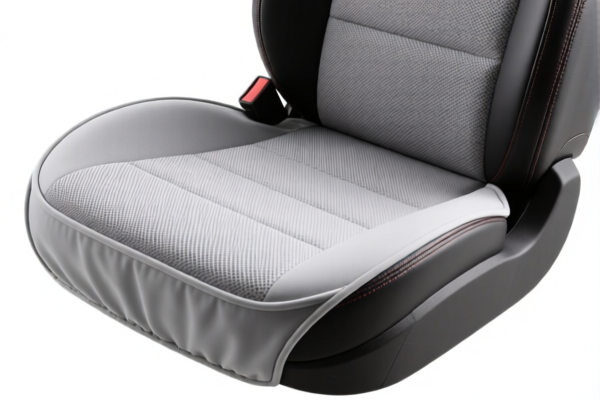
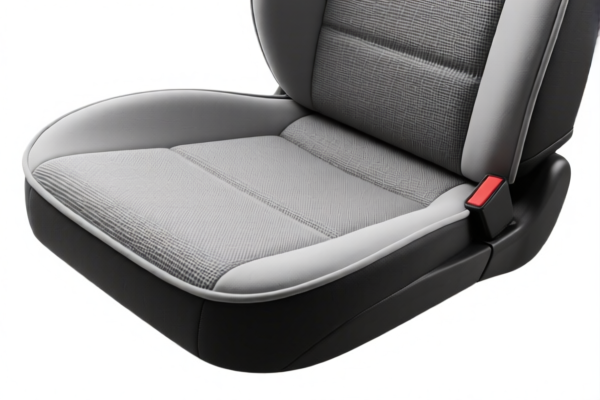
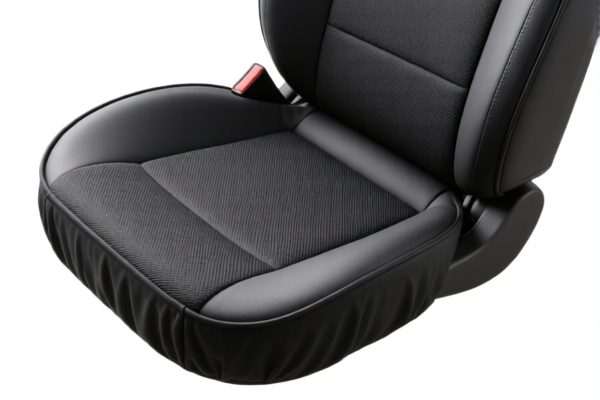
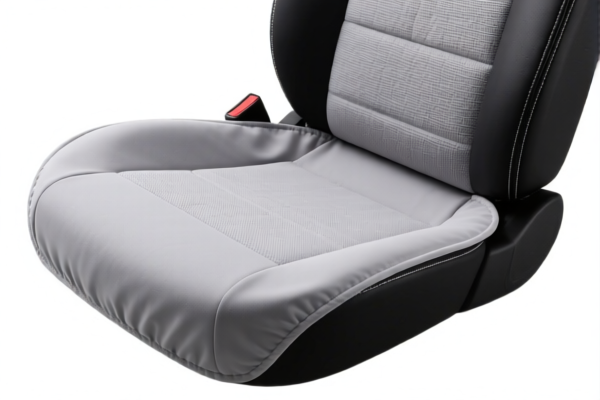
AI Analysis
🚴♂️ Bicycle Seat Cover (Saddle Cover)
🌐 HS Code Reference & Customs Clearance Guide | 2026 Latest Tariff Analysis | Professional Compliance Strategy
📌 I. Product Definition & Classification: What is a "Bicycle Seat Cover"?
A bicycle seat cover (often called a saddle cover) is an accessory designed to protect, cushion, or decorate the bicycle saddle. In international trade, classification depends heavily on material composition and functional purpose.
- Rubber/Synthetic Rubber Covers: Often made of PVC, thermoplastic rubber (TPR), or silicone. These are flexible, waterproof, and primarily used for weather protection.
- Plastic/Hard Shell Covers: Rigid covers made of ABS or other synthetic resins, less common for simple "covers" but possible for specific hard-shell accessories.
⚠️ Critical Distinction:
- If the material is Rubber or Synthetic Rubber (e.g., PVC, TPR) and used as an apparel accessory → Chapter 40
- If the material is Plastic (e.g., hard resin, non-rubberized plastic) → Chapter 39
📦 II. HS Code Classification Details (Based on Provided Data)
Based on the input data, there are 4 distinct HS Codes applicable depending on the specific material inference. Note that two codes are duplicates in the provided list, so we consolidate them into 3 unique categories.
| HS Code | Product Description | Material Inference | Tax Rate (Total) |
|---|---|---|---|
4015.90.00.50 |
Other made-up articles of vulcanized rubber, apparel & accessories | Rubber / Synthetic Rubber (Vulcanized) | 39.0% |
4015.90.00.10 |
Other apparel accessories, vulcanized rubber | Rubber / Synthetic Rubber (Specific Accessory Category) | 39.0% |
3926.90.48.00 |
Other articles of plastic, protective/decorative | Plastic / Synthetic Resin (Protective/Decorative) | 13.4% |
3926.90.99.89 |
Other articles of plastic, not elsewhere specified | Plastic / Synthetic Material (General "Other") | 22.8% |
🔍 Key Insight:
- Rubber-based covers (4015.xx) face a higher total tariff (39%).
- Plastic-based covers (3926.xx) have a lower total tariff (13.4% - 22.8%), but the classification must strictly match "Plastic" and not "Rubber."
- Misclassification between Rubber (Ch 40) and Plastic (Ch 39) is a common audit risk.
💰 III. 2026 Tariff Rate Breakdown (Including Surcharge Policies)
✅ Applicable Country: United States (US)
✅ Origin: China (CN)
✅ Effective Date: Post-November 2025 (Current Policy)
🎯 1. 4015.90.00.50 & 4015.90.00.10 — Rubber/Synthetic Rubber Seat Covers
| Item | Detail |
|---|---|
| Base Tariff | 4.0% |
| USITC Surcharge (Section 301) | +25.0% |
| IEEPA Surcharge (Section 122) | +10.0% |
| Total Tariff Rate | 39.0% |
| De Minimis Exemption | ❌ Not Eligible (deny_de_minimis) |
| Legal Basis Path | Base: 4015 → USITC: 301-Clause → IEEPA: 122-Clause |
📌 Explanation:
- Rubber-based automotive/bicycle accessories from China are subject to Section 301 tariffs (25%) and Section 122 tariffs (10%).
- The 39% rate is significant and must be factored into landed cost calculations.
- Warning: These codes are considered "high-risk" for Section 301 compliance. Ensure the product is indeed classified under Chapter 40 (Rubber) and not Chapter 39 (Plastic) to avoid penalties if mislabeled.
🎯 2. 3926.90.48.00 — Plastic Protective/Decorative Seat Covers
| Item | Detail |
|---|---|
| Base Tariff | 3.4% |
| USITC Surcharge (Section 301) | 0.0% |
| IEEPA Surcharge (Section 122) | +10.0% |
| Total Tariff Rate | 13.4% |
| De Minimis Exemption | ❌ Not Eligible (deny_de_minimis) |
| Legal Basis Path | Base: 3926 → IEEPA: 122-Clause |
📌 Explanation:
- This code attracts a lower tariff (13.4%) because it is not subject to the 25% Section 301 surcharge (only the 10% IEEPA/122 surcharge applies).
- Crucial Condition: The product must be definitively classified as Plastic (e.g., rigid or non-vulcanized plastic) and not rubber. If the product is flexible PVC, customs may reclassify it as rubber (4015), leading to back taxes and fines.
🎯 3. 3926.90.99.89 — Other Plastic Articles (General)
| Item | Detail |
|---|---|
| Base Tariff | 5.3% |
| USITC Surcharge (Section 301) | +7.5% |
| IEEPA Surcharge (Section 122) | +10.0% |
| Total Tariff Rate | 22.8% |
| De Minimis Exemption | ❌ Not Eligible (deny_de_minimis) |
| Legal Basis Path | Base: 3926 → USITC: 301-Clause (7.5%) → IEEPA: 122-Clause |
📌 Explanation:
- This is a "catch-all" plastic category. It applies a 7.5% Section 301 surcharge (lower than the 25% for rubber) plus the 10% IEEPA surcharge.
- Suitable for seat covers made of specific plastic compositions not covered by3926.90.48.00.
🛠️ IV. Customs Clearance Practical Advice (Pitfall Avoidance Guide)
✅ 1. Essential Documentation Checklist
| Document | Required? | Purpose |
|---|---|---|
| ✅ Product Composition Statement | ✔️ | Must explicitly state material: "100% PVC (Plastic)" vs. "Vulcanized Rubber". This determines Ch 39 vs. Ch 40. |
| ✅ Product Photos | ✔️ | Show texture, flexibility, and any labels indicating material. |
| ✅ Commercial Invoice | ✔️ | Must use precise description: "Plastic Bicycle Saddle Cover" or "Rubber Bicycle Saddle Cover". |
| ✅ Packing List | ✔️ | Ensure no mixed HS codes in one shipment unless properly declared. |
| ✅ Certification | ✔️ | If applicable, provide PVC-free or Non-Toxic certificates (for Ch 39) or Rubber composition reports. |
✅ 2. Classification Strategy (Critical Decision Matrix)
| Material Type | Recommended HS Code | Total Tax | Risk Level |
|---|---|---|---|
| Soft, Flexible, Rubber-like (PVC/TPR) | 4015.90.00.50 |
39.0% | ⚠️ High (301 + 122) |
| Rigid Plastic or Non-Vulcanized Plastic | 3926.90.48.00 |
13.4% | ✅ Lower Tax |
| Other Plastic (Not Protective/Decorative Specific) | 3926.90.99.89 |
22.8% | ✅ Moderate |
🔥 Golden Rule:
"Check the Material! Rubber is Expensive (39%), Plastic is Cheaper (13-22%). But don't lie about material!"
- If you declare Plastic but it is Rubber, Customs may seize the goods or issue a penalty.
- If you declare Rubber but it is Plastic, you overpay taxes unnecessarily.
✅ 3. Special Case Handling
| Scenario | Recommendation |
|---|---|
| OEM Custom Colors | Provide color swatches and material certs to prove consistency. |
| Mixed Materials (e.g., Rubber Cover + Plastic Buckle) | Declare the principal component (usually the rubber cover). Do not split unless instructed. |
| Small B2C Orders (De Minimis) | ❌ Not Eligible. All listed codes are deny_de_minimis. You must pay duties. |
| Pre-Arrival Review Program (PARP) | ✅ Highly Recommended. Apply for a Binding Ruling if volume is high to lock in the HS Code and tax rate. |
🌍 V. Global Market Comparison (2026 Outlook)
| Country/Region | Preferred HS Code | Est. Total Tax (China Origin) | Notes |
|---|---|---|---|
| 🇺🇸 USA | 3926.90.48.00 (if plastic) |
13.4% | Avoid Ch 40 if possible due to 25% Section 301. |
| 🇨🇳 China | 3926.90.99.90 |
~5-7% | Lower base tariffs, no US-style surcharges. |
| 🇪🇺 EU | 3926.90.97 |
0-4% | Generally low duty, but strict REACH chemical compliance required. |
| 🇬🇧 UK | 3926.90.97 |
0-4% | Similar to EU post-Brexit. |
📌 Conclusion:
- US Market: The 25% Section 301 tariff on rubber products (4015) makes plastic alternatives (3926) significantly more cost-effective if the product composition allows.
- Strategy: If your product can be formulated as non-vulcanized plastic (e.g., TPE that is not classified as rubber), consider reclassifying to3926.90.48.00to save 25.6% in duties.
📌 VI. Common Errors & Pitfalls (Lessons Learned)
❌ Error 1: Declaring "Rubber Cover" as "Plastic Cover" to save taxes.
👉 Result: Customs inspection reveals rubber composition → Back taxes + 25% penalty + Potential seizure.
❌ Error 2: Using vague descriptions like "Bicycle Accessory" without material specification.
👉 Result: Customs assigns worst-case HS Code or holds shipment for classification review → Delays.
❌ Error 3: Assuming De Minimis ($800) applies.
👉 Result: All codes listed are denied de minimis. Small shipments still incur duties and processing fees.
✅ Correct Approach:
"Plastic Bicycle Saddle Cover, Waterproof, Non-Vulcanized, Model ABC, FCC/REACH Compliant"
OR
"Vulcanized Rubber Bicycle Saddle Cover, Black, Model XYZ"
🎯 VII. Conclusion: Smart Classification, Maximize Profit!
🎯 Remember the Key Takeaways:
🔹 Material is King: Rubber = 39% Tax, Plastic = 13-23% Tax.
🔹 No De Minimis: Even small orders pay full duty.
🔹 Documentation is Key: Prove your material to defend your HS Code.
📌 Pro Tip:
If you are shipping high volume, apply for a CBP Advance Ruling to lock in your HS Code. This prevents future disputes and allows for accurate budgeting.
📣 Immediate Action:
📞 Contact a Customs Broker to review your product’s material composition.
📄 Request a Material Test Report from your manufacturer.
🚀 Optimize your HS Code to ensure compliance and cost-efficiency!
✨ Professional Clearance, Starting with Accurate Classification!
💼 Every Dollar Saved in Duties is Pure Profit!
Customer Reviews
About HS Code Classification
The Harmonized System (HS) is an internationally standardized nomenclature developed by the World Customs Organization (WCO) to classify traded products. Over 200 countries use the HS system as the basis for customs tariffs, trade statistics, and import/export regulations.
Each HS code follows a hierarchical structure:
- Chapter (2 digits) — Broad category of goods (e.g., Chapter 84: Machinery and Mechanical Appliances)
- Heading (4 digits) — More specific grouping within the chapter
- Subheading (6 digits) — Internationally standardized breakdown, used by all WCO member countries
- National subdivisions (8-10 digits) — Country-specific extensions for further classification, such as US HTSUS 10-digit codes
Correct HS code classification is essential for smooth customs clearance, accurate duty payment, and compliance with trade regulations. Misclassification can lead to customs delays, overpayment of duties, or penalties.
When importing from CN to US, the applicable tariff rates may include:
- Most-Favored-Nation (MFN) rate — The standard duty rate applied to WTO members
- General rate — Applied to countries without trade agreements
- Trade remedy duties — Additional tariffs such as Section 301 (anti-dumping), Section 232 (national security), or countervailing duties
The information provided on this page is for reference purposes only. For official classification, please consult with your local customs authority or a licensed customs broker.