Bimetal Casting Dispersant Mixture
CN → US| HS编码 | 关税税率 | 原产国 | 目的国 | 文档 |
|---|---|---|---|---|
| 3824100000 | 41.0% | CN | US | 官方文档 |
| 3824999397 | 40.0% | CN | US | 官方文档 |
| 3911909150 | 41.5% | CN | US | 官方文档 |
| 3911909110 | 41.5% | CN | US | 官方文档 |
| 3806900000 | 39.2% | CN | US | 官方文档 |
商品图片


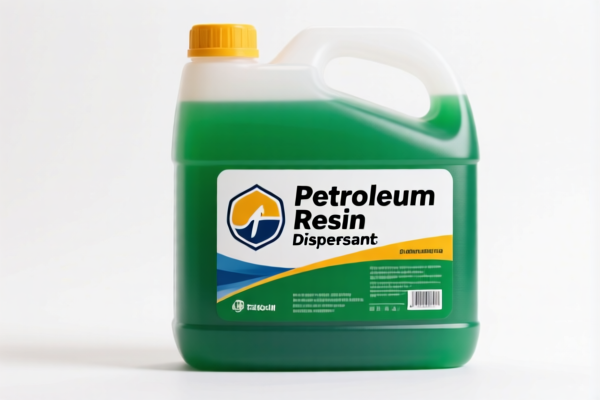
AI分析
🏭 Bimetal Casting Dispersant Mixture (铸造用分散剂混合物)
🌐 HS Code Classification & Customs Clearance Guide | 2026 Latest Tariff Analysis | Professional Strategy for Chemical Additives
📌 I. Product Definition & Classification: What is a "Bimetal Casting Dispersant Mixture"?
A Bimetal Casting Dispersant Mixture is a specialized chemical additive used in the metal casting industry. Its primary function is to prevent agglomeration of particles in casting sands, improve mold/coke permeability, and ensure uniform distribution of additives.
In international trade, its classification depends heavily on its chemical composition and primary use: * As a Foundry Auxiliary: If used specifically for mold/core preparation, it may fall under Chapter 38 (Chemical Products). * As a Chemical Mixture: If composed of polymers, resins, or unclassified chemical substances, it falls under specific subheadings of Chapter 38 or 39. * Special Note on "Bimetal": The term "Bimetal" here refers to the casting process (joining two metals) or the type of alloy, not that the product itself is made of two distinct metals. It is a chemical mixture.
⚠️ Key Classification Distinction: - If it functions primarily as a mold binding agent or auxiliary, look at 3824. - If it functions primarily as a generic chemical preparation, look at 3824.99 or 3911. - The classification determines the Base Tariff, which cascades into the Section 301 (25%) and Section 122 (10%) additional duties.
📦 II. HS Code Classification Details (2026 Latest Tariff Authority Comparison)
Based on the provided data, there are 5 possible HS Codes for this product. The choice depends on the precise chemical nature and primary function.
| HS Code | Product Description (From Data) | Applicability Scenario | Tax Rate Profile |
|---|---|---|---|
3824.10.00.00 |
Foundry dispersant, classified as a chemical auxiliary, consistent with mold/core binding agents. | Used specifically for mold/core preparation in casting. | 41.0% |
3824.99.93.97 |
Chemical preparation category, fits "other" chemical products & preparations. | General chemical mixture not specifically named elsewhere in 3824. | 40.0% |
3911.90.91.50 |
Chemical auxiliary in primary form, unclassified chemical. | Considered a "primary form" chemical aid, not yet a finished preparation. | 41.5% |
3911.90.91.10 |
Polymer/resin additive, fits "other chemical products" not elsewhere specified. | Contains polymeric/resin components as the main dispersing agent. | 41.5% |
3806.90.00.00 |
Chemical mixture for bimetal casting defoamer, fits rosin/derivatives category. | Specific Case: If the product is also a defoamer and based on rosin/derivatives. | 39.2% |
🔍 Critical Insight: -
3824.10.00.00is the most direct classification if the product is explicitly sold as a "foundry auxiliary." -3806.90.00.00is the lowest tax option (39.2%) but only if the product can be technically justified as a defoamer based on rosin derivatives. This requires strong technical documentation. -3911codes (41.5%) are higher because they treat the product as an unclassified polymer/resin additive, often attracting a higher base tariff.
💰 III. 2026 Latest Tariff Rate Breakdown (Including Surcharges)
✅ Applicable Country: United States (US)
✅ Origin: China (CN) (Assumed based on the specific "122 Clause" and 25% 301 tariffs mentioned in data)
✅ Effective Date: Current ongoing trade restrictions
🎯 1. 3824.10.00.00 – Foundry Chemical Auxiliaries
| Item | Content |
|---|---|
| Base Tariff | 6.0% |
| Section 301 Tariff (25%) | +25.0% (Standard USITC Footnote for Chemicals) |
| Section 122 Tariff (10%) | +10.0% (Specific Clause for Chemicals/Additives) |
| Total Tax Rate | 41.0% |
| Tax Calculation | CIF Value × 41.0% |
| De Minimis Exemption | ❌ Not Eligible (High tariff rates exceed threshold) |
| Legal Basis | USITC 3824.10.00.00 + Section 301 + Section 122 |
📌 Explanation:
- This is a "foundry-specific" chemical. The base rate is 6%. - The 35% surcharge (25% + 10%) significantly increases the landed cost. - Total: 41.0%.
🎯 2. 3824.99.93.97 – Other Chemical Preparations
| Item | Content |
|---|---|
| Base Tariff | 5.0% |
| Section 301 Tariff (25%) | +25.0% |
| Section 122 Tariff (10%) | +10.0% |
| Total Tax Rate | 40.0% |
| Tax Calculation | CIF Value × 40.0% |
| De Minimis Exemption | ❌ Not Eligible |
| Legal Basis | USITC 3824.99.93.97 + Section 301 + Section 122 |
📌 Note:
- This code has a 1% lower base tariff than3824.10.00.00. - Total: 40.0%. This is the standard "default" chemical mixture code if it doesn't fit the specific "foundry auxiliary" definition perfectly.
🎯 3. 3911.90.91.50 & 3911.90.91.10 – Unclassified Polymer/Resin Additives
| Item | Content |
|---|---|
| Base Tariff | 6.5% |
| Section 301 Tariff (25%) | +25.0% |
| Section 122 Tariff (10%) | +10.0% |
| Total Tax Rate | 41.5% |
| Tax Calculation | CIF Value × 41.5% |
| De Minimis Exemption | ❌ Not Eligible |
| Legal Basis | USITC 3911.90.91.xx + Section 301 + Section 122 |
📌 Warning:
- These codes have the highest base tariff (6.5%). - Total: 41.5%. Only use this if the product is chemically defined as a primary polymer/resin form. Avoid if possible due to higher cost.
🎯 4. 3806.90.00.00 – Rosin Derivatives / Defoamers (Lowest Rate)
| Item | Content |
|---|---|
| Base Tariff | 4.2% |
| Section 301 Tariff (25%) | +25.0% |
| Section 122 Tariff (10%) | +10.0% |
| Total Tax Rate | 39.2% |
| Tax Calculation | CIF Value × 39.2% |
| De Minimis Exemption | ❌ Not Eligible |
| Legal Basis | USITC 3806.90.00.00 + Section 301 + Section 122 |
📌 Strategic Opportunity:
- Total: 39.2%. This is the lowest total tax rate. - Condition: The product must be technically classified as a defoamer (消泡剂) and based on rosin or its derivatives (松香衍生物). - If your product is a "disperasnt" but also functions as a defoamer and contains rosin-based compounds, this is the most cost-effective classification.
🛠️ IV. Customs Clearance Practical Advice (Real-World Pitfall Guide)
✅ 1. Documentation Checklist (Mandatory)
| Document | Required | Description |
|---|---|---|
| ✅ Technical Data Sheet (TDS) | ✔️ | Must specify chemical composition, function (dispersant/defoamer), and primary raw materials (e.g., rosin derivatives). |
| ✅ MSDS (SDS) | ✔️ | Section 3 (Composition) must align with HS Code justification. |
| ✅ Product Photo | ✔️ | Clear image of packaging, label, and product state (liquid/powder). |
| ✅ Invoice | ✔️ | Must state "Bimetal Casting Dispersant Mixture" or "Foundry Chemical Auxiliary". |
| ✅ Packing List | ✔️ | Net weight/Gross weight must match declaration. |
| ✅ Certificate of Origin (CO) | ✔️ | Essential for proving Chinese origin (triggers tariffs). |
💡 Pro Tip: If aiming for
3806.90.00.00(39.2%), your TDS must highlight "Defoaming" and "Rosin-Based" properties. If it's purely a dispersant without defoaming function, you risk rejection and forced reclassification to 41.0% or 41.5%.
✅ 2. Declaration Strategy (Key Rules)
| Scenario | Correct Declaration | Incorrect Declaration |
|---|---|---|
| General Dispersant | 3824.10.00.00 (Foundry Auxiliary) or 3824.99.93.97 (Other Chemical) |
Misdeclare as "Metal Alloy" → 0% (Fraud!) |
| Rosin-Based Defoamer/Dispersant | 3806.90.00.00 (Rosin Derivatives) |
Misdeclare as "Plastic Resin" → 41.5% |
| Pure Chemical Mixture | 3824.99.93.97 |
Misdeclare as "Organic Chemicals" → Varies, risk audit |
| Polymer Additive | 3911.90.91.10 |
Misdeclare as "Foundry Sand" → 0% (Fraud!) |
🔥 Golden Rule:
"Function Dictates Code, Composition Dictates Rate."
- If it's for foundries →3824.
- If it's rosin-based →3806.
- If it's polymer-based →3911.
✅ 3. Special Handling
| Situation | Handling Advice |
|---|---|
| OEM/Private Label | Provide client’s technical specifications to prove the "Foundry Auxiliary" nature for 3824.10.00.00. |
| Mixed Packaging | Declare as a single product. Do not split "Dispersant + Carrier" unless they are clearly separate goods in the shipment. |
| Dispute on "Defoamer" Claim | If CBP rejects 3806 (Defoamer) classification, immediately pivot to 3824.99.93.97 (40.0%) as a fallback. |
🌍 V. Global Market Comparison (2026 Latest)
| Country/Region | Recommended HS Code | Total Tariff (China Origin) | Notes |
|---|---|---|---|
| 🇺🇸 USA | 3806.90.00.00 (Best Case) |
39.2% | Requires Rosin/Defoamer justification. |
| 🇺🇸 USA | 3824.10.00.00 (Standard) |
41.0% | Standard foundry auxiliary. |
| 🇨🇳 China | 3824.10.00.00 |
6.0% | No Section 301/122 tariffs. |
| 🇪🇺 EU | 3824.99.99.10 |
~5-7% | No Section 301/122. Tariff varies by exact composition. |
| 🇯🇵 Japan | 3824.90.90.90 |
~5-6% | No Section 301/122. |
📌 Conclusion:
- US Market: The 1.8% difference between3806(39.2%) and3824(41.0%) is significant for large shipments. Investigate if your product qualifies for3806. - Non-US Markets: Tariffs are much lower (4-6%). The Section 301/122 surcharges do not apply.
📌 VI. Common Mistakes & Pitfall Guide (Blood & Tears)
❌ Mistake 1: Declaring as "Metal Casting Mold" (HS 8428)
👉 Consequence: 0% tariff claim, but flagged for fraud. Heavy fines and cargo seizure.
❌ Mistake 2: Using 3911 (41.5%) when 3824 (41.0%) or 3806 (39.2%) applies
👉 Consequence: Overpaying taxes. If audited, you may get a refund, but it ties up cash flow.
❌ Mistake 3: Misclassifying as "Resin" under Chapter 39 without justification
👉 Consequence: Higher base tariff (6.5%). CBP may demand proof of polymer content.
❌ Mistake 4: Ignoring the "Defoamer" function
👉 Consequence: Missing the 39.2% rate. If your product reduces foam in casting sand, it likely qualifies as a defoamer.
✅ Correct Approach:
"Bimetal Casting Dispersant Mixture, Contains Rosin Derivatives, Functions as Dispersant and Defoamer, for Metal Casting Industry."
🎯 VII. Conclusion: Professional Classification Saves Money
🎯 Remember the Hierarchy:
1. Is it a Rosin-Based Defoamer? → 3806.90.00.00 (39.2% - Lowest)
2. Is it a Foundry Auxiliary? → 3824.10.00.00 (41.0%)
3. Is it a General Chemical Mixture? → 3824.99.93.97 (40.0%)
4. Is it a Polymer Additive? → 3911.90.91.10 (41.5% - Highest)
📌 Strategic Advice:
- For US Imports: Work with your chemist to confirm if Rosin Derivatives are present. If yes, aim for3806.90.00.00to save 1.8% on the total value. - Documentation is Key: Ensure your TDS and MSDS support the chosen HS Code. If you claim3806, you must prove it’s a defoamer/rosin product.
📣 Immediate Action:
📞 Consult with a customs broker + Provide TDS + Apply for Advance Ruling if shipment value is high.
🚀 Precise Classification = Lower Costs = Higher Profit!
✨ Professional Customs Clearance Starts with Accurate Classification!
💼 Every Percent Matters in Chemical Trade!
用户评价
关于 HS 编码归类
协调制度(HS)是由世界海关组织(WCO)制定的国际贸易商品分类标准。全球 200 多个国家采用 HS 系统作为海关关税、贸易统计和进出口监管的基础。
每个 HS 编码遵循以下层级结构:
- 章(2 位)——商品大类(例如:第 84 章:机器和机械设备)
- 品目(4 位)——章内的更具体分类
- 子目(6 位)——国际通用细分,所有 WCO 成员国统一使用
- 本国细分(8-10 位)——各国自行扩展的细分编码,如美国 HTSUS 10 位编码
正确的 HS 编码归类对于顺利通关、准确缴纳关税和遵守贸易法规至关重要。错误归类可能导致海关延误、多缴关税或罚款。
从CN进口到US时,适用的关税税率可能包括:
- 最惠国(MFN)税率——适用于 WTO 成员国的标准关税税率
- 普通税率——适用于无贸易协定国家
- 贸易救济关税——附加关税,如 301 条款(反倾销)、232 条款(国家安全)或反补贴税
本页内容仅供参考。如需正式归类,请咨询当地海关或持牌报关代理。