Bimetal Casting Dispersant Mixture
CN → US| HS Code | Tariff Rate | Origin | Destination | Doc |
|---|---|---|---|---|
| 3824100000 | 41.0% | CN | US | Official Doc |
| 3824999397 | 40.0% | CN | US | Official Doc |
| 3911909150 | 41.5% | CN | US | Official Doc |
| 3911909110 | 41.5% | CN | US | Official Doc |
| 3806900000 | 39.2% | CN | US | Official Doc |
Product Images


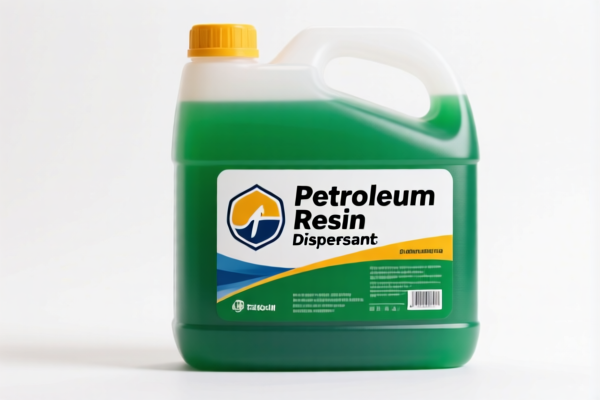
AI Analysis
🏭 Bimetal Casting Dispersant Mixture (铸造用分散剂混合物)
🌐 HS Code Classification & Customs Clearance Guide | 2026 Latest Tariff Analysis | Professional Strategy for Chemical Additives
📌 I. Product Definition & Classification: What is a "Bimetal Casting Dispersant Mixture"?
A Bimetal Casting Dispersant Mixture is a specialized chemical additive used in the metal casting industry. Its primary function is to prevent agglomeration of particles in casting sands, improve mold/coke permeability, and ensure uniform distribution of additives.
In international trade, its classification depends heavily on its chemical composition and primary use: * As a Foundry Auxiliary: If used specifically for mold/core preparation, it may fall under Chapter 38 (Chemical Products). * As a Chemical Mixture: If composed of polymers, resins, or unclassified chemical substances, it falls under specific subheadings of Chapter 38 or 39. * Special Note on "Bimetal": The term "Bimetal" here refers to the casting process (joining two metals) or the type of alloy, not that the product itself is made of two distinct metals. It is a chemical mixture.
⚠️ Key Classification Distinction: - If it functions primarily as a mold binding agent or auxiliary, look at 3824. - If it functions primarily as a generic chemical preparation, look at 3824.99 or 3911. - The classification determines the Base Tariff, which cascades into the Section 301 (25%) and Section 122 (10%) additional duties.
📦 II. HS Code Classification Details (2026 Latest Tariff Authority Comparison)
Based on the provided data, there are 5 possible HS Codes for this product. The choice depends on the precise chemical nature and primary function.
| HS Code | Product Description (From Data) | Applicability Scenario | Tax Rate Profile |
|---|---|---|---|
3824.10.00.00 |
Foundry dispersant, classified as a chemical auxiliary, consistent with mold/core binding agents. | Used specifically for mold/core preparation in casting. | 41.0% |
3824.99.93.97 |
Chemical preparation category, fits "other" chemical products & preparations. | General chemical mixture not specifically named elsewhere in 3824. | 40.0% |
3911.90.91.50 |
Chemical auxiliary in primary form, unclassified chemical. | Considered a "primary form" chemical aid, not yet a finished preparation. | 41.5% |
3911.90.91.10 |
Polymer/resin additive, fits "other chemical products" not elsewhere specified. | Contains polymeric/resin components as the main dispersing agent. | 41.5% |
3806.90.00.00 |
Chemical mixture for bimetal casting defoamer, fits rosin/derivatives category. | Specific Case: If the product is also a defoamer and based on rosin/derivatives. | 39.2% |
🔍 Critical Insight: -
3824.10.00.00is the most direct classification if the product is explicitly sold as a "foundry auxiliary." -3806.90.00.00is the lowest tax option (39.2%) but only if the product can be technically justified as a defoamer based on rosin derivatives. This requires strong technical documentation. -3911codes (41.5%) are higher because they treat the product as an unclassified polymer/resin additive, often attracting a higher base tariff.
💰 III. 2026 Latest Tariff Rate Breakdown (Including Surcharges)
✅ Applicable Country: United States (US)
✅ Origin: China (CN) (Assumed based on the specific "122 Clause" and 25% 301 tariffs mentioned in data)
✅ Effective Date: Current ongoing trade restrictions
🎯 1. 3824.10.00.00 – Foundry Chemical Auxiliaries
| Item | Content |
|---|---|
| Base Tariff | 6.0% |
| Section 301 Tariff (25%) | +25.0% (Standard USITC Footnote for Chemicals) |
| Section 122 Tariff (10%) | +10.0% (Specific Clause for Chemicals/Additives) |
| Total Tax Rate | 41.0% |
| Tax Calculation | CIF Value × 41.0% |
| De Minimis Exemption | ❌ Not Eligible (High tariff rates exceed threshold) |
| Legal Basis | USITC 3824.10.00.00 + Section 301 + Section 122 |
📌 Explanation:
- This is a "foundry-specific" chemical. The base rate is 6%. - The 35% surcharge (25% + 10%) significantly increases the landed cost. - Total: 41.0%.
🎯 2. 3824.99.93.97 – Other Chemical Preparations
| Item | Content |
|---|---|
| Base Tariff | 5.0% |
| Section 301 Tariff (25%) | +25.0% |
| Section 122 Tariff (10%) | +10.0% |
| Total Tax Rate | 40.0% |
| Tax Calculation | CIF Value × 40.0% |
| De Minimis Exemption | ❌ Not Eligible |
| Legal Basis | USITC 3824.99.93.97 + Section 301 + Section 122 |
📌 Note:
- This code has a 1% lower base tariff than3824.10.00.00. - Total: 40.0%. This is the standard "default" chemical mixture code if it doesn't fit the specific "foundry auxiliary" definition perfectly.
🎯 3. 3911.90.91.50 & 3911.90.91.10 – Unclassified Polymer/Resin Additives
| Item | Content |
|---|---|
| Base Tariff | 6.5% |
| Section 301 Tariff (25%) | +25.0% |
| Section 122 Tariff (10%) | +10.0% |
| Total Tax Rate | 41.5% |
| Tax Calculation | CIF Value × 41.5% |
| De Minimis Exemption | ❌ Not Eligible |
| Legal Basis | USITC 3911.90.91.xx + Section 301 + Section 122 |
📌 Warning:
- These codes have the highest base tariff (6.5%). - Total: 41.5%. Only use this if the product is chemically defined as a primary polymer/resin form. Avoid if possible due to higher cost.
🎯 4. 3806.90.00.00 – Rosin Derivatives / Defoamers (Lowest Rate)
| Item | Content |
|---|---|
| Base Tariff | 4.2% |
| Section 301 Tariff (25%) | +25.0% |
| Section 122 Tariff (10%) | +10.0% |
| Total Tax Rate | 39.2% |
| Tax Calculation | CIF Value × 39.2% |
| De Minimis Exemption | ❌ Not Eligible |
| Legal Basis | USITC 3806.90.00.00 + Section 301 + Section 122 |
📌 Strategic Opportunity:
- Total: 39.2%. This is the lowest total tax rate. - Condition: The product must be technically classified as a defoamer (消泡剂) and based on rosin or its derivatives (松香衍生物). - If your product is a "disperasnt" but also functions as a defoamer and contains rosin-based compounds, this is the most cost-effective classification.
🛠️ IV. Customs Clearance Practical Advice (Real-World Pitfall Guide)
✅ 1. Documentation Checklist (Mandatory)
| Document | Required | Description |
|---|---|---|
| ✅ Technical Data Sheet (TDS) | ✔️ | Must specify chemical composition, function (dispersant/defoamer), and primary raw materials (e.g., rosin derivatives). |
| ✅ MSDS (SDS) | ✔️ | Section 3 (Composition) must align with HS Code justification. |
| ✅ Product Photo | ✔️ | Clear image of packaging, label, and product state (liquid/powder). |
| ✅ Invoice | ✔️ | Must state "Bimetal Casting Dispersant Mixture" or "Foundry Chemical Auxiliary". |
| ✅ Packing List | ✔️ | Net weight/Gross weight must match declaration. |
| ✅ Certificate of Origin (CO) | ✔️ | Essential for proving Chinese origin (triggers tariffs). |
💡 Pro Tip: If aiming for
3806.90.00.00(39.2%), your TDS must highlight "Defoaming" and "Rosin-Based" properties. If it's purely a dispersant without defoaming function, you risk rejection and forced reclassification to 41.0% or 41.5%.
✅ 2. Declaration Strategy (Key Rules)
| Scenario | Correct Declaration | Incorrect Declaration |
|---|---|---|
| General Dispersant | 3824.10.00.00 (Foundry Auxiliary) or 3824.99.93.97 (Other Chemical) |
Misdeclare as "Metal Alloy" → 0% (Fraud!) |
| Rosin-Based Defoamer/Dispersant | 3806.90.00.00 (Rosin Derivatives) |
Misdeclare as "Plastic Resin" → 41.5% |
| Pure Chemical Mixture | 3824.99.93.97 |
Misdeclare as "Organic Chemicals" → Varies, risk audit |
| Polymer Additive | 3911.90.91.10 |
Misdeclare as "Foundry Sand" → 0% (Fraud!) |
🔥 Golden Rule:
"Function Dictates Code, Composition Dictates Rate."
- If it's for foundries →3824.
- If it's rosin-based →3806.
- If it's polymer-based →3911.
✅ 3. Special Handling
| Situation | Handling Advice |
|---|---|
| OEM/Private Label | Provide client’s technical specifications to prove the "Foundry Auxiliary" nature for 3824.10.00.00. |
| Mixed Packaging | Declare as a single product. Do not split "Dispersant + Carrier" unless they are clearly separate goods in the shipment. |
| Dispute on "Defoamer" Claim | If CBP rejects 3806 (Defoamer) classification, immediately pivot to 3824.99.93.97 (40.0%) as a fallback. |
🌍 V. Global Market Comparison (2026 Latest)
| Country/Region | Recommended HS Code | Total Tariff (China Origin) | Notes |
|---|---|---|---|
| 🇺🇸 USA | 3806.90.00.00 (Best Case) |
39.2% | Requires Rosin/Defoamer justification. |
| 🇺🇸 USA | 3824.10.00.00 (Standard) |
41.0% | Standard foundry auxiliary. |
| 🇨🇳 China | 3824.10.00.00 |
6.0% | No Section 301/122 tariffs. |
| 🇪🇺 EU | 3824.99.99.10 |
~5-7% | No Section 301/122. Tariff varies by exact composition. |
| 🇯🇵 Japan | 3824.90.90.90 |
~5-6% | No Section 301/122. |
📌 Conclusion:
- US Market: The 1.8% difference between3806(39.2%) and3824(41.0%) is significant for large shipments. Investigate if your product qualifies for3806. - Non-US Markets: Tariffs are much lower (4-6%). The Section 301/122 surcharges do not apply.
📌 VI. Common Mistakes & Pitfall Guide (Blood & Tears)
❌ Mistake 1: Declaring as "Metal Casting Mold" (HS 8428)
👉 Consequence: 0% tariff claim, but flagged for fraud. Heavy fines and cargo seizure.
❌ Mistake 2: Using 3911 (41.5%) when 3824 (41.0%) or 3806 (39.2%) applies
👉 Consequence: Overpaying taxes. If audited, you may get a refund, but it ties up cash flow.
❌ Mistake 3: Misclassifying as "Resin" under Chapter 39 without justification
👉 Consequence: Higher base tariff (6.5%). CBP may demand proof of polymer content.
❌ Mistake 4: Ignoring the "Defoamer" function
👉 Consequence: Missing the 39.2% rate. If your product reduces foam in casting sand, it likely qualifies as a defoamer.
✅ Correct Approach:
"Bimetal Casting Dispersant Mixture, Contains Rosin Derivatives, Functions as Dispersant and Defoamer, for Metal Casting Industry."
🎯 VII. Conclusion: Professional Classification Saves Money
🎯 Remember the Hierarchy:
1. Is it a Rosin-Based Defoamer? → 3806.90.00.00 (39.2% - Lowest)
2. Is it a Foundry Auxiliary? → 3824.10.00.00 (41.0%)
3. Is it a General Chemical Mixture? → 3824.99.93.97 (40.0%)
4. Is it a Polymer Additive? → 3911.90.91.10 (41.5% - Highest)
📌 Strategic Advice:
- For US Imports: Work with your chemist to confirm if Rosin Derivatives are present. If yes, aim for3806.90.00.00to save 1.8% on the total value. - Documentation is Key: Ensure your TDS and MSDS support the chosen HS Code. If you claim3806, you must prove it’s a defoamer/rosin product.
📣 Immediate Action:
📞 Consult with a customs broker + Provide TDS + Apply for Advance Ruling if shipment value is high.
🚀 Precise Classification = Lower Costs = Higher Profit!
✨ Professional Customs Clearance Starts with Accurate Classification!
💼 Every Percent Matters in Chemical Trade!
Customer Reviews
About HS Code Classification
The Harmonized System (HS) is an internationally standardized nomenclature developed by the World Customs Organization (WCO) to classify traded products. Over 200 countries use the HS system as the basis for customs tariffs, trade statistics, and import/export regulations.
Each HS code follows a hierarchical structure:
- Chapter (2 digits) — Broad category of goods (e.g., Chapter 84: Machinery and Mechanical Appliances)
- Heading (4 digits) — More specific grouping within the chapter
- Subheading (6 digits) — Internationally standardized breakdown, used by all WCO member countries
- National subdivisions (8-10 digits) — Country-specific extensions for further classification, such as US HTSUS 10-digit codes
Correct HS code classification is essential for smooth customs clearance, accurate duty payment, and compliance with trade regulations. Misclassification can lead to customs delays, overpayment of duties, or penalties.
When importing from CN to US, the applicable tariff rates may include:
- Most-Favored-Nation (MFN) rate — The standard duty rate applied to WTO members
- General rate — Applied to countries without trade agreements
- Trade remedy duties — Additional tariffs such as Section 301 (anti-dumping), Section 232 (national security), or countervailing duties
The information provided on this page is for reference purposes only. For official classification, please consult with your local customs authority or a licensed customs broker.