Biomass Wood Briquettes
CN → US| HS编码 | 关税税率 | 原产国 | 目的国 | 文档 |
|---|---|---|---|---|
| 4401320000 | 35.0% | CN | US | 官方文档 |
| 4401310000 | 35.0% | CN | US | 官方文档 |
商品图片
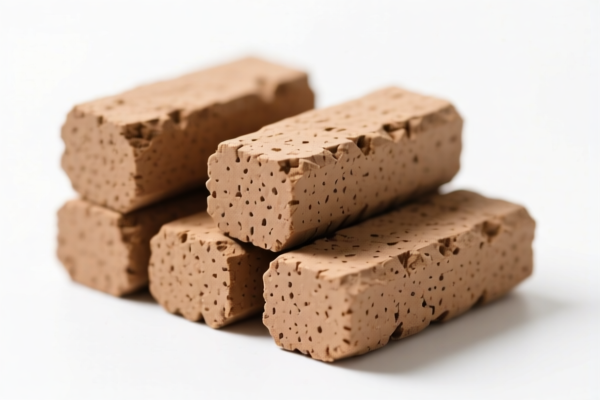
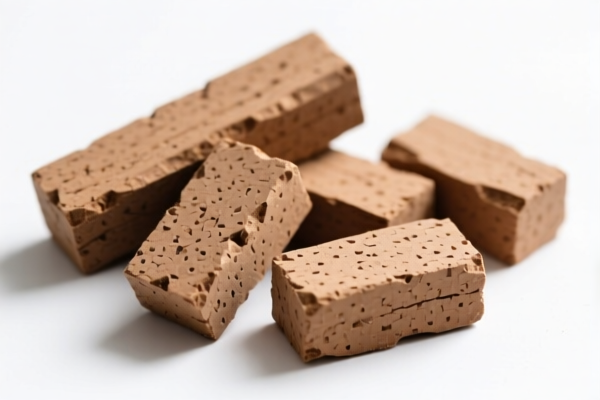
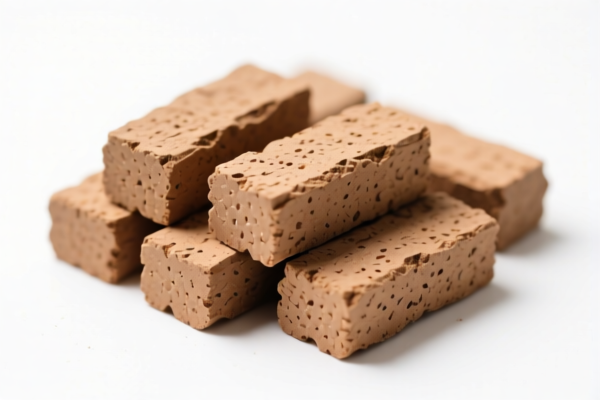
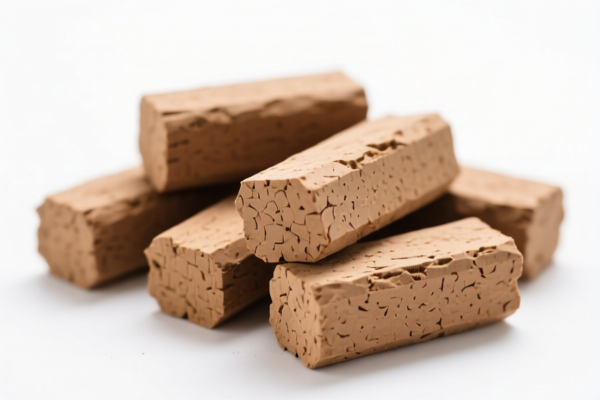
AI分析
🌲 Wood Briquettes & Pellets: Biomass Fuel HS Code & Tax Analysis (2026)
🌐 HS Code Reference & Customs Clearance Guide | 2026 Latest Tariff Full Analysis | Professional Clearance Strategy
📌 I. Product Definition & Classification: Do You Really Understand "Biomass Fuel"?
Wood Briquettes and Pellets are processed solid biofuels derived from sawdust, wood waste, or bark. In international trade, they are strictly categorized under Chapter 44: Wood and Articles of Wood. The key distinction lies in the form of agglomeration:
Wood Briquettes: Compressed blocks or logs, typically larger and denser, often used in industrial boilers or high-end residential fireplaces.
Wood Pellets: Small, cylindrical granules (typically 6-8mm diameter), highly standardized, primarily used for home heating stoves and automated industrial feed systems.
⚠️ Key Distinction Point:
- If the product is in block/log form → Classified under 4401.32.00.00 (Wood Briquettes).
- If the product is in granular/pellet form → Classified under 4401.31.00.00 (Wood Pellets).
- Crucial Note: Both are considered "Sawdust and wood waste and scrap, whether or not agglomerated."
📦 II. HS Code Classification Details (2026 Latest Tariff Authority Comparison)
| HS Code | Product Description | Applicable Scenario | Form Type |
|--------|--------------------------|----------|
| 4401.32.00.00 | Wood Briquettes | Large compressed logs/blocks; industrial heating; premium residential fuel | 🟧 Briquettes/Logs |
| 4401.31.00.00 | Wood Pellets | Small cylindrical granules; automated stove feed; bulk residential use | ⚪ Pellets/Granules |
🔍 Key Reminder:
- Both categories fall under the umbrella of "Agglomerated wood waste".
- Do NOT confuse with raw firewood (4401.21) or chips (4401.22). These are processed, agglomerated products.
- Moisture content does not change the HS code classification (unlike some other commodities), but it affects the declared value (CIF).
💰 III. 2026 Latest Tariff Rate Details (Including Additional Taxes)
✅ Applicable Country: United States (US)
✅ Origin: China (CN)
✅ Effective Date: 2025 onwards (Based on 301 Tariff List)
🎯 1. 4401.32.00.00 —— Wood Briquettes
| Item | Content |
|---|---|
| Base Tariff Rate | 0.0% (Ad Valorem) |
| Section 301 Additional Tariff | +25.0% (Applied to Chinese Origin Goods) |
| Total Tariff Rate | 25.0% |
| Tax Calculation | CIF Value × 25% |
| De Minimis Exemption | ❌ Not Applicable |
| Legal Basis Path | HTSUS:4401.32.00.00 → USITC Footnote 9903.88.01 (Section 301) |
📌 Explanation:
- The base duty for wood fuel is generally 0% under normal trade relations.
- However, due to Section 301 of the Trade Act of 1974, a 25% additional tariff is levied on products from China.
- This results in a flat 25% total import duty. No other major surcharges (like IEEPA 10%) currently apply to this specific wood category in the provided data, but the 25% is significant.
🎯 2. 4401.31.00.00 —— Wood Pellets
| Item | Content |
|---|---|
| Base Tariff Rate | 0.0% (Ad Valorem) |
| Section 301 Additional Tariff | +25.0% (Applied to Chinese Origin Goods) |
| Total Tariff Rate | 25.0% |
| Tax Calculation | CIF Value × 25% |
| De Minimis Exemption | ❌ Not Applicable |
| Legal Basis Path | HTSUS:4401.31.00.00 → USITC Footnote 9903.88.01 (Section 301) |
📌 Note:
- Identical tax structure to briquettes.
- Even though pellets are more processed, they fall under the same "agglomerated waste" chapter.
- 25% Total Duty applies regardless of whether you ship briquettes or pellets from China to the US.
🛠️ IV. Customs Clearance Practical Advice (Battle-Tested Pitfall Avoidance)
✅ 1. Document Checklist (Mandatory)
| Document | Required | Explanation |
|---|---|---|
| ✅ Product Specification Sheet | ✔️ | Must clearly state: Material (e.g., Pure Hardwood Sawdust), Binding Agent (None/Natural), Density, Moisture Content. |
| ✅ Composition Certificate | ✔️ | Proof that it contains no non-wood additives (glues, chemicals) that might change classification to Chapter 39 or 38. |
| ✅ Commercial Invoice | ✔️ | Must explicitly state: "Wood Briquettes" or "Wood Pellets" and HS Code 4401.32.00.00 / 4401.31.00.00. |
| ✅ Bill of Lading | ✔️ | Clean on board, indicating proper stowage (pellets are prone to caking; ensure ventilation info is present if required). |
| ✅ Certificate of Origin | ✔️ | Essential to prove origin for tariff calculation. |
✅ 2. Declaration Tips (Key Mantras)
🔥 "Be Specific: Say 'Briquette' or 'Pellet', Not 'Fuel Wood'"
| Scenario | Correct Declaration | Incorrect Action |
|---|---|---|
| Wood Pellets | "Wood Pellets, Agglomerated Sawdust, 6mm, Moisture <10%" | Misdeclaring as "Raw Firewood" → Risk of penalty for misclassification. |
| Wood Briquettes | "Wood Briquettes, Log Form, Agglomerated Wood Waste" | Misdeclaring as "Chips" → Different duty rate scrutiny. |
| Mixed Shipment | Declare separately or clarify packing list | Blending pelles and briquettes in one line item → Confusion for customs broker. |
| Labeling | Must include "Made in China" | Omission → Seizure risk. |
✅ 3. Special Handling Considerations
| Situation | Handling Advice |
|---|---|
| Moisture Content | Declare accurately. High moisture (>20%) may lead to quality claims but does not change HS Code. However, it affects weight-based CIF value. |
| Additives | If binders (non-wood) are used >5%, the classification MAY shift to Chapter 38 (Chemical Products). Keep additive declaration minimal/natural (e.g., lignin only). |
| Pest Control | Ensure wood is heat-treated (ISPM 15 standard) if shipped with wooden pallets. The briquettes themselves are processed, but packaging matters. |
| Bulk vs. Bagged | Duty is calculated on CIF value. Bagged goods have higher handling costs but lower risk of contamination/damage during transit. |
🌍 V. Global Market Comparison (2026 Snapshot)
| Country/Region | Recommended HS Code | Tariff (China Origin) | Remarks |
|---|---|---|---|
| 🇺🇸 United States | 4401.31.00.00 / 4401.32.00.00 |
25% (301 Tariff) | High barrier. Focus on efficiency to offset cost. |
| 🇪🇺 European Union | 4401.31.00 / 4401.32.00 |
0% - 2.5% | Check for EU Bioenergy sustainability criteria (RED II). Certification often required for duty-free access under certain FTAs. |
| 🇨🇦 Canada | 4401.31.00 / 4401.32.00 |
0% (CUSMA) | Duty-free if originating from US/Mexico under CUSMA. China origin may face MFN rates (check latest updates). |
| 🇬🇧 United Kingdom | 4401.31.00 / 4401.32.00 |
0% - 5% | Post-Brexit tariff schedules may differ slightly from EU. |
📌 Conclusion:
- The US market is the most costly due to the fixed 25% surcharge.
- EU and other markets are more favorable tariff-wise, but compliance with sustainability/chemical standards is stricter.
- For US imports, the 25% duty is non-negotiable for Chinese origin goods. Profit margins must account for this.
📌 VI. Common Mistakes & Pitfalls (Lessons Learned)
❌ Mistake 1: Declaring as "Raw Wood Chips"
👉 Consequence: Misclassification. Raw chips (4401.21) have different regulations and potential phytosanitary requirements. Agglomerated products are cleaner but legally distinct.
❌ Mistake 2: Ignoring the "Agglomerated" Keyword
👉 Consequence: If you simply write "Wood Fuel," customs may reject the clear classification. Must use "Briquettes" or "Pellets" as per HS headings.
❌ Mistake 3: Assuming "De Minimis" Applies
👉 Consequence: Wood products do not benefit from the $800 de minimis exemption for small shipments in the same way consumer goods might. Full duty applies.
❌ Mistake 4: Failing to Specify Additives
👉 Consequence: If binders are present, US Customs might suspect chemical processing (Chapter 38). Always declare "100% Natural Wood, No Additives" if true.
✅ Correct Declaration Example:
"Wood Pellets, Agglomerated from Hardwood Sawdust, 6mm Diameter, Moisture Content 8%, No Chemical Binders, HS Code: 4401.31.00.00"
🎯 VII. Conclusion: Professional Clearance, Cost Control!
🎯 Remember the Mantra:
🔹 "Pellets 31, Briquettes 32, Both are Agglomerated Waste."
🔹 "China to US: 25% Fixed Hit. Base is 0%, Adder is 25."
🔹 "Declare Form Clearly: Briquette vs. Pellet Avoids Delays."
📌 Pro Tip:
- For US Imports: Consider sourcing from non-China origins (e.g., Canada, Russia, or European suppliers) if available, to avoid the 25% Section 301 tariff.
- For EU Imports: Obtain ENplus certification for pellets to ensure market acceptance and smooth customs clearance.
- Always apply for an Advance Ruling if you are introducing a new type of agglomerated fuel (e.g., compressed bark vs. pure sawdust) to mitigate classification risk.
📣 Immediate Action:
📞 Consult a licensed customs broker for pre-classification verification.
📄 Ensure your Commercial Invoice explicitly lists the HS Code and Product Type.
🚀 Secure your supply chain before the 25% tariff impact eats into your margins!
✨ Expert Customs Clearance Starts with Precise Classification!
💼 Every percentage point of duty is a percentage point of profit!
用户评价
关于 HS 编码归类
协调制度(HS)是由世界海关组织(WCO)制定的国际贸易商品分类标准。全球 200 多个国家采用 HS 系统作为海关关税、贸易统计和进出口监管的基础。
每个 HS 编码遵循以下层级结构:
- 章(2 位)——商品大类(例如:第 84 章:机器和机械设备)
- 品目(4 位)——章内的更具体分类
- 子目(6 位)——国际通用细分,所有 WCO 成员国统一使用
- 本国细分(8-10 位)——各国自行扩展的细分编码,如美国 HTSUS 10 位编码
正确的 HS 编码归类对于顺利通关、准确缴纳关税和遵守贸易法规至关重要。错误归类可能导致海关延误、多缴关税或罚款。
从CN进口到US时,适用的关税税率可能包括:
- 最惠国(MFN)税率——适用于 WTO 成员国的标准关税税率
- 普通税率——适用于无贸易协定国家
- 贸易救济关税——附加关税,如 301 条款(反倾销)、232 条款(国家安全)或反补贴税
本页内容仅供参考。如需正式归类,请咨询当地海关或持牌报关代理。