Biomass Wood Briquettes
CN → US| HS Code | Tariff Rate | Origin | Destination | Doc |
|---|---|---|---|---|
| 4401320000 | 35.0% | CN | US | Official Doc |
| 4401310000 | 35.0% | CN | US | Official Doc |
Product Images
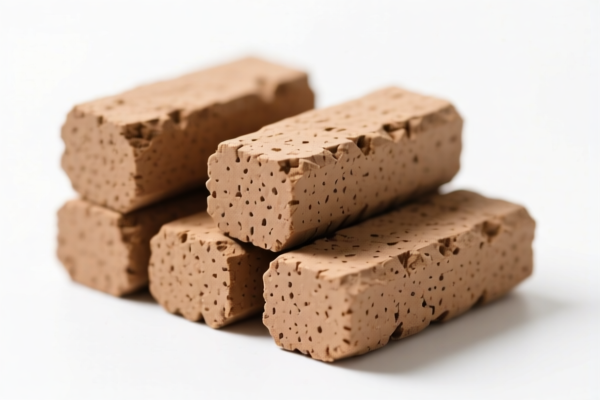
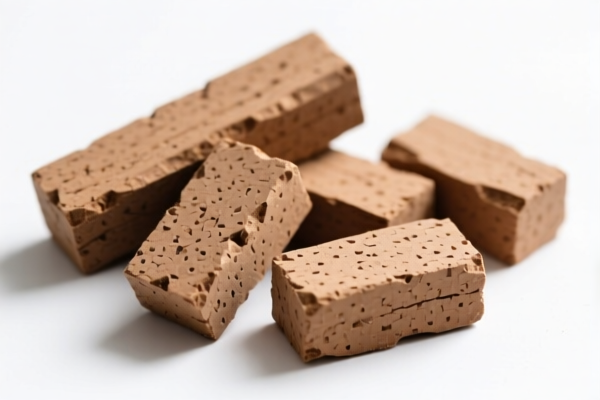
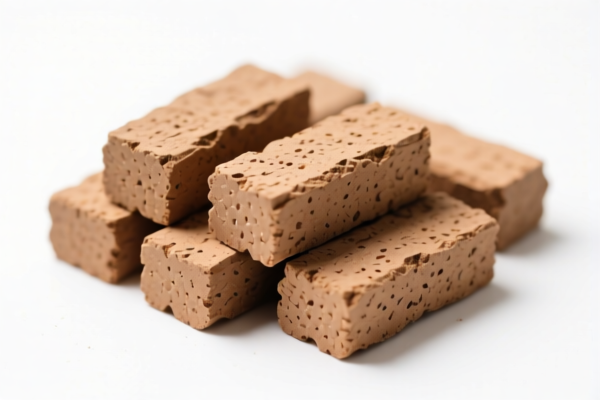
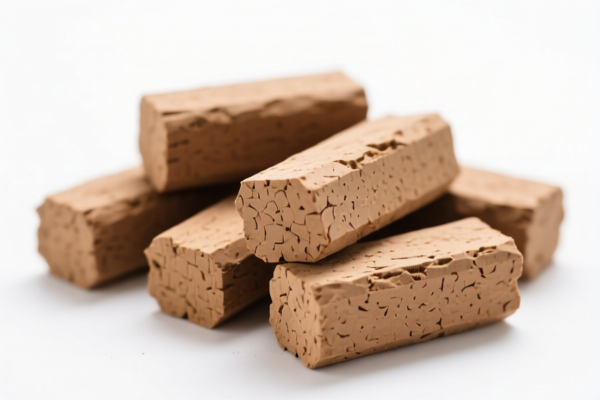
AI Analysis
🌲 Wood Briquettes & Pellets: Biomass Fuel HS Code & Tax Analysis (2026)
🌐 HS Code Reference & Customs Clearance Guide | 2026 Latest Tariff Full Analysis | Professional Clearance Strategy
📌 I. Product Definition & Classification: Do You Really Understand "Biomass Fuel"?
Wood Briquettes and Pellets are processed solid biofuels derived from sawdust, wood waste, or bark. In international trade, they are strictly categorized under Chapter 44: Wood and Articles of Wood. The key distinction lies in the form of agglomeration:
Wood Briquettes: Compressed blocks or logs, typically larger and denser, often used in industrial boilers or high-end residential fireplaces.
Wood Pellets: Small, cylindrical granules (typically 6-8mm diameter), highly standardized, primarily used for home heating stoves and automated industrial feed systems.
⚠️ Key Distinction Point:
- If the product is in block/log form → Classified under 4401.32.00.00 (Wood Briquettes).
- If the product is in granular/pellet form → Classified under 4401.31.00.00 (Wood Pellets).
- Crucial Note: Both are considered "Sawdust and wood waste and scrap, whether or not agglomerated."
📦 II. HS Code Classification Details (2026 Latest Tariff Authority Comparison)
| HS Code | Product Description | Applicable Scenario | Form Type |
|--------|--------------------------|----------|
| 4401.32.00.00 | Wood Briquettes | Large compressed logs/blocks; industrial heating; premium residential fuel | 🟧 Briquettes/Logs |
| 4401.31.00.00 | Wood Pellets | Small cylindrical granules; automated stove feed; bulk residential use | ⚪ Pellets/Granules |
🔍 Key Reminder:
- Both categories fall under the umbrella of "Agglomerated wood waste".
- Do NOT confuse with raw firewood (4401.21) or chips (4401.22). These are processed, agglomerated products.
- Moisture content does not change the HS code classification (unlike some other commodities), but it affects the declared value (CIF).
💰 III. 2026 Latest Tariff Rate Details (Including Additional Taxes)
✅ Applicable Country: United States (US)
✅ Origin: China (CN)
✅ Effective Date: 2025 onwards (Based on 301 Tariff List)
🎯 1. 4401.32.00.00 —— Wood Briquettes
| Item | Content |
|---|---|
| Base Tariff Rate | 0.0% (Ad Valorem) |
| Section 301 Additional Tariff | +25.0% (Applied to Chinese Origin Goods) |
| Total Tariff Rate | 25.0% |
| Tax Calculation | CIF Value × 25% |
| De Minimis Exemption | ❌ Not Applicable |
| Legal Basis Path | HTSUS:4401.32.00.00 → USITC Footnote 9903.88.01 (Section 301) |
📌 Explanation:
- The base duty for wood fuel is generally 0% under normal trade relations.
- However, due to Section 301 of the Trade Act of 1974, a 25% additional tariff is levied on products from China.
- This results in a flat 25% total import duty. No other major surcharges (like IEEPA 10%) currently apply to this specific wood category in the provided data, but the 25% is significant.
🎯 2. 4401.31.00.00 —— Wood Pellets
| Item | Content |
|---|---|
| Base Tariff Rate | 0.0% (Ad Valorem) |
| Section 301 Additional Tariff | +25.0% (Applied to Chinese Origin Goods) |
| Total Tariff Rate | 25.0% |
| Tax Calculation | CIF Value × 25% |
| De Minimis Exemption | ❌ Not Applicable |
| Legal Basis Path | HTSUS:4401.31.00.00 → USITC Footnote 9903.88.01 (Section 301) |
📌 Note:
- Identical tax structure to briquettes.
- Even though pellets are more processed, they fall under the same "agglomerated waste" chapter.
- 25% Total Duty applies regardless of whether you ship briquettes or pellets from China to the US.
🛠️ IV. Customs Clearance Practical Advice (Battle-Tested Pitfall Avoidance)
✅ 1. Document Checklist (Mandatory)
| Document | Required | Explanation |
|---|---|---|
| ✅ Product Specification Sheet | ✔️ | Must clearly state: Material (e.g., Pure Hardwood Sawdust), Binding Agent (None/Natural), Density, Moisture Content. |
| ✅ Composition Certificate | ✔️ | Proof that it contains no non-wood additives (glues, chemicals) that might change classification to Chapter 39 or 38. |
| ✅ Commercial Invoice | ✔️ | Must explicitly state: "Wood Briquettes" or "Wood Pellets" and HS Code 4401.32.00.00 / 4401.31.00.00. |
| ✅ Bill of Lading | ✔️ | Clean on board, indicating proper stowage (pellets are prone to caking; ensure ventilation info is present if required). |
| ✅ Certificate of Origin | ✔️ | Essential to prove origin for tariff calculation. |
✅ 2. Declaration Tips (Key Mantras)
🔥 "Be Specific: Say 'Briquette' or 'Pellet', Not 'Fuel Wood'"
| Scenario | Correct Declaration | Incorrect Action |
|---|---|---|
| Wood Pellets | "Wood Pellets, Agglomerated Sawdust, 6mm, Moisture <10%" | Misdeclaring as "Raw Firewood" → Risk of penalty for misclassification. |
| Wood Briquettes | "Wood Briquettes, Log Form, Agglomerated Wood Waste" | Misdeclaring as "Chips" → Different duty rate scrutiny. |
| Mixed Shipment | Declare separately or clarify packing list | Blending pelles and briquettes in one line item → Confusion for customs broker. |
| Labeling | Must include "Made in China" | Omission → Seizure risk. |
✅ 3. Special Handling Considerations
| Situation | Handling Advice |
|---|---|
| Moisture Content | Declare accurately. High moisture (>20%) may lead to quality claims but does not change HS Code. However, it affects weight-based CIF value. |
| Additives | If binders (non-wood) are used >5%, the classification MAY shift to Chapter 38 (Chemical Products). Keep additive declaration minimal/natural (e.g., lignin only). |
| Pest Control | Ensure wood is heat-treated (ISPM 15 standard) if shipped with wooden pallets. The briquettes themselves are processed, but packaging matters. |
| Bulk vs. Bagged | Duty is calculated on CIF value. Bagged goods have higher handling costs but lower risk of contamination/damage during transit. |
🌍 V. Global Market Comparison (2026 Snapshot)
| Country/Region | Recommended HS Code | Tariff (China Origin) | Remarks |
|---|---|---|---|
| 🇺🇸 United States | 4401.31.00.00 / 4401.32.00.00 |
25% (301 Tariff) | High barrier. Focus on efficiency to offset cost. |
| 🇪🇺 European Union | 4401.31.00 / 4401.32.00 |
0% - 2.5% | Check for EU Bioenergy sustainability criteria (RED II). Certification often required for duty-free access under certain FTAs. |
| 🇨🇦 Canada | 4401.31.00 / 4401.32.00 |
0% (CUSMA) | Duty-free if originating from US/Mexico under CUSMA. China origin may face MFN rates (check latest updates). |
| 🇬🇧 United Kingdom | 4401.31.00 / 4401.32.00 |
0% - 5% | Post-Brexit tariff schedules may differ slightly from EU. |
📌 Conclusion:
- The US market is the most costly due to the fixed 25% surcharge.
- EU and other markets are more favorable tariff-wise, but compliance with sustainability/chemical standards is stricter.
- For US imports, the 25% duty is non-negotiable for Chinese origin goods. Profit margins must account for this.
📌 VI. Common Mistakes & Pitfalls (Lessons Learned)
❌ Mistake 1: Declaring as "Raw Wood Chips"
👉 Consequence: Misclassification. Raw chips (4401.21) have different regulations and potential phytosanitary requirements. Agglomerated products are cleaner but legally distinct.
❌ Mistake 2: Ignoring the "Agglomerated" Keyword
👉 Consequence: If you simply write "Wood Fuel," customs may reject the clear classification. Must use "Briquettes" or "Pellets" as per HS headings.
❌ Mistake 3: Assuming "De Minimis" Applies
👉 Consequence: Wood products do not benefit from the $800 de minimis exemption for small shipments in the same way consumer goods might. Full duty applies.
❌ Mistake 4: Failing to Specify Additives
👉 Consequence: If binders are present, US Customs might suspect chemical processing (Chapter 38). Always declare "100% Natural Wood, No Additives" if true.
✅ Correct Declaration Example:
"Wood Pellets, Agglomerated from Hardwood Sawdust, 6mm Diameter, Moisture Content 8%, No Chemical Binders, HS Code: 4401.31.00.00"
🎯 VII. Conclusion: Professional Clearance, Cost Control!
🎯 Remember the Mantra:
🔹 "Pellets 31, Briquettes 32, Both are Agglomerated Waste."
🔹 "China to US: 25% Fixed Hit. Base is 0%, Adder is 25."
🔹 "Declare Form Clearly: Briquette vs. Pellet Avoids Delays."
📌 Pro Tip:
- For US Imports: Consider sourcing from non-China origins (e.g., Canada, Russia, or European suppliers) if available, to avoid the 25% Section 301 tariff.
- For EU Imports: Obtain ENplus certification for pellets to ensure market acceptance and smooth customs clearance.
- Always apply for an Advance Ruling if you are introducing a new type of agglomerated fuel (e.g., compressed bark vs. pure sawdust) to mitigate classification risk.
📣 Immediate Action:
📞 Consult a licensed customs broker for pre-classification verification.
📄 Ensure your Commercial Invoice explicitly lists the HS Code and Product Type.
🚀 Secure your supply chain before the 25% tariff impact eats into your margins!
✨ Expert Customs Clearance Starts with Precise Classification!
💼 Every percentage point of duty is a percentage point of profit!
Customer Reviews
About HS Code Classification
The Harmonized System (HS) is an internationally standardized nomenclature developed by the World Customs Organization (WCO) to classify traded products. Over 200 countries use the HS system as the basis for customs tariffs, trade statistics, and import/export regulations.
Each HS code follows a hierarchical structure:
- Chapter (2 digits) — Broad category of goods (e.g., Chapter 84: Machinery and Mechanical Appliances)
- Heading (4 digits) — More specific grouping within the chapter
- Subheading (6 digits) — Internationally standardized breakdown, used by all WCO member countries
- National subdivisions (8-10 digits) — Country-specific extensions for further classification, such as US HTSUS 10-digit codes
Correct HS code classification is essential for smooth customs clearance, accurate duty payment, and compliance with trade regulations. Misclassification can lead to customs delays, overpayment of duties, or penalties.
When importing from CN to US, the applicable tariff rates may include:
- Most-Favored-Nation (MFN) rate — The standard duty rate applied to WTO members
- General rate — Applied to countries without trade agreements
- Trade remedy duties — Additional tariffs such as Section 301 (anti-dumping), Section 232 (national security), or countervailing duties
The information provided on this page is for reference purposes only. For official classification, please consult with your local customs authority or a licensed customs broker.