Bison Cereal Slices for Model Making
CN → US| HS编码 | 关税税率 | 原产国 | 目的国 | 文档 |
|---|---|---|---|---|
| 4410190060 | 35.0% | CN | US | 官方文档 |
| 4410190010 | 35.0% | CN | US | 官方文档 |
| 4823908620 | 35.0% | CN | US | 官方文档 |
| 4823908680 | 35.0% | CN | US | 官方文档 |
商品图片
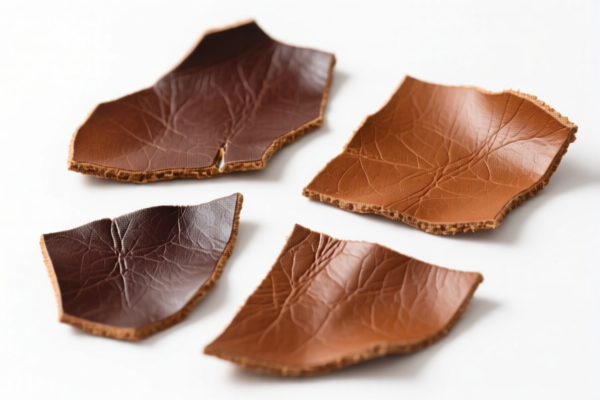
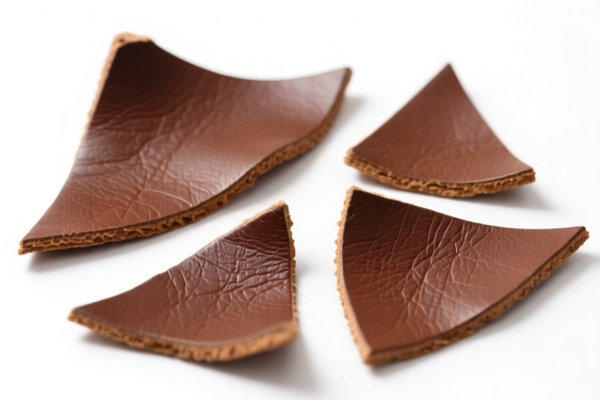
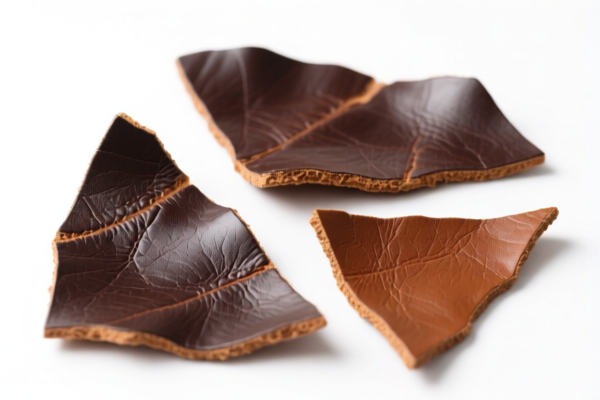
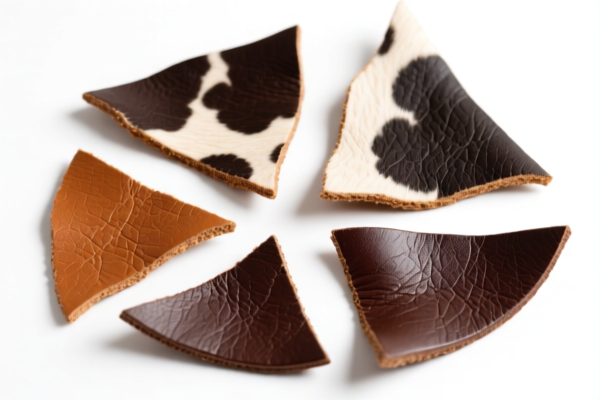
AI分析
🦁 Bison Cereal Slices for Model Making (Artificial Wood/Lignocellulosic Board)
🌐 HS Code Reference & Customs Clearance Guide | 2026 Latest Tariff Analysis | Professional Entry Strategy
📌 Part 1: Product Definition & Classification: What is "Bison Cereal Slices"?
"Bison Cereal Slices" is a commercial name for agglomerated wood chips or lignocellulosic flakes, often used in model making, woodworking, or crafting. Despite the name "cereal," these are not food products but rather board-like materials made from wood or other ligneous materials, bound together with resins or organic substances.
In international trade, this product falls under Chapter 44: Wood and articles of wood. Specifically, it is classified as "Particle board, oriented strand board (OSB) and similar board... of wood."
⚠️ Key Distinction:
- If the product is sandblasted, sanded, or rough-cut without further processing → It may be considered "Unworked or not further worked than sanded."
- If the product is finished, cut to specific model shapes, or coated → It is considered "Other."
- Crucial: It is NOT classified as paper (Chapter 48) because the base material is wood/lignocellulose, not paper pulp, and the structure is board-like, not fibrous sheets.
📦 Part 2: HS Code Classification Details (2026 Latest Tariff Authority)
Based on the provided data, there are two primary HS Codes for this product, depending on its level of processing:
| HS Code | Product Description | Applicable Scenario | Processing Level |
|---|---|---|---|
4410.19.00.10 |
Particle board, oriented strand board (OSB) and similar board... Of wood: Other Unworked or not further worked than sanded | Rough wood slices, sanded board blanks, raw material for model makers | ✅ Sanded only / Rough |
4410.19.00.60 |
Particle board, oriented strand board (OSB) and similar board... Of wood: Other Other | Finished model slices, pre-cut shapes, coated, or further processed | ✅ Further Worked / Finished |
🔍 Important Note:
- Both codes fall under HS Heading 4410: Particle board, oriented strand board (OSB) and similar board... of wood.
- The key differentiator is processing: Is it just sanded (...10) or further worked (...60)?
- Do NOT classify under Chapter 48 (Paper) unless the material is explicitly cellulose fibers/pulp and not wood-based. "Bison Cereal" implies wood/lignocellulose.
💰 Part 3: 2026 Latest Tariff Rate Breakdown (Detailed)
✅ Applicable Country: United States (US)
✅ Country of Origin: China (CN)
✅ Effective Date: 2025/2026 (as per provided data)
🎯 1. 4410.19.00.10 —— Particle Board (Unworked/Sanded)
| Item | Content |
|---|---|
| Basic Tariff Rate | 0.0% (Ad Valorem) |
| Additional Tariff (Section 301 / IEEPA) | +25.0% |
| Total Tariff Rate | 25.0% |
| Tax Calculation | CIF Value × 25% |
| De Minimis Exemption | ❌ Not Eligible (High tariff rate excludes de minimis) |
| Legal Basis | HS:4410.19.00.10 → Total Tax: 25.0% |
📌 Explanation:
- The 0% basic tariff reflects the standard MFN rate for wood-based boards.
- The +25% is an additional duty imposed on Chinese-origin wood products under US trade policy (Section 301/IEEPA).
- Total burden: 25%. This is a high tariff for raw materials, impacting cost significantly.
🎯 2. 4410.19.00.60 —— Particle Board (Other/Further Worked)
| Item | Content |
|---|---|
| Basic Tariff Rate | 0.0% (Ad Valorem) |
| Additional Tariff (Section 301 / IEEPA) | +25.0% |
| Total Tariff Rate | 25.0% |
| Tax Calculation | CIF Value × 25% |
| De Minimis Exemption | ❌ Not Eligible |
| Legal Basis | HS:4410.19.00.60 → Total Tax: 25.0% |
📌 Explanation:
- Same tax structure as above. Further processing does not reduce the tariff; it remains at 25%.
- Warning: Misclassifying a sanded board as "finished" (...60) vs. "sanded" (...10) does not change the tax rate, but it may affect customs inspection rigor.
🛠️ Part 4: Customs Clearance Practical Advice
✅ 1. Documentation Checklist (Essential)
| Document | Required | Notes |
|---|---|---|
| ✅ Commercial Invoice | ✔️ | Must describe item as "Wood-based Particle Board" or "Lignocellulosic Board," NOT "Cereal" (to avoid FDA/USDA confusion). |
| ✅ Product Specification | ✔️ | Confirm material is 100% wood/lignocellulose. If it contains >10% non-wood fibers, classification may change. |
| ✅ Photos of Product | ✔️ | Show texture, thickness, and any markings. Prove it is board-like, not paper or food. |
| ✅ Declaration of Non-Use as Food | ✔️ | Critical to prevent USDA/FDA hold. State: "Industrial/Craft Use Only – Not for Human Consumption." |
| ✅ Packing List | ✔️ | Clear weight and dimensions. |
✅ 2. Declaration Tips (Key Mnemonic)
🔥 "Not Food, Wood Board, 25% Tax, Declare Correctly!"
| Situation | Correct Declaration | Wrong Practice |
|---|---|---|
| Raw/Sanded Slices | 4410.19.00.10 |
Declare as "Paper" → 4823.90.86.20 (Risk of reclassification) |
| Finished/Cut Slices | 4410.19.00.60 |
Declare as "Cereal" → USDA Hold for Food Inspection |
| Mixed Materials | 4410.19.00.60 |
Hide ingredient list → Penalty + Seizure |
⚠️ Critical Warning:
- NEVER use the word "Cereal" in the English description for US customs unless it is edible.
- Use terms like: "Wood-based Model Board," "Lignocellulosic Composite Board," or "Artificial Wood Slices."
✅ 3. Special Scenarios
| Scenario | Handling Advice |
|---|---|
| Model Making Kits | If sold with other non-wood items, separate the wood part for HS classification. |
| Coated/Painted Slices | Still 4410.19.00.60. Coating does not change chapter. |
| Small Samples (De Minimis) | If value < $800, 25% tax still applies if declared correctly. No exemption for high-tariff items. |
| Non-Chinese Origin | If from Canada/Mexico, check USMCA eligibility (may have 0% tariff). |
🌍 Part 5: Global Market Comparison (2026)
| Country/Region | Recommended HS Code | Tariff Rate | Certification | Notes |
|---|---|---|---|---|
| 🇺🇸 USA | 4410.19.00.10 / 60 |
25% | None specific | High tariff due to China origin. |
| 🇨🇳 China | 4410.19.00 |
5-10% | FSC (Optional) | Lower import tariff, but export focus. |
| 🇪🇺 EU | 4410 |
0-4% | FSC/PEFC | Low tariff, but strict EUDR (Deforestation Regulation) compliance needed. |
| 🇬🇧 UK | 4410 |
0-5% | UKCA (if applicable) | Post-Brexit rules apply. |
📌 Conclusion:
- USA imposes the highest burden (25%) on Chinese-made wood-based model boards.
- EU has stricter environmental controls (EUDR) but lower tariffs.
- No de minimis exemption for this category in the US.
📌 Part 6: Common Mistakes & Pitfalls (Lessons Learned)
❌ Mistake 1: Declaring as "Paper" (4823.90.86.20)
👉 Consequence: Customs may reject if material is wood-based. Penalty for misclassification.
❌ Mistake 2: Using "Cereal" in the description
👉 Consequence: USDA/FDA inspection delay. Suspected food product.
❌ Mistake 3: Ignoring the "Wood" vs. "Pulp" distinction
👉 Consequence: Chapter 48 (Paper) vs. Chapter 44 (Wood). Wood has specific trade remedies.
✅ Correct Approach:
"Wood-Based Composite Board, for Model Making, Sanded, Not for Food Use, HS 4410.19.00.10"
🎯 Part 7: Conclusion: Professional Declaration, Cost Control!
🎯 Remember the Mantra:
🔹 "Not Food, Wood Board, 25% Tax!"
🔹 "HS Code 4410, Origin China, Declare Clearly!"
📌 Tip:
If your product is sanded only, use 4410.19.00.10.
If finished, use 4410.19.00.60.
Both are 25% total tax.
📣 Immediate Action:
📞 Consult a customs broker with product photos.
📝 Ensure "Not for Human Consumption" is clearly stated on the invoice.
🚀 Avoid USDA hold, ensure smooth customs clearance!
✨ Professional clearance starts with accurate classification!
💼 Your cost is critical; get it right the first time!
用户评价
关于 HS 编码归类
协调制度(HS)是由世界海关组织(WCO)制定的国际贸易商品分类标准。全球 200 多个国家采用 HS 系统作为海关关税、贸易统计和进出口监管的基础。
每个 HS 编码遵循以下层级结构:
- 章(2 位)——商品大类(例如:第 84 章:机器和机械设备)
- 品目(4 位)——章内的更具体分类
- 子目(6 位)——国际通用细分,所有 WCO 成员国统一使用
- 本国细分(8-10 位)——各国自行扩展的细分编码,如美国 HTSUS 10 位编码
正确的 HS 编码归类对于顺利通关、准确缴纳关税和遵守贸易法规至关重要。错误归类可能导致海关延误、多缴关税或罚款。
从CN进口到US时,适用的关税税率可能包括:
- 最惠国(MFN)税率——适用于 WTO 成员国的标准关税税率
- 普通税率——适用于无贸易协定国家
- 贸易救济关税——附加关税,如 301 条款(反倾销)、232 条款(国家安全)或反补贴税
本页内容仅供参考。如需正式归类,请咨询当地海关或持牌报关代理。