Bison Cereal Slices for Model Making
CN → US| HS Code | Tariff Rate | Origin | Destination | Doc |
|---|---|---|---|---|
| 4410190060 | 35.0% | CN | US | Official Doc |
| 4410190010 | 35.0% | CN | US | Official Doc |
| 4823908620 | 35.0% | CN | US | Official Doc |
| 4823908680 | 35.0% | CN | US | Official Doc |
Product Images
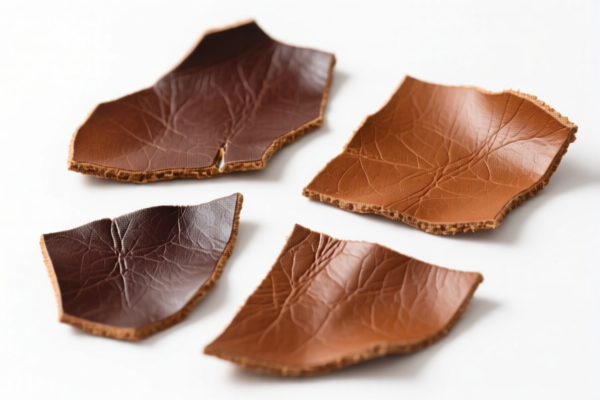
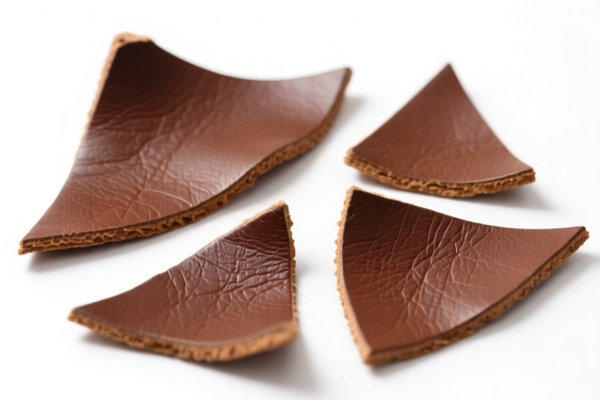
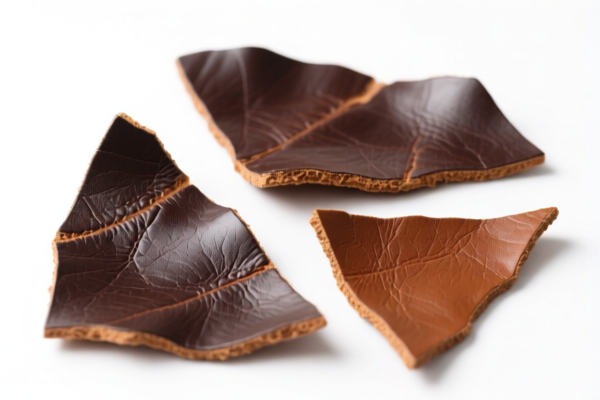
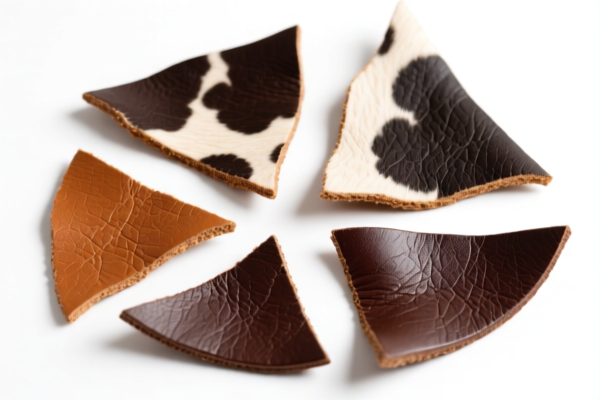
AI Analysis
🦁 Bison Cereal Slices for Model Making (Artificial Wood/Lignocellulosic Board)
🌐 HS Code Reference & Customs Clearance Guide | 2026 Latest Tariff Analysis | Professional Entry Strategy
📌 Part 1: Product Definition & Classification: What is "Bison Cereal Slices"?
"Bison Cereal Slices" is a commercial name for agglomerated wood chips or lignocellulosic flakes, often used in model making, woodworking, or crafting. Despite the name "cereal," these are not food products but rather board-like materials made from wood or other ligneous materials, bound together with resins or organic substances.
In international trade, this product falls under Chapter 44: Wood and articles of wood. Specifically, it is classified as "Particle board, oriented strand board (OSB) and similar board... of wood."
⚠️ Key Distinction:
- If the product is sandblasted, sanded, or rough-cut without further processing → It may be considered "Unworked or not further worked than sanded."
- If the product is finished, cut to specific model shapes, or coated → It is considered "Other."
- Crucial: It is NOT classified as paper (Chapter 48) because the base material is wood/lignocellulose, not paper pulp, and the structure is board-like, not fibrous sheets.
📦 Part 2: HS Code Classification Details (2026 Latest Tariff Authority)
Based on the provided data, there are two primary HS Codes for this product, depending on its level of processing:
| HS Code | Product Description | Applicable Scenario | Processing Level |
|---|---|---|---|
4410.19.00.10 |
Particle board, oriented strand board (OSB) and similar board... Of wood: Other Unworked or not further worked than sanded | Rough wood slices, sanded board blanks, raw material for model makers | ✅ Sanded only / Rough |
4410.19.00.60 |
Particle board, oriented strand board (OSB) and similar board... Of wood: Other Other | Finished model slices, pre-cut shapes, coated, or further processed | ✅ Further Worked / Finished |
🔍 Important Note:
- Both codes fall under HS Heading 4410: Particle board, oriented strand board (OSB) and similar board... of wood.
- The key differentiator is processing: Is it just sanded (...10) or further worked (...60)?
- Do NOT classify under Chapter 48 (Paper) unless the material is explicitly cellulose fibers/pulp and not wood-based. "Bison Cereal" implies wood/lignocellulose.
💰 Part 3: 2026 Latest Tariff Rate Breakdown (Detailed)
✅ Applicable Country: United States (US)
✅ Country of Origin: China (CN)
✅ Effective Date: 2025/2026 (as per provided data)
🎯 1. 4410.19.00.10 —— Particle Board (Unworked/Sanded)
| Item | Content |
|---|---|
| Basic Tariff Rate | 0.0% (Ad Valorem) |
| Additional Tariff (Section 301 / IEEPA) | +25.0% |
| Total Tariff Rate | 25.0% |
| Tax Calculation | CIF Value × 25% |
| De Minimis Exemption | ❌ Not Eligible (High tariff rate excludes de minimis) |
| Legal Basis | HS:4410.19.00.10 → Total Tax: 25.0% |
📌 Explanation:
- The 0% basic tariff reflects the standard MFN rate for wood-based boards.
- The +25% is an additional duty imposed on Chinese-origin wood products under US trade policy (Section 301/IEEPA).
- Total burden: 25%. This is a high tariff for raw materials, impacting cost significantly.
🎯 2. 4410.19.00.60 —— Particle Board (Other/Further Worked)
| Item | Content |
|---|---|
| Basic Tariff Rate | 0.0% (Ad Valorem) |
| Additional Tariff (Section 301 / IEEPA) | +25.0% |
| Total Tariff Rate | 25.0% |
| Tax Calculation | CIF Value × 25% |
| De Minimis Exemption | ❌ Not Eligible |
| Legal Basis | HS:4410.19.00.60 → Total Tax: 25.0% |
📌 Explanation:
- Same tax structure as above. Further processing does not reduce the tariff; it remains at 25%.
- Warning: Misclassifying a sanded board as "finished" (...60) vs. "sanded" (...10) does not change the tax rate, but it may affect customs inspection rigor.
🛠️ Part 4: Customs Clearance Practical Advice
✅ 1. Documentation Checklist (Essential)
| Document | Required | Notes |
|---|---|---|
| ✅ Commercial Invoice | ✔️ | Must describe item as "Wood-based Particle Board" or "Lignocellulosic Board," NOT "Cereal" (to avoid FDA/USDA confusion). |
| ✅ Product Specification | ✔️ | Confirm material is 100% wood/lignocellulose. If it contains >10% non-wood fibers, classification may change. |
| ✅ Photos of Product | ✔️ | Show texture, thickness, and any markings. Prove it is board-like, not paper or food. |
| ✅ Declaration of Non-Use as Food | ✔️ | Critical to prevent USDA/FDA hold. State: "Industrial/Craft Use Only – Not for Human Consumption." |
| ✅ Packing List | ✔️ | Clear weight and dimensions. |
✅ 2. Declaration Tips (Key Mnemonic)
🔥 "Not Food, Wood Board, 25% Tax, Declare Correctly!"
| Situation | Correct Declaration | Wrong Practice |
|---|---|---|
| Raw/Sanded Slices | 4410.19.00.10 |
Declare as "Paper" → 4823.90.86.20 (Risk of reclassification) |
| Finished/Cut Slices | 4410.19.00.60 |
Declare as "Cereal" → USDA Hold for Food Inspection |
| Mixed Materials | 4410.19.00.60 |
Hide ingredient list → Penalty + Seizure |
⚠️ Critical Warning:
- NEVER use the word "Cereal" in the English description for US customs unless it is edible.
- Use terms like: "Wood-based Model Board," "Lignocellulosic Composite Board," or "Artificial Wood Slices."
✅ 3. Special Scenarios
| Scenario | Handling Advice |
|---|---|
| Model Making Kits | If sold with other non-wood items, separate the wood part for HS classification. |
| Coated/Painted Slices | Still 4410.19.00.60. Coating does not change chapter. |
| Small Samples (De Minimis) | If value < $800, 25% tax still applies if declared correctly. No exemption for high-tariff items. |
| Non-Chinese Origin | If from Canada/Mexico, check USMCA eligibility (may have 0% tariff). |
🌍 Part 5: Global Market Comparison (2026)
| Country/Region | Recommended HS Code | Tariff Rate | Certification | Notes |
|---|---|---|---|---|
| 🇺🇸 USA | 4410.19.00.10 / 60 |
25% | None specific | High tariff due to China origin. |
| 🇨🇳 China | 4410.19.00 |
5-10% | FSC (Optional) | Lower import tariff, but export focus. |
| 🇪🇺 EU | 4410 |
0-4% | FSC/PEFC | Low tariff, but strict EUDR (Deforestation Regulation) compliance needed. |
| 🇬🇧 UK | 4410 |
0-5% | UKCA (if applicable) | Post-Brexit rules apply. |
📌 Conclusion:
- USA imposes the highest burden (25%) on Chinese-made wood-based model boards.
- EU has stricter environmental controls (EUDR) but lower tariffs.
- No de minimis exemption for this category in the US.
📌 Part 6: Common Mistakes & Pitfalls (Lessons Learned)
❌ Mistake 1: Declaring as "Paper" (4823.90.86.20)
👉 Consequence: Customs may reject if material is wood-based. Penalty for misclassification.
❌ Mistake 2: Using "Cereal" in the description
👉 Consequence: USDA/FDA inspection delay. Suspected food product.
❌ Mistake 3: Ignoring the "Wood" vs. "Pulp" distinction
👉 Consequence: Chapter 48 (Paper) vs. Chapter 44 (Wood). Wood has specific trade remedies.
✅ Correct Approach:
"Wood-Based Composite Board, for Model Making, Sanded, Not for Food Use, HS 4410.19.00.10"
🎯 Part 7: Conclusion: Professional Declaration, Cost Control!
🎯 Remember the Mantra:
🔹 "Not Food, Wood Board, 25% Tax!"
🔹 "HS Code 4410, Origin China, Declare Clearly!"
📌 Tip:
If your product is sanded only, use 4410.19.00.10.
If finished, use 4410.19.00.60.
Both are 25% total tax.
📣 Immediate Action:
📞 Consult a customs broker with product photos.
📝 Ensure "Not for Human Consumption" is clearly stated on the invoice.
🚀 Avoid USDA hold, ensure smooth customs clearance!
✨ Professional clearance starts with accurate classification!
💼 Your cost is critical; get it right the first time!
Customer Reviews
About HS Code Classification
The Harmonized System (HS) is an internationally standardized nomenclature developed by the World Customs Organization (WCO) to classify traded products. Over 200 countries use the HS system as the basis for customs tariffs, trade statistics, and import/export regulations.
Each HS code follows a hierarchical structure:
- Chapter (2 digits) — Broad category of goods (e.g., Chapter 84: Machinery and Mechanical Appliances)
- Heading (4 digits) — More specific grouping within the chapter
- Subheading (6 digits) — Internationally standardized breakdown, used by all WCO member countries
- National subdivisions (8-10 digits) — Country-specific extensions for further classification, such as US HTSUS 10-digit codes
Correct HS code classification is essential for smooth customs clearance, accurate duty payment, and compliance with trade regulations. Misclassification can lead to customs delays, overpayment of duties, or penalties.
When importing from CN to US, the applicable tariff rates may include:
- Most-Favored-Nation (MFN) rate — The standard duty rate applied to WTO members
- General rate — Applied to countries without trade agreements
- Trade remedy duties — Additional tariffs such as Section 301 (anti-dumping), Section 232 (national security), or countervailing duties
The information provided on this page is for reference purposes only. For official classification, please consult with your local customs authority or a licensed customs broker.