Black Dog Collar (M)
CN → US| HS编码 | 关税税率 | 原产国 | 目的国 | 文档 |
|---|---|---|---|---|
| 4201003000 | 37.4% | CN | US | 官方文档 |
| 4201006000 | 37.8% | CN | US | 官方文档 |
| 3926906520 | 14.2% | CN | US | 官方文档 |
| 4201003000 | 37.4% | CN | US | 官方文档 |
| 4201003000 | 37.4% | CN | US | 官方文档 |
商品图片
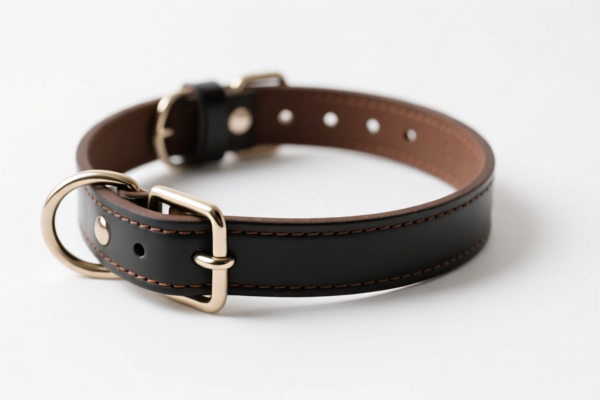
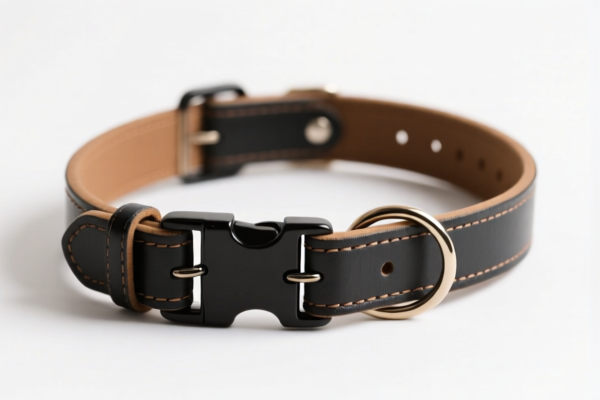
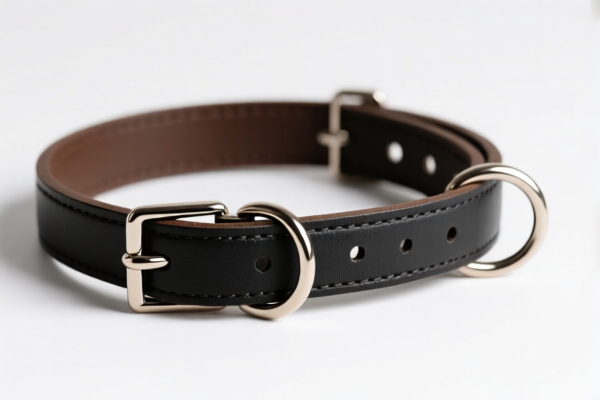
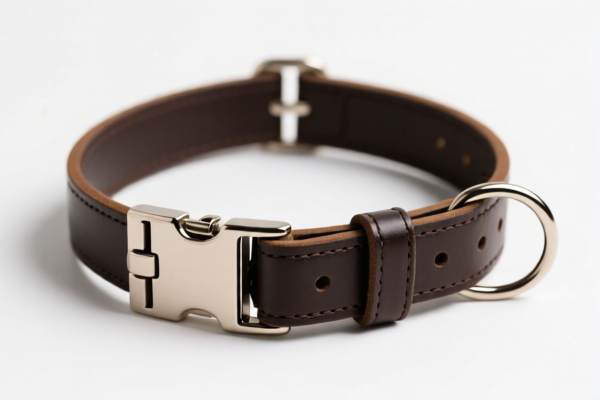
AI分析
🐕 Black Dog Collar (Medium) – The Ultimate Customs & Tax Guide 2026
🌐 HS Code Reference & Clearance Strategy | Understanding the "Collar vs. Harness" Trap | Pro-Level Compliance
📌 I. Product Definition & Classification: Is It Just a Collar?
A Black Dog Collar (M) is a fundamental accessory for pet control and identification. However, in international trade, its classification depends heavily on material composition and specific use-case definitions. Misclassification here is the #1 cause of overpaying duties or facing customs delays.
In the Harmonized System (HS), collars often fall into two distinct chapters: 1. Chapter 42 (Articles of Leather; Saddle Harness): If made of leather, fabric, or nylon, it is often classified under "Harness and Tack." 2. Chapter 39 (Plastics and Articles Thereof): If made primarily of plastic, PVC, or synthetic materials, it may fall under "Other Plastic Articles."
⚠️ Key Distinction Point:
- If the product is leather, nylon, or woven fabric → It is treated as Animal Harness/Tack (Chapter 42).
- If the product is hard plastic, PVC, or synthetic rubber → It is treated as Plastic Article (Chapter 39).
📦 II. HS Code Classification Matrix (Based on Provided Data)
Below are the three most likely HS codes for a Black Dog Collar (M), derived strictly from the provided dataset. Note that the Total Tax Rate varies significantly based on the material inferred.
| HS Code | Summary & Inference | Total Tax Rate | Tax Breakdown |
|---|---|---|---|
| 4201.00.30.00 | Matched Use (Dog Collar) & Form. Material inferred as Leather, Nylon, or Fabric. | 37.4% | Base: 2.4% Additional: 25.0% Section 122: 10% |
| 4201.00.60.00 | Matched Use (Animal Harness/Tack). Material inferred as Leather or Fabric. | 37.8% | Base: 2.8% Additional: 25.0% Section 122: 10% |
| 3926.90.65.20 | Material Inference: Plastic/Synthetic Leather. Classified as Other Plastic Articles. | 14.2% | Base: 4.2% Additional: 0.0% Section 122: 10% |
🔍 Critical Observation:
- Plastic/Synthetic Collars (HS 3926) enjoy a much lower total tax (14.2%) because they are exempt from the 25% Additional Duty. - Leather/Nylon/Fabric Collars (HS 4201) are subject to the 25% Additional Duty, pushing the total tax to ~37-38%. - Section 122 Tariff (10%) applies to ALL these categories in this dataset.
💰 III. Detailed Tax Clause Explanation (2026 Latest Rules)
✅ Applicable Jurisdiction: United States (US)
✅ Origin: China (CN)
✅ Applicable Dates: Based on current trade policies including Section 301 and Section 122 measures.
🎯 1. For Leather/Nylon/Fabric Collars (HS 4201.00.30.00 & 4201.00.60.00)
| Item | Detail |
|---|---|
| Base Duty (MFN) | 2.4% - 2.8% (Ad Valorem) |
| Section 301 Additional Duty | +25.0% Legal Basis: U.S. Trade Act of 1974, Section 301. Targets specific Chinese imports, including animal harnesses and leather articles. |
| Section 122 Tariff | +10.0% Legal Basis: Specific statutory tariff applied to certain goods from China. |
| Total Effective Tax | 37.4% - 37.8% |
| Calculation | Tax = CIF Value × (2.4%~2.8% + 25% + 10%) |
| De Minimis Exemption? | ❌ NO Goods subject to Section 301 or 122 tariffs are generally excluded from the $800 de minimis exemption (8 U.S.C. § 1321(a)(2)). |
📌 Why So High?
The 25% Additional Duty is the main driver. Even with a low base rate, the叠加 (superposition) of Section 301 and Section 122 creates a high barrier. Customs officials scrutinize these codes for misclassification to plastic items to avoid these duties.
🎯 2. For Plastic/Synthetic Collars (HS 3926.90.65.20)
| Item | Detail |
|---|---|
| Base Duty (MFN) | 4.2% (Ad Valorem) |
| Section 301 Additional Duty | 0.0% Note: Certain plastic articles may be excluded from the 25% rate depending on the specific HTS subheading and exclusion lists. In this dataset, it is 0%. |
| Section 122 Tariff | +10.0% Legal Basis: Same Section 122 provision applies. |
| Total Effective Tax | 14.2% |
| Calculation | Tax = CIF Value × (4.2% + 0% + 10%) |
| De Minimis Exemption? | ❌ NO (If Section 122 applies, de minimis is often denied, similar to Sec 301 goods. Check current CBP enforcement strictly). |
📌 Why Lower?
The absence of the 25% Section 301 duty makes this category significantly cheaper to import. However, you must prove the product is >50% plastic by weight or essential character to claim this code. If it has leather trim, it may be reclassified to Chapter 42.
🛠️ IV. Customs Clearance Operational Advice (Avoiding Pitfalls)
✅ 1. Material Verification is Key
Before shipping, you must know the exact material composition. - Leather/Nylon/Fabric? → Expect ~37.4% tax. - 100% Plastic/PVC/Synthetic? → Expect 14.2% tax.
🚨 Warning: Do not claim "Plastic" if the collar has a leather buckle or nylon webbing. Customs may reclassify it to 4201.00.30.00 or 4201.00.60.00 based on the "Essential Character" rule, leading to back taxes + penalties.
✅ 2. Documentation Requirements
| Document | Purpose |
|---|---|
| Commercial Invoice | Must clearly state: "Dog Collar, Medium, Material: [Leather/Nylon/Plastic]." Do not just say "Pet Accessory." |
| Material Specification Sheet | Detail the % composition of each part (e.g., "Belt: 100% Nylon; Buckle: Zinc Alloy; Lining: Cotton"). |
| Product Photos | High-res photos showing the texture and components to prove material type. |
| Supply Chain Proof | If claiming Plastic (14.2%), provide invoices from plastic raw material suppliers to prove origin and composition. |
✅ 3. Smart Classification Strategy
| Scenario | Recommended HS Code | Risk Level | Action |
|---|---|---|---|
| Standard Nylon Collar | 4201.00.30.00 |
Medium | Accept 37.4% tax. Ensure no leather parts. |
| Leather Collar | 4201.00.60.00 |
Medium | Accept 37.8% tax. Common for "premium" black collars. |
| PVC/Plastic Collar | 3926.90.65.20 |
Low (Tax) / High (Audit) | Best for cost. Ensure no fabric/leather. Be prepared for audit. |
| Collar + Leash Set | N/A | High | Do not ship mixed sets without clear separation. Leashes may have different rules. |
💡 Pro Tip:
If your black dog collar is made of nylon (common for "Black Dog Collars"), it falls under Chapter 42 (Harness/Tack), not Chapter 59 (Textiles). Many exporters mistakenly try to classify nylon collars as textiles to avoid the 25% duty, which is a red flag for CBP. Stick to4201.00.30.00for nylon/leather.
🌍 V. Global Market Comparison (2026 Outlook)
| Market | Likely HS Code | Est. Total Tax | Notes |
|---|---|---|---|
| 🇺🇸 USA | 4201.00.30.00 / 3926.90.65.20 |
14.2% - 37.8% | Heavily impacted by Sec 301 (25%) and Sec 122 (10%). |
| 🇨🇳 China | 4201.00.30.00 |
~5-10% | Lower base duties. No Section 122/301 reverse tariffs. |
| 🇪🇺 EU | 4201.00.00 |
~4-6% | No Section 301/122 equivalents. Standard MFN rates apply. |
| 🇬🇧 UK | 4201.00.00 |
~4-6% | Post-Brexit tariffs similar to EU. No US-style punitive tariffs. |
📌 Conclusion for US Imports:
The 14.2% vs. 37.8% difference is massive. If your product can be engineered to be 100% plastic/PVC (e.g., reflective plastic collars), you save ~23% on duties. If it must be nylon/leather, budget for the higher rate.
📌 VI. Common Errors & How to Avoid Them
❌ Error 1: Labeling a Nylon Collar as "Textile Product" (HS 5903/6307).
👉 Consequence: CBP reclassifies to 4201.00.30.00 → Back taxes of 37.4% + storage fees.
✅ Fix: Always classify nylon/leather harnesses under Chapter 42.
❌ Error 2: Claiming "Plastic" for a collar with a leather buckle.
👉 Consequence: Rejection or reclassification to 4201.00.30.00.
✅ Fix: If >50% by weight/value is plastic, it might pass, but disclose fully. Better to use 4201 if mixed.
❌ Error 3: Ignoring Section 122.
👉 Consequence: Underpaying tax by 10%.
✅ Fix: Remember, Section 122 (10%) applies to ALL three HS codes in the dataset. Do not forget this layer.
🎯 VII. Final Recommendation: Optimize Your Cost
- Audit Your BOM (Bill of Materials): Is your "Black Dog Collar" truly plastic? Can you switch buckles to plastic? Can you use synthetic webbing that qualifies as plastic?
- If Plastic: Declare under
3926.90.65.20. Save ~23% in duties. - If Nylon/Leather: Declare under
4201.00.30.00. It is the most accurate for standard black nylon collars. Do not try to game the system with textile codes. - Pre-Ruling: For large shipments, consider applying for a Customs Ruling from CBP to confirm the HS code and avoid surprise audits.
📣 Immediate Action:
📞 Consult your broker with the exact material spec sheet.
🚀 Label clearly: "Material: Nylon" or "Material: PVC".
💼 Plan for 37.4% tax if nylon, or 14.2% if plastic.
✨ Precision in Classification = Profit in Margins!
💼 Don't let a 25% duty surprise eat your margin!
用户评价
关于 HS 编码归类
协调制度(HS)是由世界海关组织(WCO)制定的国际贸易商品分类标准。全球 200 多个国家采用 HS 系统作为海关关税、贸易统计和进出口监管的基础。
每个 HS 编码遵循以下层级结构:
- 章(2 位)——商品大类(例如:第 84 章:机器和机械设备)
- 品目(4 位)——章内的更具体分类
- 子目(6 位)——国际通用细分,所有 WCO 成员国统一使用
- 本国细分(8-10 位)——各国自行扩展的细分编码,如美国 HTSUS 10 位编码
正确的 HS 编码归类对于顺利通关、准确缴纳关税和遵守贸易法规至关重要。错误归类可能导致海关延误、多缴关税或罚款。
从CN进口到US时,适用的关税税率可能包括:
- 最惠国(MFN)税率——适用于 WTO 成员国的标准关税税率
- 普通税率——适用于无贸易协定国家
- 贸易救济关税——附加关税,如 301 条款(反倾销)、232 条款(国家安全)或反补贴税
本页内容仅供参考。如需正式归类,请咨询当地海关或持牌报关代理。