Black Dog Collar (M)
CN → US| HS Code | Tariff Rate | Origin | Destination | Doc |
|---|---|---|---|---|
| 4201003000 | 37.4% | CN | US | Official Doc |
| 4201006000 | 37.8% | CN | US | Official Doc |
| 3926906520 | 14.2% | CN | US | Official Doc |
| 4201003000 | 37.4% | CN | US | Official Doc |
| 4201003000 | 37.4% | CN | US | Official Doc |
Product Images
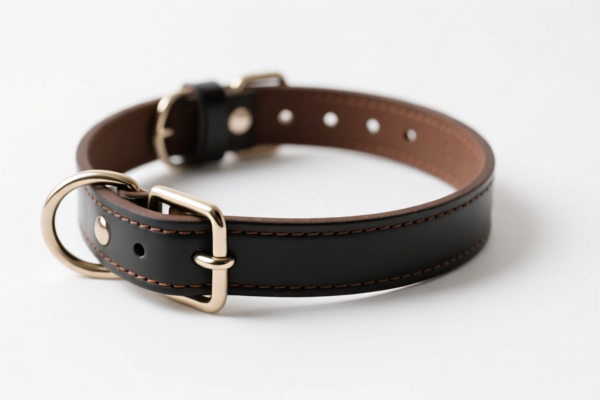
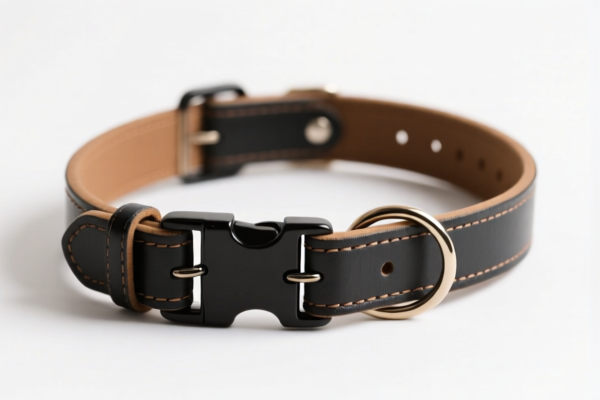
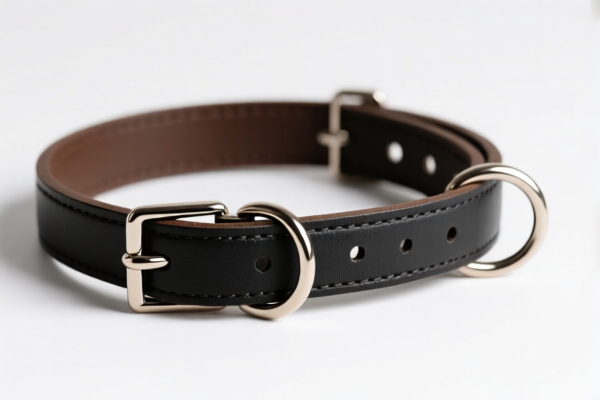
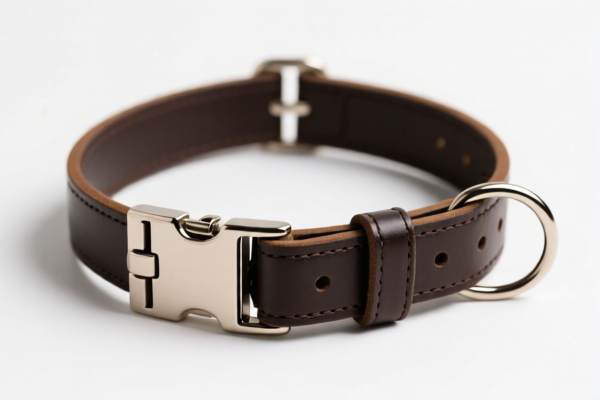
AI Analysis
🐕 Black Dog Collar (Medium) – The Ultimate Customs & Tax Guide 2026
🌐 HS Code Reference & Clearance Strategy | Understanding the "Collar vs. Harness" Trap | Pro-Level Compliance
📌 I. Product Definition & Classification: Is It Just a Collar?
A Black Dog Collar (M) is a fundamental accessory for pet control and identification. However, in international trade, its classification depends heavily on material composition and specific use-case definitions. Misclassification here is the #1 cause of overpaying duties or facing customs delays.
In the Harmonized System (HS), collars often fall into two distinct chapters: 1. Chapter 42 (Articles of Leather; Saddle Harness): If made of leather, fabric, or nylon, it is often classified under "Harness and Tack." 2. Chapter 39 (Plastics and Articles Thereof): If made primarily of plastic, PVC, or synthetic materials, it may fall under "Other Plastic Articles."
⚠️ Key Distinction Point:
- If the product is leather, nylon, or woven fabric → It is treated as Animal Harness/Tack (Chapter 42).
- If the product is hard plastic, PVC, or synthetic rubber → It is treated as Plastic Article (Chapter 39).
📦 II. HS Code Classification Matrix (Based on Provided Data)
Below are the three most likely HS codes for a Black Dog Collar (M), derived strictly from the provided dataset. Note that the Total Tax Rate varies significantly based on the material inferred.
| HS Code | Summary & Inference | Total Tax Rate | Tax Breakdown |
|---|---|---|---|
| 4201.00.30.00 | Matched Use (Dog Collar) & Form. Material inferred as Leather, Nylon, or Fabric. | 37.4% | Base: 2.4% Additional: 25.0% Section 122: 10% |
| 4201.00.60.00 | Matched Use (Animal Harness/Tack). Material inferred as Leather or Fabric. | 37.8% | Base: 2.8% Additional: 25.0% Section 122: 10% |
| 3926.90.65.20 | Material Inference: Plastic/Synthetic Leather. Classified as Other Plastic Articles. | 14.2% | Base: 4.2% Additional: 0.0% Section 122: 10% |
🔍 Critical Observation:
- Plastic/Synthetic Collars (HS 3926) enjoy a much lower total tax (14.2%) because they are exempt from the 25% Additional Duty. - Leather/Nylon/Fabric Collars (HS 4201) are subject to the 25% Additional Duty, pushing the total tax to ~37-38%. - Section 122 Tariff (10%) applies to ALL these categories in this dataset.
💰 III. Detailed Tax Clause Explanation (2026 Latest Rules)
✅ Applicable Jurisdiction: United States (US)
✅ Origin: China (CN)
✅ Applicable Dates: Based on current trade policies including Section 301 and Section 122 measures.
🎯 1. For Leather/Nylon/Fabric Collars (HS 4201.00.30.00 & 4201.00.60.00)
| Item | Detail |
|---|---|
| Base Duty (MFN) | 2.4% - 2.8% (Ad Valorem) |
| Section 301 Additional Duty | +25.0% Legal Basis: U.S. Trade Act of 1974, Section 301. Targets specific Chinese imports, including animal harnesses and leather articles. |
| Section 122 Tariff | +10.0% Legal Basis: Specific statutory tariff applied to certain goods from China. |
| Total Effective Tax | 37.4% - 37.8% |
| Calculation | Tax = CIF Value × (2.4%~2.8% + 25% + 10%) |
| De Minimis Exemption? | ❌ NO Goods subject to Section 301 or 122 tariffs are generally excluded from the $800 de minimis exemption (8 U.S.C. § 1321(a)(2)). |
📌 Why So High?
The 25% Additional Duty is the main driver. Even with a low base rate, the叠加 (superposition) of Section 301 and Section 122 creates a high barrier. Customs officials scrutinize these codes for misclassification to plastic items to avoid these duties.
🎯 2. For Plastic/Synthetic Collars (HS 3926.90.65.20)
| Item | Detail |
|---|---|
| Base Duty (MFN) | 4.2% (Ad Valorem) |
| Section 301 Additional Duty | 0.0% Note: Certain plastic articles may be excluded from the 25% rate depending on the specific HTS subheading and exclusion lists. In this dataset, it is 0%. |
| Section 122 Tariff | +10.0% Legal Basis: Same Section 122 provision applies. |
| Total Effective Tax | 14.2% |
| Calculation | Tax = CIF Value × (4.2% + 0% + 10%) |
| De Minimis Exemption? | ❌ NO (If Section 122 applies, de minimis is often denied, similar to Sec 301 goods. Check current CBP enforcement strictly). |
📌 Why Lower?
The absence of the 25% Section 301 duty makes this category significantly cheaper to import. However, you must prove the product is >50% plastic by weight or essential character to claim this code. If it has leather trim, it may be reclassified to Chapter 42.
🛠️ IV. Customs Clearance Operational Advice (Avoiding Pitfalls)
✅ 1. Material Verification is Key
Before shipping, you must know the exact material composition. - Leather/Nylon/Fabric? → Expect ~37.4% tax. - 100% Plastic/PVC/Synthetic? → Expect 14.2% tax.
🚨 Warning: Do not claim "Plastic" if the collar has a leather buckle or nylon webbing. Customs may reclassify it to 4201.00.30.00 or 4201.00.60.00 based on the "Essential Character" rule, leading to back taxes + penalties.
✅ 2. Documentation Requirements
| Document | Purpose |
|---|---|
| Commercial Invoice | Must clearly state: "Dog Collar, Medium, Material: [Leather/Nylon/Plastic]." Do not just say "Pet Accessory." |
| Material Specification Sheet | Detail the % composition of each part (e.g., "Belt: 100% Nylon; Buckle: Zinc Alloy; Lining: Cotton"). |
| Product Photos | High-res photos showing the texture and components to prove material type. |
| Supply Chain Proof | If claiming Plastic (14.2%), provide invoices from plastic raw material suppliers to prove origin and composition. |
✅ 3. Smart Classification Strategy
| Scenario | Recommended HS Code | Risk Level | Action |
|---|---|---|---|
| Standard Nylon Collar | 4201.00.30.00 |
Medium | Accept 37.4% tax. Ensure no leather parts. |
| Leather Collar | 4201.00.60.00 |
Medium | Accept 37.8% tax. Common for "premium" black collars. |
| PVC/Plastic Collar | 3926.90.65.20 |
Low (Tax) / High (Audit) | Best for cost. Ensure no fabric/leather. Be prepared for audit. |
| Collar + Leash Set | N/A | High | Do not ship mixed sets without clear separation. Leashes may have different rules. |
💡 Pro Tip:
If your black dog collar is made of nylon (common for "Black Dog Collars"), it falls under Chapter 42 (Harness/Tack), not Chapter 59 (Textiles). Many exporters mistakenly try to classify nylon collars as textiles to avoid the 25% duty, which is a red flag for CBP. Stick to4201.00.30.00for nylon/leather.
🌍 V. Global Market Comparison (2026 Outlook)
| Market | Likely HS Code | Est. Total Tax | Notes |
|---|---|---|---|
| 🇺🇸 USA | 4201.00.30.00 / 3926.90.65.20 |
14.2% - 37.8% | Heavily impacted by Sec 301 (25%) and Sec 122 (10%). |
| 🇨🇳 China | 4201.00.30.00 |
~5-10% | Lower base duties. No Section 122/301 reverse tariffs. |
| 🇪🇺 EU | 4201.00.00 |
~4-6% | No Section 301/122 equivalents. Standard MFN rates apply. |
| 🇬🇧 UK | 4201.00.00 |
~4-6% | Post-Brexit tariffs similar to EU. No US-style punitive tariffs. |
📌 Conclusion for US Imports:
The 14.2% vs. 37.8% difference is massive. If your product can be engineered to be 100% plastic/PVC (e.g., reflective plastic collars), you save ~23% on duties. If it must be nylon/leather, budget for the higher rate.
📌 VI. Common Errors & How to Avoid Them
❌ Error 1: Labeling a Nylon Collar as "Textile Product" (HS 5903/6307).
👉 Consequence: CBP reclassifies to 4201.00.30.00 → Back taxes of 37.4% + storage fees.
✅ Fix: Always classify nylon/leather harnesses under Chapter 42.
❌ Error 2: Claiming "Plastic" for a collar with a leather buckle.
👉 Consequence: Rejection or reclassification to 4201.00.30.00.
✅ Fix: If >50% by weight/value is plastic, it might pass, but disclose fully. Better to use 4201 if mixed.
❌ Error 3: Ignoring Section 122.
👉 Consequence: Underpaying tax by 10%.
✅ Fix: Remember, Section 122 (10%) applies to ALL three HS codes in the dataset. Do not forget this layer.
🎯 VII. Final Recommendation: Optimize Your Cost
- Audit Your BOM (Bill of Materials): Is your "Black Dog Collar" truly plastic? Can you switch buckles to plastic? Can you use synthetic webbing that qualifies as plastic?
- If Plastic: Declare under
3926.90.65.20. Save ~23% in duties. - If Nylon/Leather: Declare under
4201.00.30.00. It is the most accurate for standard black nylon collars. Do not try to game the system with textile codes. - Pre-Ruling: For large shipments, consider applying for a Customs Ruling from CBP to confirm the HS code and avoid surprise audits.
📣 Immediate Action:
📞 Consult your broker with the exact material spec sheet.
🚀 Label clearly: "Material: Nylon" or "Material: PVC".
💼 Plan for 37.4% tax if nylon, or 14.2% if plastic.
✨ Precision in Classification = Profit in Margins!
💼 Don't let a 25% duty surprise eat your margin!
Customer Reviews
About HS Code Classification
The Harmonized System (HS) is an internationally standardized nomenclature developed by the World Customs Organization (WCO) to classify traded products. Over 200 countries use the HS system as the basis for customs tariffs, trade statistics, and import/export regulations.
Each HS code follows a hierarchical structure:
- Chapter (2 digits) — Broad category of goods (e.g., Chapter 84: Machinery and Mechanical Appliances)
- Heading (4 digits) — More specific grouping within the chapter
- Subheading (6 digits) — Internationally standardized breakdown, used by all WCO member countries
- National subdivisions (8-10 digits) — Country-specific extensions for further classification, such as US HTSUS 10-digit codes
Correct HS code classification is essential for smooth customs clearance, accurate duty payment, and compliance with trade regulations. Misclassification can lead to customs delays, overpayment of duties, or penalties.
When importing from CN to US, the applicable tariff rates may include:
- Most-Favored-Nation (MFN) rate — The standard duty rate applied to WTO members
- General rate — Applied to countries without trade agreements
- Trade remedy duties — Additional tariffs such as Section 301 (anti-dumping), Section 232 (national security), or countervailing duties
The information provided on this page is for reference purposes only. For official classification, please consult with your local customs authority or a licensed customs broker.