Blackout Fabric
CN → US| HS编码 | 关税税率 | 原产国 | 目的国 | 文档 |
|---|---|---|---|---|
| 5903102090 | 35.0% | CN | US | 官方文档 |
| 5603120070 | 35.0% | CN | US | 官方文档 |
| 5603110070 | 35.0% | CN | US | 官方文档 |
| 6306191100 | 25.5% | CN | US | 官方文档 |
| 6306120000 | 18.8% | CN | US | 官方文档 |
商品图片
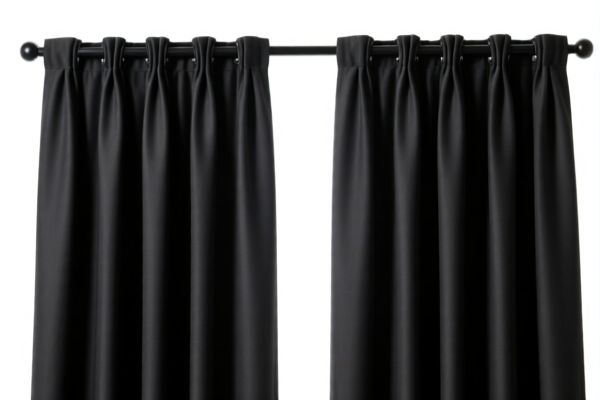
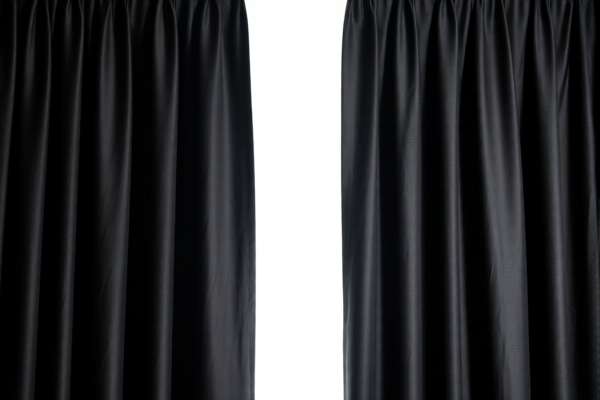
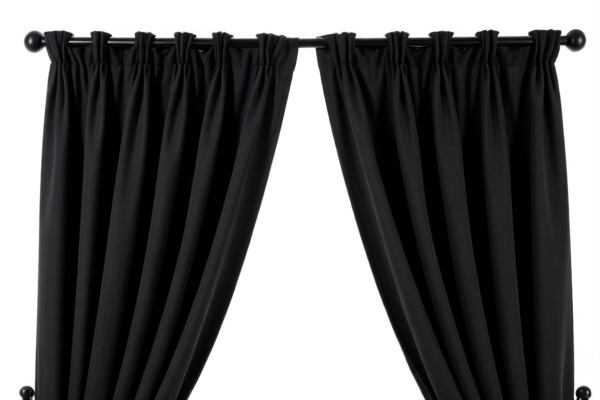
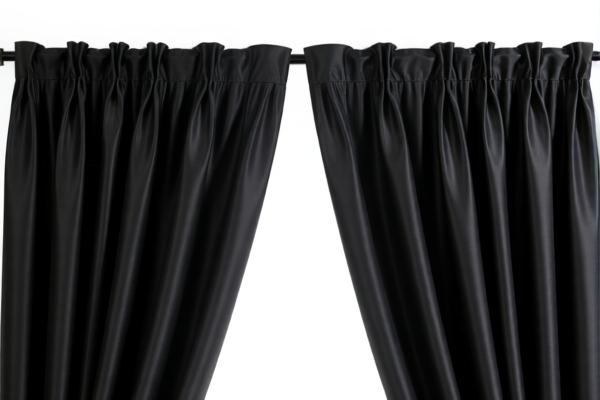
AI分析
🌑 Blackout Fabric (遮阳布/遮光布)
🌐 HS Code Reference & Customs Clearance Guide | 2026 Latest Tariff Analysis | Professional Import Strategy
📌 I. Product Definition & Classification: What Exactly is "Blackout Fabric"?
Blackout fabric is a specialized textile material designed to block light completely. In international trade, its classification is not determined by a single function, but by its material composition and manufacturing process. It generally falls into two main categories:
- Coated/Impregnated Textile Fabrics: Traditional woven fabrics (cotton, polyester, etc.) that have been coated with plastic (PVC, acrylic, etc.) to make them light-proof.
- Key Characteristic: The base is a woven fabric, modified by chemical treatment.
- Non-woven Fabrics: Synthetic fibers (polyethylene, polypropylene) bonded together mechanically or chemically, without weaving. Often used for cheaper, disposable, or industrial sunshades.
- Key Characteristic: No weaving structure; feels more like felt or thick paper.
⚠️ Critical Distinction Point:
- If the fabric is a woven textile coated with plastic → It belongs to Chapter 59 (Impregnated, Coated, Covered or Covered with Plastics Textile Fabrics).
- If the fabric is a non-woven sheet made of synthetic fibers → It belongs to Chapter 56 (Batting, Felt and Nonwovens).
- If the fabric is already made into a finished curtain or awning made of specific materials (e.g., cotton or synthetic) → It may fall under Chapter 63 (Other Made-up Textile Articles).
📦 II. HS Code Classification Details (2026 Latest Tariff Authority Match)
| HS Code | Product Description | Material/Structure | Tax Rate (China Origin → US) |
|---|---|---|---|
| 5903.10.20.90 | Textile fabric impregnated, coated, covered or laminated with plastics, of synthetic fibers | Woven fabric + Plastic Coating (e.g., PVC blackout curtain) | 35.0% |
| 5603.12.00.70 | Nonwovens, weighing >150 g/m², of synthetic fibers | Non-woven synthetic (e.g., Polypropylene sunshade) | 35.0% |
| 5603.11.00.70 | Nonwovens, weighing ≤150 g/m², of synthetic fibers | Lighter Non-woven synthetic | 35.0% |
| 6306.19.11.00 | Other sails and sunblinds and the like, of other textile materials (e.g., Cotton) | Finished Made-up Article (Cotton base) | 25.5% |
| 6306.12.00.00 | Other sails and sunblinds and the like, of synthetic fibers | Finished Made-up Article (Synthetic base) | 18.8% |
🔍 Key Insight:
- Chapters 59 & 56 refer to raw materials or semi-finished fabrics (rolls of cloth).
- Chapter 63 refers to finished articles (cut and sewn curtains, awnings, or blinds).
- Misclassification Risk: If you ship "Blackout Fabric Rolls," do not use Chapter 63. If you ship "Ready-to-hang Blackout Curtains," do not use Chapter 59.
💰 III. 2026 Latest Tariff Rate Breakdown (Including Additional Taxes & Policy Add-ons)
✅ Applicable Country: United States (US)
✅ Origin: China (CN)
✅ Effective Date: November 10, 2025 onwards (including subsequent imports)
🎯 1. 5903.10.20.90 & 5603.12.00.70 & 5603.11.00.70 — Plastic-Coated & Non-Woven Fabrics
| Item | Content |
|---|---|
| Base Duty Rate | 0.0% (Ad Valorem) |
| Section 301 Additional Duty | +25.0% (USITC Footnote 9903.88.01) |
| Section 122 / IEEPA Additional Duty | +10.0% (Against China/HK products, effective Nov 10, 2025) |
| Total Effective Rate | 35.0% |
| Tax Calculation | CIF Value × 35% |
| De Minimis Exemption | ❌ Not Eligible (deny_de_minimis) |
| Legal Basis Path | IEEPA:9903.01.25 → USITC:5903.10.20.90 → FOOTNOTE:9903.88.01 |
📌 Explanation:
- These codes fall under Section 301 (25% tariff) due to their strategic material status.
- The additional 10% is applied under Section 122/IEEPA provisions targeting specific Chinese textiles.
- Total 35% is extremely high for raw textiles. Cost control is essential.
🎯 2. 6306.19.11.00 — Finished Sunblinds/Curtains (Cotton Base)
| Item | Content |
|---|---|
| Base Duty Rate | 8.0% |
| Section 301 Additional Duty | +7.5% |
| Section 122 / IEEPA Additional Duty | +10.0% |
| Total Effective Rate | 25.5% |
| Tax Calculation | CIF Value × 25.5% |
| De Minimis Exemption | ❌ Not Eligible |
| Legal Basis Path | IEEPA:9903.01.24 → USITC:6306.19.11.00 → FOOTNOTE:9903.88.01 |
📌 Note:
- Cotton-based finished products have a higher base rate (8%) but lower Section 301 add-on (7.5%), resulting in a 25.5% total. Still significant.
🎯 3. 6306.12.00.00 — Finished Sunblinds/Curtains (Synthetic Base)
| Item | Content |
|---|---|
| Base Duty Rate | 8.8% |
| Section 301 Additional Duty | 0.0% |
| Section 122 / IEEPA Additional Duty | +10.0% |
| Total Effective Rate | 18.8% |
| Tax Calculation | CIF Value × 18.8% |
| De Minimis Exemption | ❌ Not Eligible |
| Legal Basis Path | IEEPA:9903.01.24 → USITC:6306.12.00.00 → FOOTNOTE:9903.88.01 |
📌 Strategic Advantage:
- This is the most cost-effective option among the listed codes.
- Why 0% Section 301? Synthetic finished textiles (Chapter 63) often enjoy exemption from the 25% Section 301 tariff, retaining only the 8.8% base + 10% IEEPA = 18.8%.
- Recommendation: If you can manufacture finished curtains/awnings from synthetic fabrics, this is the optimal HS code to minimize tariffs.
🛠️ IV. Customs Clearance Practical Advice (Battle-Tested Pitfall Avoidance)
✅ 1. Documentation Checklist (Mandatory)
| Document | Must Provide | Explanation |
|---|---|---|
| ✅ Product Specification Sheet | ✔️ | Detailed composition: e.g., "100% Polyester, PVC Coated, Weight 200gsm" |
| ✅ Material Safety Data Sheet (MSDS) | ✔️ | For coated fabrics, to prove chemical compliance |
| ✅ Product Photos (Clear) | ✔️ | Show texture, coating, and label. Must distinguish between "Roll" and "Sewn Item" |
| ✅ Commercial Invoice | ✔️ | Clearly state: "Blackout Fabric Roll" or "Sewn Blackout Curtain" |
| ✅ Packing List | ✔️ | Include gross/net weight, dimensions |
| ✅ Declaration of Origin | ✔️ | Essential for determining IEEPA applicability |
✅ 2. Declaration Tips (Critical Mnemonic)
🔥 "Raw Fabric = Ch 59/56, Finished Good = Ch 63; Synthetic Finishes Win, Cotton Coats Begin!"
| Scenario | Correct HS Code | Mistake to Avoid |
|---|---|---|
| Roll of Blackout Cloth (PVC Coated) | 5903.10.20.90 |
Don't declare as "Curtain" → Risk of higher base duty + classification dispute |
| Non-woven Polypropylene Sheet | 5603.12.00.70 |
Don't declare as "Textile Fabric" → Must specify "Non-woven" |
| Sewn Blackout Curtain (Synthetic) | 6306.12.00.00 |
Don't declare as "Fabric" → Saves 16.2% tariff! |
| Sewn Blackout Curtain (Cotton) | 6306.19.11.00 |
Higher base rate; verify material content strictly |
✅ 3. Special Circumstances Handling
| Situation | Handling Advice |
|---|---|
| Hybrid Products (e.g., Fabric + Grommets + Pockets) | If sewn and ready for use, declare as Finished Article (Ch 63). Do not split parts. |
| Sample Rolls | Even samples are subject to full tariffs if > $800 (US De Minimis exemption does NOT apply to these codes). |
| OEM Private Label | Ensure the invoice matches the product exactly. "Blackout Fabric" is too vague; use "Polyester Woven Fabric, PVC Coated, Black, Width 150cm". |
🌍 V. Global Market Comparison (2026 Latest)
| Country/Region | Recommended HS Code | Total Tariff (China Origin) | Certification Required | Notes |
|---|---|---|---|---|
| 🇺🇸 USA | 6306.12.00.00 |
18.8% | No special cert | Best rate for finished synthetics |
| 🇺🇸 USA | 5903.10.20.90 |
35.0% | No special cert | High tariff for coated fabrics |
| 🇪🇺 EU | 6303.92 |
0% - 12% | CE (if applicable) | Lower duties, but stricter REACH chemicals rules |
| 🇨🇳 China | 5903.10.20.90 |
8% - 10% | CCC (if specific) | Low export tax, but check domestic policies |
| 🇦🇺 Australia | 6306.12.00.00 |
5% | No special cert | Competitive market |
📌 Conclusion:
- USA: Focus on finished synthetic products (6306.12.00.00) to keep tariffs at 18.8% instead of 35%.
- Raw Coated Fabrics face the highest penalty. Consider value-addition (sewing) before export to the US.
📌 VI. Common Errors & Pitfall Guide (Blood & Tears Lessons)
❌ Mistake 1: Declaring "Sewn Curtains" as "Raw Fabric" (5903.10.20.90)
👉 Consequence: Customs may reclassify and charge additional duties + penalties for incorrect declaration. Also, you miss the chance to prove it's a "finished good" if documentation is weak.
❌ Mistake 2: Declaring "Non-woven Rolls" as "Woven Textile"
👉 Consequence: Rejection by customs. Non-wovens (5603) and Wovens (5903) have different testing requirements.
❌ Mistake 3: Ignoring the "122 Clause" (IEEPA 10%)
👉 Consequence: Underestimating total landed cost by 10%. Always factor this into your pricing.
❌ Mistake 4: Using vague terms like "Sunshade Cloth" without material details
👉 Consequence: Delayed customs clearance. Officers will ask for specifications, causing port storage fees.
✅ Correct Practice:
"Sewn Blackout Curtains, 100% Polyester, Synthetic Fiber, With Rod Pocket, Model XYZ, Width 72 inch, Length 84 inch"
🎯 VII. Conclusion: Precise Classification Saves Profit!
🎯 Remember the Golden Rules:
🔹 "Finished Synthetic Wins (18.8%), Raw Coated Loses (35%), Cotton is Middle (25.5%)."
🔹 "Is it a roll or a curtain? If sewn, it's Chapter 63. If raw, it's Chapter 59/56."
🔹 "Always add 10% IEEPA to your cost model for China-origin textiles."
📌 Pro Tip:
If your blackout fabric is sourced from Vietnam, Indonesia, or Turkey, you may qualify for lower or zero IEEPA duties.
Action:
📞 Contact a licensed customs broker for an Advance Ruling.
📋 Prepare material composition sheets and product images.
🚀 Optimize your supply chain to export finished synthetic curtains to maximize margin!
✨ Professional Clearance Starts with Accurate Classification!
💼 Your every dollar of profit deserves precise calculation!
用户评价
关于 HS 编码归类
协调制度(HS)是由世界海关组织(WCO)制定的国际贸易商品分类标准。全球 200 多个国家采用 HS 系统作为海关关税、贸易统计和进出口监管的基础。
每个 HS 编码遵循以下层级结构:
- 章(2 位)——商品大类(例如:第 84 章:机器和机械设备)
- 品目(4 位)——章内的更具体分类
- 子目(6 位)——国际通用细分,所有 WCO 成员国统一使用
- 本国细分(8-10 位)——各国自行扩展的细分编码,如美国 HTSUS 10 位编码
正确的 HS 编码归类对于顺利通关、准确缴纳关税和遵守贸易法规至关重要。错误归类可能导致海关延误、多缴关税或罚款。
从CN进口到US时,适用的关税税率可能包括:
- 最惠国(MFN)税率——适用于 WTO 成员国的标准关税税率
- 普通税率——适用于无贸易协定国家
- 贸易救济关税——附加关税,如 301 条款(反倾销)、232 条款(国家安全)或反补贴税
本页内容仅供参考。如需正式归类,请咨询当地海关或持牌报关代理。