Blackout Fabric
CN → US| HS Code | Tariff Rate | Origin | Destination | Doc |
|---|---|---|---|---|
| 5903102090 | 35.0% | CN | US | Official Doc |
| 5603120070 | 35.0% | CN | US | Official Doc |
| 5603110070 | 35.0% | CN | US | Official Doc |
| 6306191100 | 25.5% | CN | US | Official Doc |
| 6306120000 | 18.8% | CN | US | Official Doc |
Product Images
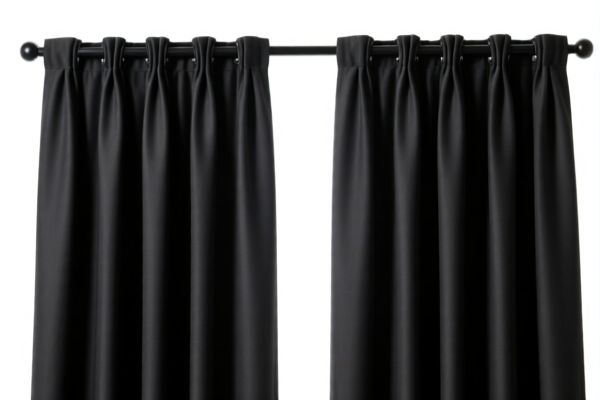
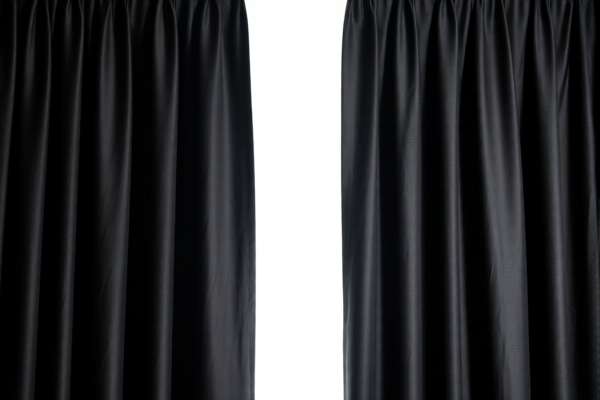
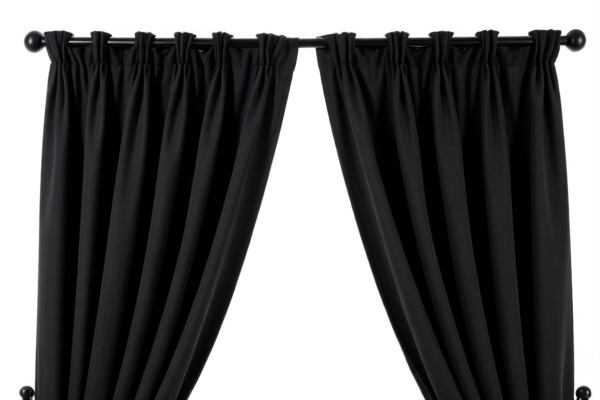
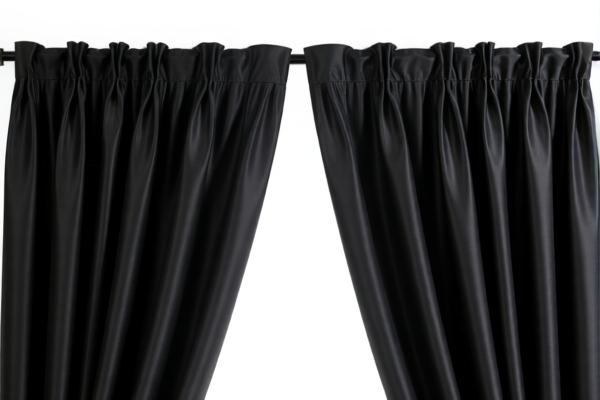
AI Analysis
🌑 Blackout Fabric (遮阳布/遮光布)
🌐 HS Code Reference & Customs Clearance Guide | 2026 Latest Tariff Analysis | Professional Import Strategy
📌 I. Product Definition & Classification: What Exactly is "Blackout Fabric"?
Blackout fabric is a specialized textile material designed to block light completely. In international trade, its classification is not determined by a single function, but by its material composition and manufacturing process. It generally falls into two main categories:
- Coated/Impregnated Textile Fabrics: Traditional woven fabrics (cotton, polyester, etc.) that have been coated with plastic (PVC, acrylic, etc.) to make them light-proof.
- Key Characteristic: The base is a woven fabric, modified by chemical treatment.
- Non-woven Fabrics: Synthetic fibers (polyethylene, polypropylene) bonded together mechanically or chemically, without weaving. Often used for cheaper, disposable, or industrial sunshades.
- Key Characteristic: No weaving structure; feels more like felt or thick paper.
⚠️ Critical Distinction Point:
- If the fabric is a woven textile coated with plastic → It belongs to Chapter 59 (Impregnated, Coated, Covered or Covered with Plastics Textile Fabrics).
- If the fabric is a non-woven sheet made of synthetic fibers → It belongs to Chapter 56 (Batting, Felt and Nonwovens).
- If the fabric is already made into a finished curtain or awning made of specific materials (e.g., cotton or synthetic) → It may fall under Chapter 63 (Other Made-up Textile Articles).
📦 II. HS Code Classification Details (2026 Latest Tariff Authority Match)
| HS Code | Product Description | Material/Structure | Tax Rate (China Origin → US) |
|---|---|---|---|
| 5903.10.20.90 | Textile fabric impregnated, coated, covered or laminated with plastics, of synthetic fibers | Woven fabric + Plastic Coating (e.g., PVC blackout curtain) | 35.0% |
| 5603.12.00.70 | Nonwovens, weighing >150 g/m², of synthetic fibers | Non-woven synthetic (e.g., Polypropylene sunshade) | 35.0% |
| 5603.11.00.70 | Nonwovens, weighing ≤150 g/m², of synthetic fibers | Lighter Non-woven synthetic | 35.0% |
| 6306.19.11.00 | Other sails and sunblinds and the like, of other textile materials (e.g., Cotton) | Finished Made-up Article (Cotton base) | 25.5% |
| 6306.12.00.00 | Other sails and sunblinds and the like, of synthetic fibers | Finished Made-up Article (Synthetic base) | 18.8% |
🔍 Key Insight:
- Chapters 59 & 56 refer to raw materials or semi-finished fabrics (rolls of cloth).
- Chapter 63 refers to finished articles (cut and sewn curtains, awnings, or blinds).
- Misclassification Risk: If you ship "Blackout Fabric Rolls," do not use Chapter 63. If you ship "Ready-to-hang Blackout Curtains," do not use Chapter 59.
💰 III. 2026 Latest Tariff Rate Breakdown (Including Additional Taxes & Policy Add-ons)
✅ Applicable Country: United States (US)
✅ Origin: China (CN)
✅ Effective Date: November 10, 2025 onwards (including subsequent imports)
🎯 1. 5903.10.20.90 & 5603.12.00.70 & 5603.11.00.70 — Plastic-Coated & Non-Woven Fabrics
| Item | Content |
|---|---|
| Base Duty Rate | 0.0% (Ad Valorem) |
| Section 301 Additional Duty | +25.0% (USITC Footnote 9903.88.01) |
| Section 122 / IEEPA Additional Duty | +10.0% (Against China/HK products, effective Nov 10, 2025) |
| Total Effective Rate | 35.0% |
| Tax Calculation | CIF Value × 35% |
| De Minimis Exemption | ❌ Not Eligible (deny_de_minimis) |
| Legal Basis Path | IEEPA:9903.01.25 → USITC:5903.10.20.90 → FOOTNOTE:9903.88.01 |
📌 Explanation:
- These codes fall under Section 301 (25% tariff) due to their strategic material status.
- The additional 10% is applied under Section 122/IEEPA provisions targeting specific Chinese textiles.
- Total 35% is extremely high for raw textiles. Cost control is essential.
🎯 2. 6306.19.11.00 — Finished Sunblinds/Curtains (Cotton Base)
| Item | Content |
|---|---|
| Base Duty Rate | 8.0% |
| Section 301 Additional Duty | +7.5% |
| Section 122 / IEEPA Additional Duty | +10.0% |
| Total Effective Rate | 25.5% |
| Tax Calculation | CIF Value × 25.5% |
| De Minimis Exemption | ❌ Not Eligible |
| Legal Basis Path | IEEPA:9903.01.24 → USITC:6306.19.11.00 → FOOTNOTE:9903.88.01 |
📌 Note:
- Cotton-based finished products have a higher base rate (8%) but lower Section 301 add-on (7.5%), resulting in a 25.5% total. Still significant.
🎯 3. 6306.12.00.00 — Finished Sunblinds/Curtains (Synthetic Base)
| Item | Content |
|---|---|
| Base Duty Rate | 8.8% |
| Section 301 Additional Duty | 0.0% |
| Section 122 / IEEPA Additional Duty | +10.0% |
| Total Effective Rate | 18.8% |
| Tax Calculation | CIF Value × 18.8% |
| De Minimis Exemption | ❌ Not Eligible |
| Legal Basis Path | IEEPA:9903.01.24 → USITC:6306.12.00.00 → FOOTNOTE:9903.88.01 |
📌 Strategic Advantage:
- This is the most cost-effective option among the listed codes.
- Why 0% Section 301? Synthetic finished textiles (Chapter 63) often enjoy exemption from the 25% Section 301 tariff, retaining only the 8.8% base + 10% IEEPA = 18.8%.
- Recommendation: If you can manufacture finished curtains/awnings from synthetic fabrics, this is the optimal HS code to minimize tariffs.
🛠️ IV. Customs Clearance Practical Advice (Battle-Tested Pitfall Avoidance)
✅ 1. Documentation Checklist (Mandatory)
| Document | Must Provide | Explanation |
|---|---|---|
| ✅ Product Specification Sheet | ✔️ | Detailed composition: e.g., "100% Polyester, PVC Coated, Weight 200gsm" |
| ✅ Material Safety Data Sheet (MSDS) | ✔️ | For coated fabrics, to prove chemical compliance |
| ✅ Product Photos (Clear) | ✔️ | Show texture, coating, and label. Must distinguish between "Roll" and "Sewn Item" |
| ✅ Commercial Invoice | ✔️ | Clearly state: "Blackout Fabric Roll" or "Sewn Blackout Curtain" |
| ✅ Packing List | ✔️ | Include gross/net weight, dimensions |
| ✅ Declaration of Origin | ✔️ | Essential for determining IEEPA applicability |
✅ 2. Declaration Tips (Critical Mnemonic)
🔥 "Raw Fabric = Ch 59/56, Finished Good = Ch 63; Synthetic Finishes Win, Cotton Coats Begin!"
| Scenario | Correct HS Code | Mistake to Avoid |
|---|---|---|
| Roll of Blackout Cloth (PVC Coated) | 5903.10.20.90 |
Don't declare as "Curtain" → Risk of higher base duty + classification dispute |
| Non-woven Polypropylene Sheet | 5603.12.00.70 |
Don't declare as "Textile Fabric" → Must specify "Non-woven" |
| Sewn Blackout Curtain (Synthetic) | 6306.12.00.00 |
Don't declare as "Fabric" → Saves 16.2% tariff! |
| Sewn Blackout Curtain (Cotton) | 6306.19.11.00 |
Higher base rate; verify material content strictly |
✅ 3. Special Circumstances Handling
| Situation | Handling Advice |
|---|---|
| Hybrid Products (e.g., Fabric + Grommets + Pockets) | If sewn and ready for use, declare as Finished Article (Ch 63). Do not split parts. |
| Sample Rolls | Even samples are subject to full tariffs if > $800 (US De Minimis exemption does NOT apply to these codes). |
| OEM Private Label | Ensure the invoice matches the product exactly. "Blackout Fabric" is too vague; use "Polyester Woven Fabric, PVC Coated, Black, Width 150cm". |
🌍 V. Global Market Comparison (2026 Latest)
| Country/Region | Recommended HS Code | Total Tariff (China Origin) | Certification Required | Notes |
|---|---|---|---|---|
| 🇺🇸 USA | 6306.12.00.00 |
18.8% | No special cert | Best rate for finished synthetics |
| 🇺🇸 USA | 5903.10.20.90 |
35.0% | No special cert | High tariff for coated fabrics |
| 🇪🇺 EU | 6303.92 |
0% - 12% | CE (if applicable) | Lower duties, but stricter REACH chemicals rules |
| 🇨🇳 China | 5903.10.20.90 |
8% - 10% | CCC (if specific) | Low export tax, but check domestic policies |
| 🇦🇺 Australia | 6306.12.00.00 |
5% | No special cert | Competitive market |
📌 Conclusion:
- USA: Focus on finished synthetic products (6306.12.00.00) to keep tariffs at 18.8% instead of 35%.
- Raw Coated Fabrics face the highest penalty. Consider value-addition (sewing) before export to the US.
📌 VI. Common Errors & Pitfall Guide (Blood & Tears Lessons)
❌ Mistake 1: Declaring "Sewn Curtains" as "Raw Fabric" (5903.10.20.90)
👉 Consequence: Customs may reclassify and charge additional duties + penalties for incorrect declaration. Also, you miss the chance to prove it's a "finished good" if documentation is weak.
❌ Mistake 2: Declaring "Non-woven Rolls" as "Woven Textile"
👉 Consequence: Rejection by customs. Non-wovens (5603) and Wovens (5903) have different testing requirements.
❌ Mistake 3: Ignoring the "122 Clause" (IEEPA 10%)
👉 Consequence: Underestimating total landed cost by 10%. Always factor this into your pricing.
❌ Mistake 4: Using vague terms like "Sunshade Cloth" without material details
👉 Consequence: Delayed customs clearance. Officers will ask for specifications, causing port storage fees.
✅ Correct Practice:
"Sewn Blackout Curtains, 100% Polyester, Synthetic Fiber, With Rod Pocket, Model XYZ, Width 72 inch, Length 84 inch"
🎯 VII. Conclusion: Precise Classification Saves Profit!
🎯 Remember the Golden Rules:
🔹 "Finished Synthetic Wins (18.8%), Raw Coated Loses (35%), Cotton is Middle (25.5%)."
🔹 "Is it a roll or a curtain? If sewn, it's Chapter 63. If raw, it's Chapter 59/56."
🔹 "Always add 10% IEEPA to your cost model for China-origin textiles."
📌 Pro Tip:
If your blackout fabric is sourced from Vietnam, Indonesia, or Turkey, you may qualify for lower or zero IEEPA duties.
Action:
📞 Contact a licensed customs broker for an Advance Ruling.
📋 Prepare material composition sheets and product images.
🚀 Optimize your supply chain to export finished synthetic curtains to maximize margin!
✨ Professional Clearance Starts with Accurate Classification!
💼 Your every dollar of profit deserves precise calculation!
Customer Reviews
About HS Code Classification
The Harmonized System (HS) is an internationally standardized nomenclature developed by the World Customs Organization (WCO) to classify traded products. Over 200 countries use the HS system as the basis for customs tariffs, trade statistics, and import/export regulations.
Each HS code follows a hierarchical structure:
- Chapter (2 digits) — Broad category of goods (e.g., Chapter 84: Machinery and Mechanical Appliances)
- Heading (4 digits) — More specific grouping within the chapter
- Subheading (6 digits) — Internationally standardized breakdown, used by all WCO member countries
- National subdivisions (8-10 digits) — Country-specific extensions for further classification, such as US HTSUS 10-digit codes
Correct HS code classification is essential for smooth customs clearance, accurate duty payment, and compliance with trade regulations. Misclassification can lead to customs delays, overpayment of duties, or penalties.
When importing from CN to US, the applicable tariff rates may include:
- Most-Favored-Nation (MFN) rate — The standard duty rate applied to WTO members
- General rate — Applied to countries without trade agreements
- Trade remedy duties — Additional tariffs such as Section 301 (anti-dumping), Section 232 (national security), or countervailing duties
The information provided on this page is for reference purposes only. For official classification, please consult with your local customs authority or a licensed customs broker.