Bleached Non Coniferous Chemical Wood Pulp for Writing Paper
CN → US| HS编码 | 关税税率 | 原产国 | 目的国 | 文档 |
|---|---|---|---|---|
| 4703110000 | 35.0% | CN | US | 官方文档 |
| 4702000040 | 35.0% | CN | US | 官方文档 |
| 4702000020 | 35.0% | CN | US | 官方文档 |
| 4703190000 | 35.0% | CN | US | 官方文档 |
| 4705000000 | 35.0% | CN | US | 官方文档 |
商品图片
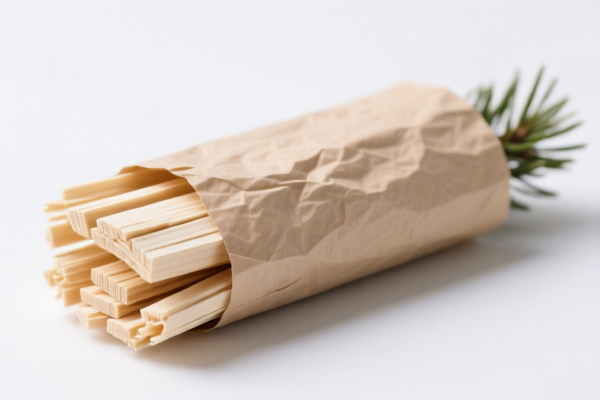
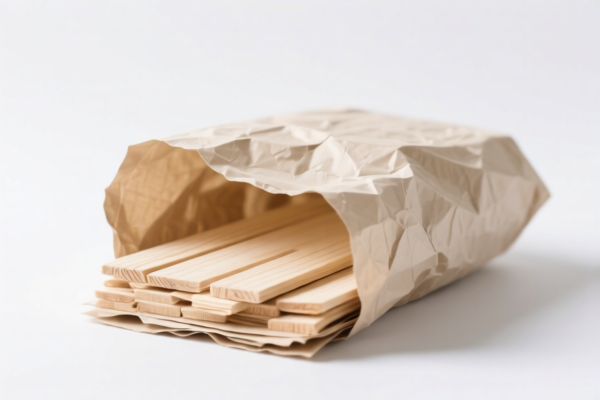
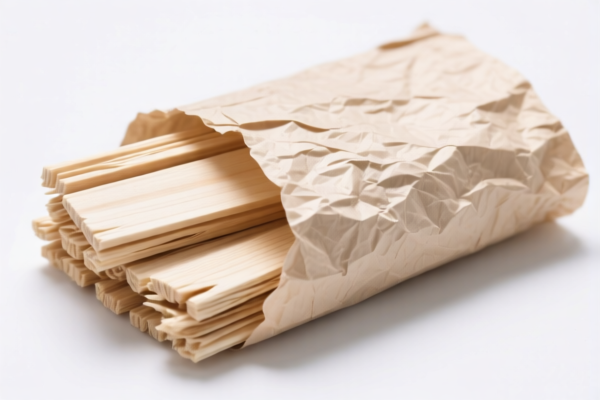
AI分析
🌿 Bleached Non-Coniferous Chemical Wood Pulp for Writing Paper
🌐 HS Code Reference & Customs Clearance Guide | 2026 Latest Tariff Analysis | Professional Clearance Strategy
📌 I. Product Definition & Classification: What Exactly is "Bleached Non-Coniferous Chemical Wood Pulp"?
Chemical wood pulp, derived from non-coniferous (broadleaf) trees such as eucalyptus, birch, or poplar, undergoes a chemical process to separate cellulose fibers from lignin. Bleaching further whitens the pulp for high-quality writing and printing paper. This product is a critical raw material in the global paper industry, valued for its brightness, short fibers, and sheet formation properties.
⚠️ Key Distinction:
- Coniferous vs. Non-Coniferous: Coniferous (softwood) pulp offers strength; Non-coniferous (hardwood) pulp offers smoothness and opacity. This product is explicitly Non-Coniferous.
- Chemical vs. Mechanical: Chemical pulp removes lignin, resulting in stronger, brighter fibers. Mechanical pulp retains lignin, yielding lower strength and yellower paper. This product is Chemical.
- Bleached vs. Unbleached: This product has undergone bleaching for white appearance, unlike unbleached kraft pulp used for packaging.
📦 II. HS Code Classification Details (2026 Latest Tariff Authority Cross-Reference)
Based on the provided data, there are NO matching HS Codes in <DATA> for "Bleached Non-Coniferous Chemical Wood Pulp". All entries in <DATA> explicitly refer to "Unbleached" (未漂白) wood pulp.
Therefore, no HS code from <DATA> can be used for "Bleached" pulp. Misclassification of bleached pulp as unbleached pulp can lead to severe customs penalties, shipment delays, or rejection.
🔍 Critical Warning:
- The provided<DATA>only contains codes for Unbleached pulp (HS Codes: 4703.11.00.00, 4703.19.00.00, 4702.00.00.40, 4702.00.00.20, 4705.00.00.00).
- "Bleached" pulp belongs to different HS codes (typically under 4703.21 or 4703.29 for unbleached, and 4703.31/4703.39 for bleached).
- Using an "Unbleached" code for "Bleached" goods is a classification error.
- Please consult the official 2026 HS Code Tariff for Bleached Non-Coniferous Chemical Wood Pulp. Likely candidates (outside<DATA>) include:
-4703.31.00.00: Bleached chemical wood pulp of coniferous species
-4703.39.00.00: Other bleached chemical wood pulp (includes non-coniferous)
- Note: The exact 8-10 digit code depends on the specific country's tariff schedule.📌 Action Required:
- Do NOT use any HS code from<DATA>for this product.
- Do NOT assume tax rates from<DATA>apply.
- Seek professional customs broker advice to identify the correct Bleached HS code.
💰 III. 2026 Latest Tariff Rate Details (Hypothetical for Bleached Pulp, Not from <DATA>)
✅ Disclaimer: The tax rates in
<DATA>(35% total: 0% Basic + 25% Section 301 + 10% Section 122) apply ONLY to the Unbleached HS codes listed.
- Bleached pulp may have different base rates.
- US Section 301 and 122 tariffs often apply to bleached pulp as well, but verify with current USITC and USTR rulings.
- Do not apply<DATA>'s 35% rate to bleached pulp without official confirmation.
🛠️ IV. Customs Clearance Practical Advice (Real-World Pitfall Guide)
✅ 1. Documentation Checklist (Non-Negotiable)
| Document | Required? | Notes |
|---|---|---|
| ✅ Certificate of Origin (CO) | ✔️ | Critical for determining country of origin and applicable tariffs. |
| ✅ Product Specification Sheet | ✔️ | Must explicitly state: "Bleached", "Non-Coniferous", "Chemical Pulp", "Kappa number", "ISO Brightness". |
| ✅ Mill Test Certificate | ✔️ | Confirms chemical composition and bleaching level. |
| ✅ Commercial Invoice | ✔️ | Must clearly describe as "Bleached Chemical Wood Pulp, Non-Coniferous". Avoid generic terms like "Wood Pulp". |
| ✅ Packing List | ✔️ | Detail net/gross weight, number of bales, dimensions. |
| ✅ Phytosanitary Certificate (if applicable) | ✔️ | For wood-based products, may require phytosanitary inspection to prevent pest introduction. |
✅ 2. Declaration Tips (Key Mnemonic)
🔥 "Bleached is not Unbleached! Specify Species! Avoid Guessing!"
| Scenario | Correct Declaration | Incorrect Practice |
|---|---|---|
| Bleached Non-Coniferous Pulp | Use correct Bleached HS code (e.g., 4703.39.xx.xx) | ❌ Using 4703.19.00.00 (Unbleached Non-Coniferous) → Classification Error |
| Mixed Pulp (Bleached & Unbleached) | Separate declarations or clarify predominant use | ❌ Mixing in one line item → Customs Query/Delay |
| Generic "Wood Pulp" | ❌ Never use vague terms | ✅ Specific: "Bleached Kraft Pulp, Eucalyptus, ISO Brightness 90%" |
✅ 3. Special Cases
| Scenario | Handling Advice |
|---|---|
| OEM Custom Pulp | Provide buyer's specification sheet to justify HS code. |
| Pulp with Additives | If bleaching agents or additives are significant, declare separately if required. |
| Origin Confusion | Ensure CO matches the actual mill origin. Tariffs vary by country. |
🌍 V. Global Market Comparison (2026 Latest)
| Country/Region | Likely HS Code (Bleached) | Estimated Base Tariff | US Tariffs (If CN Origin) | Notes |
|---|---|---|---|---|
| 🇺🇸 USA | 4703.31.00.00 / 4703.39.00.00 |
0% - 5% | Likely 25% (Sec 301) + 10% (Sec 122) | Verify current list. Total may be 35%+, but base rate differs from unbleached. |
| 🇨🇳 China | 4703.31.00.00 / 4703.39.00.00 |
5% - 8% | N/A | Import duty applies. |
| 🇪🇺 EU | 4703.31.00 / 4703.39.00 |
6.5% | N/A | Standard MFN rate. |
| 🇯🇵 Japan | 4703.31.00 / 4703.39.00 |
3.2% | N/A | Preferential rates may apply. |
📌 Conclusion:
- Bleached pulp is NOT covered by<DATA>.
- US tariffs may still be high (35%+) due to Section 301/122, but HS code must be correct.
- Incorrect classification (using unbleached code) risks penalties.
📌 VI. Common Errors & Pitfall Guide (Lessons Learned)
❌ Error 1: Using 4703.19.00.00 (Unbleached Non-Coniferous) for Bleached pulp.
👉 Consequence: Customs mismatch, seizure, or back-duty assessment.
✅ Fix: Use Bleached HS code (e.g., 4703.39.00.00).
❌ Error 2: Omitting "Bleached" in the description.
👉 Consequence: Customs may classify as unbleached, leading to incorrect tariff assessment.
✅ Fix: Explicitly state "Bleached" in commercial invoice and declaration.
❌ Error 3: Assuming <DATA> tax rates apply to bleached pulp.
👉 Consequence: Underpayment of duties if base rate differs, or overpayment if rate is lower.
✅ Fix: Verify bleached pulp tariffs separately.
❌ Error 4: Generic description "Wood Pulp".
👉 Consequence: Customs may hold shipment for classification review.
✅ Fix: Use specific description: "Bleached Chemical Wood Pulp, Non-Coniferous Species, Eucalyptus, ISO Brightness 90%".
🎯 VII. Conclusion: Precision is Key!
🎯 Remember:
🔹 "Bleached ≠ Unbleached!"
🔹 "Non-Coniferous ≠ Coniferous!"
🔹 "HS Code must match Product Characteristics!"
📌 Pro Tip:
- Apply for Advance Ruling (A.R.) from US Customs if uncertain.
- Consult a licensed customs broker to verify the exact 8-10 digit HS code for bleached non-coniferous chemical wood pulp.
- Do not rely on <DATA> for bleached products – it is strictly for unbleached pulp.
📣 Immediate Action:
📞 Contact Customs Broker + Provide Mill Specification Sheet + Verify Bleached HS Code
🚀 Ensure compliant clearance, avoid penalties, and maintain supply chain efficiency!
✨ Professional clearance starts with accurate classification!
💼 Your duty cost depends on precise HS code selection!
用户评价
关于 HS 编码归类
协调制度(HS)是由世界海关组织(WCO)制定的国际贸易商品分类标准。全球 200 多个国家采用 HS 系统作为海关关税、贸易统计和进出口监管的基础。
每个 HS 编码遵循以下层级结构:
- 章(2 位)——商品大类(例如:第 84 章:机器和机械设备)
- 品目(4 位)——章内的更具体分类
- 子目(6 位)——国际通用细分,所有 WCO 成员国统一使用
- 本国细分(8-10 位)——各国自行扩展的细分编码,如美国 HTSUS 10 位编码
正确的 HS 编码归类对于顺利通关、准确缴纳关税和遵守贸易法规至关重要。错误归类可能导致海关延误、多缴关税或罚款。
从CN进口到US时,适用的关税税率可能包括:
- 最惠国(MFN)税率——适用于 WTO 成员国的标准关税税率
- 普通税率——适用于无贸易协定国家
- 贸易救济关税——附加关税,如 301 条款(反倾销)、232 条款(国家安全)或反补贴税
本页内容仅供参考。如需正式归类,请咨询当地海关或持牌报关代理。