Bleached Non Coniferous Chemical Wood Pulp for Writing Paper
CN → US| HS Code | Tariff Rate | Origin | Destination | Doc |
|---|---|---|---|---|
| 4703110000 | 35.0% | CN | US | Official Doc |
| 4702000040 | 35.0% | CN | US | Official Doc |
| 4702000020 | 35.0% | CN | US | Official Doc |
| 4703190000 | 35.0% | CN | US | Official Doc |
| 4705000000 | 35.0% | CN | US | Official Doc |
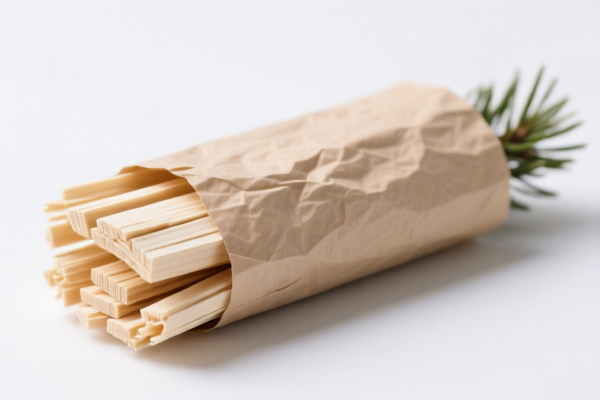
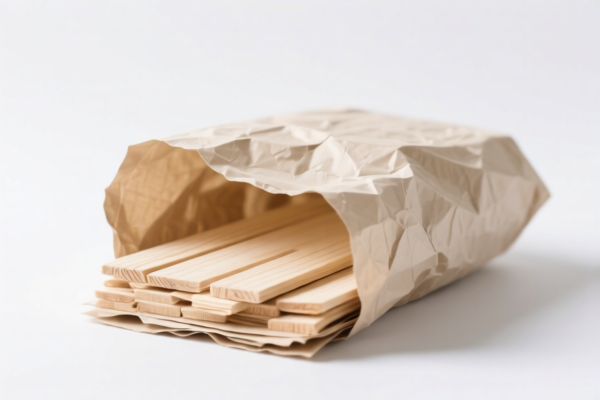
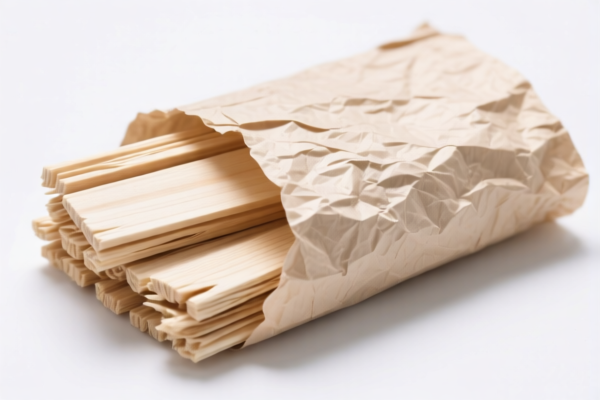
Product Images
AI Analysis
🌿 Bleached Non-Coniferous Chemical Wood Pulp for Writing Paper
🌐 HS Code Reference & Customs Clearance Guide | 2026 Latest Tariff Analysis | Professional Clearance Strategy
📌 I. Product Definition & Classification: What Exactly is "Bleached Non-Coniferous Chemical Wood Pulp"?
Chemical wood pulp, derived from non-coniferous (broadleaf) trees such as eucalyptus, birch, or poplar, undergoes a chemical process to separate cellulose fibers from lignin. Bleaching further whitens the pulp for high-quality writing and printing paper. This product is a critical raw material in the global paper industry, valued for its brightness, short fibers, and sheet formation properties.
⚠️ Key Distinction:
- Coniferous vs. Non-Coniferous: Coniferous (softwood) pulp offers strength; Non-coniferous (hardwood) pulp offers smoothness and opacity. This product is explicitly Non-Coniferous.
- Chemical vs. Mechanical: Chemical pulp removes lignin, resulting in stronger, brighter fibers. Mechanical pulp retains lignin, yielding lower strength and yellower paper. This product is Chemical.
- Bleached vs. Unbleached: This product has undergone bleaching for white appearance, unlike unbleached kraft pulp used for packaging.
📦 II. HS Code Classification Details (2026 Latest Tariff Authority Cross-Reference)
Based on the provided data, there are NO matching HS Codes in <DATA> for "Bleached Non-Coniferous Chemical Wood Pulp". All entries in <DATA> explicitly refer to "Unbleached" (未漂白) wood pulp.
Therefore, no HS code from <DATA> can be used for "Bleached" pulp. Misclassification of bleached pulp as unbleached pulp can lead to severe customs penalties, shipment delays, or rejection.
🔍 Critical Warning:
- The provided<DATA>only contains codes for Unbleached pulp (HS Codes: 4703.11.00.00, 4703.19.00.00, 4702.00.00.40, 4702.00.00.20, 4705.00.00.00).
- "Bleached" pulp belongs to different HS codes (typically under 4703.21 or 4703.29 for unbleached, and 4703.31/4703.39 for bleached).
- Using an "Unbleached" code for "Bleached" goods is a classification error.
- Please consult the official 2026 HS Code Tariff for Bleached Non-Coniferous Chemical Wood Pulp. Likely candidates (outside<DATA>) include:
-4703.31.00.00: Bleached chemical wood pulp of coniferous species
-4703.39.00.00: Other bleached chemical wood pulp (includes non-coniferous)
- Note: The exact 8-10 digit code depends on the specific country's tariff schedule.📌 Action Required:
- Do NOT use any HS code from<DATA>for this product.
- Do NOT assume tax rates from<DATA>apply.
- Seek professional customs broker advice to identify the correct Bleached HS code.
💰 III. 2026 Latest Tariff Rate Details (Hypothetical for Bleached Pulp, Not from <DATA>)
✅ Disclaimer: The tax rates in
<DATA>(35% total: 0% Basic + 25% Section 301 + 10% Section 122) apply ONLY to the Unbleached HS codes listed.
- Bleached pulp may have different base rates.
- US Section 301 and 122 tariffs often apply to bleached pulp as well, but verify with current USITC and USTR rulings.
- Do not apply<DATA>'s 35% rate to bleached pulp without official confirmation.
🛠️ IV. Customs Clearance Practical Advice (Real-World Pitfall Guide)
✅ 1. Documentation Checklist (Non-Negotiable)
| Document | Required? | Notes |
|---|---|---|
| ✅ Certificate of Origin (CO) | ✔️ | Critical for determining country of origin and applicable tariffs. |
| ✅ Product Specification Sheet | ✔️ | Must explicitly state: "Bleached", "Non-Coniferous", "Chemical Pulp", "Kappa number", "ISO Brightness". |
| ✅ Mill Test Certificate | ✔️ | Confirms chemical composition and bleaching level. |
| ✅ Commercial Invoice | ✔️ | Must clearly describe as "Bleached Chemical Wood Pulp, Non-Coniferous". Avoid generic terms like "Wood Pulp". |
| ✅ Packing List | ✔️ | Detail net/gross weight, number of bales, dimensions. |
| ✅ Phytosanitary Certificate (if applicable) | ✔️ | For wood-based products, may require phytosanitary inspection to prevent pest introduction. |
✅ 2. Declaration Tips (Key Mnemonic)
🔥 "Bleached is not Unbleached! Specify Species! Avoid Guessing!"
| Scenario | Correct Declaration | Incorrect Practice |
|---|---|---|
| Bleached Non-Coniferous Pulp | Use correct Bleached HS code (e.g., 4703.39.xx.xx) | ❌ Using 4703.19.00.00 (Unbleached Non-Coniferous) → Classification Error |
| Mixed Pulp (Bleached & Unbleached) | Separate declarations or clarify predominant use | ❌ Mixing in one line item → Customs Query/Delay |
| Generic "Wood Pulp" | ❌ Never use vague terms | ✅ Specific: "Bleached Kraft Pulp, Eucalyptus, ISO Brightness 90%" |
✅ 3. Special Cases
| Scenario | Handling Advice |
|---|---|
| OEM Custom Pulp | Provide buyer's specification sheet to justify HS code. |
| Pulp with Additives | If bleaching agents or additives are significant, declare separately if required. |
| Origin Confusion | Ensure CO matches the actual mill origin. Tariffs vary by country. |
🌍 V. Global Market Comparison (2026 Latest)
| Country/Region | Likely HS Code (Bleached) | Estimated Base Tariff | US Tariffs (If CN Origin) | Notes |
|---|---|---|---|---|
| 🇺🇸 USA | 4703.31.00.00 / 4703.39.00.00 |
0% - 5% | Likely 25% (Sec 301) + 10% (Sec 122) | Verify current list. Total may be 35%+, but base rate differs from unbleached. |
| 🇨🇳 China | 4703.31.00.00 / 4703.39.00.00 |
5% - 8% | N/A | Import duty applies. |
| 🇪🇺 EU | 4703.31.00 / 4703.39.00 |
6.5% | N/A | Standard MFN rate. |
| 🇯🇵 Japan | 4703.31.00 / 4703.39.00 |
3.2% | N/A | Preferential rates may apply. |
📌 Conclusion:
- Bleached pulp is NOT covered by<DATA>.
- US tariffs may still be high (35%+) due to Section 301/122, but HS code must be correct.
- Incorrect classification (using unbleached code) risks penalties.
📌 VI. Common Errors & Pitfall Guide (Lessons Learned)
❌ Error 1: Using 4703.19.00.00 (Unbleached Non-Coniferous) for Bleached pulp.
👉 Consequence: Customs mismatch, seizure, or back-duty assessment.
✅ Fix: Use Bleached HS code (e.g., 4703.39.00.00).
❌ Error 2: Omitting "Bleached" in the description.
👉 Consequence: Customs may classify as unbleached, leading to incorrect tariff assessment.
✅ Fix: Explicitly state "Bleached" in commercial invoice and declaration.
❌ Error 3: Assuming <DATA> tax rates apply to bleached pulp.
👉 Consequence: Underpayment of duties if base rate differs, or overpayment if rate is lower.
✅ Fix: Verify bleached pulp tariffs separately.
❌ Error 4: Generic description "Wood Pulp".
👉 Consequence: Customs may hold shipment for classification review.
✅ Fix: Use specific description: "Bleached Chemical Wood Pulp, Non-Coniferous Species, Eucalyptus, ISO Brightness 90%".
🎯 VII. Conclusion: Precision is Key!
🎯 Remember:
🔹 "Bleached ≠ Unbleached!"
🔹 "Non-Coniferous ≠ Coniferous!"
🔹 "HS Code must match Product Characteristics!"
📌 Pro Tip:
- Apply for Advance Ruling (A.R.) from US Customs if uncertain.
- Consult a licensed customs broker to verify the exact 8-10 digit HS code for bleached non-coniferous chemical wood pulp.
- Do not rely on <DATA> for bleached products – it is strictly for unbleached pulp.
📣 Immediate Action:
📞 Contact Customs Broker + Provide Mill Specification Sheet + Verify Bleached HS Code
🚀 Ensure compliant clearance, avoid penalties, and maintain supply chain efficiency!
✨ Professional clearance starts with accurate classification!
💼 Your duty cost depends on precise HS code selection!
Customer Reviews
About HS Code Classification
The Harmonized System (HS) is an internationally standardized nomenclature developed by the World Customs Organization (WCO) to classify traded products. Over 200 countries use the HS system as the basis for customs tariffs, trade statistics, and import/export regulations.
Each HS code follows a hierarchical structure:
- Chapter (2 digits) — Broad category of goods (e.g., Chapter 84: Machinery and Mechanical Appliances)
- Heading (4 digits) — More specific grouping within the chapter
- Subheading (6 digits) — Internationally standardized breakdown, used by all WCO member countries
- National subdivisions (8-10 digits) — Country-specific extensions for further classification, such as US HTSUS 10-digit codes
Correct HS code classification is essential for smooth customs clearance, accurate duty payment, and compliance with trade regulations. Misclassification can lead to customs delays, overpayment of duties, or penalties.
When importing from CN to US, the applicable tariff rates may include:
- Most-Favored-Nation (MFN) rate — The standard duty rate applied to WTO members
- General rate — Applied to countries without trade agreements
- Trade remedy duties — Additional tariffs such as Section 301 (anti-dumping), Section 232 (national security), or countervailing duties
The information provided on this page is for reference purposes only. For official classification, please consult with your local customs authority or a licensed customs broker.