Bleached Twill Canvas (Non Plain)
CN → US| HS编码 | 关税税率 | 原产国 | 目的国 | 文档 |
|---|---|---|---|---|
| 5407912090 | 49.9% | CN | US | 官方文档 |
| 5208298090 | 48.5% | CN | US | 官方文档 |
| 5208298020 | 48.5% | CN | US | 官方文档 |
| 5407619910 | 49.9% | CN | US | 官方文档 |
商品图片
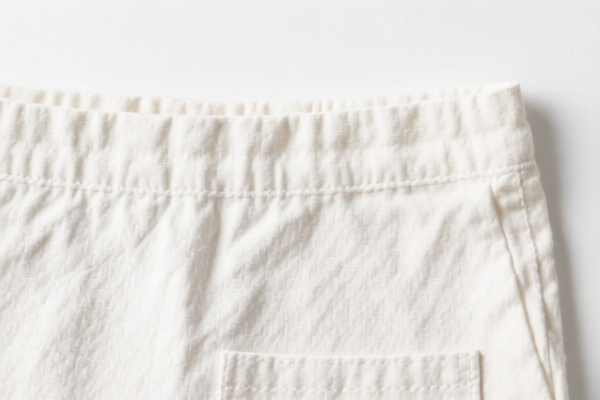
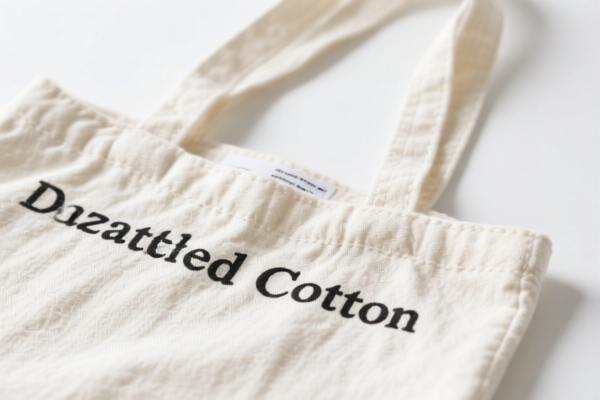
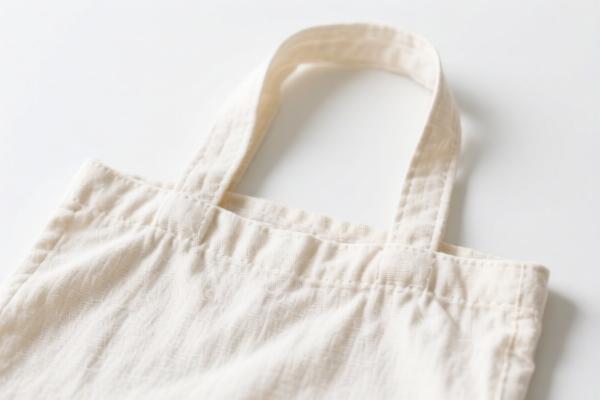
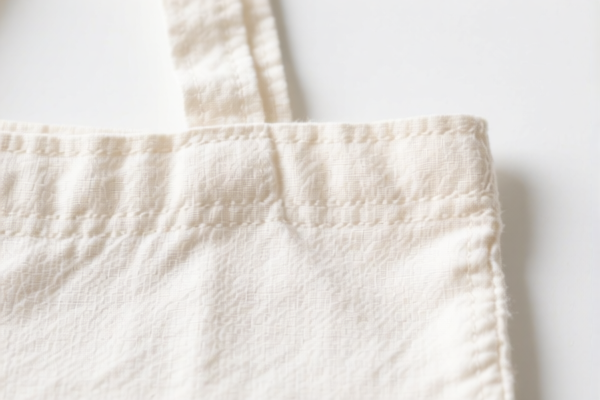
AI分析
🧵 Bleached Twill Canvas (Non-Plain Weave)
🌐 HS Code Reference & Customs Clearance Guide | 2024/2025 Latest Tariff Analysis | Professional Clearance Strategy
📌 I. Product Definition & Classification: Do You Understand "Bleached Twill Canvas"?
Bleached Twill Canvas refers to woven fabrics made from natural fibers (typically cotton) or synthetic filaments, characterized by a twill weave structure (diagonal rib pattern) and treated with bleaching agents to achieve a white or off-white appearance. The key distinction from "plain weave" is the diagonal interlacing, which offers greater durability and flexibility.
In international trade, the classification depends heavily on: 1. Fiber Composition: Cotton vs. Synthetic (Polyester/Nylon/etc.). 2. Weave Structure: Twill (diagonal) vs. Plain (crosswise). 3. Processing: Bleached.
⚠️ Key Distinction Point:
- If it is Cotton based → Look at Chapter 52 (Cotton Textiles); - If it is Synthetic Filament based → Look at Chapter 54 (Man-Made Filaments); - "Non-Plain" (Twill) is the critical differentiator. Plain weaves often fall under different sub-headings (e.g., 5208.1x or 5208.2x for cotton plain weave), while twill weaves fall under 5208.29 (Cotton) or 5407.61/5407.91 (Synthetic).
📦 II. HS Code Classification Details (Based on Provided Data)
According to the provided , there are four potential HS Codes depending on the exact fiber content and specific weaving characteristics. Please verify your product's material composition to select the correct code.
| HS Code | Summary Description | Material/Base Inference | Total Tax Rate | Tax Breakdown |
|---|---|---|---|---|
| 5407.91.20.90 | Bleached non-twill fabric* | Based on Synthetic Fiber Filament inference* | 49.9% | Base: 14.9% Additional: 25.0% Section 301: 10% |
| 5208.29.80.90 | Bleached non-twill cotton fabric | Based on Cotton Material common sense inference* | 48.5% | Base: 13.5% Additional: 25.0% Section 301: 10% |
| 5208.29.80.20 | Bleached non-twill fabric | Meets bleaching & fabric morphology requirements* | 48.5% | Base: 13.5% Additional: 25.0% Section 301: 10% |
| 5407.61.99.10 | Bleached fabric | Based on Synthetic Fiber Filament category inference* | 49.9% | Base: 14.9% Additional: 25.0% Section 301: 10% |
🔍 Critical Note on Data Consistency:
The input data contains contradictory summaries (e.g., "Non-Twill" vs. the product name "Twill").
- HS 5208.29 generally refers to Cotton woven fabrics, weighted > 85%, bleached, other than plain weave (which includes Twill). This aligns with "Bleached Twill Canvas."
- HS 5407.61/5407.91 refers to Synthetic Filament fabrics.
- Action: You must determine if your canvas is Cotton or Synthetic.
- If Cotton: Use 5208.29.80.90 or 5208.29.80.20.
- If Synthetic: Use 5407.91.20.90 or 5407.61.99.10.
💰 III. Detailed Tariff Rate Analysis (Including Surtaxes & Policy Surcharges)
✅ Applicable Country: United States (US)
✅ Country of Origin: China (CN) [Implied by Section 122/301 context]
✅ Effective Time: Current rates apply
🎯 1. For Cotton-Based Bleached Twill Canvas (HS 5208.29.80.xx)
| Item | Detail |
|---|---|
| Base MFN Rate | 13.5% (Ad Valorem) |
| USITC Surtax (Section 301) | +25.0% |
| Section 122 Surtax | +10.0% |
| Total Effective Tax Rate | 48.5% |
| Tax Calculation | CIF Value × 48.5% |
| De Minimis Exemption | ❌ Not Eligible (Deemed too high) |
| Legal Basis Path | HTSUS:5208.29.80 → Section 301 List 4 → Section 122 (If applicable) |
📌 Explanation:
- The 13.5% is the standard Most Favored Nation (MFN) duty for cotton textiles.
- The 25% is the aggressive tariff added under Section 301 for Chinese goods.
- The 10% is the Section 122 tariff (national security/trade remedy specific).
- Total: 48.5% is extremely high for textiles. Cost control is critical.
🎯 2. For Synthetic Filament-Based Bleached Canvas (HS 5407.xx.xx)
| Item | Detail |
|---|---|
| Base MFN Rate | 14.9% (Ad Valorem) |
| USITC Surtax (Section 301) | +25.0% |
| Section 122 Surtax | +10.0% |
| Total Effective Tax Rate | 49.9% |
| Tax Calculation | CIF Value × 49.9% |
| De Minimis Exemption | ❌ Not Eligible |
| Legal Basis Path | HTSUS:5407.61/5407.91 → Section 301 List 4 → Section 122 |
📌 Explanation:
- Synthetic textiles often have slightly higher base rates than cotton.
- Total: 49.9% is the highest bracket in the provided data.
- Ensure the synthetic content is clearly declared (e.g., 100% Polyester) to avoid misclassification penalties.
🛠️ IV. Customs Clearance Practical Advice (Battle-Tested Pitfall Avoidance)
✅ 1. Essential Documentation Checklist (Non-Negotiable)
| Document | Required? | Purpose |
|---|---|---|
| ✅ Product Specification Sheet | ✔️ | Must specify: Fiber Content (%), Weave Type (Twill), Weight (gsm), Width. |
| ✅ Fabric Swatch/Photo | ✔️ | Visual proof of Twill Weave (diagonal lines) vs. Plain Weave. |
| ✅ Bleaching Certificate | ✔️ | Confirms "Bleached" status, not "Dyed" or "Printed" (different tariffs). |
| ✅ Commercial Invoice | ✔️ | Must explicitly state "Bleached Twill Canvas" and HS Code. |
| ✅ Bill of Lading/Air Waybill | ✔️ | Standard shipping doc. |
| ✅ Country of Origin Certificate | ✔️ | Critical for applying/confirming Surtaxes. |
✅ 2. Declaration Tips (Key Mantra)
🔥 “Fiber Clear, Weave Defined, Bleach Confirmed, Tax Avoided!”
| Scenario | Correct Declaration | Wrong Declaration |
|---|---|---|
| 100% Cotton Twill | Bleached Cotton Twill Canvas, 100% Cotton → HS 5208.29.80.xx |
Label as "Twill Fabric" without fiber content → Risk of 49.9% (Synthetic rate) |
| Polyester Twill | Bleached Synthetic Twill Canvas, 100% Polyester → HS 5407.xx.xx |
Label as "Cotton Canvas" → Fraud/Misdeclaration penalty |
| Plain Weave Mistake | If it's actually plain weave, do NOT use 5208.29 (Twill) | Using 5208.29 for plain weave → Rejection & Back Fees |
| Mixed Fiber | Must declare exact % (e.g., 80% Cotton, 20% Poly) → May change Chapter | Guessing fiber content → Seizure |
✅ 3. Special Circumstances Handling
| Situation | Handling Advice |
|---|---|
| OEM/Custom Canvas | Provide end-user specification sheet. "Twill" must be visually verifiable. |
| Bleached vs. White | "Bleached" implies chemical treatment. If just naturally white (unbleached), tariff may differ. Use "Bleached" only if chemically treated. |
| Section 301 Exclusion | Check if your specific HS Code had an exclusion period (expired for most in 2024/2025). Assume No Exclusion applies. |
| De Minimis (Section 321) | ❌ Do Not Use. The total tax is ~50%, far above the de minimis threshold benefit. Full formal entry is required. |
🌍 V. Global Market Comparison (2024/2025 Context)
| Country/Region | Recommended HS Code | Est. Tariff (CN Origin) | Certification Requirements | Notes |
|---|---|---|---|---|
| 🇺🇸 USA | 5208.29.80 or 5407.xx |
48.5% - 49.9% | None specific (Standard) | Highest Tax. Due to 301 + 122. |
| 🇨🇳 China | 5208.29 / 5407 |
~8% - 10% | None | Low import duty. |
| 🇪🇺 EU | 5208.29 / 5407 |
~12% - 16% | REACH (Chemical) | No 301 tax, but higher base than US MFN. |
| 🇻🇳 Vietnam | 5208.29 / 5407 |
~0% - 5% (if RCEP/ATIGA) | None | If you re-export from Vietnam, check Rules of Origin. |
📌 Conclusion:
- The US market is the most expensive for Chinese-origin bleached twill canvas due to the叠加 (stacking) of MFN, Section 301, and Section 122 tariffs.
- Total Cost Impact: Nearly half the product value is tax.
- Strategy: Consider supply chain diversification (e.g., sourcing from Bangladesh, Vietnam, or India) if targeting the US, to avoid the 35-40% surtax.
📌 VI. Common Errors & Pitfall Guide (Lessons Learned)
❌ Mistake 1: Classifying Twill as Plain Weave
👉 Result: If you classify Twill as Plain (e.g., 5208.1x), but it is actually Twill, Customs may reject it or reclassify it to a higher tax rate if they suspect fraud. Conversely, Plain weave often has lower base rates (e.g., 8-10% before surtaxes), but with surtaxes, the gap narrows. However, misclassification leads to seizure.
❌ Mistake 2: Ignoring Section 122
👉 Result: Many importers only plan for Section 301 (25%). Forgetting the 10% Section 122 leads to underpayment and penalty upon audit.
❌ Mistake 3: Confusing Cotton with Synthetic
👉 Result:
- If you declare Cotton (5208) but it’s Polyester (5407), you pay 14.9% base + 35% surtax = 49.9% retroactively.
- If you declare Polyester (5407) but it’s Cotton (5208), you might underpay base duty (13.5% vs 14.9%), but the surtax (35%) is the same, so the main risk is administrative penalty for false declaration.
❌ Mistake 4: Using "Canvas" as a Generic Term
👉 Result: Customs needs specific fiber content. "Canvas" is not an HS descriptor. Always specify: "Bleached Cotton Twill Canvas, 10oz".
✅ Correct Declaration Example:
"Bleached Cotton Twill Canvas, 100% Cotton, Weave: 2x2 Twill, Weight: 12oz, Width: 60 inches, HS 5208.29.80.90"
🎯 VII. Conclusion: Precision is Profit
🎯 Remember:
🔹 "Fiber Determines Chapter, Weave Determines Subheading, Bleach Confirms Finish."
🔹 "US Tariff = 48-50%. Plan accordingly."
🔹 "Never guess fiber content. Test it."
📌 Pro Tip:
If you are shipping small quantities (< $800), check if Section 321 (De Minimis) still applies. However, with 49.9% tax, the benefit is negligible compared to the risk of clearance delays. For bulk shipments, Pre-Ruling (Advance Ruling) is recommended to lock in the HS Code and avoid disputes.
📣 Immediate Action:
📞 Contact your customs broker with a fabric swatch.
🧪 Conduct a fiber test (burn test or lab test) to confirm Cotton vs. Synthetic.
📊 Calculate Landed Cost:(Product Cost + Freight + Insurance) * 1.499(for Synthetic) or* 1.485(for Cotton).
✨ Professional Clearance Starts with Accurate Classification!
💼 Your Margin Depends on Your HS Code!
用户评价
关于 HS 编码归类
协调制度(HS)是由世界海关组织(WCO)制定的国际贸易商品分类标准。全球 200 多个国家采用 HS 系统作为海关关税、贸易统计和进出口监管的基础。
每个 HS 编码遵循以下层级结构:
- 章(2 位)——商品大类(例如:第 84 章:机器和机械设备)
- 品目(4 位)——章内的更具体分类
- 子目(6 位)——国际通用细分,所有 WCO 成员国统一使用
- 本国细分(8-10 位)——各国自行扩展的细分编码,如美国 HTSUS 10 位编码
正确的 HS 编码归类对于顺利通关、准确缴纳关税和遵守贸易法规至关重要。错误归类可能导致海关延误、多缴关税或罚款。
从CN进口到US时,适用的关税税率可能包括:
- 最惠国(MFN)税率——适用于 WTO 成员国的标准关税税率
- 普通税率——适用于无贸易协定国家
- 贸易救济关税——附加关税,如 301 条款(反倾销)、232 条款(国家安全)或反补贴税
本页内容仅供参考。如需正式归类,请咨询当地海关或持牌报关代理。