Bleached Twill Canvas (Non Plain)
CN → US| HS Code | Tariff Rate | Origin | Destination | Doc |
|---|---|---|---|---|
| 5407912090 | 49.9% | CN | US | Official Doc |
| 5208298090 | 48.5% | CN | US | Official Doc |
| 5208298020 | 48.5% | CN | US | Official Doc |
| 5407619910 | 49.9% | CN | US | Official Doc |
Product Images
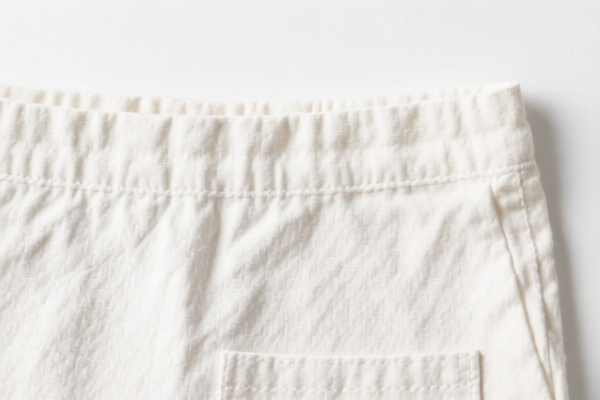
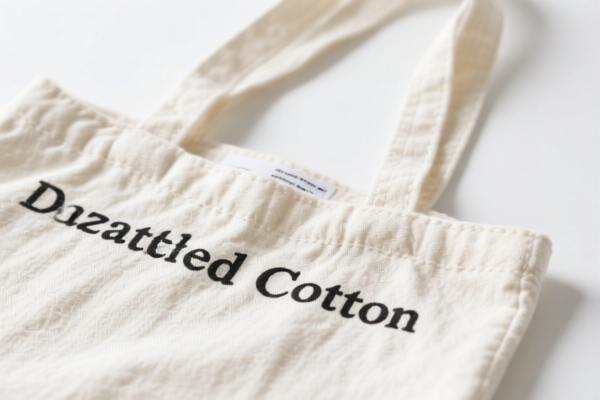
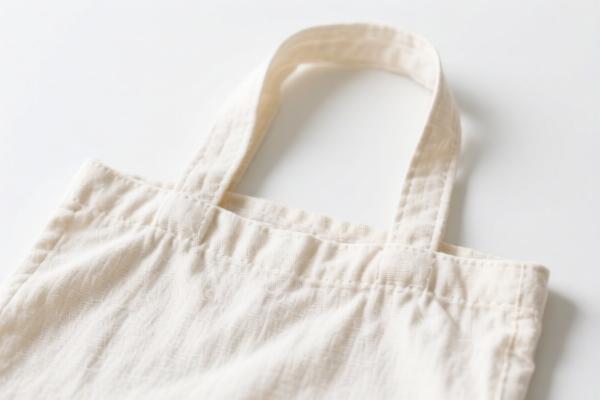
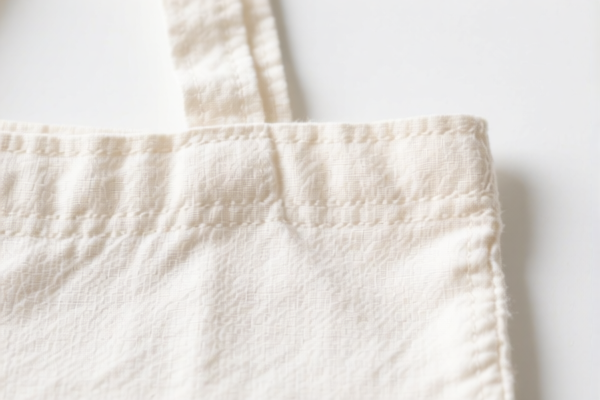
AI Analysis
🧵 Bleached Twill Canvas (Non-Plain Weave)
🌐 HS Code Reference & Customs Clearance Guide | 2024/2025 Latest Tariff Analysis | Professional Clearance Strategy
📌 I. Product Definition & Classification: Do You Understand "Bleached Twill Canvas"?
Bleached Twill Canvas refers to woven fabrics made from natural fibers (typically cotton) or synthetic filaments, characterized by a twill weave structure (diagonal rib pattern) and treated with bleaching agents to achieve a white or off-white appearance. The key distinction from "plain weave" is the diagonal interlacing, which offers greater durability and flexibility.
In international trade, the classification depends heavily on: 1. Fiber Composition: Cotton vs. Synthetic (Polyester/Nylon/etc.). 2. Weave Structure: Twill (diagonal) vs. Plain (crosswise). 3. Processing: Bleached.
⚠️ Key Distinction Point:
- If it is Cotton based → Look at Chapter 52 (Cotton Textiles); - If it is Synthetic Filament based → Look at Chapter 54 (Man-Made Filaments); - "Non-Plain" (Twill) is the critical differentiator. Plain weaves often fall under different sub-headings (e.g., 5208.1x or 5208.2x for cotton plain weave), while twill weaves fall under 5208.29 (Cotton) or 5407.61/5407.91 (Synthetic).
📦 II. HS Code Classification Details (Based on Provided Data)
According to the provided , there are four potential HS Codes depending on the exact fiber content and specific weaving characteristics. Please verify your product's material composition to select the correct code.
| HS Code | Summary Description | Material/Base Inference | Total Tax Rate | Tax Breakdown |
|---|---|---|---|---|
| 5407.91.20.90 | Bleached non-twill fabric* | Based on Synthetic Fiber Filament inference* | 49.9% | Base: 14.9% Additional: 25.0% Section 301: 10% |
| 5208.29.80.90 | Bleached non-twill cotton fabric | Based on Cotton Material common sense inference* | 48.5% | Base: 13.5% Additional: 25.0% Section 301: 10% |
| 5208.29.80.20 | Bleached non-twill fabric | Meets bleaching & fabric morphology requirements* | 48.5% | Base: 13.5% Additional: 25.0% Section 301: 10% |
| 5407.61.99.10 | Bleached fabric | Based on Synthetic Fiber Filament category inference* | 49.9% | Base: 14.9% Additional: 25.0% Section 301: 10% |
🔍 Critical Note on Data Consistency:
The input data contains contradictory summaries (e.g., "Non-Twill" vs. the product name "Twill").
- HS 5208.29 generally refers to Cotton woven fabrics, weighted > 85%, bleached, other than plain weave (which includes Twill). This aligns with "Bleached Twill Canvas."
- HS 5407.61/5407.91 refers to Synthetic Filament fabrics.
- Action: You must determine if your canvas is Cotton or Synthetic.
- If Cotton: Use 5208.29.80.90 or 5208.29.80.20.
- If Synthetic: Use 5407.91.20.90 or 5407.61.99.10.
💰 III. Detailed Tariff Rate Analysis (Including Surtaxes & Policy Surcharges)
✅ Applicable Country: United States (US)
✅ Country of Origin: China (CN) [Implied by Section 122/301 context]
✅ Effective Time: Current rates apply
🎯 1. For Cotton-Based Bleached Twill Canvas (HS 5208.29.80.xx)
| Item | Detail |
|---|---|
| Base MFN Rate | 13.5% (Ad Valorem) |
| USITC Surtax (Section 301) | +25.0% |
| Section 122 Surtax | +10.0% |
| Total Effective Tax Rate | 48.5% |
| Tax Calculation | CIF Value × 48.5% |
| De Minimis Exemption | ❌ Not Eligible (Deemed too high) |
| Legal Basis Path | HTSUS:5208.29.80 → Section 301 List 4 → Section 122 (If applicable) |
📌 Explanation:
- The 13.5% is the standard Most Favored Nation (MFN) duty for cotton textiles.
- The 25% is the aggressive tariff added under Section 301 for Chinese goods.
- The 10% is the Section 122 tariff (national security/trade remedy specific).
- Total: 48.5% is extremely high for textiles. Cost control is critical.
🎯 2. For Synthetic Filament-Based Bleached Canvas (HS 5407.xx.xx)
| Item | Detail |
|---|---|
| Base MFN Rate | 14.9% (Ad Valorem) |
| USITC Surtax (Section 301) | +25.0% |
| Section 122 Surtax | +10.0% |
| Total Effective Tax Rate | 49.9% |
| Tax Calculation | CIF Value × 49.9% |
| De Minimis Exemption | ❌ Not Eligible |
| Legal Basis Path | HTSUS:5407.61/5407.91 → Section 301 List 4 → Section 122 |
📌 Explanation:
- Synthetic textiles often have slightly higher base rates than cotton.
- Total: 49.9% is the highest bracket in the provided data.
- Ensure the synthetic content is clearly declared (e.g., 100% Polyester) to avoid misclassification penalties.
🛠️ IV. Customs Clearance Practical Advice (Battle-Tested Pitfall Avoidance)
✅ 1. Essential Documentation Checklist (Non-Negotiable)
| Document | Required? | Purpose |
|---|---|---|
| ✅ Product Specification Sheet | ✔️ | Must specify: Fiber Content (%), Weave Type (Twill), Weight (gsm), Width. |
| ✅ Fabric Swatch/Photo | ✔️ | Visual proof of Twill Weave (diagonal lines) vs. Plain Weave. |
| ✅ Bleaching Certificate | ✔️ | Confirms "Bleached" status, not "Dyed" or "Printed" (different tariffs). |
| ✅ Commercial Invoice | ✔️ | Must explicitly state "Bleached Twill Canvas" and HS Code. |
| ✅ Bill of Lading/Air Waybill | ✔️ | Standard shipping doc. |
| ✅ Country of Origin Certificate | ✔️ | Critical for applying/confirming Surtaxes. |
✅ 2. Declaration Tips (Key Mantra)
🔥 “Fiber Clear, Weave Defined, Bleach Confirmed, Tax Avoided!”
| Scenario | Correct Declaration | Wrong Declaration |
|---|---|---|
| 100% Cotton Twill | Bleached Cotton Twill Canvas, 100% Cotton → HS 5208.29.80.xx |
Label as "Twill Fabric" without fiber content → Risk of 49.9% (Synthetic rate) |
| Polyester Twill | Bleached Synthetic Twill Canvas, 100% Polyester → HS 5407.xx.xx |
Label as "Cotton Canvas" → Fraud/Misdeclaration penalty |
| Plain Weave Mistake | If it's actually plain weave, do NOT use 5208.29 (Twill) | Using 5208.29 for plain weave → Rejection & Back Fees |
| Mixed Fiber | Must declare exact % (e.g., 80% Cotton, 20% Poly) → May change Chapter | Guessing fiber content → Seizure |
✅ 3. Special Circumstances Handling
| Situation | Handling Advice |
|---|---|
| OEM/Custom Canvas | Provide end-user specification sheet. "Twill" must be visually verifiable. |
| Bleached vs. White | "Bleached" implies chemical treatment. If just naturally white (unbleached), tariff may differ. Use "Bleached" only if chemically treated. |
| Section 301 Exclusion | Check if your specific HS Code had an exclusion period (expired for most in 2024/2025). Assume No Exclusion applies. |
| De Minimis (Section 321) | ❌ Do Not Use. The total tax is ~50%, far above the de minimis threshold benefit. Full formal entry is required. |
🌍 V. Global Market Comparison (2024/2025 Context)
| Country/Region | Recommended HS Code | Est. Tariff (CN Origin) | Certification Requirements | Notes |
|---|---|---|---|---|
| 🇺🇸 USA | 5208.29.80 or 5407.xx |
48.5% - 49.9% | None specific (Standard) | Highest Tax. Due to 301 + 122. |
| 🇨🇳 China | 5208.29 / 5407 |
~8% - 10% | None | Low import duty. |
| 🇪🇺 EU | 5208.29 / 5407 |
~12% - 16% | REACH (Chemical) | No 301 tax, but higher base than US MFN. |
| 🇻🇳 Vietnam | 5208.29 / 5407 |
~0% - 5% (if RCEP/ATIGA) | None | If you re-export from Vietnam, check Rules of Origin. |
📌 Conclusion:
- The US market is the most expensive for Chinese-origin bleached twill canvas due to the叠加 (stacking) of MFN, Section 301, and Section 122 tariffs.
- Total Cost Impact: Nearly half the product value is tax.
- Strategy: Consider supply chain diversification (e.g., sourcing from Bangladesh, Vietnam, or India) if targeting the US, to avoid the 35-40% surtax.
📌 VI. Common Errors & Pitfall Guide (Lessons Learned)
❌ Mistake 1: Classifying Twill as Plain Weave
👉 Result: If you classify Twill as Plain (e.g., 5208.1x), but it is actually Twill, Customs may reject it or reclassify it to a higher tax rate if they suspect fraud. Conversely, Plain weave often has lower base rates (e.g., 8-10% before surtaxes), but with surtaxes, the gap narrows. However, misclassification leads to seizure.
❌ Mistake 2: Ignoring Section 122
👉 Result: Many importers only plan for Section 301 (25%). Forgetting the 10% Section 122 leads to underpayment and penalty upon audit.
❌ Mistake 3: Confusing Cotton with Synthetic
👉 Result:
- If you declare Cotton (5208) but it’s Polyester (5407), you pay 14.9% base + 35% surtax = 49.9% retroactively.
- If you declare Polyester (5407) but it’s Cotton (5208), you might underpay base duty (13.5% vs 14.9%), but the surtax (35%) is the same, so the main risk is administrative penalty for false declaration.
❌ Mistake 4: Using "Canvas" as a Generic Term
👉 Result: Customs needs specific fiber content. "Canvas" is not an HS descriptor. Always specify: "Bleached Cotton Twill Canvas, 10oz".
✅ Correct Declaration Example:
"Bleached Cotton Twill Canvas, 100% Cotton, Weave: 2x2 Twill, Weight: 12oz, Width: 60 inches, HS 5208.29.80.90"
🎯 VII. Conclusion: Precision is Profit
🎯 Remember:
🔹 "Fiber Determines Chapter, Weave Determines Subheading, Bleach Confirms Finish."
🔹 "US Tariff = 48-50%. Plan accordingly."
🔹 "Never guess fiber content. Test it."
📌 Pro Tip:
If you are shipping small quantities (< $800), check if Section 321 (De Minimis) still applies. However, with 49.9% tax, the benefit is negligible compared to the risk of clearance delays. For bulk shipments, Pre-Ruling (Advance Ruling) is recommended to lock in the HS Code and avoid disputes.
📣 Immediate Action:
📞 Contact your customs broker with a fabric swatch.
🧪 Conduct a fiber test (burn test or lab test) to confirm Cotton vs. Synthetic.
📊 Calculate Landed Cost:(Product Cost + Freight + Insurance) * 1.499(for Synthetic) or* 1.485(for Cotton).
✨ Professional Clearance Starts with Accurate Classification!
💼 Your Margin Depends on Your HS Code!
Customer Reviews
About HS Code Classification
The Harmonized System (HS) is an internationally standardized nomenclature developed by the World Customs Organization (WCO) to classify traded products. Over 200 countries use the HS system as the basis for customs tariffs, trade statistics, and import/export regulations.
Each HS code follows a hierarchical structure:
- Chapter (2 digits) — Broad category of goods (e.g., Chapter 84: Machinery and Mechanical Appliances)
- Heading (4 digits) — More specific grouping within the chapter
- Subheading (6 digits) — Internationally standardized breakdown, used by all WCO member countries
- National subdivisions (8-10 digits) — Country-specific extensions for further classification, such as US HTSUS 10-digit codes
Correct HS code classification is essential for smooth customs clearance, accurate duty payment, and compliance with trade regulations. Misclassification can lead to customs delays, overpayment of duties, or penalties.
When importing from CN to US, the applicable tariff rates may include:
- Most-Favored-Nation (MFN) rate — The standard duty rate applied to WTO members
- General rate — Applied to countries without trade agreements
- Trade remedy duties — Additional tariffs such as Section 301 (anti-dumping), Section 232 (national security), or countervailing duties
The information provided on this page is for reference purposes only. For official classification, please consult with your local customs authority or a licensed customs broker.