bleached twill canvas non plain
CN → US| HS Code | Tariff Rate | Origin | Destination | Doc |
|---|---|---|---|---|
| 5211202960 | 43.4% | CN | US | Official Doc |
| 5211202990 | 43.4% | CN | US | Official Doc |
Product Images
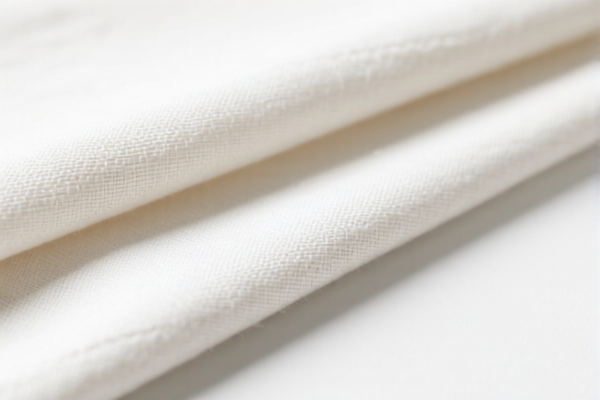
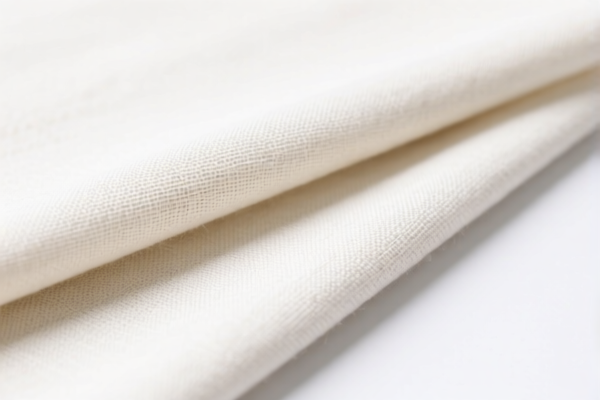
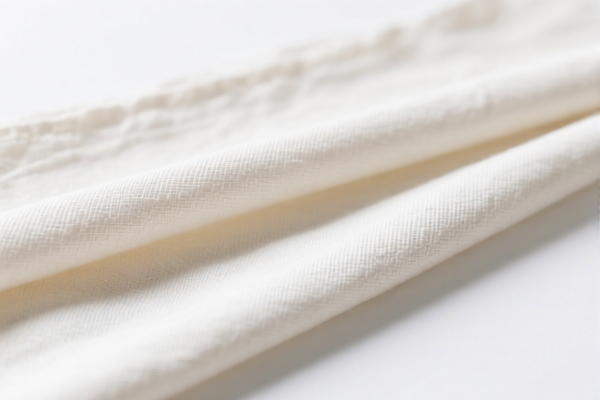
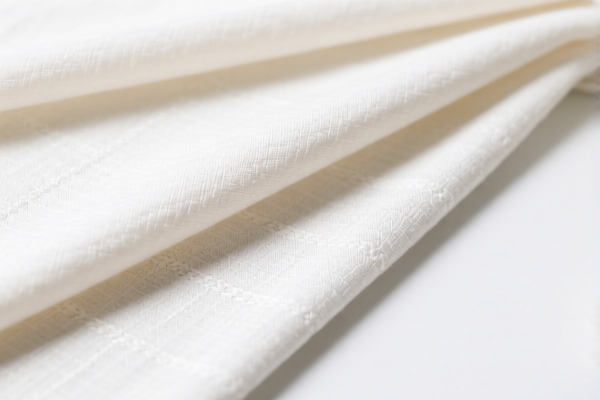
AI Analysis
🧵 Bleached Twill Canvas, Non-Plain Weave (Cotton Mixed Fabrics)
🌐 HS Code Reference & Clearance Guide | 2026 Latest Tariff Analysis | Professional Customs Strategy
📌 I. Product Definition & Classification: What is "Bleached Twill Canvas"?
Bleached twill canvas refers to woven fabrics made primarily of cotton mixed with man-made fibers, characterized by a specific weight and weave structure. In international trade, classification hinges on three critical factors: Cotton Content, Fabric Weight, and Weave Type.
Key Characteristics: * Material: Woven fabric of cotton, containing less than 85% by weight of cotton, mixed mainly or solely with man-made fibers. * Weight: Weighing more than 200 g/m² (heavy-duty fabric). * Process: Bleached (chemically whiten, not dyed). * Weave: Twill (diagonal parallel ribs) or other non-plain weaves. It is explicitly NOT plain weave (which is typically classified under "Duck, plain weave").
⚠️ Critical Distinction:
- If the fabric is Plain Weave (Duck) → It falls under different subheadings (e.g.,5211.20.29.20).
- If the fabric is Twill or other Non-Plain Weave → It falls under Other fabrics.
- If the cotton content is ≥85% → It belongs to Chapter 52 but different subheadings (5208or5209).
- If the weight is ≤200 g/m² → It belongs to lighter fabric categories (5210or5211lighter weights).
📦 II. HS Code Classification Details (2026 Latest Tariff Authority)
Based on the provided data, the product "bleached twill canvas non plain" (meeting the criteria: <85% cotton, mixed with synthetic, >200g/m², bleached) is classified into two specific HS codes based on the degree of specification ("Other" vs. specific type like "Duck" but non-plain).
| HS Code | Product Description | Application Scenario | Weave Type | Cotton Content | Weight |
|---|---|---|---|---|---|
5211.20.29.60 |
Woven fabrics of cotton, <85% cotton, mixed mainly/solitary with man-made fibers, >200g/m²: Bleached: Other fabrics Duck, except plain weave | Heavy-duty industrial canvas, tent fabrics, heavy bags, tarps, non-plain duck variants | Twill or other non-plain | <85% | >200 g/m² |
5211.20.29.90 |
Woven fabrics of cotton, <85% cotton, mixed mainly/solitary with man-made fibers, >200g/m²: Bleached: Other fabrics Other | Generic bleached mixed fabrics not specifically classified as "Duck" or other specific named types | Any non-plain | <85% | >200 g/m² |
🔍 Key Reminder:
- The term "Duck" traditionally refers to heavy, plain-woven cotton fabric. However, HS Code5211.20.29.60specifically captures "Duck, except plain weave" (e.g., twill duck).
- If the fabric does not meet the specific definition of "Duck" (even non-plain) or is a generic heavy mixed fabric, it defaults to5211.20.29.90("Other").
- Both codes apply to Bleached fabrics. Dyed, printed, or colored fabrics would fall under different subheadings.
💰 III. 2026 Latest Tariff Rate Details (Including Surcharges & Policy Add-ons)
✅ Applicable Country: United States (US)
✅ Origin: China (CN)
✅ Effective Date: Current 2026 Tariff Schedule
🎯 1. 5211.20.29.60 – Bleached Twill Duck (Non-Plain Weave)
| Item | Content |
|---|---|
| Base Tariff Rate | 0.0% |
| Section 301 Surcharge | 0.0% |
| Total Tax Rate | 0.0% |
| Tax Calculation | CIF Value × 0.0% = $0.00 |
| De Minimis Eligibility | ✅ Yes (if value < $800, no duty) |
| Legal Basis | HTSUS 5211.20.29.60 |
📌 Explanation:
- 0.0% Total Tax: This is a significant advantage for exporters. The base rate is 0%, and there is no additional Section 301 surcharge applied to this specific subcategory of mixed cotton fabrics under the current data provided.
- No Penalty: Unlike electronics or steel, textile fabrics of this specific mixed composition often enjoy lower or zero tariffs in certain contexts.
- Verification Needed: While the data shows 0%, always verify with the latest USITC announcements, as textile tariffs can change. However, based strictly on<DATA>, the rate is 0.0%.
🎯 2. 5211.20.29.90 – Bleached Other Mixed Cotton Fabrics (>200g/m²)
| Item | Content |
|---|---|
| Base Tariff Rate | 0.0% |
| Section 301 Surcharge | 0.0% |
| Total Tax Rate | 0.0% |
| Tax Calculation | CIF Value × 0.0% = $0.00 |
| De Minimis Eligibility | ✅ Yes (if value < $800, no duty) |
| Legal Basis | HTSUS 5211.20.29.90 |
📌 Explanation:
- 0.0% Total Tax: Similar to the above, this category also has a 0.0% total tax rate.
- Zero Surcharge: No additional penalties or surcharges are indicated in the data.
- Cost Efficiency: Importers can leverage this for cost-effective sourcing of heavy, bleached mixed cotton fabrics.
🛠️ IV. Customs Clearance Practical Advice (Avoiding Pitfalls)
✅ 1. Required Documentation Checklist (No Exceptions)
| Document | Mandatory? | Notes |
|---|---|---|
| ✅ Commercial Invoice | ✔️ | Must clearly state: "Bleached Twill Canvas," "Mixed Cotton (<85%)," "Weight >200g/m²." |
| ✅ Packing List | ✔️ | Detail rolls, length, width, and total weight. |
| ✅ Certificate of Origin (CO) | ✔️ | To prove origin (China) and apply for correct tariff rates. |
| ✅ Fabric Specification Sheet | ✔️ | Critical: Must specify Cotton % (e.g., 80% Cotton / 20% Polyester), Weight (e.g., 250 g/m²), and Weave (Twill). |
| ✅ Lab Test Report | ✔️ | Recommended to confirm cotton percentage and fabric weight to avoid misclassification. |
| ✅ Bill of Lading (B/L) | ✔️ | Standard shipping document. |
✅ 2. Declaration Tips (Key Mnemonics)
🔥 "Weave Defines, Weight Confirms, % Cotton Decides!"
| Scenario | Correct Declaration | Error to Avoid |
|---|---|---|
| Twill Weave, >200g/m², <85% Cotton | 5211.20.29.60 (if classified as Duck) or 5211.20.29.90 (if Other) |
Misclassifying as Plain Weave (5211.20.29.20) → Risk of penalty if weave is different. |
| Weight ≤200g/m² | Wrong HS Code Entirely → Use Chapter 52 lighter fabric codes. | Declaring as >200g/m² to fit 5211.20 → Customs Audit Risk. |
| Cotton ≥85% | Wrong HS Code Entirely → Use 5208/5209 series. | Declaring as <85% to fit 5211 → Fraudulent Declaration. |
| Dyed/Printed | Wrong HS Code → Use 5211.20.3x or 5211.20.4x. | Declaring as Bleached → Major Discrepancy. |
✅ 3. Special Cases Handling
| Scenario | Handling Advice |
|---|---|
| Mixed Weave (Twill + Plain) | If the fabric has mixed weave types, the predominant weave determines classification. Provide detailed structural analysis. |
| Sample Shipments | Even for samples, declare accurately. Misdeclaration can lead to port holds. |
| Customs Valuation | Ensure the declared value reflects the true transaction value (FOB/CIF). Under-invoicing triggers audits. |
| Origin Marking | Ensure products are properly marked "Made in China" for US import compliance. |
🌍 V. Global Market Comparison (2026 Latest)
| Country/Region | Recommended HS Code | Tariff Rate | Certification Requirements | Notes |
|---|---|---|---|---|
| 🇺🇸 USA | 5211.20.29.60 / .90 |
0.0% | None (General) | Best Market: Zero tariff based on current data. |
| 🇨🇳 China | 5211.20.29.60 / .90 |
~5-10% | N/A | Import tax applies. |
| 🇪🇺 EU | 5211.20 |
~10-12% | REACH Compliance | No specific textile duty-free status for China. |
| 🇬🇧 UK | 5211.20 |
~10-12% | UKCA Marking | Post-Brexit rules apply. |
| 🇦🇺 Australia | 5211.20 |
~5% | Standard Import Controls | Lower tariffs than EU. |
📌 Conclusion:
- USA offers the most favorable tariff rate (0.0%) for this specific product classification, making it a highly competitive market for bleached twill canvas exports.
- EU and UK impose moderate tariffs (~10-12%), so cost structures must account for this.
📌 VI. Common Mistakes & Pitfalls (Blood & Tears Lessons)
❌ Mistake 1: Misidentifying the Weave Type.
👉 Consequence: If declared as "Plain Weave" but it is "Twill," customs may reclassify, leading to back taxes + penalties if plain weave has different duties or quotas.
✅ Fix: Provide microscopic images or weave diagrams in specs.
❌ Mistake 2: Incorrect Cotton Percentage.
👉 Consequence: If cotton is 85%+, it should be 5208/5209. Misdeclaring as <85% to fit 5211 is smuggling.
✅ Fix: Include a lab report confirming cotton content (e.g., 80%).
❌ Mistake 3: Ignoring Weight Threshold.
👉 Consequence: If weight is 190 g/m², it belongs to 5210 or 5207, not 5211.20. Misclassification leads to duty underpayment.
✅ Fix: Test weight per ASTM D3776 standards.
❌ Mistake 4: Confusing Bleached with White.
👉 Consequence: "Bleached" is a chemical process. "White" is a color. If dyed white but not bleached, classification might differ.
✅ Fix: Use precise terminology: "Bleached" in all documents.
🎯 VII. Conclusion: Professional Declaration Saves Money!
🎯 Remember the Mantra:
🔹 "Weave: Twill = 5211.20.29.60/.90"
🔹 "Weight: >200g/m² is Key"
🔹 "Cotton: <85% Mixed"
🔹 "Tax: 0.0% in USA – Zero Cost Advantage!"
📌 Pro Tip:
If your fabric is 100% Cotton but <85%? Impossible.
If your fabric is ≥85% Cotton, do NOT use these codes. Use 5208 or 5209.
If you are unsure, request a Pre-Ruling from US Customs (CBP) before shipment. It provides legal certainty and protects against audits.
📣 Immediate Action:
📞 Contact a licensed customs broker.
📄 Prepare a detailed Specification Sheet (Cotton %, Weight, Weave, Bleach Process).
🚀 Export with Confidence: 0% Tariff Advantage!
✨ Professional Customs Clearance Starts with Accurate Classification!
💼 Your Cost Efficiency, Calculated Down to the Cent!
Customer Reviews
About HS Code Classification
The Harmonized System (HS) is an internationally standardized nomenclature developed by the World Customs Organization (WCO) to classify traded products. Over 200 countries use the HS system as the basis for customs tariffs, trade statistics, and import/export regulations.
Each HS code follows a hierarchical structure:
- Chapter (2 digits) — Broad category of goods (e.g., Chapter 84: Machinery and Mechanical Appliances)
- Heading (4 digits) — More specific grouping within the chapter
- Subheading (6 digits) — Internationally standardized breakdown, used by all WCO member countries
- National subdivisions (8-10 digits) — Country-specific extensions for further classification, such as US HTSUS 10-digit codes
Correct HS code classification is essential for smooth customs clearance, accurate duty payment, and compliance with trade regulations. Misclassification can lead to customs delays, overpayment of duties, or penalties.
When importing from CN to US, the applicable tariff rates may include:
- Most-Favored-Nation (MFN) rate — The standard duty rate applied to WTO members
- General rate — Applied to countries without trade agreements
- Trade remedy duties — Additional tariffs such as Section 301 (anti-dumping), Section 232 (national security), or countervailing duties
The information provided on this page is for reference purposes only. For official classification, please consult with your local customs authority or a licensed customs broker.