Blue Wet Sheepskin
CN → US商品图片
AI分析
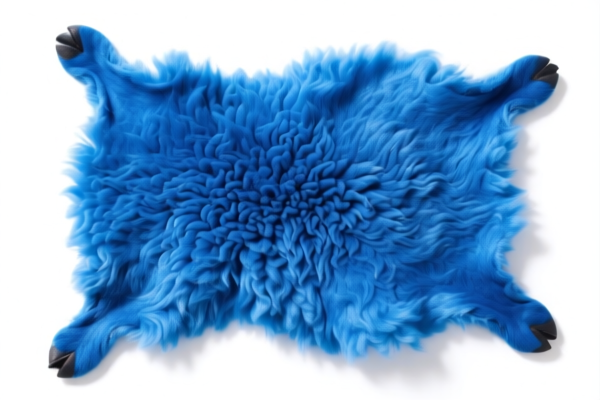
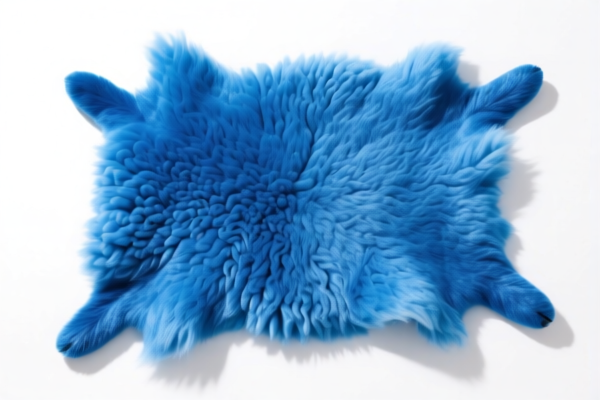
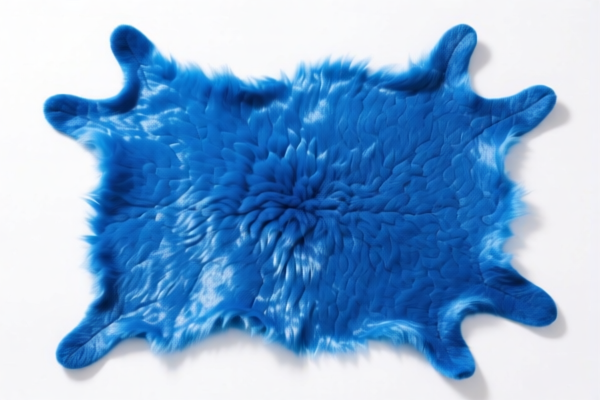
🐑 Blue Wet Sheepskin (Suede Leather)
🌐 HS Code Reference & Customs Clearance Guide | 2026 Latest Tariff Analysis | Professional-Level Clearance Strategy 📌 I. Product Definition & Classification: Do You Truly Understand “Blue Wet Sheepskin”?
“Blue Wet Sheepskin” (often referred to in trade as Blue Wet End Leather or Wet Blue Sheepskin) is a semi-processed leather product. It represents the state of leather after the tanning process has been completed with chromium salts (the "chrome tanning" process), but before the final dyeing, fatliquoring, drying, and finishing stages.
The term "Blue" refers to the characteristic bluish-gray color of chromium-tanned leather, which serves as a universal identification marker for chrome-tanned hides. "Wet" indicates that the leather is still moist and is typically packed wet (salted or preserved) to prevent spoilage and maintain fiber structure. "Sheepskin" identifies the raw material source.
In international trade, this product is not a finished good (like gloves or jackets) but an intermediate material used in the downstream leather goods manufacturing industry.
⚠️ Key Distinction Point: - If the leather is fully tanned, dried, and finished (dyed, polished, grained), it may be classified under 4104 (Finished Leather). - However, "Wet Blue" implies it has not undergone the full finishing process. It is classified as Tanned Leather, specifically under 4103 (Other Tanned Leather) because sheepskin is not bovine, equine, caprine, or porcine.
📦 II. HS Code Classification Details (2026 Latest Tariff Authority Comparison)
| HS Code | Product Description | Application Scenario | Processing Stage |
|---|---|---|---|
4103.20.00.00 |
Sheepskin and goatskin, tanned or pale-faced, other than leather of heading 4104 | Wet Blue Sheepskin, Chrome Tanned, Unfinished | ✅ Tanned but Unfinished |
4104.54.00.00 |
Other leather, further processed than pale-faced, not split, of sheep or lamb | Finished Sheep Leather (dyed, coated) | ✅ Finished/Dyed |
4101.29.00.00 |
Bovine leather, tanned, other | Cattle hides | ❌ Wrong Species |
4105.30.00.00 |
Goat/kid leather, tanned, other | Finished Goat Leather | ❌ Wrong Species |
4106.21.00.00 |
Sheepskin, tanned or pale-faced | Raw Tanned Skins (often includes Wet Blue) | ⚠️ Check Country Specifics (See Note Below) |
🔍 Critical Clarification for 2026 Tariff: - Primary Classification: For most major markets (including the US and EU), Wet Blue Sheepskin is classified under 4103.20.00.00 (Sheepskin, tanned, other). This category captures leather that has been tanned (usually chrome-tanned, hence "blue") but has not undergone the further processing required for heading 4104 (finished leather). - Alternative View (Raw Tanned): In some specific national interpretations, if the "wet blue" is considered merely "pale-faced" or lightly processed, it might fall under 4106.21.00.00 (Sheepskin, tanned or pale-faced). However, 4103.20.00.00 is the more accurate description for chrome-tanned, colored (blue) leather ready for further dyeing/finishing. - Recommendation: Use 4103.20.00.00 as the primary code for Wet Blue Sheepskin in most global trade contexts unless specific country rules of origin dictate otherwise.
💰 III. 2026 Latest Tariff Rate Details (Including Surtaxes & Policy Add-ons)
✅ Applicable Country: United States (US)
✅ Country of Origin: China (CN)
✅ Effective Time: As of 2026 (Post-2025 Policy Updates)
🎯 1. 4103.20.00.00 —— Sheepskin, Tanned (Wet Blue)
| Item | Content |
|---|---|
| Base MFN Rate | 0% (ad valorem) |
| Section 301 Surtax | +25% (USITC Footnote 4103.20.00.00) |
| IEEPA Surtax | +10% (Against Chinese/ HK products, effective Nov 10, 2025) |
| Total Tariff Rate | 35% |
| Tax Calculation | CIF Value × 35% |
| De Minimis Eligibility | ❌ Not Eligible (deny_de_minimis for Section 301 goods) |
| Legal Path | IEEPA:9903.01.25 → IEEPA:9903.01.24 → USITC:4103.20.00.00 → FOOTNOTE:9903.88.01 |
📌 Explanation: - Base Rate (0%): Unprocessed or semi-processed leather generally has low base tariffs to encourage domestic manufacturing. - Section 301 Surtax (+25%): Imposed on Chinese leather goods and raw materials to protect US domestic leather processors. - IEEPA Surtax (+10%): Additional tariff under the International Emergency Economic Powers Act, targeting Chinese imports. - Total Impact: A 35% effective tariff significantly increases the cost of imported wet blue sheepskin, making it expensive for US-based leather goods manufacturers to source from China.
🛠️ IV. Customs Clearance Practical Advice (Combat Pitfall Guide)
✅ 1. Documentation Checklist (Mandatory)
| Document | Required | Notes |
|---|---|---|
| ✅ Product Specification Sheet | ✔️ | Must specify: "Chrome-Tanned Sheepskin, Wet Blue State, Salt-Packed." |
| ✅ Photos (Wet/In Bulk) | ✔️ | Clear images showing the blue color and wet texture to prove it is not finished leather. |
| ✅ Commercial Invoice | ✔️ | Description must not say "Finished Leather" or "Suede". Use "Wet Blue Sheepskin for Further Processing." |
| ✅ Packing List | ✔️ | List net weight and gross weight accurately. Wet leather is heavy due to moisture content. |
| ✅ Certificate of Origin (CO) | ✔️ | Crucial for proving Chinese origin to apply/add surtaxes correctly. |
| ✅ Environmental Compliance Doc | ✔️ | Proof of chromium compliance (e.g., ISO 17075) to ensure no prohibited chromates exceed limits. |
✅ 2. Declaration Tips (Key Mnemonics)
🔥 "State Matters: Wet Blue is Semi, Not Final. Declare Tanned, Not Finished!"
| Scenario | Correct Declaration | Wrong Practice |
|---|---|---|
| Wet Blue Sheepskin | HS 4103.20.00.00 + "Chrome-Tanned, Unfinished" |
Declare as 4104 (Finished) → Underreporting Tariff |
| Finished Dyed Sheepskin | HS 4104.54.00.00 + "Dyed, Finished" |
Declare as Wet Blue → Overreporting Tariff (but risky) |
| Raw Skins (Untanned) | HS 4101 or 4102 + "Raw, Salted" |
Declare as Tanned → Misclassification |
| Leather Waste/Scraps | HS 4115 + "Leather Offcuts" |
Declare as Whole Skins → Customs Seizure |
✅ 3. Special Circumstances Handling
| Situation | Handling Advice |
|---|---|
| High Moisture Content | Ensure weight is declared as Net Weight. Customs may adjust for evaporation if gross/net ratio is suspicious. |
| Chromium Content | Must comply with REACH (EU) or CPSIA (US) limits for Chromium VI. Provide test reports from SGS/TÜV. |
| Zoonotic Disease Compliance | Sheepskins from certain regions may require veterinary health certificates to prove freedom from Foot-and-Mouth Disease. |
| Transshipment Risk | If goods are routed through Vietnam/Malaysia to avoid 35% tariff, be prepared for Anti-Circumvention Investigations. US CBP is strict on "substantial transformation." |
🌍 V. Global Market Clearance Comparison (2026 Latest)
| Country/Region | Recommended HS Code | Tariff (CN Origin) | Certification Requirements | Notes |
|---|---|---|---|---|
| 🇺🇸 USA | 4103.20.00.00 |
35% | FCC N/A (Chemical Safety) | High tariff barrier; avoid de minimis. |
| 🇨🇳 China | 4103.20.00.00 |
0% | N/A | Import duty exemption for raw materials. |
| 🇪🇺 EU | 4103.20.00.00 |
0% | REACH (Cr VI limit) | No surtax, but strict chemical compliance. |
| 🇬🇧 UK | 4103.20.00.00 |
0% | UK REACH | Post-Brexit rules mirror EU largely. |
| 🇻🇳 Vietnam | 4103.20.00.00 |
Varies | N/A | Often used for processing trade. |
📌 Conclusion: - The US is the only major market with a high effective tariff (35%) on Chinese Wet Blue Sheepskin. - EU and UK have 0% base tariffs but enforce strict environmental regulations (REACH) regarding chromium content. - Risk Alert: For US imports, the 35% tariff is unavoidable if originating from China. Companies often seek Vietnam or Turkey as alternative sourcing points, but must ensure genuine transformation to avoid penalties.
📌 VI. Common Mistakes & Pitfall Guide (Blood & Tears Lessons)
❌ Mistake 1: Declaring "Wet Blue" as "Finished Suede" to hide the semi-processed state. 👉 Consequence: Penalty for Undervaluation + Back Taxes + Potential Fraud Investigation.
❌ Mistake 2: Ignoring Chromium VI Limits. 👉 Consequence: Rejection at US CBP or EU Border. Goods destroyed. Fines up to $10,000 per shipment.
❌ Mistake 3: Using "Leather" as a generic description without specifying "Tanned" or "Wet Blue". 👉 Consequence: Customs Hold for further examination. Delays of 2-4 weeks.
❌ Mistake 4: Assuming De Minimis ($800) applies to Wet Blue Sheepskin. 👉 Consequence: Section 301 goods are EXCLUDED from De Minimis. If shipped via parcel, it will be taxed and seized.
✅ Correct Approach:
"Wet Blue Sheepskin, Chrome-Tanned, Unfinished, Salt-Packed, for Further Dyeing & Finishing, Model: WB-SHEEP-001, Cr VI < 3ppm"
🎯 VII. Conclusion: Precision in Classification Saves Millions!
🎯 Remember the Mnemonic:
🔹 "Wet Blue is Semi, Not Finished. Tariff is 35% in US. De Minimis Doesn't Apply!" 🔹 "Check Chrome VI, Check Origin, Avoid Fraud Charges!"
📌 Pro Tip:
If you are importing into the US, consider processing trade opportunities or sourcing from non-China origins (e.g., Turkey, Peru, New Zealand) to avoid the 35% surtax. Always request a Pre-Ruling (ACE) from US CBP for large shipments to confirm the HS code and tariff application.
📣 Immediate Action:
📞 Contact a licensed customs broker + Provide CHROMIUM VI TEST REPORT + Verify Country of Origin 🚀 Ensure Wet Blue Sheepskin clears customs smoothly, legally, and cost-effectively!
✨ Professional Clearance Starts with Accurate Classification! 💼 Every Dollar of Tariff, Calculated Precisely!
用户评价
关于 HS 编码归类
协调制度(HS)是由世界海关组织(WCO)制定的国际贸易商品分类标准。全球 200 多个国家采用 HS 系统作为海关关税、贸易统计和进出口监管的基础。
每个 HS 编码遵循以下层级结构:
- 章(2 位)——商品大类(例如:第 84 章:机器和机械设备)
- 品目(4 位)——章内的更具体分类
- 子目(6 位)——国际通用细分,所有 WCO 成员国统一使用
- 本国细分(8-10 位)——各国自行扩展的细分编码,如美国 HTSUS 10 位编码
正确的 HS 编码归类对于顺利通关、准确缴纳关税和遵守贸易法规至关重要。错误归类可能导致海关延误、多缴关税或罚款。
从CN进口到US时,适用的关税税率可能包括:
- 最惠国(MFN)税率——适用于 WTO 成员国的标准关税税率
- 普通税率——适用于无贸易协定国家
- 贸易救济关税——附加关税,如 301 条款(反倾销)、232 条款(国家安全)或反补贴税
本页内容仅供参考。如需正式归类,请咨询当地海关或持牌报关代理。