Blue Wet Sheepskin
CN → USProduct Images
AI Analysis
🐑 Blue Wet Sheepskin (Suede Leather)
🌐 HS Code Reference & Customs Clearance Guide | 2026 Latest Tariff Analysis | Professional-Level Clearance Strategy 📌 I. Product Definition & Classification: Do You Truly Understand “Blue Wet Sheepskin”?
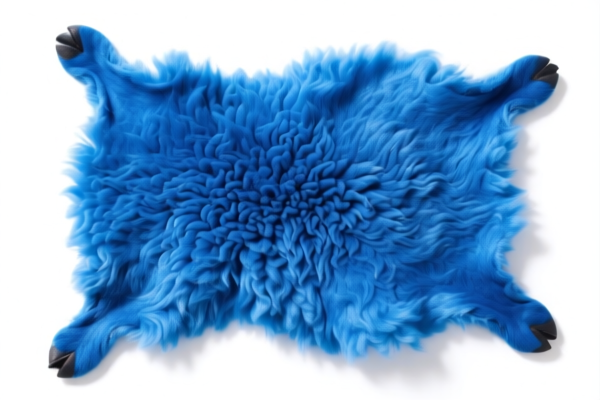
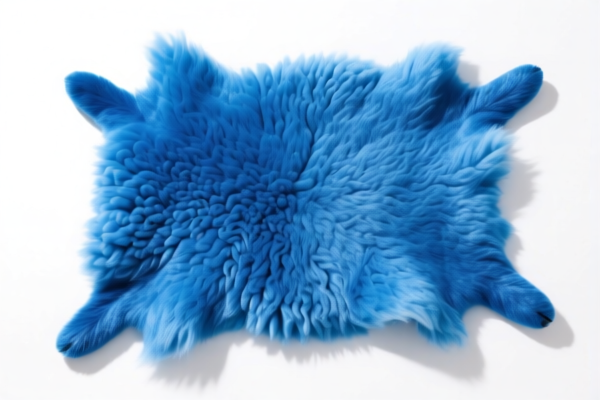
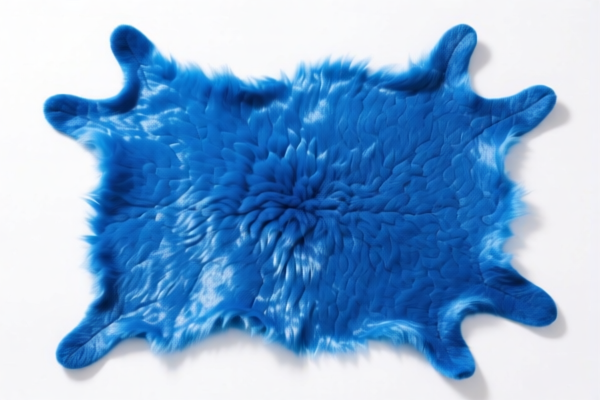
“Blue Wet Sheepskin” (often referred to in trade as Blue Wet End Leather or Wet Blue Sheepskin) is a semi-processed leather product. It represents the state of leather after the tanning process has been completed with chromium salts (the "chrome tanning" process), but before the final dyeing, fatliquoring, drying, and finishing stages.
The term "Blue" refers to the characteristic bluish-gray color of chromium-tanned leather, which serves as a universal identification marker for chrome-tanned hides. "Wet" indicates that the leather is still moist and is typically packed wet (salted or preserved) to prevent spoilage and maintain fiber structure. "Sheepskin" identifies the raw material source.
In international trade, this product is not a finished good (like gloves or jackets) but an intermediate material used in the downstream leather goods manufacturing industry.
⚠️ Key Distinction Point: - If the leather is fully tanned, dried, and finished (dyed, polished, grained), it may be classified under 4104 (Finished Leather). - However, "Wet Blue" implies it has not undergone the full finishing process. It is classified as Tanned Leather, specifically under 4103 (Other Tanned Leather) because sheepskin is not bovine, equine, caprine, or porcine.
📦 II. HS Code Classification Details (2026 Latest Tariff Authority Comparison)
| HS Code | Product Description | Application Scenario | Processing Stage |
|---|---|---|---|
4103.20.00.00 |
Sheepskin and goatskin, tanned or pale-faced, other than leather of heading 4104 | Wet Blue Sheepskin, Chrome Tanned, Unfinished | ✅ Tanned but Unfinished |
4104.54.00.00 |
Other leather, further processed than pale-faced, not split, of sheep or lamb | Finished Sheep Leather (dyed, coated) | ✅ Finished/Dyed |
4101.29.00.00 |
Bovine leather, tanned, other | Cattle hides | ❌ Wrong Species |
4105.30.00.00 |
Goat/kid leather, tanned, other | Finished Goat Leather | ❌ Wrong Species |
4106.21.00.00 |
Sheepskin, tanned or pale-faced | Raw Tanned Skins (often includes Wet Blue) | ⚠️ Check Country Specifics (See Note Below) |
🔍 Critical Clarification for 2026 Tariff: - Primary Classification: For most major markets (including the US and EU), Wet Blue Sheepskin is classified under 4103.20.00.00 (Sheepskin, tanned, other). This category captures leather that has been tanned (usually chrome-tanned, hence "blue") but has not undergone the further processing required for heading 4104 (finished leather). - Alternative View (Raw Tanned): In some specific national interpretations, if the "wet blue" is considered merely "pale-faced" or lightly processed, it might fall under 4106.21.00.00 (Sheepskin, tanned or pale-faced). However, 4103.20.00.00 is the more accurate description for chrome-tanned, colored (blue) leather ready for further dyeing/finishing. - Recommendation: Use 4103.20.00.00 as the primary code for Wet Blue Sheepskin in most global trade contexts unless specific country rules of origin dictate otherwise.
💰 III. 2026 Latest Tariff Rate Details (Including Surtaxes & Policy Add-ons)
✅ Applicable Country: United States (US)
✅ Country of Origin: China (CN)
✅ Effective Time: As of 2026 (Post-2025 Policy Updates)
🎯 1. 4103.20.00.00 —— Sheepskin, Tanned (Wet Blue)
| Item | Content |
|---|---|
| Base MFN Rate | 0% (ad valorem) |
| Section 301 Surtax | +25% (USITC Footnote 4103.20.00.00) |
| IEEPA Surtax | +10% (Against Chinese/ HK products, effective Nov 10, 2025) |
| Total Tariff Rate | 35% |
| Tax Calculation | CIF Value × 35% |
| De Minimis Eligibility | ❌ Not Eligible (deny_de_minimis for Section 301 goods) |
| Legal Path | IEEPA:9903.01.25 → IEEPA:9903.01.24 → USITC:4103.20.00.00 → FOOTNOTE:9903.88.01 |
📌 Explanation: - Base Rate (0%): Unprocessed or semi-processed leather generally has low base tariffs to encourage domestic manufacturing. - Section 301 Surtax (+25%): Imposed on Chinese leather goods and raw materials to protect US domestic leather processors. - IEEPA Surtax (+10%): Additional tariff under the International Emergency Economic Powers Act, targeting Chinese imports. - Total Impact: A 35% effective tariff significantly increases the cost of imported wet blue sheepskin, making it expensive for US-based leather goods manufacturers to source from China.
🛠️ IV. Customs Clearance Practical Advice (Combat Pitfall Guide)
✅ 1. Documentation Checklist (Mandatory)
| Document | Required | Notes |
|---|---|---|
| ✅ Product Specification Sheet | ✔️ | Must specify: "Chrome-Tanned Sheepskin, Wet Blue State, Salt-Packed." |
| ✅ Photos (Wet/In Bulk) | ✔️ | Clear images showing the blue color and wet texture to prove it is not finished leather. |
| ✅ Commercial Invoice | ✔️ | Description must not say "Finished Leather" or "Suede". Use "Wet Blue Sheepskin for Further Processing." |
| ✅ Packing List | ✔️ | List net weight and gross weight accurately. Wet leather is heavy due to moisture content. |
| ✅ Certificate of Origin (CO) | ✔️ | Crucial for proving Chinese origin to apply/add surtaxes correctly. |
| ✅ Environmental Compliance Doc | ✔️ | Proof of chromium compliance (e.g., ISO 17075) to ensure no prohibited chromates exceed limits. |
✅ 2. Declaration Tips (Key Mnemonics)
🔥 "State Matters: Wet Blue is Semi, Not Final. Declare Tanned, Not Finished!"
| Scenario | Correct Declaration | Wrong Practice |
|---|---|---|
| Wet Blue Sheepskin | HS 4103.20.00.00 + "Chrome-Tanned, Unfinished" |
Declare as 4104 (Finished) → Underreporting Tariff |
| Finished Dyed Sheepskin | HS 4104.54.00.00 + "Dyed, Finished" |
Declare as Wet Blue → Overreporting Tariff (but risky) |
| Raw Skins (Untanned) | HS 4101 or 4102 + "Raw, Salted" |
Declare as Tanned → Misclassification |
| Leather Waste/Scraps | HS 4115 + "Leather Offcuts" |
Declare as Whole Skins → Customs Seizure |
✅ 3. Special Circumstances Handling
| Situation | Handling Advice |
|---|---|
| High Moisture Content | Ensure weight is declared as Net Weight. Customs may adjust for evaporation if gross/net ratio is suspicious. |
| Chromium Content | Must comply with REACH (EU) or CPSIA (US) limits for Chromium VI. Provide test reports from SGS/TÜV. |
| Zoonotic Disease Compliance | Sheepskins from certain regions may require veterinary health certificates to prove freedom from Foot-and-Mouth Disease. |
| Transshipment Risk | If goods are routed through Vietnam/Malaysia to avoid 35% tariff, be prepared for Anti-Circumvention Investigations. US CBP is strict on "substantial transformation." |
🌍 V. Global Market Clearance Comparison (2026 Latest)
| Country/Region | Recommended HS Code | Tariff (CN Origin) | Certification Requirements | Notes |
|---|---|---|---|---|
| 🇺🇸 USA | 4103.20.00.00 |
35% | FCC N/A (Chemical Safety) | High tariff barrier; avoid de minimis. |
| 🇨🇳 China | 4103.20.00.00 |
0% | N/A | Import duty exemption for raw materials. |
| 🇪🇺 EU | 4103.20.00.00 |
0% | REACH (Cr VI limit) | No surtax, but strict chemical compliance. |
| 🇬🇧 UK | 4103.20.00.00 |
0% | UK REACH | Post-Brexit rules mirror EU largely. |
| 🇻🇳 Vietnam | 4103.20.00.00 |
Varies | N/A | Often used for processing trade. |
📌 Conclusion: - The US is the only major market with a high effective tariff (35%) on Chinese Wet Blue Sheepskin. - EU and UK have 0% base tariffs but enforce strict environmental regulations (REACH) regarding chromium content. - Risk Alert: For US imports, the 35% tariff is unavoidable if originating from China. Companies often seek Vietnam or Turkey as alternative sourcing points, but must ensure genuine transformation to avoid penalties.
📌 VI. Common Mistakes & Pitfall Guide (Blood & Tears Lessons)
❌ Mistake 1: Declaring "Wet Blue" as "Finished Suede" to hide the semi-processed state. 👉 Consequence: Penalty for Undervaluation + Back Taxes + Potential Fraud Investigation.
❌ Mistake 2: Ignoring Chromium VI Limits. 👉 Consequence: Rejection at US CBP or EU Border. Goods destroyed. Fines up to $10,000 per shipment.
❌ Mistake 3: Using "Leather" as a generic description without specifying "Tanned" or "Wet Blue". 👉 Consequence: Customs Hold for further examination. Delays of 2-4 weeks.
❌ Mistake 4: Assuming De Minimis ($800) applies to Wet Blue Sheepskin. 👉 Consequence: Section 301 goods are EXCLUDED from De Minimis. If shipped via parcel, it will be taxed and seized.
✅ Correct Approach:
"Wet Blue Sheepskin, Chrome-Tanned, Unfinished, Salt-Packed, for Further Dyeing & Finishing, Model: WB-SHEEP-001, Cr VI < 3ppm"
🎯 VII. Conclusion: Precision in Classification Saves Millions!
🎯 Remember the Mnemonic:
🔹 "Wet Blue is Semi, Not Finished. Tariff is 35% in US. De Minimis Doesn't Apply!" 🔹 "Check Chrome VI, Check Origin, Avoid Fraud Charges!"
📌 Pro Tip:
If you are importing into the US, consider processing trade opportunities or sourcing from non-China origins (e.g., Turkey, Peru, New Zealand) to avoid the 35% surtax. Always request a Pre-Ruling (ACE) from US CBP for large shipments to confirm the HS code and tariff application.
📣 Immediate Action:
📞 Contact a licensed customs broker + Provide CHROMIUM VI TEST REPORT + Verify Country of Origin 🚀 Ensure Wet Blue Sheepskin clears customs smoothly, legally, and cost-effectively!
✨ Professional Clearance Starts with Accurate Classification! 💼 Every Dollar of Tariff, Calculated Precisely!
Customer Reviews
About HS Code Classification
The Harmonized System (HS) is an internationally standardized nomenclature developed by the World Customs Organization (WCO) to classify traded products. Over 200 countries use the HS system as the basis for customs tariffs, trade statistics, and import/export regulations.
Each HS code follows a hierarchical structure:
- Chapter (2 digits) — Broad category of goods (e.g., Chapter 84: Machinery and Mechanical Appliances)
- Heading (4 digits) — More specific grouping within the chapter
- Subheading (6 digits) — Internationally standardized breakdown, used by all WCO member countries
- National subdivisions (8-10 digits) — Country-specific extensions for further classification, such as US HTSUS 10-digit codes
Correct HS code classification is essential for smooth customs clearance, accurate duty payment, and compliance with trade regulations. Misclassification can lead to customs delays, overpayment of duties, or penalties.
When importing from CN to US, the applicable tariff rates may include:
- Most-Favored-Nation (MFN) rate — The standard duty rate applied to WTO members
- General rate — Applied to countries without trade agreements
- Trade remedy duties — Additional tariffs such as Section 301 (anti-dumping), Section 232 (national security), or countervailing duties
The information provided on this page is for reference purposes only. For official classification, please consult with your local customs authority or a licensed customs broker.