Bohemian Style Sports Headband
CN → US| HS编码 | 关税税率 | 原产国 | 目的国 | 文档 |
|---|---|---|---|---|
| 6117808500 | 32.1% | CN | US | 官方文档 |
| 6117803010 | 12.3% | CN | US | 官方文档 |
| 6217108500 | 24.6% | CN | US | 官方文档 |
| 6217109510 | 32.1% | CN | US | 官方文档 |
商品图片

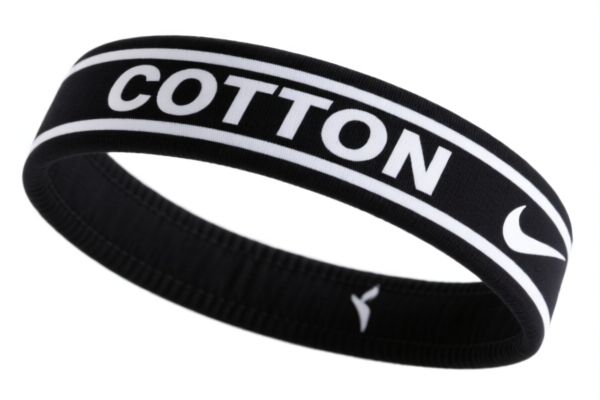
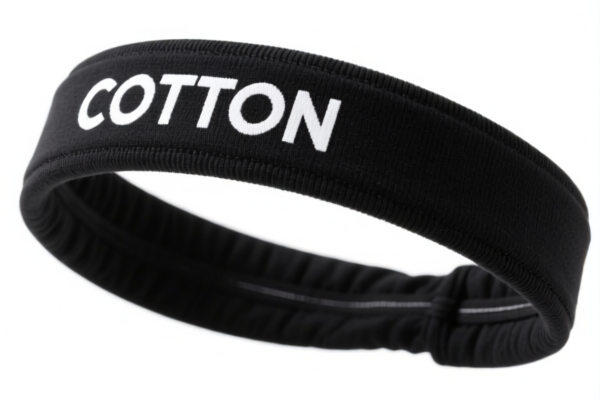
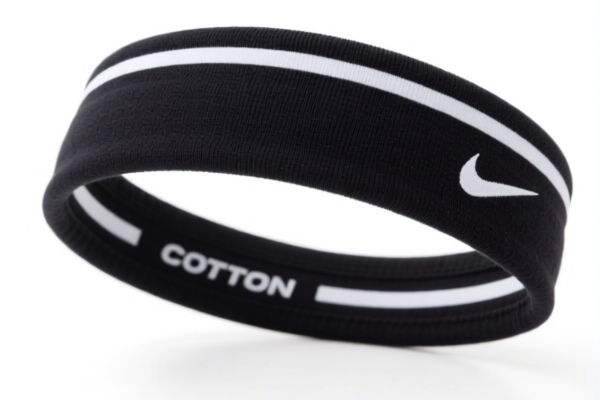
AI分析
Here is the comprehensive WIKI-style guide for Bohemian Style Sports Headbands, tailored to the specific HS Codes and tax data provided.
🎀 Bohemian Style Sports Headband (Global Customs & Tax Guide)
🌐 HS Code Classification & Tariff Analysis | 2026 Updated Tax Regime | Professional Clearance Strategy
📌 1. Product Definition & Classification: What is a "Bohemian Sports Headband"?
The Bohemian Style Sports Headband is a versatile accessory combining aesthetic flair (floral patterns, earthy tones, loose weaves) with functional utility (sweat absorption, hair retention during exercise).
In international trade, the classification CRITICALLY depends on two factors: 1. Material Composition: Is it knitted (flexible/stretchy) or woven/based on fabric sheets? 2. Fiber Type: Is it synthetic (polyester/acrylic), natural (silk/cotton), or a mix?
⚠️ Key Distinction: * Knitted (Chapter 61): Products made by knitting or crocheting fibers into a continuous tube or loop. Often associated with "stretchy" athletic wear. * Woven/Textile (Chapter 62): Products made from cut fabric pieces sewn together. Often associated with structured or heavier fabric headbands.
Why the Classification Matters: A slight difference in material description (e.g., "Silk" vs. "Synthetic") can result in a 20% difference in tax rates due to the "Section 301" (Added Tariff) and "Section 122" (New Tariff) layers.
📦 2. HS Code Classification Matrix (2026 Data)
Based on the provided dataset, here is the precise breakdown of the Bohemian Style Sports Headband by material:
| HS Code | Material Description | Total Tax Rate | Tariff Breakdown |
|---|---|---|---|
6117.80.85.00 |
Knitted/Crocheted (Fiber-based) Synthetic/Fiber Blends |
32.1% | Base: 14.6% + Added: 7.5% + Sec 122: 10% |
6117.80.30.10 |
Knitted/Crocheted (Silk/Silk-Blend) Pure Silk or Silk Mix |
12.3% | Base: 2.3% + Added: 0.0% + Sec 122: 10% |
6217.10.85.00 |
Woven/Textile (Fabric/Fiber) Non-Knitted Fabric Base |
24.6% | Base: 14.6% + Added: 0.0% + Sec 122: 10% |
6217.10.95.10 |
Woven/Textile (Woven/Cotton) Fabric or Cotton-based |
32.1% | Base: 14.6% + Added: 7.5% + Sec 122: 10% |
🔍 Critical Analysis: * The "Silk" Advantage: If the headband contains silk (even in a blend), it qualifies for HS 6117.80.30.10, dropping the total tax from 32.1% to 12.3%. * The "Cotton/Fiber" Trap: Knitted fibers or Cotton/Weaves attract the highest penalty (7.5% Added Tariff), pushing the total to 32.1%.
💰 3. 2026 Tariff Rate Deep Dive (Detailed Explanation)
✅ Applicable Markets: US (United States) ✅ Origin: China (CN) ✅ Effective Date: Current Regime (Post-2025 Adjustments)
🎯 Scenario A: The High-Tax Zone (32.1%)
- Codes:
6117.80.85.00(Knitted Fiber) &6217.10.95.10(Woven Cotton) - Structure:
- Base Duty (Most Favored Nation): 14.6%
- Standard tariff for textile accessories.
- Added Tariff (Section 301): 7.5%
- Penalty specifically applied to "Fiber-based" and "Cotton-based" textile goods from China.
- Section 122 Tariff: 10%
- New punitive tariff layer applied to textile headbands.
- Base Duty (Most Favored Nation): 14.6%
- Calculation: $14.6\% + 7.5\% + 10\% = \mathbf{32.1\%}$
- Impact: If importing $10,000 worth of these headbands, you pay $3,210 in taxes alone.
🎯 Scenario B: The Silk Advantage (12.3%)
- Code:
6117.80.30.10(Silk/Silk-Blend) - Structure:
- Base Duty: 2.3% (Significantly lower for natural silk).
- Added Tariff: 0.0% (Silk is often exempt from the specific 301 penalty on textiles).
- Section 122 Tariff: 10% (Still applies).
- Calculation: $2.3\% + 0.0\% + 10\% = \mathbf{12.3\%}$
- Impact: Saves $2,000 in taxes on a $10,000 shipment compared to the high-tax zone.
🎯 Scenario C: The Woven Middle Ground (24.6%)
- Code:
6217.10.85.00(Woven Fabric/Fiber) - Structure:
- Base Duty: 14.6%
- Added Tariff: 0.0% (Woven fabrics often avoid the specific "fiber" penalty, but not the base).
- Section 122 Tariff: 10%
- Calculation: $14.6\% + 0.0\% + 10\% = \mathbf{24.6\%}$
- Strategy: Woven fabrics are cheaper than knitted/fiber ones but more expensive than silk.
🛠️ 4. Customs Clearance Strategy & Recommendations
✅ 1. Documentation Checklist (The "Must-Haves")
To avoid delays or re-classification, ensure your commercial invoice and packing list include:
| Document | Requirement | Why? |
|---|---|---|
| Product Description | Must specify "Knitted" vs. "Woven" and exact Material % (e.g., "80% Acrylic, 20% Silk"). | Determines if it falls under Chapter 61 (Knitted) or 62 (Woven). |
| Material Declaration | Explicitly state "Contains Silk" if applicable. | Critical for claiming the 12.3% rate under 6117.80.30.10. |
| Photos | Show texture (knit loops vs. woven threads) and close-up of the "Bohemian" print. | Customs officers may inspect to verify the manufacturing method. |
| Composition Label | Must match the declared HS code exactly. | Mismatch between label and invoice leads to fines. |
✅ 2. Strategic Classification Advice
🔥 The "Silk" Loophole: If your Bohemian headbands are marketed as "Premium," consider sourcing or producing them with a Silk content (even 10-20%). * Result: You jump from 32.1% tax to 12.3% tax. * Action: Update your Bill of Materials (BOM) to highlight "Silk Blend" or "Pure Silk."
🔥 Knitted vs. Woven Decision: * If the product is stretchy and feels like a sock → Chapter 61 (
6117.80...). * If the product is structured, flat, or sewn from a square of fabric → Chapter 62 (6217.10...). * Warning: Do not mislabel a knitted item as "Woven" to try to save the Section 122 tax. The Section 122 tax (10%) applies to ALL categories in this dataset, so the only leverage is the Base Duty and Added Tariff.
✅ 3. Common Pitfalls to Avoid
| ❌ Mistake | ⚠️ Consequence | ✅ Solution |
|---|---|---|
| Generic Description: "Sports Headband" | Risk of 32.1% default classification. | Use precise terms: "Silk Knitted Headband" or "Cotton Woven Headband." |
| Ignoring "Section 122": Believing only Base Tax applies. | Unexpected cost increase of 10%. | Factor 10% into your landed cost calculation for ALL headbands. |
| Mixing Materials: Not declaring Silk content. | Loss of eligibility for 6117.80.30.10. |
Ensure packaging and invoice explicitly state the silk content %. |
🌍 5. Landed Cost Calculator (Example)
Assumption: Shipment Value = $50,000**
| Scenario | HS Code | Material | Total Tax % | Tax Amount | Net Cost (Import) |
|---|---|---|---|---|---|
| Premium Silk | 6117.80.30.10 |
Silk/Silk-Blend | 12.3% | $6,150 | $56,150 |
| Woven Fabric | 6217.10.85.00 |
Fabric/Fiber | 24.6% | $12,300 | $62,300 |
| Knitted Fiber | 6117.80.85.00 |
Synthetic/Other | 32.1% | $16,050 | $66,050 |
| Woven Cotton | 6217.10.95.10 |
Cotton/Woven | 32.1% | $16,050 | $66,050 |
📌 Insight: Choosing the Silk variant saves you $9,900 compared to the Synthetic/Cotton variants on a $50k shipment.
📌 6. Final Conclusion & Action Plan
- Verify Material: Check your supplier's BOM immediately. Is it Knitted or Woven? Is there Silk?
- Optimize Composition: If possible, introduce Silk to unlock the 12.3% rate (
6117.80.30.10). - Accurate Labeling: Ensure the HS Code on your invoice matches the physical product's construction (Knit vs. Woven) to avoid Section 122 disputes.
- Budget for 10%: Regardless of the material, the Section 122 Tariff (10%) is unavoidable for this category.
🚀 Pro Tip: "Bohemian" is a style, not a material. Customs cares about Knit/Woven and Fiber Content. Let the material drive your HS Code, not the design!
✨ Professional Clearance, Precise Tariffs, Maximum Profit! Disclaimer: Tariff rates are subject to change by US Customs (CBP) and USTR. Always verify with a licensed customs broker before shipping.
用户评价
关于 HS 编码归类
协调制度(HS)是由世界海关组织(WCO)制定的国际贸易商品分类标准。全球 200 多个国家采用 HS 系统作为海关关税、贸易统计和进出口监管的基础。
每个 HS 编码遵循以下层级结构:
- 章(2 位)——商品大类(例如:第 84 章:机器和机械设备)
- 品目(4 位)——章内的更具体分类
- 子目(6 位)——国际通用细分,所有 WCO 成员国统一使用
- 本国细分(8-10 位)——各国自行扩展的细分编码,如美国 HTSUS 10 位编码
正确的 HS 编码归类对于顺利通关、准确缴纳关税和遵守贸易法规至关重要。错误归类可能导致海关延误、多缴关税或罚款。
从CN进口到US时,适用的关税税率可能包括:
- 最惠国(MFN)税率——适用于 WTO 成员国的标准关税税率
- 普通税率——适用于无贸易协定国家
- 贸易救济关税——附加关税,如 301 条款(反倾销)、232 条款(国家安全)或反补贴税
本页内容仅供参考。如需正式归类,请咨询当地海关或持牌报关代理。