Bohemian Style Sports Headband
CN → US| HS Code | Tariff Rate | Origin | Destination | Doc |
|---|---|---|---|---|
| 6117808500 | 32.1% | CN | US | Official Doc |
| 6117803010 | 12.3% | CN | US | Official Doc |
| 6217108500 | 24.6% | CN | US | Official Doc |
| 6217109510 | 32.1% | CN | US | Official Doc |
Product Images

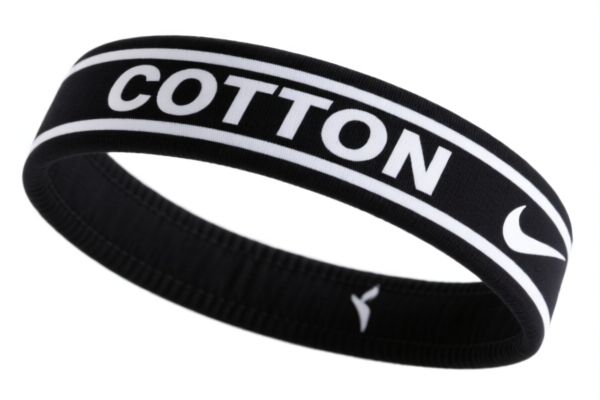
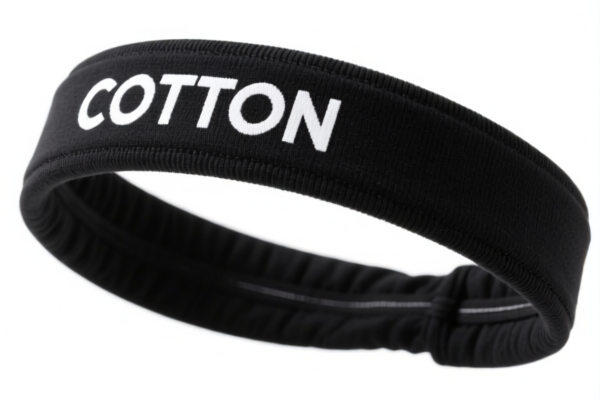
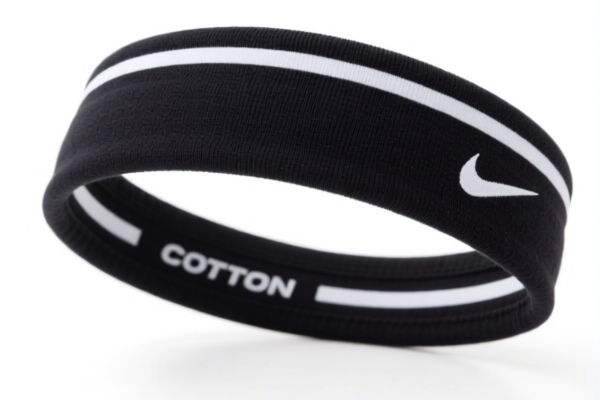
AI Analysis
Here is the comprehensive WIKI-style guide for Bohemian Style Sports Headbands, tailored to the specific HS Codes and tax data provided.
🎀 Bohemian Style Sports Headband (Global Customs & Tax Guide)
🌐 HS Code Classification & Tariff Analysis | 2026 Updated Tax Regime | Professional Clearance Strategy
📌 1. Product Definition & Classification: What is a "Bohemian Sports Headband"?
The Bohemian Style Sports Headband is a versatile accessory combining aesthetic flair (floral patterns, earthy tones, loose weaves) with functional utility (sweat absorption, hair retention during exercise).
In international trade, the classification CRITICALLY depends on two factors: 1. Material Composition: Is it knitted (flexible/stretchy) or woven/based on fabric sheets? 2. Fiber Type: Is it synthetic (polyester/acrylic), natural (silk/cotton), or a mix?
⚠️ Key Distinction: * Knitted (Chapter 61): Products made by knitting or crocheting fibers into a continuous tube or loop. Often associated with "stretchy" athletic wear. * Woven/Textile (Chapter 62): Products made from cut fabric pieces sewn together. Often associated with structured or heavier fabric headbands.
Why the Classification Matters: A slight difference in material description (e.g., "Silk" vs. "Synthetic") can result in a 20% difference in tax rates due to the "Section 301" (Added Tariff) and "Section 122" (New Tariff) layers.
📦 2. HS Code Classification Matrix (2026 Data)
Based on the provided dataset, here is the precise breakdown of the Bohemian Style Sports Headband by material:
| HS Code | Material Description | Total Tax Rate | Tariff Breakdown |
|---|---|---|---|
6117.80.85.00 |
Knitted/Crocheted (Fiber-based) Synthetic/Fiber Blends |
32.1% | Base: 14.6% + Added: 7.5% + Sec 122: 10% |
6117.80.30.10 |
Knitted/Crocheted (Silk/Silk-Blend) Pure Silk or Silk Mix |
12.3% | Base: 2.3% + Added: 0.0% + Sec 122: 10% |
6217.10.85.00 |
Woven/Textile (Fabric/Fiber) Non-Knitted Fabric Base |
24.6% | Base: 14.6% + Added: 0.0% + Sec 122: 10% |
6217.10.95.10 |
Woven/Textile (Woven/Cotton) Fabric or Cotton-based |
32.1% | Base: 14.6% + Added: 7.5% + Sec 122: 10% |
🔍 Critical Analysis: * The "Silk" Advantage: If the headband contains silk (even in a blend), it qualifies for HS 6117.80.30.10, dropping the total tax from 32.1% to 12.3%. * The "Cotton/Fiber" Trap: Knitted fibers or Cotton/Weaves attract the highest penalty (7.5% Added Tariff), pushing the total to 32.1%.
💰 3. 2026 Tariff Rate Deep Dive (Detailed Explanation)
✅ Applicable Markets: US (United States) ✅ Origin: China (CN) ✅ Effective Date: Current Regime (Post-2025 Adjustments)
🎯 Scenario A: The High-Tax Zone (32.1%)
- Codes:
6117.80.85.00(Knitted Fiber) &6217.10.95.10(Woven Cotton) - Structure:
- Base Duty (Most Favored Nation): 14.6%
- Standard tariff for textile accessories.
- Added Tariff (Section 301): 7.5%
- Penalty specifically applied to "Fiber-based" and "Cotton-based" textile goods from China.
- Section 122 Tariff: 10%
- New punitive tariff layer applied to textile headbands.
- Base Duty (Most Favored Nation): 14.6%
- Calculation: $14.6\% + 7.5\% + 10\% = \mathbf{32.1\%}$
- Impact: If importing $10,000 worth of these headbands, you pay $3,210 in taxes alone.
🎯 Scenario B: The Silk Advantage (12.3%)
- Code:
6117.80.30.10(Silk/Silk-Blend) - Structure:
- Base Duty: 2.3% (Significantly lower for natural silk).
- Added Tariff: 0.0% (Silk is often exempt from the specific 301 penalty on textiles).
- Section 122 Tariff: 10% (Still applies).
- Calculation: $2.3\% + 0.0\% + 10\% = \mathbf{12.3\%}$
- Impact: Saves $2,000 in taxes on a $10,000 shipment compared to the high-tax zone.
🎯 Scenario C: The Woven Middle Ground (24.6%)
- Code:
6217.10.85.00(Woven Fabric/Fiber) - Structure:
- Base Duty: 14.6%
- Added Tariff: 0.0% (Woven fabrics often avoid the specific "fiber" penalty, but not the base).
- Section 122 Tariff: 10%
- Calculation: $14.6\% + 0.0\% + 10\% = \mathbf{24.6\%}$
- Strategy: Woven fabrics are cheaper than knitted/fiber ones but more expensive than silk.
🛠️ 4. Customs Clearance Strategy & Recommendations
✅ 1. Documentation Checklist (The "Must-Haves")
To avoid delays or re-classification, ensure your commercial invoice and packing list include:
| Document | Requirement | Why? |
|---|---|---|
| Product Description | Must specify "Knitted" vs. "Woven" and exact Material % (e.g., "80% Acrylic, 20% Silk"). | Determines if it falls under Chapter 61 (Knitted) or 62 (Woven). |
| Material Declaration | Explicitly state "Contains Silk" if applicable. | Critical for claiming the 12.3% rate under 6117.80.30.10. |
| Photos | Show texture (knit loops vs. woven threads) and close-up of the "Bohemian" print. | Customs officers may inspect to verify the manufacturing method. |
| Composition Label | Must match the declared HS code exactly. | Mismatch between label and invoice leads to fines. |
✅ 2. Strategic Classification Advice
🔥 The "Silk" Loophole: If your Bohemian headbands are marketed as "Premium," consider sourcing or producing them with a Silk content (even 10-20%). * Result: You jump from 32.1% tax to 12.3% tax. * Action: Update your Bill of Materials (BOM) to highlight "Silk Blend" or "Pure Silk."
🔥 Knitted vs. Woven Decision: * If the product is stretchy and feels like a sock → Chapter 61 (
6117.80...). * If the product is structured, flat, or sewn from a square of fabric → Chapter 62 (6217.10...). * Warning: Do not mislabel a knitted item as "Woven" to try to save the Section 122 tax. The Section 122 tax (10%) applies to ALL categories in this dataset, so the only leverage is the Base Duty and Added Tariff.
✅ 3. Common Pitfalls to Avoid
| ❌ Mistake | ⚠️ Consequence | ✅ Solution |
|---|---|---|
| Generic Description: "Sports Headband" | Risk of 32.1% default classification. | Use precise terms: "Silk Knitted Headband" or "Cotton Woven Headband." |
| Ignoring "Section 122": Believing only Base Tax applies. | Unexpected cost increase of 10%. | Factor 10% into your landed cost calculation for ALL headbands. |
| Mixing Materials: Not declaring Silk content. | Loss of eligibility for 6117.80.30.10. |
Ensure packaging and invoice explicitly state the silk content %. |
🌍 5. Landed Cost Calculator (Example)
Assumption: Shipment Value = $50,000**
| Scenario | HS Code | Material | Total Tax % | Tax Amount | Net Cost (Import) |
|---|---|---|---|---|---|
| Premium Silk | 6117.80.30.10 |
Silk/Silk-Blend | 12.3% | $6,150 | $56,150 |
| Woven Fabric | 6217.10.85.00 |
Fabric/Fiber | 24.6% | $12,300 | $62,300 |
| Knitted Fiber | 6117.80.85.00 |
Synthetic/Other | 32.1% | $16,050 | $66,050 |
| Woven Cotton | 6217.10.95.10 |
Cotton/Woven | 32.1% | $16,050 | $66,050 |
📌 Insight: Choosing the Silk variant saves you $9,900 compared to the Synthetic/Cotton variants on a $50k shipment.
📌 6. Final Conclusion & Action Plan
- Verify Material: Check your supplier's BOM immediately. Is it Knitted or Woven? Is there Silk?
- Optimize Composition: If possible, introduce Silk to unlock the 12.3% rate (
6117.80.30.10). - Accurate Labeling: Ensure the HS Code on your invoice matches the physical product's construction (Knit vs. Woven) to avoid Section 122 disputes.
- Budget for 10%: Regardless of the material, the Section 122 Tariff (10%) is unavoidable for this category.
🚀 Pro Tip: "Bohemian" is a style, not a material. Customs cares about Knit/Woven and Fiber Content. Let the material drive your HS Code, not the design!
✨ Professional Clearance, Precise Tariffs, Maximum Profit! Disclaimer: Tariff rates are subject to change by US Customs (CBP) and USTR. Always verify with a licensed customs broker before shipping.
Customer Reviews
About HS Code Classification
The Harmonized System (HS) is an internationally standardized nomenclature developed by the World Customs Organization (WCO) to classify traded products. Over 200 countries use the HS system as the basis for customs tariffs, trade statistics, and import/export regulations.
Each HS code follows a hierarchical structure:
- Chapter (2 digits) — Broad category of goods (e.g., Chapter 84: Machinery and Mechanical Appliances)
- Heading (4 digits) — More specific grouping within the chapter
- Subheading (6 digits) — Internationally standardized breakdown, used by all WCO member countries
- National subdivisions (8-10 digits) — Country-specific extensions for further classification, such as US HTSUS 10-digit codes
Correct HS code classification is essential for smooth customs clearance, accurate duty payment, and compliance with trade regulations. Misclassification can lead to customs delays, overpayment of duties, or penalties.
When importing from CN to US, the applicable tariff rates may include:
- Most-Favored-Nation (MFN) rate — The standard duty rate applied to WTO members
- General rate — Applied to countries without trade agreements
- Trade remedy duties — Additional tariffs such as Section 301 (anti-dumping), Section 232 (national security), or countervailing duties
The information provided on this page is for reference purposes only. For official classification, please consult with your local customs authority or a licensed customs broker.