Bovine Leather Cases and Bags
CN → US| HS编码 | 关税税率 | 原产国 | 目的国 | 文档 |
|---|---|---|---|---|
| 4202110030 | 43.0% | CN | US | 官方文档 |
| 4202110090 | 43.0% | CN | US | 官方文档 |
| 4107117050 | 15.0% | CN | US | 官方文档 |
| 4107127050 | 15.0% | CN | US | 官方文档 |
商品图片
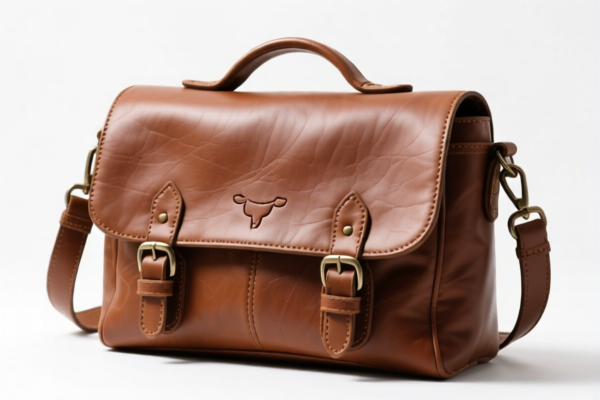
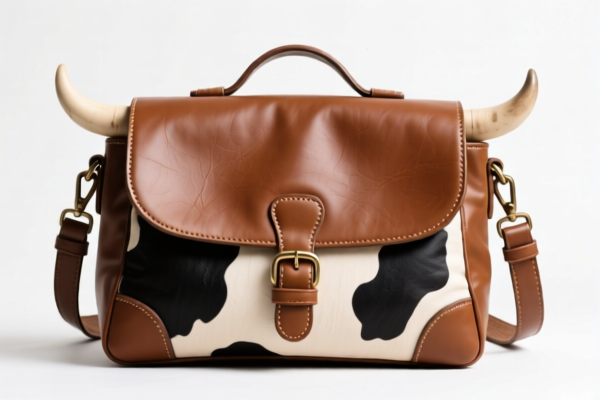
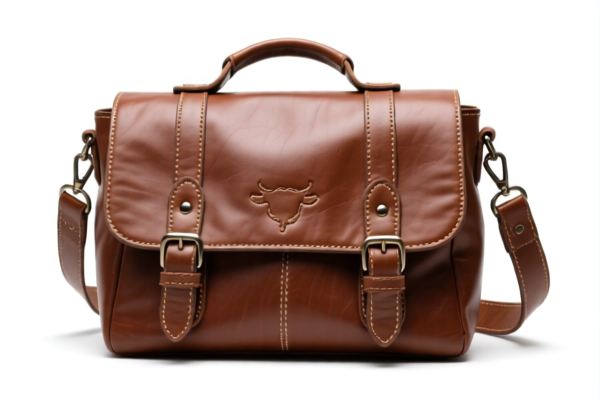
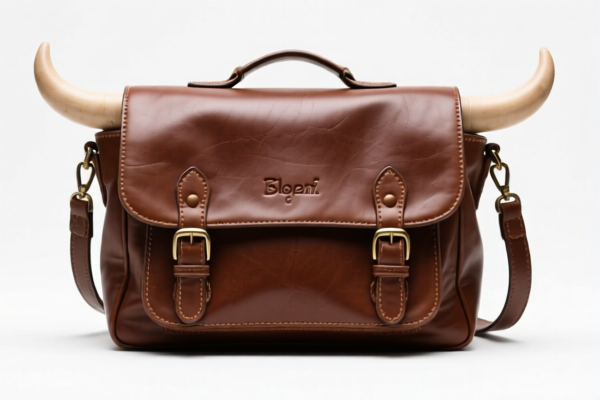
AI分析
👜 Bovine Leather Cases and Bags: HS Code Classification & 2026 Tax Guide
🌐 HS Code Reference & Customs Clearance Strategy | 2026 Latest Tariff Analysis | Professional Compliance Guide
📌 I. Product Definition: What Exactly Are "Bovine Leather Cases and Bags"?
In international trade, Bovine Leather Cases and Bags are not a single monolithic category. They are split based on material processing and final utility. The distinction is critical because it dictates whether you face a 15% or 43% total tax rate.
Key Distinction:
1. Finished Goods (Cases/Bags): Items ready for consumer use (handbags, briefcases, suitcases). These fall under Heading 4202.
2. Semi-Processed Goods (Leather Hides/Skins): Raw, tanned, or crust leather ready for manufacturing into bags. These fall under Heading 4107.
⚠️ Critical Warning:
- If the item is a completed bag (with lining, handles, zippers, structure) → Classify under 4202.
- If the item is just the leather material (tanned skins, even if cut for bags) → Classify under 4107.
- Misclassification Risk: Declaring a finished handbag as "Leather" (4107) to lower taxes will result in severe penalties and seizure.
📦 II. HS Code Classification Matrix (2026 Latest Tariff Authority)
| HS Code | Product Description | Material Specifics | Final Use | Tax Rate |
|---|---|---|---|---|
4202.11.00.30 |
Bovine Leather Cases & Bags (Specific Use) | Tanned/Finished Leather | Handbags, Briefcases, Suitcases | 43.0% |
4202.11.00.90 |
Bovine Leather Cases & Bags (General) | Tanned/Finished Leather | Other containers/cases | 43.0% |
4107.11.70.50 |
Bovine Leather (Full-Grain) | Full-Grain Cowhide | Raw material for bags, belts, collars | 15.0% |
4107.12.70.50 |
Bovine Leather (Other) | Other Tanned Cowhide | Raw material for bags | 15.0% |
🔍 Detailed Breakdown:
- 4202.11.00.30 / .90: These are finished consumer goods. The leather has been fully processed, cut, sewn, and assembled into a usable case or bag.
- 4107.11.70.50: Specifically for Full-Grain bovine leather. This is a premium material category, often used for high-end manufacturing. It is not a finished bag.
- 4107.12.70.50: Covers other types of tanned bovine leather not classified as full-grain. Also a raw material.
💰 III. 2026 Tariff Rate Breakdown (US Market Analysis)
✅ Applicable Country: United States (US)
✅ Origin: China (CN)
✅ Effective Date: November 10, 2025 (Post-import)
🎯 1. Finished Cases & Bags (HS 4202.11)
Total Tariff: 43.0%
This is the highest risk category for profitability.
| Component | Rate | Source |
|---|---|---|
| Base Tariff | 8.0% | Standard US MFN Rate for Leather Goods |
| Section 301 Tariff | 25.0% | USITC Footnote 9903.88.01 (Trade Remedy) |
| Section 122 Tariff | 10.0% | IEEPA Provision (China-Specific) |
| TOTAL | 43.0% | Cumulative Ad Valorem |
📌 Explanation:
- The 8% is the baseline duty for leather articles.
- The 25% is a punitive tariff added under Section 301 for specific Chinese goods.
- The 10% is an additional tariff under Section 122 (often linked to national security or emergency powers).
- De Minimis Exemption? ❌ NO. These goods do not qualify for the $800 de minimis exemption. Every shipment is subject to full duties.
🎯 2. Semi-Processed Leather (HS 4107)
Total Tariff: 15.0%
This category represents raw materials, not finished consumer goods.
| Component | Rate | Source |
|---|---|---|
| Base Tariff | 5.0% | Standard US MFN Rate for Tanned Leather |
| Section 301 Tariff | 0.0% | Exempted from 301 duties for raw leather |
| Section 122 Tariff | 10.0% | IEEPA Provision (Applies to China-origin) |
| TOTAL | 15.0% | Lower Risk Category |
📌 Explanation:
- Raw leather enjoys a lower base rate (5%).
- Crucially, it is exempt from the 25% Section 301 tariff.
- However, it still incurs the 10% Section 122 tariff.
- Warning: You cannot classify a finished handbag as "Leather" to get this 15% rate. Customs will inspect the product's structure.
🛠️ IV. Customs Clearance Practical Advice (Avoiding Pitfalls)
✅ 1. Documentation Checklist (Non-Negotiable)
| Document | Required? | Purpose |
|---|---|---|
| ✅ Commercial Invoice | ✔️ | Must clearly state "Bovine Leather Handbag" or "Tanned Bovine Hides". Ambiguity leads to audits. |
| ✅ Packing List | ✔️ | Itemized count. Show quantity vs. weight. |
| ✅ Product Photos | ✔️ | CRITICAL: Show labels, stitching, lining, and hardware. Proves it is a "finished good" or "raw material". |
| ✅ Material Declaration | ✔️ | Specify "Full-Grain" vs. "Split Leather". Affects HS subheading. |
| ✅ Origin Certificate | ✔️ | Required to prove CN origin for Section 122 calculation. |
✅ 2. Declaration Strategy (The "Golden Rules")
🔥 "Finished = 4202 (43%), Raw = 4107 (15%). Do NOT mix!"
| Scenario | Correct HS Code | Risk if Wrong |
|---|---|---|
| Finished Briefcase | 4202.11.00.30 |
If declared as 4107 → Seizure + 28% Penalty |
| Finished Handbag | 4202.11.00.90 |
If declared as 4107 → Seizure + 28% Penalty |
| Tanned Cowhide Sheets | 4107.11.70.50 |
If declared as 4202 → Overpayment of 28% (Unlikely, but possible) |
| Leather with Handles Attached | 4202.11.00.30 |
Customs considers attached handles as "finished". |
✅ 3. Special Case Handling
| Situation | Recommendation |
|---|---|
| OEM Custom Bags | Provide factory specifications showing the item is a "completed article." Use precise descriptions like "Women's Leather Tote Bag." |
| Mixed Shipments | NEVER mix finished bags with raw leather in one HS Code line. Separate lines are mandatory. |
| Leather with Minor Accessories | If leather has tags, small clips, or dust bags attached, it is still considered a finished good (4202). |
| Section 122 Appeal | Consult legal counsel if you believe the 10% Section 122 tariff applies incorrectly (rare for finished goods). |
🌍 V. Global Market Comparison (2026 Outlook)
| Market | Recommended HS Code | Tariff Rate (China Origin) | Key Requirement |
|---|---|---|---|
| 🇺🇸 USA | 4202.11.00.30 |
43.0% | Strict origin verification. No de minimis. |
| 🇺🇸 USA | 4107.11.70.50 |
15.0% | Must prove raw material status. |
| 🇪🇺 EU | 4202.11.00.30 |
~4.5% + VAT | CE marking not required, but REACH (chemicals) compliance is strict. |
| 🇨🇳 China | 4202.11.00.30 |
10-12% (Import) | CCC not required for leather, but environmental standards apply. |
| 🇬🇧 UK | 4202.11.00.30 |
~5% + VAT | Post-Brexit rules. Check UK Global Tariff. |
📌 Conclusion:
- The US market is the most expensive for finished bovine leather goods due to the叠加 (stacking) of Base + 301 + 122 tariffs.
- Raw leather imports to the US are significantly cheaper (15%) but require strict proof of being a "material" not a "product."
📌 VI. Common Mistakes & Pitfalls (Blood Lessons)
❌ Mistake 1: Declaring a finished handbag as "Leather Goods" under 4107 to save 28%.
👉 Consequence: Customs examiners will see stitching, zippers, and lining. Result: Seizure, fines, and blacklisting.
❌ Mistake 2: Ignoring the "Section 122" 10% tariff.
👉 Consequence: Under-declaration. You pay 25% instead of 35% (for leather) or 43% (for bags). Result: Back taxes + interest.
❌ Mistake 3: Using vague descriptions like "Fashion Accessories."
👉 Consequence: CBP (Customs and Border Protection) will assign a generic code, often with higher duties or additional scrutiny.
✅ Correct Practice:
"Women's Bovine Leather Handbag, Full-Grain, with Zip Closure and Interior Pockets, Model XYZ, Made in China"
HS Code:4202.11.00.30
Declared Value: CIF Price + Insurance + Freight.
🎯 VII. Conclusion: Precision Saves Profits
🎯 Key Takeaways:
🔹 Finished Bags = 43% Tax (
4202.11.00.30/.90)
🔹 Raw Leather = 15% Tax (4107.11.70.50/.12)
🔹 Section 122 (10%) applies to ALL China-origin leather goods.
🔹 De Minimis ($800) does NOT apply.
📌 Pro Tip:
If you are a manufacturer exporting raw leather to the US for processing, utilize the 15% rate. If you are exporting finished goods, factor in the 43% cost into your pricing model immediately. Consider supply chain diversification if margins are tight.
📣 Immediate Action:
📞 Verify Product State: Is it a finished bag or raw hide?
📄 Document Structure: Provide photos showing the "finished" nature if using 4202.
🚀 Calculate Landed Cost: Include 43% duty for US-bound finished goods.
✨ Professional Customs Clearance Starts with Accurate Classification!
💼 Don't let 28% difference destroy your profit margin!
用户评价
关于 HS 编码归类
协调制度(HS)是由世界海关组织(WCO)制定的国际贸易商品分类标准。全球 200 多个国家采用 HS 系统作为海关关税、贸易统计和进出口监管的基础。
每个 HS 编码遵循以下层级结构:
- 章(2 位)——商品大类(例如:第 84 章:机器和机械设备)
- 品目(4 位)——章内的更具体分类
- 子目(6 位)——国际通用细分,所有 WCO 成员国统一使用
- 本国细分(8-10 位)——各国自行扩展的细分编码,如美国 HTSUS 10 位编码
正确的 HS 编码归类对于顺利通关、准确缴纳关税和遵守贸易法规至关重要。错误归类可能导致海关延误、多缴关税或罚款。
从CN进口到US时,适用的关税税率可能包括:
- 最惠国(MFN)税率——适用于 WTO 成员国的标准关税税率
- 普通税率——适用于无贸易协定国家
- 贸易救济关税——附加关税,如 301 条款(反倾销)、232 条款(国家安全)或反补贴税
本页内容仅供参考。如需正式归类,请咨询当地海关或持牌报关代理。