Bovine Leather Cases and Bags
CN → US| HS Code | Tariff Rate | Origin | Destination | Doc |
|---|---|---|---|---|
| 4202110030 | 43.0% | CN | US | Official Doc |
| 4202110090 | 43.0% | CN | US | Official Doc |
| 4107117050 | 15.0% | CN | US | Official Doc |
| 4107127050 | 15.0% | CN | US | Official Doc |
Product Images
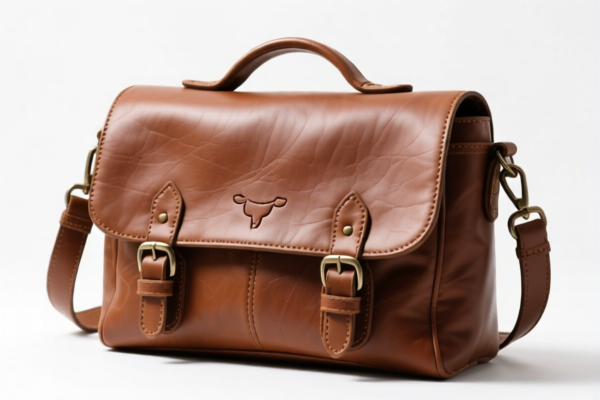
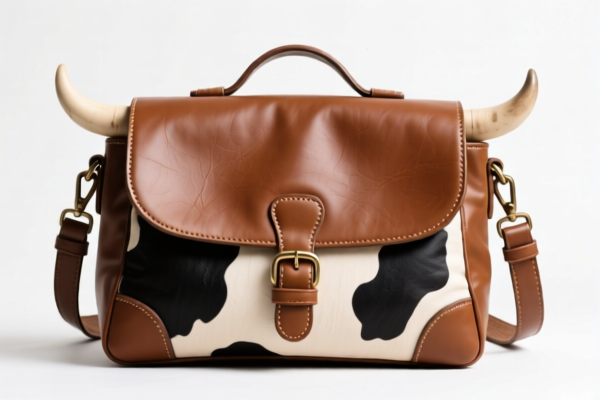
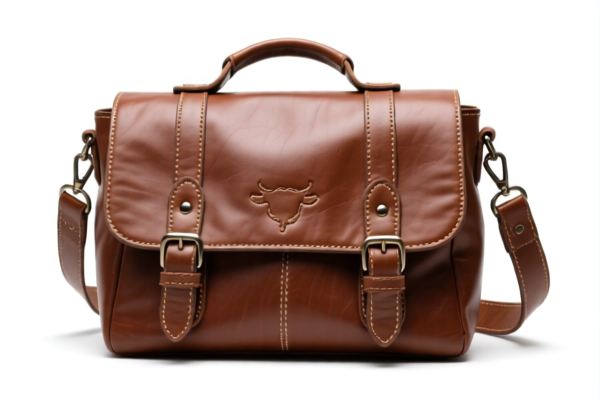
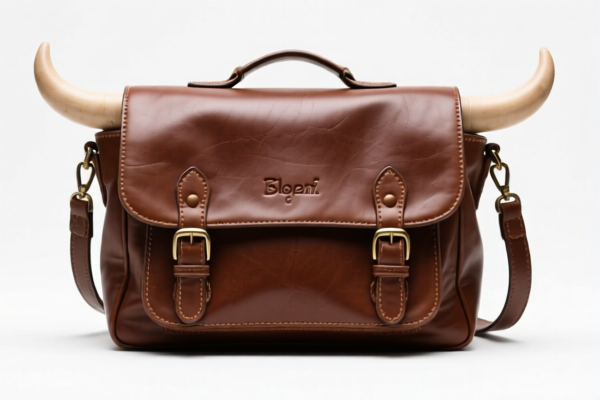
AI Analysis
👜 Bovine Leather Cases and Bags: HS Code Classification & 2026 Tax Guide
🌐 HS Code Reference & Customs Clearance Strategy | 2026 Latest Tariff Analysis | Professional Compliance Guide
📌 I. Product Definition: What Exactly Are "Bovine Leather Cases and Bags"?
In international trade, Bovine Leather Cases and Bags are not a single monolithic category. They are split based on material processing and final utility. The distinction is critical because it dictates whether you face a 15% or 43% total tax rate.
Key Distinction:
1. Finished Goods (Cases/Bags): Items ready for consumer use (handbags, briefcases, suitcases). These fall under Heading 4202.
2. Semi-Processed Goods (Leather Hides/Skins): Raw, tanned, or crust leather ready for manufacturing into bags. These fall under Heading 4107.
⚠️ Critical Warning:
- If the item is a completed bag (with lining, handles, zippers, structure) → Classify under 4202.
- If the item is just the leather material (tanned skins, even if cut for bags) → Classify under 4107.
- Misclassification Risk: Declaring a finished handbag as "Leather" (4107) to lower taxes will result in severe penalties and seizure.
📦 II. HS Code Classification Matrix (2026 Latest Tariff Authority)
| HS Code | Product Description | Material Specifics | Final Use | Tax Rate |
|---|---|---|---|---|
4202.11.00.30 |
Bovine Leather Cases & Bags (Specific Use) | Tanned/Finished Leather | Handbags, Briefcases, Suitcases | 43.0% |
4202.11.00.90 |
Bovine Leather Cases & Bags (General) | Tanned/Finished Leather | Other containers/cases | 43.0% |
4107.11.70.50 |
Bovine Leather (Full-Grain) | Full-Grain Cowhide | Raw material for bags, belts, collars | 15.0% |
4107.12.70.50 |
Bovine Leather (Other) | Other Tanned Cowhide | Raw material for bags | 15.0% |
🔍 Detailed Breakdown:
- 4202.11.00.30 / .90: These are finished consumer goods. The leather has been fully processed, cut, sewn, and assembled into a usable case or bag.
- 4107.11.70.50: Specifically for Full-Grain bovine leather. This is a premium material category, often used for high-end manufacturing. It is not a finished bag.
- 4107.12.70.50: Covers other types of tanned bovine leather not classified as full-grain. Also a raw material.
💰 III. 2026 Tariff Rate Breakdown (US Market Analysis)
✅ Applicable Country: United States (US)
✅ Origin: China (CN)
✅ Effective Date: November 10, 2025 (Post-import)
🎯 1. Finished Cases & Bags (HS 4202.11)
Total Tariff: 43.0%
This is the highest risk category for profitability.
| Component | Rate | Source |
|---|---|---|
| Base Tariff | 8.0% | Standard US MFN Rate for Leather Goods |
| Section 301 Tariff | 25.0% | USITC Footnote 9903.88.01 (Trade Remedy) |
| Section 122 Tariff | 10.0% | IEEPA Provision (China-Specific) |
| TOTAL | 43.0% | Cumulative Ad Valorem |
📌 Explanation:
- The 8% is the baseline duty for leather articles.
- The 25% is a punitive tariff added under Section 301 for specific Chinese goods.
- The 10% is an additional tariff under Section 122 (often linked to national security or emergency powers).
- De Minimis Exemption? ❌ NO. These goods do not qualify for the $800 de minimis exemption. Every shipment is subject to full duties.
🎯 2. Semi-Processed Leather (HS 4107)
Total Tariff: 15.0%
This category represents raw materials, not finished consumer goods.
| Component | Rate | Source |
|---|---|---|
| Base Tariff | 5.0% | Standard US MFN Rate for Tanned Leather |
| Section 301 Tariff | 0.0% | Exempted from 301 duties for raw leather |
| Section 122 Tariff | 10.0% | IEEPA Provision (Applies to China-origin) |
| TOTAL | 15.0% | Lower Risk Category |
📌 Explanation:
- Raw leather enjoys a lower base rate (5%).
- Crucially, it is exempt from the 25% Section 301 tariff.
- However, it still incurs the 10% Section 122 tariff.
- Warning: You cannot classify a finished handbag as "Leather" to get this 15% rate. Customs will inspect the product's structure.
🛠️ IV. Customs Clearance Practical Advice (Avoiding Pitfalls)
✅ 1. Documentation Checklist (Non-Negotiable)
| Document | Required? | Purpose |
|---|---|---|
| ✅ Commercial Invoice | ✔️ | Must clearly state "Bovine Leather Handbag" or "Tanned Bovine Hides". Ambiguity leads to audits. |
| ✅ Packing List | ✔️ | Itemized count. Show quantity vs. weight. |
| ✅ Product Photos | ✔️ | CRITICAL: Show labels, stitching, lining, and hardware. Proves it is a "finished good" or "raw material". |
| ✅ Material Declaration | ✔️ | Specify "Full-Grain" vs. "Split Leather". Affects HS subheading. |
| ✅ Origin Certificate | ✔️ | Required to prove CN origin for Section 122 calculation. |
✅ 2. Declaration Strategy (The "Golden Rules")
🔥 "Finished = 4202 (43%), Raw = 4107 (15%). Do NOT mix!"
| Scenario | Correct HS Code | Risk if Wrong |
|---|---|---|
| Finished Briefcase | 4202.11.00.30 |
If declared as 4107 → Seizure + 28% Penalty |
| Finished Handbag | 4202.11.00.90 |
If declared as 4107 → Seizure + 28% Penalty |
| Tanned Cowhide Sheets | 4107.11.70.50 |
If declared as 4202 → Overpayment of 28% (Unlikely, but possible) |
| Leather with Handles Attached | 4202.11.00.30 |
Customs considers attached handles as "finished". |
✅ 3. Special Case Handling
| Situation | Recommendation |
|---|---|
| OEM Custom Bags | Provide factory specifications showing the item is a "completed article." Use precise descriptions like "Women's Leather Tote Bag." |
| Mixed Shipments | NEVER mix finished bags with raw leather in one HS Code line. Separate lines are mandatory. |
| Leather with Minor Accessories | If leather has tags, small clips, or dust bags attached, it is still considered a finished good (4202). |
| Section 122 Appeal | Consult legal counsel if you believe the 10% Section 122 tariff applies incorrectly (rare for finished goods). |
🌍 V. Global Market Comparison (2026 Outlook)
| Market | Recommended HS Code | Tariff Rate (China Origin) | Key Requirement |
|---|---|---|---|
| 🇺🇸 USA | 4202.11.00.30 |
43.0% | Strict origin verification. No de minimis. |
| 🇺🇸 USA | 4107.11.70.50 |
15.0% | Must prove raw material status. |
| 🇪🇺 EU | 4202.11.00.30 |
~4.5% + VAT | CE marking not required, but REACH (chemicals) compliance is strict. |
| 🇨🇳 China | 4202.11.00.30 |
10-12% (Import) | CCC not required for leather, but environmental standards apply. |
| 🇬🇧 UK | 4202.11.00.30 |
~5% + VAT | Post-Brexit rules. Check UK Global Tariff. |
📌 Conclusion:
- The US market is the most expensive for finished bovine leather goods due to the叠加 (stacking) of Base + 301 + 122 tariffs.
- Raw leather imports to the US are significantly cheaper (15%) but require strict proof of being a "material" not a "product."
📌 VI. Common Mistakes & Pitfalls (Blood Lessons)
❌ Mistake 1: Declaring a finished handbag as "Leather Goods" under 4107 to save 28%.
👉 Consequence: Customs examiners will see stitching, zippers, and lining. Result: Seizure, fines, and blacklisting.
❌ Mistake 2: Ignoring the "Section 122" 10% tariff.
👉 Consequence: Under-declaration. You pay 25% instead of 35% (for leather) or 43% (for bags). Result: Back taxes + interest.
❌ Mistake 3: Using vague descriptions like "Fashion Accessories."
👉 Consequence: CBP (Customs and Border Protection) will assign a generic code, often with higher duties or additional scrutiny.
✅ Correct Practice:
"Women's Bovine Leather Handbag, Full-Grain, with Zip Closure and Interior Pockets, Model XYZ, Made in China"
HS Code:4202.11.00.30
Declared Value: CIF Price + Insurance + Freight.
🎯 VII. Conclusion: Precision Saves Profits
🎯 Key Takeaways:
🔹 Finished Bags = 43% Tax (
4202.11.00.30/.90)
🔹 Raw Leather = 15% Tax (4107.11.70.50/.12)
🔹 Section 122 (10%) applies to ALL China-origin leather goods.
🔹 De Minimis ($800) does NOT apply.
📌 Pro Tip:
If you are a manufacturer exporting raw leather to the US for processing, utilize the 15% rate. If you are exporting finished goods, factor in the 43% cost into your pricing model immediately. Consider supply chain diversification if margins are tight.
📣 Immediate Action:
📞 Verify Product State: Is it a finished bag or raw hide?
📄 Document Structure: Provide photos showing the "finished" nature if using 4202.
🚀 Calculate Landed Cost: Include 43% duty for US-bound finished goods.
✨ Professional Customs Clearance Starts with Accurate Classification!
💼 Don't let 28% difference destroy your profit margin!
Customer Reviews
About HS Code Classification
The Harmonized System (HS) is an internationally standardized nomenclature developed by the World Customs Organization (WCO) to classify traded products. Over 200 countries use the HS system as the basis for customs tariffs, trade statistics, and import/export regulations.
Each HS code follows a hierarchical structure:
- Chapter (2 digits) — Broad category of goods (e.g., Chapter 84: Machinery and Mechanical Appliances)
- Heading (4 digits) — More specific grouping within the chapter
- Subheading (6 digits) — Internationally standardized breakdown, used by all WCO member countries
- National subdivisions (8-10 digits) — Country-specific extensions for further classification, such as US HTSUS 10-digit codes
Correct HS code classification is essential for smooth customs clearance, accurate duty payment, and compliance with trade regulations. Misclassification can lead to customs delays, overpayment of duties, or penalties.
When importing from CN to US, the applicable tariff rates may include:
- Most-Favored-Nation (MFN) rate — The standard duty rate applied to WTO members
- General rate — Applied to countries without trade agreements
- Trade remedy duties — Additional tariffs such as Section 301 (anti-dumping), Section 232 (national security), or countervailing duties
The information provided on this page is for reference purposes only. For official classification, please consult with your local customs authority or a licensed customs broker.