Braided Handbag (For Students)
CN → US| HS编码 | 关税税率 | 原产国 | 目的国 | 文档 |
|---|---|---|---|---|
| 4202224020 | 42.4% | CN | US | 官方文档 |
| 4602192940 | 40.3% | CN | US | 官方文档 |
| 4602192920 | 40.3% | CN | US | 官方文档 |
| 4202223500 | 43.4% | CN | US | 官方文档 |
| 3926903300 | 16.5% | CN | US | 官方文档 |
商品图片
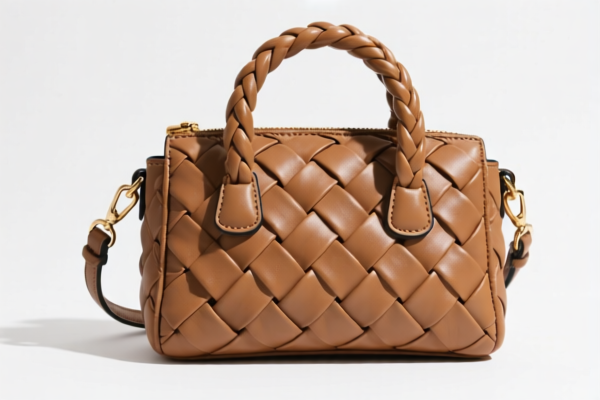
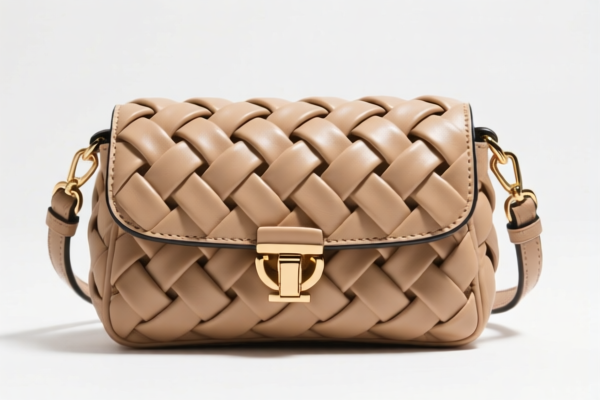
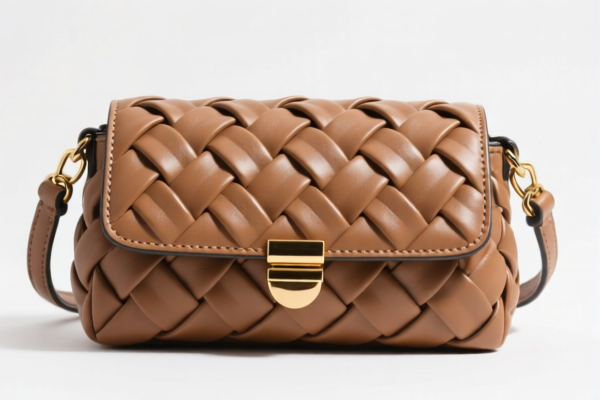
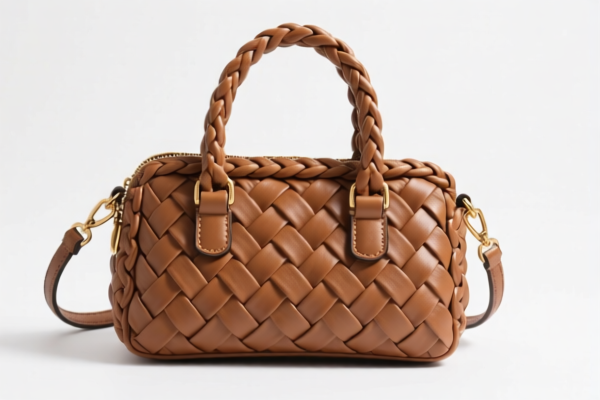
AI分析
👜 Braided Handbag for Students (Weave & Style Analysis)
🌐 HS Code Reference & Customs Clearance Guide | 2026 Latest Tariff Analysis | Professional Entry Strategy for Woven Bags
📌 I. Product Definition & Classification: Do You Really Understand "Braided Handbags"?
A "Braided Handbag for Students" is a versatile accessory characterized by its woven/braided structure. However, in international trade customs classification (HS Code), the material composition is the critical determinant, not just the shape or target audience ("students").
The term "Braided" implies a specific manufacturing technique. Depending on whether the braiding is made from plastic strands, textile fibers, or natural plant fibers, the goods fall into entirely different chapters:
1. Plastic/Polymer Based: If the "braid" is made of plastic strips, PVC, or synthetic fibers molded to look like braid → Chapter 39.
2. Textile Based: If the "braid" is made of cotton, polyester, or other fabric threads → Chapter 42.
3. Plant Fiber Based: If the "braid" is made from straw, rattan, wicker, or similar natural materials → Chapter 46.
⚠️ Key Distinction Point:
- If the outer surface is plastic/nylon/polyester woven strands → Likely 3926.90.33.00 or 4202 series.
- If the outer surface is natural plant fiber (straw/wicker) → 4602.19 series.
- Misclassification Risk: Declaring a plastic bag as "natural weave" to lower duties is a major customs violation.
📦 II. HS Code Classification Details (Based on Provided Data)
Below is the precise mapping of the Braided Handbag to the provided HS Codes, along with the logical deduction for each.
| HS Code | Product Description & Logic | Key Matching Feature |
|---|---|---|
3926.90.33.00 |
Other articles of plastic / Handbags of plastic material | Material: Inferred as Plastic/Polymer fibers. The "Braided" form is treated as a molded or processed plastic article. |
4202.22.40.20 |
Handbags with outer surface of textile materials | Material: Inferred as Textile Fabric. "Braided" is interpreted as a woven textile structure (e.g., synthetic fabric weave). |
4202.22.35.00 |
Handbags with outer surface of textile materials (Other) | Material: Inferred as Textile/Braided Textile. Focuses on the "Braided Handbag" form factor using textile logic. |
4602.19.29.20 |
Articles of wickerwork, cork, of vegetal materials / Handbags | Material: Inferred as Vegetal/Plant Fiber. Matches the literal "braided" look of straw/rattan bags. |
4602.19.29.40 |
Articles of wickerwork, cork, of vegetal materials / Other | Material: Inferred as Vegetal/Plant Fiber (General). Matches the "weave" category under vegetal materials if not specifically "handbag" defined elsewhere. |
💰 III. 2026 Latest Tariff Rate Breakdown (USA Import from China)
✅ Applicable Country: USA (US)
✅ Origin: China (CN)
✅ Effective Date: 2025/2026 Tariff Regime (Including Section 301 & IEEPA)
🎯 1. 3926.90.33.00 —— LOWEST TARIFF OPTION (Plastic Material)
| Item | Detail |
|---|---|
| Base Duty | 6.5% |
| Section 301 (Additional) | 0.0% |
| IEEPA (Section 122/EO) | 10.0% |
| Total Tax Rate | 16.5% |
| Tax Calculation | CIF Value × 16.5% |
| De Minimis Eligibility | ❌ No (Deny De Minimis applies to this code under current enforcement) |
| Legal Basis Path | USITC:3926.90.33.00 → IEEPA:9903.01.24 (10% surcharge) |
📌 Analysis:
- This is the most cost-effective classification if the bag is made of plastic strands (e.g., PVC ribbon weaving).
- It benefits from 0% Section 301 tariffs, making it significantly cheaper than textile or vegetal alternatives.
- Crucial: You must prove the material is plastic (e.g., PVC, PP strips) to claim this.
🎯 2. 4202.22.40.20 —— HIGH TARIFF (Textile Material)
| Item | Detail |
|---|---|
| Base Duty | 7.4% |
| Section 301 (Additional) | 25.0% |
| IEEPA (Section 122/EO) | 10.0% |
| Total Tax Rate | 42.4% |
| Tax Calculation | CIF Value × 42.4% |
| De Minimis Eligibility | ❌ No |
| Legal Basis Path | USITC:4202.22.40.20 → USITC:9903.88.01 (25% surcharge) → IEEPA:9903.01.24 (10%) |
📌 Analysis:
- Applies if the bag is made of fabric (cotton, polyester) that is woven/braided.
- Subject to the full 35% in additional duties (25% + 10%).
- Warning: High cost. Only use if the product is genuinely textile.
🎯 3. 4202.22.35.00 —— HIGH TARIFF (Textile Material - Other)
| Item | Detail |
|---|---|
| Base Duty | 8.4% |
| Section 301 (Additional) | 25.0% |
| IEEPA (Section 122/EO) | 10.0% |
| Total Tax Rate | 43.4% |
| Tax Calculation | CIF Value × 43.4% |
| De Minimis Eligibility | ❌ No |
| Legal Basis Path | USITC:4202.22.35.00 → USITC:9903.88.01 → IEEPA:9903.01.24 |
📌 Analysis:
- Another textile classification, slightly higher base duty than40.20.
- Total rate is 43.4%, the second highest. Avoid unless structurally required by customs.
🎯 4. 4602.19.29.20 & 4602.19.29.40 —— MEDIUM-HIGH TARIFF (Plant/Natural Fiber)
| Item | Detail |
|---|---|
| Base Duty | 5.3% |
| Section 301 (Additional) | 25.0% |
| IEEPA (Section 122/EO) | 10.0% |
| Total Tax Rate | 40.3% |
| Tax Calculation | CIF Value × 40.3% |
| De Minimis Eligibility | ❌ No |
| Legal Basis Path | USITC:4602.19.29.xx → USITC:9903.88.01 → IEEPA:9903.01.24 |
📌 Analysis:
- Applies to straw, wicker, rattan, or reed bags.
- Although the base duty is low (5.3%), the 25% Section 301 tariff spikes the total to 40.3%.
- Common Mistake: Importers often try to classify straw bags here, but customs may reclassify them as textiles (4202) if the weave is very tight or synthetic-looking.
🛠️ IV. Customs Clearance Practical Advice
✅ 1. Material Verification is King (Don't Guess!)
| Material Type | Recommended HS Code | Total Tax | Why? |
|---|---|---|---|
| PVC/Plastic Strands | 3926.90.33.00 |
16.5% | ✅ Best Option. Lowest duty. Must prove it's plastic. |
| Fabric (Cotton/Poly) | 4202.22.40.20 |
42.4% | High duty. Use only if truly textile. |
| Straw/Rattan/Wicker | 4602.19.29.20 |
40.3% | High duty. Use only if genuinely natural plant fiber. |
⚠️ Critical Warning:
- Do NOT misdeclare plastic bags as "natural weave" (4602) to avoid the 25% tariff if they are actually plastic. Customs will perform a material test. If found to be plastic, you face penalties + back taxes. - Do NOT declare fabric bags as "plastic" (3926) to save money. This is fraud.
✅ 2. Documentation Checklist
| Document | Requirement | Description |
|---|---|---|
| Product Photos | ✅ Required | Clear images showing the weave texture. Macro shots help prove material (plastic vs. plant). |
| Material Spec Sheet | ✅ Required | Must explicitly state: "Outer Surface Material: [PVC/Cotton/Straw]". |
| Commercial Invoice | ✅ Required | Description: "Plastic Braided Handbag" or "Straw Braided Tote". Be specific. |
| Origin Certificate | ✅ Required | Proof of origin (China) to calculate IEEPA 10% surcharge. |
✅ 3. Declaration Tips
🔥 Golden Rule:
"Describe the Material, Not Just the Shape!"
| Scenario | Correct Declaration | Incorrect Declaration |
|---|---|---|
| Plastic Bag | "Braided Handbag, Outer Surface: Polyvinyl Chloride (PVC) Strands" | "Braided Handbag, Material: Fabric" (Will be reclassified + penalized) |
| Straw Bag | "Braided Handbag, Outer Surface: Woven Rattan/Straw" | "Braided Handbag, Material: Plastic" (High risk of dispute) |
| Fabric Bag | "Braided Handbag, Outer Surface: Woven Polyester" | "Braided Handbag, Material: Plant Fiber" (Wrong classification) |
🌍 V. Global Market Comparison (2026 Update)
| Market | Best HS Code | Est. Total Duty | Notes |
|---|---|---|---|
| 🇺🇸 USA | 3926.90.33.00 |
16.5% | Only market with significant IEEPA/301 surcharges. Plastic is best. |
| 🇨🇳 China | 4202.22.40.20 |
~5-10% | Low duty, no Section 301. Easy clearance. |
| 🇪🇺 EU | 4202.22.40.20 |
12% | No IEEPA surcharge. Standard MFN rate applies. |
| 🇬🇧 UK | 4202.22.40.20 |
12% | Post-Brexit rules apply. |
📌 Conclusion for US Importers:
The 16.5% vs 42.4% difference is massive.
- If your product is even slightly synthetic-looking, investigate if it can be legally classified under3926.90.33.00.
- If it is truly straw, accept the 40.3% cost or consider substantial transformation in a third country (e.g., Vietnam) to avoid China-origin surcharges.
📌 VI. Common Errors & Pitfalls
❌ Error 1: Using "Braided Handbag" as the only description.
👉 Result: Customs will ask for material proof. Delay in clearance.
❌ Error 2: Classifying a PVC bag as 4602 (Plant Fiber).
👉 Result: Customs lab test confirms plastic. Penalty + 25% back duty.
❌ Error 3: Ignoring the "IEEPA 10%" on 3926.
👉 Result: Thinking 6.5% is the final cost. Actual cost is 16.5%. Margin squeeze!
✅ Correct Approach:
"Braided Handbag, Outer Surface: PVC Strips, Lining: Polyester, Zipper Closure, Model S-Student, Origin: China."
🎯 VII. Conclusion: Professional Declaration Saves Money
🎯 Key Takeaway:
Material Determines Duty. Shape is Secondary.
- Plastic Braided = 16.5% (Best)
- Textile Braided = 42.4% (Expensive)
- Plant Fiber Braided = 40.3% (Expensive)
📌 Action Plan:
1. Confirm Material: Ask supplier for exact material composition (PVC? Cotton? Straw?).
2. Select HS Code: Match material to the lowest applicable duty rate from the data above.
3. Document Clearly: Ensure invoice and packing list reflect the material.
4. Pre-Ruling: If unsure, file a Binding Tariff Information (BTI) or US CBP Ruling to lock in the code.
✨ Smart Clearance, Lower Costs, Happy Business!
💼 Don't let a 26% tariff difference kill your profit!
用户评价
关于 HS 编码归类
协调制度(HS)是由世界海关组织(WCO)制定的国际贸易商品分类标准。全球 200 多个国家采用 HS 系统作为海关关税、贸易统计和进出口监管的基础。
每个 HS 编码遵循以下层级结构:
- 章(2 位)——商品大类(例如:第 84 章:机器和机械设备)
- 品目(4 位)——章内的更具体分类
- 子目(6 位)——国际通用细分,所有 WCO 成员国统一使用
- 本国细分(8-10 位)——各国自行扩展的细分编码,如美国 HTSUS 10 位编码
正确的 HS 编码归类对于顺利通关、准确缴纳关税和遵守贸易法规至关重要。错误归类可能导致海关延误、多缴关税或罚款。
从CN进口到US时,适用的关税税率可能包括:
- 最惠国(MFN)税率——适用于 WTO 成员国的标准关税税率
- 普通税率——适用于无贸易协定国家
- 贸易救济关税——附加关税,如 301 条款(反倾销)、232 条款(国家安全)或反补贴税
本页内容仅供参考。如需正式归类,请咨询当地海关或持牌报关代理。