Braided Handbag (For Students)
CN → US| HS Code | Tariff Rate | Origin | Destination | Doc |
|---|---|---|---|---|
| 4202224020 | 42.4% | CN | US | Official Doc |
| 4602192940 | 40.3% | CN | US | Official Doc |
| 4602192920 | 40.3% | CN | US | Official Doc |
| 4202223500 | 43.4% | CN | US | Official Doc |
| 3926903300 | 16.5% | CN | US | Official Doc |
Product Images
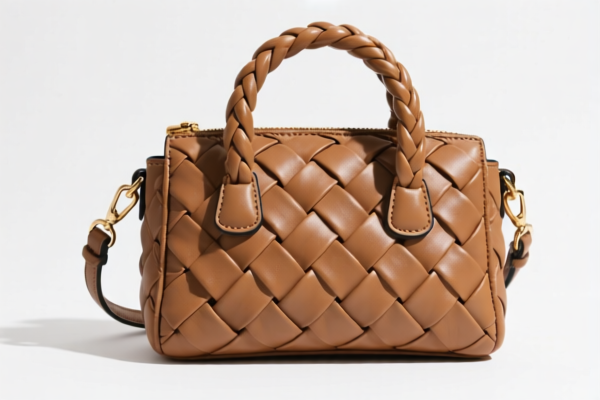
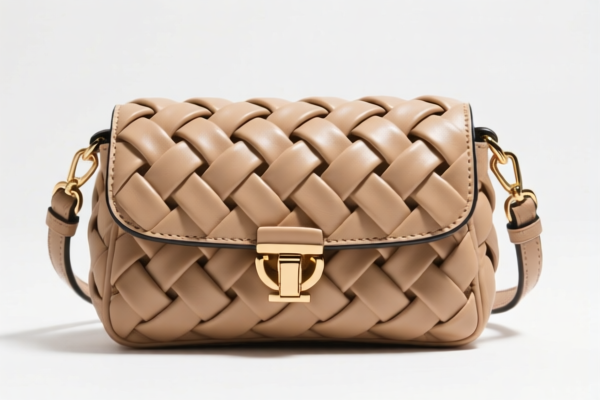
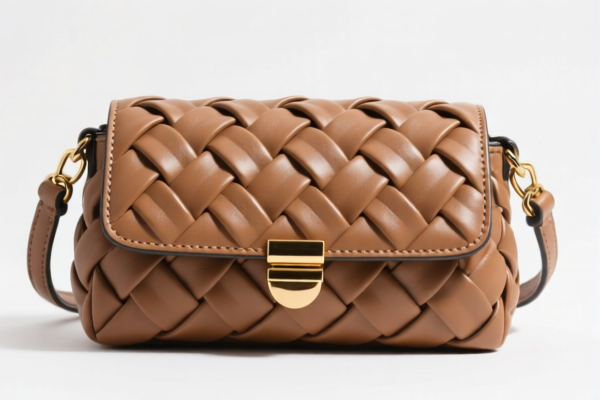
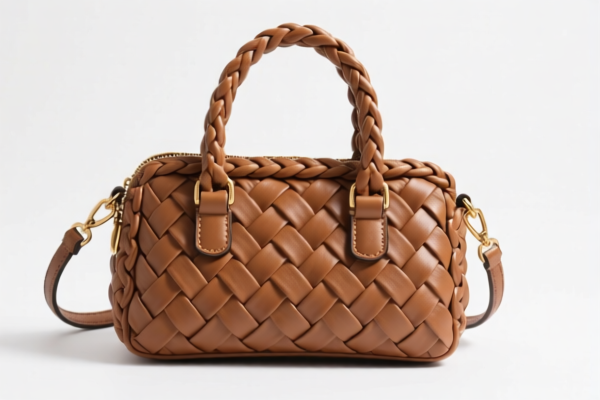
AI Analysis
👜 Braided Handbag for Students (Weave & Style Analysis)
🌐 HS Code Reference & Customs Clearance Guide | 2026 Latest Tariff Analysis | Professional Entry Strategy for Woven Bags
📌 I. Product Definition & Classification: Do You Really Understand "Braided Handbags"?
A "Braided Handbag for Students" is a versatile accessory characterized by its woven/braided structure. However, in international trade customs classification (HS Code), the material composition is the critical determinant, not just the shape or target audience ("students").
The term "Braided" implies a specific manufacturing technique. Depending on whether the braiding is made from plastic strands, textile fibers, or natural plant fibers, the goods fall into entirely different chapters:
1. Plastic/Polymer Based: If the "braid" is made of plastic strips, PVC, or synthetic fibers molded to look like braid → Chapter 39.
2. Textile Based: If the "braid" is made of cotton, polyester, or other fabric threads → Chapter 42.
3. Plant Fiber Based: If the "braid" is made from straw, rattan, wicker, or similar natural materials → Chapter 46.
⚠️ Key Distinction Point:
- If the outer surface is plastic/nylon/polyester woven strands → Likely 3926.90.33.00 or 4202 series.
- If the outer surface is natural plant fiber (straw/wicker) → 4602.19 series.
- Misclassification Risk: Declaring a plastic bag as "natural weave" to lower duties is a major customs violation.
📦 II. HS Code Classification Details (Based on Provided Data)
Below is the precise mapping of the Braided Handbag to the provided HS Codes, along with the logical deduction for each.
| HS Code | Product Description & Logic | Key Matching Feature |
|---|---|---|
3926.90.33.00 |
Other articles of plastic / Handbags of plastic material | Material: Inferred as Plastic/Polymer fibers. The "Braided" form is treated as a molded or processed plastic article. |
4202.22.40.20 |
Handbags with outer surface of textile materials | Material: Inferred as Textile Fabric. "Braided" is interpreted as a woven textile structure (e.g., synthetic fabric weave). |
4202.22.35.00 |
Handbags with outer surface of textile materials (Other) | Material: Inferred as Textile/Braided Textile. Focuses on the "Braided Handbag" form factor using textile logic. |
4602.19.29.20 |
Articles of wickerwork, cork, of vegetal materials / Handbags | Material: Inferred as Vegetal/Plant Fiber. Matches the literal "braided" look of straw/rattan bags. |
4602.19.29.40 |
Articles of wickerwork, cork, of vegetal materials / Other | Material: Inferred as Vegetal/Plant Fiber (General). Matches the "weave" category under vegetal materials if not specifically "handbag" defined elsewhere. |
💰 III. 2026 Latest Tariff Rate Breakdown (USA Import from China)
✅ Applicable Country: USA (US)
✅ Origin: China (CN)
✅ Effective Date: 2025/2026 Tariff Regime (Including Section 301 & IEEPA)
🎯 1. 3926.90.33.00 —— LOWEST TARIFF OPTION (Plastic Material)
| Item | Detail |
|---|---|
| Base Duty | 6.5% |
| Section 301 (Additional) | 0.0% |
| IEEPA (Section 122/EO) | 10.0% |
| Total Tax Rate | 16.5% |
| Tax Calculation | CIF Value × 16.5% |
| De Minimis Eligibility | ❌ No (Deny De Minimis applies to this code under current enforcement) |
| Legal Basis Path | USITC:3926.90.33.00 → IEEPA:9903.01.24 (10% surcharge) |
📌 Analysis:
- This is the most cost-effective classification if the bag is made of plastic strands (e.g., PVC ribbon weaving).
- It benefits from 0% Section 301 tariffs, making it significantly cheaper than textile or vegetal alternatives.
- Crucial: You must prove the material is plastic (e.g., PVC, PP strips) to claim this.
🎯 2. 4202.22.40.20 —— HIGH TARIFF (Textile Material)
| Item | Detail |
|---|---|
| Base Duty | 7.4% |
| Section 301 (Additional) | 25.0% |
| IEEPA (Section 122/EO) | 10.0% |
| Total Tax Rate | 42.4% |
| Tax Calculation | CIF Value × 42.4% |
| De Minimis Eligibility | ❌ No |
| Legal Basis Path | USITC:4202.22.40.20 → USITC:9903.88.01 (25% surcharge) → IEEPA:9903.01.24 (10%) |
📌 Analysis:
- Applies if the bag is made of fabric (cotton, polyester) that is woven/braided.
- Subject to the full 35% in additional duties (25% + 10%).
- Warning: High cost. Only use if the product is genuinely textile.
🎯 3. 4202.22.35.00 —— HIGH TARIFF (Textile Material - Other)
| Item | Detail |
|---|---|
| Base Duty | 8.4% |
| Section 301 (Additional) | 25.0% |
| IEEPA (Section 122/EO) | 10.0% |
| Total Tax Rate | 43.4% |
| Tax Calculation | CIF Value × 43.4% |
| De Minimis Eligibility | ❌ No |
| Legal Basis Path | USITC:4202.22.35.00 → USITC:9903.88.01 → IEEPA:9903.01.24 |
📌 Analysis:
- Another textile classification, slightly higher base duty than40.20.
- Total rate is 43.4%, the second highest. Avoid unless structurally required by customs.
🎯 4. 4602.19.29.20 & 4602.19.29.40 —— MEDIUM-HIGH TARIFF (Plant/Natural Fiber)
| Item | Detail |
|---|---|
| Base Duty | 5.3% |
| Section 301 (Additional) | 25.0% |
| IEEPA (Section 122/EO) | 10.0% |
| Total Tax Rate | 40.3% |
| Tax Calculation | CIF Value × 40.3% |
| De Minimis Eligibility | ❌ No |
| Legal Basis Path | USITC:4602.19.29.xx → USITC:9903.88.01 → IEEPA:9903.01.24 |
📌 Analysis:
- Applies to straw, wicker, rattan, or reed bags.
- Although the base duty is low (5.3%), the 25% Section 301 tariff spikes the total to 40.3%.
- Common Mistake: Importers often try to classify straw bags here, but customs may reclassify them as textiles (4202) if the weave is very tight or synthetic-looking.
🛠️ IV. Customs Clearance Practical Advice
✅ 1. Material Verification is King (Don't Guess!)
| Material Type | Recommended HS Code | Total Tax | Why? |
|---|---|---|---|
| PVC/Plastic Strands | 3926.90.33.00 |
16.5% | ✅ Best Option. Lowest duty. Must prove it's plastic. |
| Fabric (Cotton/Poly) | 4202.22.40.20 |
42.4% | High duty. Use only if truly textile. |
| Straw/Rattan/Wicker | 4602.19.29.20 |
40.3% | High duty. Use only if genuinely natural plant fiber. |
⚠️ Critical Warning:
- Do NOT misdeclare plastic bags as "natural weave" (4602) to avoid the 25% tariff if they are actually plastic. Customs will perform a material test. If found to be plastic, you face penalties + back taxes. - Do NOT declare fabric bags as "plastic" (3926) to save money. This is fraud.
✅ 2. Documentation Checklist
| Document | Requirement | Description |
|---|---|---|
| Product Photos | ✅ Required | Clear images showing the weave texture. Macro shots help prove material (plastic vs. plant). |
| Material Spec Sheet | ✅ Required | Must explicitly state: "Outer Surface Material: [PVC/Cotton/Straw]". |
| Commercial Invoice | ✅ Required | Description: "Plastic Braided Handbag" or "Straw Braided Tote". Be specific. |
| Origin Certificate | ✅ Required | Proof of origin (China) to calculate IEEPA 10% surcharge. |
✅ 3. Declaration Tips
🔥 Golden Rule:
"Describe the Material, Not Just the Shape!"
| Scenario | Correct Declaration | Incorrect Declaration |
|---|---|---|
| Plastic Bag | "Braided Handbag, Outer Surface: Polyvinyl Chloride (PVC) Strands" | "Braided Handbag, Material: Fabric" (Will be reclassified + penalized) |
| Straw Bag | "Braided Handbag, Outer Surface: Woven Rattan/Straw" | "Braided Handbag, Material: Plastic" (High risk of dispute) |
| Fabric Bag | "Braided Handbag, Outer Surface: Woven Polyester" | "Braided Handbag, Material: Plant Fiber" (Wrong classification) |
🌍 V. Global Market Comparison (2026 Update)
| Market | Best HS Code | Est. Total Duty | Notes |
|---|---|---|---|
| 🇺🇸 USA | 3926.90.33.00 |
16.5% | Only market with significant IEEPA/301 surcharges. Plastic is best. |
| 🇨🇳 China | 4202.22.40.20 |
~5-10% | Low duty, no Section 301. Easy clearance. |
| 🇪🇺 EU | 4202.22.40.20 |
12% | No IEEPA surcharge. Standard MFN rate applies. |
| 🇬🇧 UK | 4202.22.40.20 |
12% | Post-Brexit rules apply. |
📌 Conclusion for US Importers:
The 16.5% vs 42.4% difference is massive.
- If your product is even slightly synthetic-looking, investigate if it can be legally classified under3926.90.33.00.
- If it is truly straw, accept the 40.3% cost or consider substantial transformation in a third country (e.g., Vietnam) to avoid China-origin surcharges.
📌 VI. Common Errors & Pitfalls
❌ Error 1: Using "Braided Handbag" as the only description.
👉 Result: Customs will ask for material proof. Delay in clearance.
❌ Error 2: Classifying a PVC bag as 4602 (Plant Fiber).
👉 Result: Customs lab test confirms plastic. Penalty + 25% back duty.
❌ Error 3: Ignoring the "IEEPA 10%" on 3926.
👉 Result: Thinking 6.5% is the final cost. Actual cost is 16.5%. Margin squeeze!
✅ Correct Approach:
"Braided Handbag, Outer Surface: PVC Strips, Lining: Polyester, Zipper Closure, Model S-Student, Origin: China."
🎯 VII. Conclusion: Professional Declaration Saves Money
🎯 Key Takeaway:
Material Determines Duty. Shape is Secondary.
- Plastic Braided = 16.5% (Best)
- Textile Braided = 42.4% (Expensive)
- Plant Fiber Braided = 40.3% (Expensive)
📌 Action Plan:
1. Confirm Material: Ask supplier for exact material composition (PVC? Cotton? Straw?).
2. Select HS Code: Match material to the lowest applicable duty rate from the data above.
3. Document Clearly: Ensure invoice and packing list reflect the material.
4. Pre-Ruling: If unsure, file a Binding Tariff Information (BTI) or US CBP Ruling to lock in the code.
✨ Smart Clearance, Lower Costs, Happy Business!
💼 Don't let a 26% tariff difference kill your profit!
Customer Reviews
About HS Code Classification
The Harmonized System (HS) is an internationally standardized nomenclature developed by the World Customs Organization (WCO) to classify traded products. Over 200 countries use the HS system as the basis for customs tariffs, trade statistics, and import/export regulations.
Each HS code follows a hierarchical structure:
- Chapter (2 digits) — Broad category of goods (e.g., Chapter 84: Machinery and Mechanical Appliances)
- Heading (4 digits) — More specific grouping within the chapter
- Subheading (6 digits) — Internationally standardized breakdown, used by all WCO member countries
- National subdivisions (8-10 digits) — Country-specific extensions for further classification, such as US HTSUS 10-digit codes
Correct HS code classification is essential for smooth customs clearance, accurate duty payment, and compliance with trade regulations. Misclassification can lead to customs delays, overpayment of duties, or penalties.
When importing from CN to US, the applicable tariff rates may include:
- Most-Favored-Nation (MFN) rate — The standard duty rate applied to WTO members
- General rate — Applied to countries without trade agreements
- Trade remedy duties — Additional tariffs such as Section 301 (anti-dumping), Section 232 (national security), or countervailing duties
The information provided on this page is for reference purposes only. For official classification, please consult with your local customs authority or a licensed customs broker.