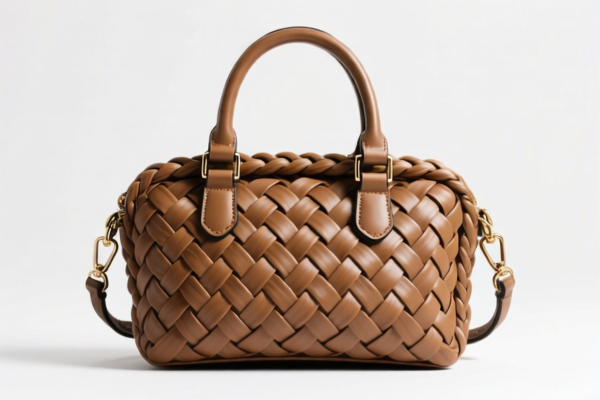
Braided Handbag Small Capacity
CN → US| HS编码 | 关税税率 | 原产国 | 目的国 | 文档 |
|---|---|---|---|---|
| 4602112100 | 41.2% | CN | US | 官方文档 |
| 4202224020 | 42.4% | CN | US | 官方文档 |
| 4202228980 | 52.6% | CN | US | 官方文档 |
| 4602192920 | 40.3% | CN | US | 官方文档 |
| 6307909891 | 24.5% | CN | US | 官方文档 |
商品图片


AI分析
👜 Braided Handbag Small Capacity
🌐 HS Code Reference & Customs Clearance Guide | 2026 Latest Tariff Analysis | Professional Entry Strategy
📌 I. Product Definition & Classification: Do You Really Understand "Braided Handbags"?
A braided handbag is a versatile accessory made from interwoven natural or synthetic fibers. In international trade, its classification is strictly determined by the raw material. A "small capacity" feature does not change the HS Code, but the material composition is the critical factor.
⚠️ Key Distinction Point:
- If made from bamboo, rattan, or similar plant materials → It is considered a "Basketwork" product.
- If made from textile braided materials (e.g., straw, plastic strips, fabric) → It falls under "Handbags."
- If it includes special features like inner compartments → It may be classified as a "Other Made-up Articles."
📦 II. HS Code Classification Details (Based on Provided Data)
| HS Code | Product Description | Material Composition |
|---|---|---|
4602.11.21.00 |
Braided Handbag | Bamboo, Rattan, or similar plant materials |
4202.22.40.20 |
Braided Handbag | Braided materials (General textile/synthetic braid) |
4202.22.89.80 |
Braided Handbag | Other textile materials (Non-standard braided textiles) |
4602.19.29.20 |
Braided Handbag | Plant material wicker/braid (General plant-based) |
6307.90.98.91 |
Braided Handbag (With Inner Compartment) | Other made-up articles, includes internal dividers |
🔍 Important Note:
- Bamboo/Rattan items are classified under Chapter 46 (Basketwork), not Chapter 42 (Handbags). This is a common mistake!
- Textile-based braided bags fall under Chapter 42 (Articles of bedding, handbags).
- If the bag has inner partitions/compartmentalization, it may be classified as an "Other made-up article" under Chapter 63, which often has lower tariffs.
💰 III. 2026 Latest Tariff Rate Breakdown (Including Additional Duties)
✅ Applicable Country: United States (US)
✅ Origin: China (CN)
✅ Effective Time: Current (Based on existing Section 301 & IEEPA measures)
🎯 1. 4602.11.21.00 — Braided Handbag (Bamboo/Rattan)
| Item | Detail |
|---|---|
| Base Tariff | 6.2% |
| Additional Duty (Section 301) | 25.0% |
| 122 Clause Duty | 10.0% |
| Total Tariff Rate | 41.2% |
| Tax Calculation | CIF Value × 41.2% |
| De Minimis Exemption | ❌ Not Eligible |
| Legal Basis | USITC:4602.11.21.00 + Section 301 + 122 Clause |
📌 Explanation:
- Bamboo and rattan products are subject to the full additional duties.
- The 10% "122 Clause" duty applies specifically to certain Chinese-origin goods.
- Total Cost Impact: High. This is a heavy-duty category.
🎯 2. 4202.22.40.20 — Braided Handbag (General Braided Material)
| Item | Detail |
|---|---|
| Base Tariff | 7.4% |
| Additional Duty (Section 301) | 25.0% |
| 122 Clause Duty | 10.0% |
| Total Tariff Rate | 42.4% |
| Tax Calculation | CIF Value × 42.4% |
| De Minimis Exemption | ❌ Not Eligible |
| Legal Basis | USITC:4202.22.40.20 + Section 301 + 122 Clause |
📌 Note:
- Standard braided handbags (e.g., straw hats, woven plastic bags) face similar high tariffs as bamboo goods.
- No significant tariff advantage over plant-based basketwork.
🎯 3. 4202.22.89.80 — Braided Handbag (Other Textile Materials)
| Item | Detail |
|---|---|
| Base Tariff | 17.6% |
| Additional Duty (Section 301) | 25.0% |
| 122 Clause Duty | 10.0% |
| Total Tariff Rate | 52.6% |
| Tax Calculation | CIF Value × 52.6% |
| De Minimis Exemption | ❌ Not Eligible |
| Legal Basis | USITC:4202.22.89.80 + Section 301 + 122 Clause |
📌 Warning:
- This is the highest tariff category in the provided data.
- "Other textile materials" often lack specific subheadings, leading to a higher base rate. Avoid this classification if possible.
🎯 4. 4602.19.29.20 — Braided Handbag (Plant Material Wicker)
| Item | Detail |
|---|---|
| Base Tariff | 5.3% |
| Additional Duty (Section 301) | 25.0% |
| 122 Clause Duty | 10.0% |
| Total Tariff Rate | 40.3% |
| Tax Calculation | CIF Value × 40.3% |
| De Minimis Exemption | ❌ Not Eligible |
| Legal Basis | USITC:4602.19.29.20 + Section 301 + 122 Clause |
📌 Optimization Tip:
- Slightly lower than4602.11.21.00(40.3% vs 41.2%) due to a lower base rate (5.3% vs 6.2%).
- Still subject to all additional duties.
🎯 5. 6307.90.98.91 — Braided Handbag (With Inner Compartment)
| Item | Detail |
|---|---|
| Base Tariff | 7.0% |
| Additional Duty (Section 301) | 7.5% |
| 122 Clause Duty | 10.0% |
| Total Tariff Rate | 24.5% |
| Tax Calculation | CIF Value × 24.5% |
| De Minimis Exemption | ❌ Not Eligible |
| Legal Basis | USITC:6307.90.98.91 + Section 301 + 122 Clause |
📌 STRATEGIC ADVANTAGE:
- Lowest Total Tariff: 24.5% (vs. 40%+ for others).
- Key Condition: The bag must have an inner compartment/divider.
- Why? It is classified as an "Other made-up article" rather than a standard handbag or basketwork, reducing the Section 301 additional duty from 25% to 7.5%.
- Action: Design your bag with clear internal pockets or dividers to qualify for this lower tariff.
🛠️ IV. Customs Clearance Practical Advice
✅ 1. Documentation Checklist
| Document | Required | Notes |
|---|---|---|
| ✅ Product Specification Sheet | ✔️ | Must specify material type (Bamboo, Plastic, Textile) |
| ✅ Photos (Inside & Outside) | ✔️ | Crucial for HS Code: Show if there are inner compartments (for 6307.90.98.91) |
| ✅ Commercial Invoice | ✔️ | Description should match HS Code exactly |
| ✅ Packing List | ✔️ | Weight and dimensions |
| ✅ Material Declaration | ✔️ | Confirm plant vs. synthetic vs. textile |
✅ 2. Declaration Strategy (Key Tips)
🔥 "If it has pockets, declare as 6307. Save 17%! If no pockets, expect 40%+."
| Scenario | Recommended HS Code | Reason |
|---|---|---|
| Bamboo/Rattan Bag (No inner pocket) | 4602.11.21.00 |
Standard basketwork |
| Braided Straw/Plastic Bag (No inner pocket) | 4202.22.40.20 |
Standard braided handbag |
| Bag with Inner Compartment | 6307.90.98.91 |
Lower tariff (24.5%). Must have visible internal structure. |
| Other Textile Braided Bag | 4202.22.89.80 |
Avoid if possible; highest tariff. |
⚠️ Common Mistake:
- Declaring a bag with an inner compartment as4202.22.40.20→ You pay 42.4% instead of 24.5%.
- Solution: Ensure your product design includes sewn-in pockets or dividers and declare it as6307.90.98.91.
✅ 3. Special Cases
| Case | Handling Advice |
|---|---|
| Mixed Materials | If >50% is bamboo, use 4602. If >50% is textile, use 4202. |
| Small Capacity | Does not affect HS Code. Size is irrelevant for classification. |
| Branded vs. Unbranded | No impact on HS Code, but may impact copyright/trademark checks. |
🌍 V. Global Market Comparison (2026)
| Country/Region | Recommended HS Code | Tariff Rate (China Origin) | Notes |
|---|---|---|---|
| 🇺🇸 USA | 6307.90.98.91 |
24.5% | Lowest option if inner compartment exists. |
| 🇺🇸 USA | 4602.11.21.00 |
41.2% | High for bamboo/rattan. |
| 🇨🇳 China | 4202.22.40.20 |
0-5% (Varies) | Low import duty, but check VAT. |
| 🇪🇺 EU | 4202.22.40.20 |
4.5% | No Section 301 duties. |
| 🇯🇵 Japan | 4202.22.40.20 |
6.8% | No additional duties. |
📌 Conclusion:
- The US market is heavily taxed due to Section 301 and 122 Clause.
- Only6307.90.98.91offers a significant tariff reduction (24.5%).
- For other markets (EU, Japan), tariffs are much lower, so HS Code optimization is less critical for cost savings.
📌 VI. Common Mistakes & Pitfalls
❌ Mistake 1: Declaring a bag with inner pockets as 4202.22.40.20
👉 Result: You pay 42.4% instead of 24.5%. Loss of 17.9% margin.
❌ Mistake 2: Using "Handbag" for bamboo products
👉 Result: Misclassification. Bamboo should be 4602. If declared as 4202, customs may reject or reclassify.
❌ Mistake 3: Ignoring the 122 Clause
👉 Result: All listed HS Codes in the data include a 10% 122 Clause duty. Failing to account for this leads to underpayment and penalties.
✅ Correct Approach:
"Design with compartments → Declare as 6307.90.98.91 → Pay only 24.5%."
"No compartments → Expect 40%+ → Budget accordingly."
🎯 VII. Conclusion: Smart Design, Lower Tariffs!
🎯 Key Takeaway:
🔹 Material Matters: Bamboo vs. Textile vs. Braided.
🔹 Structure Matters: Inner compartments can slash tariffs by 17.9%.
🔹 US Market is High-Cost: Plan for 24.5% to 52.6% in total duties.
📌 Action Items:
📞 Consult with a Customs Broker to confirm the "inner compartment" structure.
📸 Take Photos of the bag’s interior to prove the existence of dividers.
📝 Update Product Descriptions to highlight "Braided Handbag with Inner Compartment" for6307.90.98.91.
✨ Professional Customs Clearance Starts with Precise Classification!
💼 Every Percentage Point of Tariff Matters – Optimize Your Design to Save Costs!
用户评价
关于 HS 编码归类
协调制度(HS)是由世界海关组织(WCO)制定的国际贸易商品分类标准。全球 200 多个国家采用 HS 系统作为海关关税、贸易统计和进出口监管的基础。
每个 HS 编码遵循以下层级结构:
- 章(2 位)——商品大类(例如:第 84 章:机器和机械设备)
- 品目(4 位)——章内的更具体分类
- 子目(6 位)——国际通用细分,所有 WCO 成员国统一使用
- 本国细分(8-10 位)——各国自行扩展的细分编码,如美国 HTSUS 10 位编码
正确的 HS 编码归类对于顺利通关、准确缴纳关税和遵守贸易法规至关重要。错误归类可能导致海关延误、多缴关税或罚款。
从CN进口到US时,适用的关税税率可能包括:
- 最惠国(MFN)税率——适用于 WTO 成员国的标准关税税率
- 普通税率——适用于无贸易协定国家
- 贸易救济关税——附加关税,如 301 条款(反倾销)、232 条款(国家安全)或反补贴税
本页内容仅供参考。如需正式归类,请咨询当地海关或持牌报关代理。