Braided Handbag Small Capacity
CN → US| HS Code | Tariff Rate | Origin | Destination | Doc |
|---|---|---|---|---|
| 4602112100 | 41.2% | CN | US | Official Doc |
| 4202224020 | 42.4% | CN | US | Official Doc |
| 4202228980 | 52.6% | CN | US | Official Doc |
| 4602192920 | 40.3% | CN | US | Official Doc |
| 6307909891 | 24.5% | CN | US | Official Doc |
Product Images

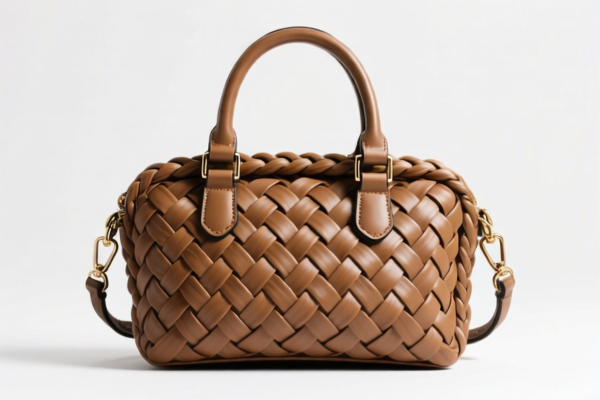

AI Analysis
👜 Braided Handbag Small Capacity
🌐 HS Code Reference & Customs Clearance Guide | 2026 Latest Tariff Analysis | Professional Entry Strategy
📌 I. Product Definition & Classification: Do You Really Understand "Braided Handbags"?
A braided handbag is a versatile accessory made from interwoven natural or synthetic fibers. In international trade, its classification is strictly determined by the raw material. A "small capacity" feature does not change the HS Code, but the material composition is the critical factor.
⚠️ Key Distinction Point:
- If made from bamboo, rattan, or similar plant materials → It is considered a "Basketwork" product.
- If made from textile braided materials (e.g., straw, plastic strips, fabric) → It falls under "Handbags."
- If it includes special features like inner compartments → It may be classified as a "Other Made-up Articles."
📦 II. HS Code Classification Details (Based on Provided Data)
| HS Code | Product Description | Material Composition |
|---|---|---|
4602.11.21.00 |
Braided Handbag | Bamboo, Rattan, or similar plant materials |
4202.22.40.20 |
Braided Handbag | Braided materials (General textile/synthetic braid) |
4202.22.89.80 |
Braided Handbag | Other textile materials (Non-standard braided textiles) |
4602.19.29.20 |
Braided Handbag | Plant material wicker/braid (General plant-based) |
6307.90.98.91 |
Braided Handbag (With Inner Compartment) | Other made-up articles, includes internal dividers |
🔍 Important Note:
- Bamboo/Rattan items are classified under Chapter 46 (Basketwork), not Chapter 42 (Handbags). This is a common mistake!
- Textile-based braided bags fall under Chapter 42 (Articles of bedding, handbags).
- If the bag has inner partitions/compartmentalization, it may be classified as an "Other made-up article" under Chapter 63, which often has lower tariffs.
💰 III. 2026 Latest Tariff Rate Breakdown (Including Additional Duties)
✅ Applicable Country: United States (US)
✅ Origin: China (CN)
✅ Effective Time: Current (Based on existing Section 301 & IEEPA measures)
🎯 1. 4602.11.21.00 — Braided Handbag (Bamboo/Rattan)
| Item | Detail |
|---|---|
| Base Tariff | 6.2% |
| Additional Duty (Section 301) | 25.0% |
| 122 Clause Duty | 10.0% |
| Total Tariff Rate | 41.2% |
| Tax Calculation | CIF Value × 41.2% |
| De Minimis Exemption | ❌ Not Eligible |
| Legal Basis | USITC:4602.11.21.00 + Section 301 + 122 Clause |
📌 Explanation:
- Bamboo and rattan products are subject to the full additional duties.
- The 10% "122 Clause" duty applies specifically to certain Chinese-origin goods.
- Total Cost Impact: High. This is a heavy-duty category.
🎯 2. 4202.22.40.20 — Braided Handbag (General Braided Material)
| Item | Detail |
|---|---|
| Base Tariff | 7.4% |
| Additional Duty (Section 301) | 25.0% |
| 122 Clause Duty | 10.0% |
| Total Tariff Rate | 42.4% |
| Tax Calculation | CIF Value × 42.4% |
| De Minimis Exemption | ❌ Not Eligible |
| Legal Basis | USITC:4202.22.40.20 + Section 301 + 122 Clause |
📌 Note:
- Standard braided handbags (e.g., straw hats, woven plastic bags) face similar high tariffs as bamboo goods.
- No significant tariff advantage over plant-based basketwork.
🎯 3. 4202.22.89.80 — Braided Handbag (Other Textile Materials)
| Item | Detail |
|---|---|
| Base Tariff | 17.6% |
| Additional Duty (Section 301) | 25.0% |
| 122 Clause Duty | 10.0% |
| Total Tariff Rate | 52.6% |
| Tax Calculation | CIF Value × 52.6% |
| De Minimis Exemption | ❌ Not Eligible |
| Legal Basis | USITC:4202.22.89.80 + Section 301 + 122 Clause |
📌 Warning:
- This is the highest tariff category in the provided data.
- "Other textile materials" often lack specific subheadings, leading to a higher base rate. Avoid this classification if possible.
🎯 4. 4602.19.29.20 — Braided Handbag (Plant Material Wicker)
| Item | Detail |
|---|---|
| Base Tariff | 5.3% |
| Additional Duty (Section 301) | 25.0% |
| 122 Clause Duty | 10.0% |
| Total Tariff Rate | 40.3% |
| Tax Calculation | CIF Value × 40.3% |
| De Minimis Exemption | ❌ Not Eligible |
| Legal Basis | USITC:4602.19.29.20 + Section 301 + 122 Clause |
📌 Optimization Tip:
- Slightly lower than4602.11.21.00(40.3% vs 41.2%) due to a lower base rate (5.3% vs 6.2%).
- Still subject to all additional duties.
🎯 5. 6307.90.98.91 — Braided Handbag (With Inner Compartment)
| Item | Detail |
|---|---|
| Base Tariff | 7.0% |
| Additional Duty (Section 301) | 7.5% |
| 122 Clause Duty | 10.0% |
| Total Tariff Rate | 24.5% |
| Tax Calculation | CIF Value × 24.5% |
| De Minimis Exemption | ❌ Not Eligible |
| Legal Basis | USITC:6307.90.98.91 + Section 301 + 122 Clause |
📌 STRATEGIC ADVANTAGE:
- Lowest Total Tariff: 24.5% (vs. 40%+ for others).
- Key Condition: The bag must have an inner compartment/divider.
- Why? It is classified as an "Other made-up article" rather than a standard handbag or basketwork, reducing the Section 301 additional duty from 25% to 7.5%.
- Action: Design your bag with clear internal pockets or dividers to qualify for this lower tariff.
🛠️ IV. Customs Clearance Practical Advice
✅ 1. Documentation Checklist
| Document | Required | Notes |
|---|---|---|
| ✅ Product Specification Sheet | ✔️ | Must specify material type (Bamboo, Plastic, Textile) |
| ✅ Photos (Inside & Outside) | ✔️ | Crucial for HS Code: Show if there are inner compartments (for 6307.90.98.91) |
| ✅ Commercial Invoice | ✔️ | Description should match HS Code exactly |
| ✅ Packing List | ✔️ | Weight and dimensions |
| ✅ Material Declaration | ✔️ | Confirm plant vs. synthetic vs. textile |
✅ 2. Declaration Strategy (Key Tips)
🔥 "If it has pockets, declare as 6307. Save 17%! If no pockets, expect 40%+."
| Scenario | Recommended HS Code | Reason |
|---|---|---|
| Bamboo/Rattan Bag (No inner pocket) | 4602.11.21.00 |
Standard basketwork |
| Braided Straw/Plastic Bag (No inner pocket) | 4202.22.40.20 |
Standard braided handbag |
| Bag with Inner Compartment | 6307.90.98.91 |
Lower tariff (24.5%). Must have visible internal structure. |
| Other Textile Braided Bag | 4202.22.89.80 |
Avoid if possible; highest tariff. |
⚠️ Common Mistake:
- Declaring a bag with an inner compartment as4202.22.40.20→ You pay 42.4% instead of 24.5%.
- Solution: Ensure your product design includes sewn-in pockets or dividers and declare it as6307.90.98.91.
✅ 3. Special Cases
| Case | Handling Advice |
|---|---|
| Mixed Materials | If >50% is bamboo, use 4602. If >50% is textile, use 4202. |
| Small Capacity | Does not affect HS Code. Size is irrelevant for classification. |
| Branded vs. Unbranded | No impact on HS Code, but may impact copyright/trademark checks. |
🌍 V. Global Market Comparison (2026)
| Country/Region | Recommended HS Code | Tariff Rate (China Origin) | Notes |
|---|---|---|---|
| 🇺🇸 USA | 6307.90.98.91 |
24.5% | Lowest option if inner compartment exists. |
| 🇺🇸 USA | 4602.11.21.00 |
41.2% | High for bamboo/rattan. |
| 🇨🇳 China | 4202.22.40.20 |
0-5% (Varies) | Low import duty, but check VAT. |
| 🇪🇺 EU | 4202.22.40.20 |
4.5% | No Section 301 duties. |
| 🇯🇵 Japan | 4202.22.40.20 |
6.8% | No additional duties. |
📌 Conclusion:
- The US market is heavily taxed due to Section 301 and 122 Clause.
- Only6307.90.98.91offers a significant tariff reduction (24.5%).
- For other markets (EU, Japan), tariffs are much lower, so HS Code optimization is less critical for cost savings.
📌 VI. Common Mistakes & Pitfalls
❌ Mistake 1: Declaring a bag with inner pockets as 4202.22.40.20
👉 Result: You pay 42.4% instead of 24.5%. Loss of 17.9% margin.
❌ Mistake 2: Using "Handbag" for bamboo products
👉 Result: Misclassification. Bamboo should be 4602. If declared as 4202, customs may reject or reclassify.
❌ Mistake 3: Ignoring the 122 Clause
👉 Result: All listed HS Codes in the data include a 10% 122 Clause duty. Failing to account for this leads to underpayment and penalties.
✅ Correct Approach:
"Design with compartments → Declare as 6307.90.98.91 → Pay only 24.5%."
"No compartments → Expect 40%+ → Budget accordingly."
🎯 VII. Conclusion: Smart Design, Lower Tariffs!
🎯 Key Takeaway:
🔹 Material Matters: Bamboo vs. Textile vs. Braided.
🔹 Structure Matters: Inner compartments can slash tariffs by 17.9%.
🔹 US Market is High-Cost: Plan for 24.5% to 52.6% in total duties.
📌 Action Items:
📞 Consult with a Customs Broker to confirm the "inner compartment" structure.
📸 Take Photos of the bag’s interior to prove the existence of dividers.
📝 Update Product Descriptions to highlight "Braided Handbag with Inner Compartment" for6307.90.98.91.
✨ Professional Customs Clearance Starts with Precise Classification!
💼 Every Percentage Point of Tariff Matters – Optimize Your Design to Save Costs!
Customer Reviews
About HS Code Classification
The Harmonized System (HS) is an internationally standardized nomenclature developed by the World Customs Organization (WCO) to classify traded products. Over 200 countries use the HS system as the basis for customs tariffs, trade statistics, and import/export regulations.
Each HS code follows a hierarchical structure:
- Chapter (2 digits) — Broad category of goods (e.g., Chapter 84: Machinery and Mechanical Appliances)
- Heading (4 digits) — More specific grouping within the chapter
- Subheading (6 digits) — Internationally standardized breakdown, used by all WCO member countries
- National subdivisions (8-10 digits) — Country-specific extensions for further classification, such as US HTSUS 10-digit codes
Correct HS code classification is essential for smooth customs clearance, accurate duty payment, and compliance with trade regulations. Misclassification can lead to customs delays, overpayment of duties, or penalties.
When importing from CN to US, the applicable tariff rates may include:
- Most-Favored-Nation (MFN) rate — The standard duty rate applied to WTO members
- General rate — Applied to countries without trade agreements
- Trade remedy duties — Additional tariffs such as Section 301 (anti-dumping), Section 232 (national security), or countervailing duties
The information provided on this page is for reference purposes only. For official classification, please consult with your local customs authority or a licensed customs broker.