Brake Fluid
CN → US| HS编码 | 关税税率 | 原产国 | 目的国 | 文档 |
|---|---|---|---|---|
| 3811190000 | 41.5% | CN | US | 官方文档 |
| 3403191000 | 35.2% | CN | US | 官方文档 |
| 3403195000 | 40.8% | CN | US | 官方文档 |
| 3403195000 | 40.8% | CN | US | 官方文档 |
| 3824992900 | 41.5% | CN | US | 官方文档 |
商品图片
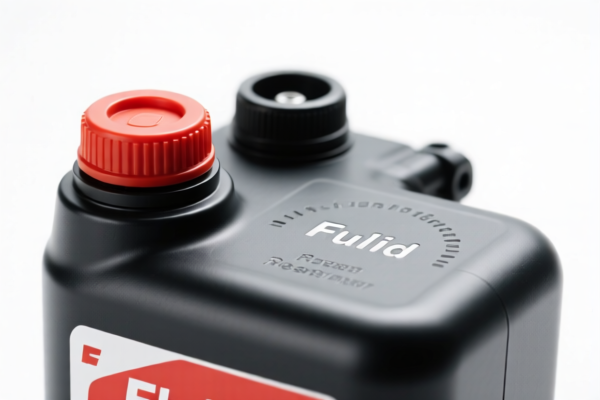
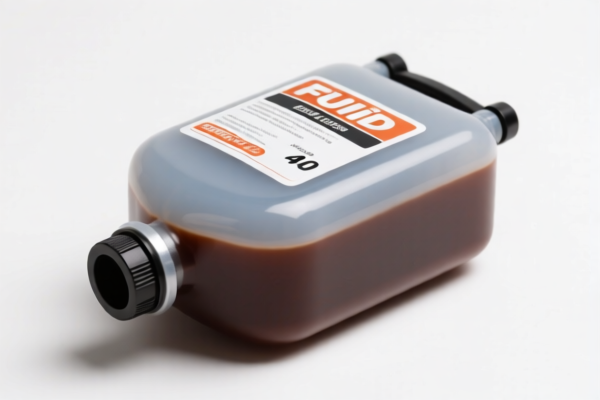
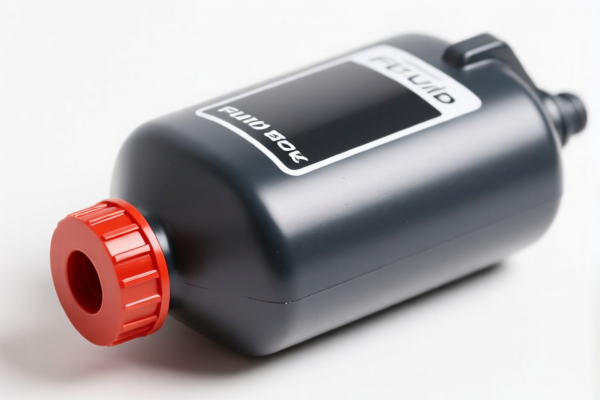

AI分析
🚗 Brake Fluid Additives (Chemical Preparations for Lubrication)
🌐 HS Code Reference & Clearance Guide | 2026 Latest Tariff Analysis | Professional Customs Strategy
📌 I. Product Definition & Classification: What is "Brake Fluid Additive"?
Brake fluid additives are specialized chemical preparations designed to enhance the performance, stability, or properties of brake fluids (typically mineral oil-based or synthetic). In international trade, these products are classified based on their chemical nature and intended function. They fall primarily under two categories:
1. Chemical Mixtures/Preparations (Chapter 38):
If the additive is considered a general-purpose chemical modifier (e.g., anti-corrosion, anti-foaming, or viscosity-adjusting agents) that doesn't primarily function as a lubricant itself but modifies other fluids.
2. Lubricating Preparations (Chapter 34):
If the additive is classified as a preparation specifically for lubricating or treating liquids (like brake fluid), falling under "Lubricating preparations" which includes preparations for the treatment of mineral oils.
⚠️ Key Distinction Point:
- If the product is viewed as a general chemical additive for industrial fluids → Likely Chapter 38.
- If the product is viewed specifically as a lubricating preparation or treatment for oil-based fluids → Likely Chapter 34.
📦 II. HS Code Classification Details (2026 Latest Tariff Authority Comparison)
| HS Code | Product Description | Application Scenario | Primary Function |
|---|---|---|---|
3811.19.00.00 |
Antiknock preparations, benzene preparations, and other additives for mineral oils or other liquids (Not containing petroleum oils ≥70% by weight) | Additives for brake fluid, fuel, or hydraulic fluids; chemical modifiers | Chemical Modification |
3403.19.10.00 |
Lubricating preparations containing ≥70% by weight of petroleum oils or oils obtained from bituminous minerals | Note: This code is less likely if the product is a small-volume additive concentrate, but considered if it meets the "lubricating preparation" definition broadly | Lubrication/Treatment |
3403.19.50.00 |
Other lubricating preparations | General lubricating additives, grease compounds, or fluid treatments | Lubrication |
3824.99.29.00 |
Chemical products and preparations for industrial use (not elsewhere specified or included) | General chemical additives, mixtures, or preparations for technical use | General Chemical Preparation |
🔍 Key Reminders:
- Chapter 38 codes (3811.19,3824.99) are often preferred for additives that modify properties (anti-corrosion, boiling point elevation) rather than purely lubricating surfaces.
- Chapter 34 codes (3403.19) apply if the product is explicitly defined as a lubricating preparation. However, since brake fluid additives are often additives to a fluid rather than the lubricant itself, Chapter 38 is frequently more accurate depending on the specific formulation.
- Misclassification Risk: Classifying a chemical additive as a simple lubricant (Chapter 34) when it lacks significant petroleum oil content may lead to disputes.
💰 III. 2026 Latest Tariff Rate Details (Including Surcharge & Policy Add-ons)
✅ Applicable Country: United States (US)
✅ Country of Origin: China (CN)
✅ Effective Date: November 10, 2025 (and onwards)
🎯 1. 3811.19.00.00 —— Additives for Mineral Oils or Other Liquids
| Item | Content |
|---|---|
| Base Tariff | 6.5% |
| USITC Additional Tariff (Section 301) | +25% |
| IEEPA Additional Tariff | +10% |
| Total Tariff Rate | 41.5% |
| Tax Calculation | CIF Value × 41.5% |
| De Minimis Exemption Available? | ❌ No (deny_de_minimis) |
| Legal Authority Path | IEEPA:9903.01.25 → IEEPA:9903.01.24 → USITC:3811.19.00.00 |
📌 Explanation:
- Base Rate (6.5%): Standard MFN rate for chemical additives.
- Section 301 (25%): Applied to most Chinese-origin goods under the 2018 trade war tariffs.
- IEEPA (10%): Additional tariff under the International Emergency Economic Powers Act for Chinese products.
- Total (41.5%): This is a very high duty rate. Importers must carefully calculate landed costs.
🎯 2. 3403.19.10.00 —— Lubricating Preparations (Specific Sub-heading)
| Item | Content |
|---|---|
| Base Tariff | 0.2% |
| USITC Additional Tariff (Section 301) | +25% |
| IEEPA Additional Tariff | +10% |
| Total Tariff Rate | 35.2% |
| Tax Calculation | CIF Value × 35.2% |
| De Minimis Exemption Available? | ❌ No |
| Legal Authority Path | IEEPA:9901.25 → IEEPA:9903.01.24 → USITC:3403.19.10.00 |
📌 Note:
- While the base rate is extremely low (0.2%), the additional tariffs drive the total to 35.2%.
- This code is suitable if the product is explicitly marketed as a "lubricating preparation" or fluid treatment.
🎯 3. 3403.19.50.00 —— Other Lubricating Preparations
| Item | Content |
|---|---|
| Base Tariff | 5.8% |
| USITC Additional Tariff (Section 301) | +25% |
| IEEPA Additional Tariff | +10% |
| Total Tariff Rate | 40.8% |
| Tax Calculation | CIF Value × 40.8% |
| De Minimis Exemption Available? | ❌ No |
| Legal Authority Path | IEEPA:9901.25 → IEEPA:9903.01.24 → USITC:3403.19.50.00 |
📌 Note:
- This is a catch-all for lubricating preparations not specified elsewhere.
- The total rate of 40.8% is comparable to the Chapter 38 option.
🎯 4. 3824.99.29.00 —— Chemical Products and Preparations (Industrial Use)
| Item | Content |
|---|---|
| Base Tariff | 6.5% |
| USITC Additional Tariff (Section 301) | +25% |
| IEEPA Additional Tariff | +10% |
| Total Tariff Rate | 41.5% |
| Tax Calculation | CIF Value × 41.5% |
| De Minimis Exemption Available? | ❌ No |
| Legal Authority Path | IEEPA:9903.01.25 → IEEPA:9903.01.24 → USITC:3824.99.29.00 |
📌 Note:
- This code is used for chemical preparations not elsewhere specified.
- If the brake fluid additive does not clearly fit "lubricating preparation" or "additive for mineral oils," it may fall here.
- Same high tariff burden of 41.5%.
🛠️ IV. Customs Clearance Practical Advice (Operational Pitfall Guide)
✅ 1. Preparation Checklist (All Required)
| Document | Required? | Description |
|---|---|---|
| ✅ Technical Data Sheet (TDS) | ✔️ | Must detail chemical composition, function, and pH/value. Crucial for HS code determination. |
| ✅ Safety Data Sheet (SDS) | ✔️ | Required for chemical imports. Shows hazard class and handling instructions. |
| ✅ Product Photos | ✔️ | Clear images of packaging, label, and container. |
| ✅ Commercial Invoice | ✔️ | Must accurately describe the product as "Brake Fluid Additive" or "Chemical Preparation," not just "Brake Fluid." |
| ✅ Packing List | ✔️ | Details net/gross weight, dimensions, and package count. |
| ✅ Proof of Origin | ✔️ | If claiming any preferential treatment (rare for China-US, but good practice). |
✅ 2. Declaration Strategy (Key Mantras)
🔥 "Specify Function, Declare Composition, Avoid Ambiguity!"
| Scenario | Correct Declaration | Incorrect Declaration |
|---|---|---|
| Additive for Brake Fluid | "Chemical Additive for Brake Fluid, for viscosity/anti-corrosion enhancement" | "Brake Fluid" (Wrong class, different HS) |
| Liquid Chemical | "Lubricating Preparation, for treatment of mineral oils" | "Cleaning Solution" |
| Mixed Package | Declare separately | Bundle with non-deminimis items incorrectly |
📌 Critical Tip:
- Do not declare "Brake Fluid Additive" simply as "Chemicals" without specifying the purpose. Customs may downgrade or reclassify based on lack of detail.
- If the product contains ≥70% petroleum oil, it must go to Chapter 34 (3403). If it's a synthetic or mineral-oil-free concentrate, Chapter 38 is more likely.
✅ 3. Special Cases & Mitigation
| Case | Handling Advice |
|---|---|
| Small Quantity Samples | Still subject to full tariff (41.5% or 35.2%). De minimis exemption ($800) does not apply to Chinese goods under current Section 301/IEEPA rules for these HS codes. |
| OEM/Private Label | Provide authorization letter if brand is registered. |
| Hazmat/UN Number | Brake fluid additives may be flammable or corrosive. Ensure proper UN packaging and hazardous material declaration if applicable. |
| FDA/EPA Registration | If marketed as a treatment for vehicles, ensure compliance with EPA environmental standards if claims are made about emissions or fuel efficiency. |
🌍 V. Global Market Comparison (2026 Latest)
| Country/Region | Recommended HS Code | Tariff Rate (China Origin) | Certification | Notes |
|---|---|---|---|---|
| 🇺🇸 USA | 3811.19.00.00 or 3403.19.50.00 |
35.2% – 41.5% | None specific, but SDS required | High tariffs make US market challenging for CN-origin additives. |
| 🇨🇳 China | 3811.19 or 3403.19 |
0% – 5% | CCC (if applicable) | Domestic market is low-cost. |
| 🇪🇺 EU | 3811.10 or 3403.91 |
0% – 4.5% | REACH, CLP | Lower base tariffs, but REACH compliance is strict. |
| 🇲🇽 Mexico | 3811.19 |
0% (under USMCA if qualified) | NOM | Potential for duty-free if USMCA rules are met. |
| 🇻🇳 Vietnam | 3811.19 |
0% – 4% | TIS | Popular alternative manufacturing base to avoid US tariffs. |
📌 Conclusion:
- USA is the most expensive market due to Section 301 + IEEPA surcharges.
- EU has moderate tariffs but high regulatory barriers (REACH).
- Supply Chain Diversification (e.g., manufacturing in Vietnam or Mexico) is a strong strategy to mitigate US tariffs.
📌 VI. Common Errors & Pitfall Guide (Lessons Learned)
❌ Error 1: Declaring "Brake Fluid Additive" as "Brake Fluid" (2710.19 or 3824.99 generic).
👉 Consequence: Misclassification penalty, potential retroactive duties, and detention.
❌ Error 2: Ignoring the IEEPA 10% surcharge in cost calculations.
👉 Consequence: Underestimating landed cost by 10%, leading to margin erosion.
❌ Error 3: Assuming de minimis ($800) applies.
👉 Consequence: Shipments under $800 from China are still taxed for these HS codes. Customs will hold the package.
❌ Error 4: Providing vague descriptions like "Car Parts" or "Chemicals."
👉 Consequence: Customs may apply the highest duty rate or require additional testing, causing delays.
✅ Correct Approach:
"Chemical Additive for Brake Fluid, Synthetic Base, For Viscosity Modification, HS 3811.19.00.00, Made in China"
🎯 VII. Conclusion: Professional Declaration, Cost Control, Efficiency!
🎯 Remember These Key Points:
🔹 "Total Duty = Base + 25% (Section 301) + 10% (IEEPA)"
🔹 "HS Code 3811.19.00.00 is often the safest bet for additives"
🔹 "De Minimis Does Not Apply! Plan for 35-42% duty."
📌 Pro Tip:
If you are importing in small quantities, consider consolidating shipments with other non-Section 301 items (if possible) or exploring Bonded Warehouses to defer duties until final sale.
For large volumes, Advance Rulings from CBP can provide certainty on HS classification.
📣 Immediate Action:
📞 Consult with a licensed customs broker.
📄 Submit detailed SDS and TDS for pre-clearance review.
🚀 Accurate classification saves money and time.
✨ Professional Clearance Starts with Accurate Classification!
💼 Every percentage point of tariff impacts your bottom line!
用户评价
关于 HS 编码归类
协调制度(HS)是由世界海关组织(WCO)制定的国际贸易商品分类标准。全球 200 多个国家采用 HS 系统作为海关关税、贸易统计和进出口监管的基础。
每个 HS 编码遵循以下层级结构:
- 章(2 位)——商品大类(例如:第 84 章:机器和机械设备)
- 品目(4 位)——章内的更具体分类
- 子目(6 位)——国际通用细分,所有 WCO 成员国统一使用
- 本国细分(8-10 位)——各国自行扩展的细分编码,如美国 HTSUS 10 位编码
正确的 HS 编码归类对于顺利通关、准确缴纳关税和遵守贸易法规至关重要。错误归类可能导致海关延误、多缴关税或罚款。
从CN进口到US时,适用的关税税率可能包括:
- 最惠国(MFN)税率——适用于 WTO 成员国的标准关税税率
- 普通税率——适用于无贸易协定国家
- 贸易救济关税——附加关税,如 301 条款(反倾销)、232 条款(国家安全)或反补贴税
本页内容仅供参考。如需正式归类,请咨询当地海关或持牌报关代理。