Brake Fluid
CN → US| HS Code | Tariff Rate | Origin | Destination | Doc |
|---|---|---|---|---|
| 3811190000 | 41.5% | CN | US | Official Doc |
| 3403191000 | 35.2% | CN | US | Official Doc |
| 3403195000 | 40.8% | CN | US | Official Doc |
| 3403195000 | 40.8% | CN | US | Official Doc |
| 3824992900 | 41.5% | CN | US | Official Doc |
Product Images
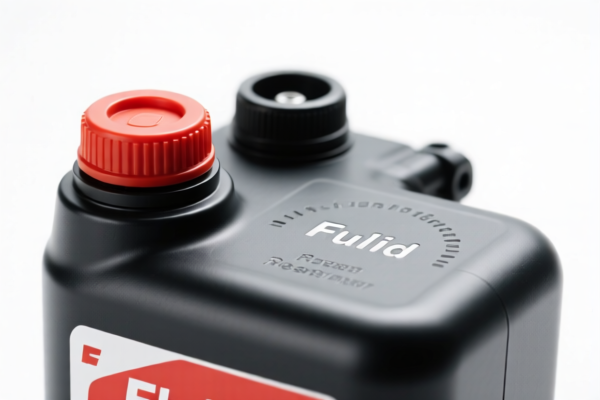
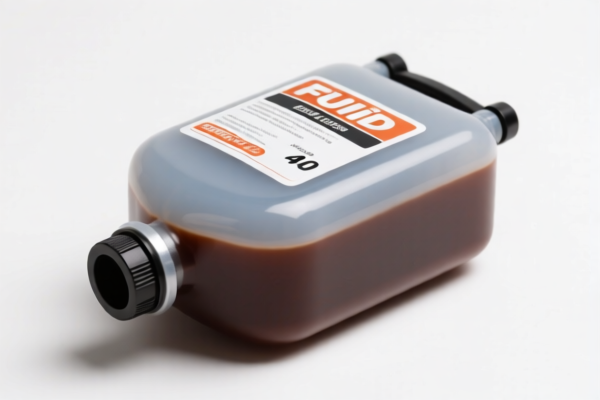
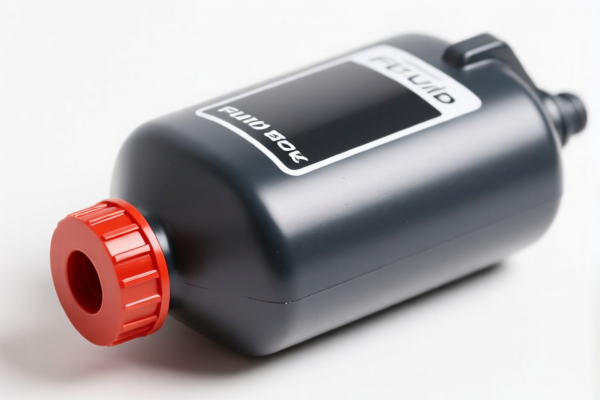

AI Analysis
🚗 Brake Fluid Additives (Chemical Preparations for Lubrication)
🌐 HS Code Reference & Clearance Guide | 2026 Latest Tariff Analysis | Professional Customs Strategy
📌 I. Product Definition & Classification: What is "Brake Fluid Additive"?
Brake fluid additives are specialized chemical preparations designed to enhance the performance, stability, or properties of brake fluids (typically mineral oil-based or synthetic). In international trade, these products are classified based on their chemical nature and intended function. They fall primarily under two categories:
1. Chemical Mixtures/Preparations (Chapter 38):
If the additive is considered a general-purpose chemical modifier (e.g., anti-corrosion, anti-foaming, or viscosity-adjusting agents) that doesn't primarily function as a lubricant itself but modifies other fluids.
2. Lubricating Preparations (Chapter 34):
If the additive is classified as a preparation specifically for lubricating or treating liquids (like brake fluid), falling under "Lubricating preparations" which includes preparations for the treatment of mineral oils.
⚠️ Key Distinction Point:
- If the product is viewed as a general chemical additive for industrial fluids → Likely Chapter 38.
- If the product is viewed specifically as a lubricating preparation or treatment for oil-based fluids → Likely Chapter 34.
📦 II. HS Code Classification Details (2026 Latest Tariff Authority Comparison)
| HS Code | Product Description | Application Scenario | Primary Function |
|---|---|---|---|
3811.19.00.00 |
Antiknock preparations, benzene preparations, and other additives for mineral oils or other liquids (Not containing petroleum oils ≥70% by weight) | Additives for brake fluid, fuel, or hydraulic fluids; chemical modifiers | Chemical Modification |
3403.19.10.00 |
Lubricating preparations containing ≥70% by weight of petroleum oils or oils obtained from bituminous minerals | Note: This code is less likely if the product is a small-volume additive concentrate, but considered if it meets the "lubricating preparation" definition broadly | Lubrication/Treatment |
3403.19.50.00 |
Other lubricating preparations | General lubricating additives, grease compounds, or fluid treatments | Lubrication |
3824.99.29.00 |
Chemical products and preparations for industrial use (not elsewhere specified or included) | General chemical additives, mixtures, or preparations for technical use | General Chemical Preparation |
🔍 Key Reminders:
- Chapter 38 codes (3811.19,3824.99) are often preferred for additives that modify properties (anti-corrosion, boiling point elevation) rather than purely lubricating surfaces.
- Chapter 34 codes (3403.19) apply if the product is explicitly defined as a lubricating preparation. However, since brake fluid additives are often additives to a fluid rather than the lubricant itself, Chapter 38 is frequently more accurate depending on the specific formulation.
- Misclassification Risk: Classifying a chemical additive as a simple lubricant (Chapter 34) when it lacks significant petroleum oil content may lead to disputes.
💰 III. 2026 Latest Tariff Rate Details (Including Surcharge & Policy Add-ons)
✅ Applicable Country: United States (US)
✅ Country of Origin: China (CN)
✅ Effective Date: November 10, 2025 (and onwards)
🎯 1. 3811.19.00.00 —— Additives for Mineral Oils or Other Liquids
| Item | Content |
|---|---|
| Base Tariff | 6.5% |
| USITC Additional Tariff (Section 301) | +25% |
| IEEPA Additional Tariff | +10% |
| Total Tariff Rate | 41.5% |
| Tax Calculation | CIF Value × 41.5% |
| De Minimis Exemption Available? | ❌ No (deny_de_minimis) |
| Legal Authority Path | IEEPA:9903.01.25 → IEEPA:9903.01.24 → USITC:3811.19.00.00 |
📌 Explanation:
- Base Rate (6.5%): Standard MFN rate for chemical additives.
- Section 301 (25%): Applied to most Chinese-origin goods under the 2018 trade war tariffs.
- IEEPA (10%): Additional tariff under the International Emergency Economic Powers Act for Chinese products.
- Total (41.5%): This is a very high duty rate. Importers must carefully calculate landed costs.
🎯 2. 3403.19.10.00 —— Lubricating Preparations (Specific Sub-heading)
| Item | Content |
|---|---|
| Base Tariff | 0.2% |
| USITC Additional Tariff (Section 301) | +25% |
| IEEPA Additional Tariff | +10% |
| Total Tariff Rate | 35.2% |
| Tax Calculation | CIF Value × 35.2% |
| De Minimis Exemption Available? | ❌ No |
| Legal Authority Path | IEEPA:9901.25 → IEEPA:9903.01.24 → USITC:3403.19.10.00 |
📌 Note:
- While the base rate is extremely low (0.2%), the additional tariffs drive the total to 35.2%.
- This code is suitable if the product is explicitly marketed as a "lubricating preparation" or fluid treatment.
🎯 3. 3403.19.50.00 —— Other Lubricating Preparations
| Item | Content |
|---|---|
| Base Tariff | 5.8% |
| USITC Additional Tariff (Section 301) | +25% |
| IEEPA Additional Tariff | +10% |
| Total Tariff Rate | 40.8% |
| Tax Calculation | CIF Value × 40.8% |
| De Minimis Exemption Available? | ❌ No |
| Legal Authority Path | IEEPA:9901.25 → IEEPA:9903.01.24 → USITC:3403.19.50.00 |
📌 Note:
- This is a catch-all for lubricating preparations not specified elsewhere.
- The total rate of 40.8% is comparable to the Chapter 38 option.
🎯 4. 3824.99.29.00 —— Chemical Products and Preparations (Industrial Use)
| Item | Content |
|---|---|
| Base Tariff | 6.5% |
| USITC Additional Tariff (Section 301) | +25% |
| IEEPA Additional Tariff | +10% |
| Total Tariff Rate | 41.5% |
| Tax Calculation | CIF Value × 41.5% |
| De Minimis Exemption Available? | ❌ No |
| Legal Authority Path | IEEPA:9903.01.25 → IEEPA:9903.01.24 → USITC:3824.99.29.00 |
📌 Note:
- This code is used for chemical preparations not elsewhere specified.
- If the brake fluid additive does not clearly fit "lubricating preparation" or "additive for mineral oils," it may fall here.
- Same high tariff burden of 41.5%.
🛠️ IV. Customs Clearance Practical Advice (Operational Pitfall Guide)
✅ 1. Preparation Checklist (All Required)
| Document | Required? | Description |
|---|---|---|
| ✅ Technical Data Sheet (TDS) | ✔️ | Must detail chemical composition, function, and pH/value. Crucial for HS code determination. |
| ✅ Safety Data Sheet (SDS) | ✔️ | Required for chemical imports. Shows hazard class and handling instructions. |
| ✅ Product Photos | ✔️ | Clear images of packaging, label, and container. |
| ✅ Commercial Invoice | ✔️ | Must accurately describe the product as "Brake Fluid Additive" or "Chemical Preparation," not just "Brake Fluid." |
| ✅ Packing List | ✔️ | Details net/gross weight, dimensions, and package count. |
| ✅ Proof of Origin | ✔️ | If claiming any preferential treatment (rare for China-US, but good practice). |
✅ 2. Declaration Strategy (Key Mantras)
🔥 "Specify Function, Declare Composition, Avoid Ambiguity!"
| Scenario | Correct Declaration | Incorrect Declaration |
|---|---|---|
| Additive for Brake Fluid | "Chemical Additive for Brake Fluid, for viscosity/anti-corrosion enhancement" | "Brake Fluid" (Wrong class, different HS) |
| Liquid Chemical | "Lubricating Preparation, for treatment of mineral oils" | "Cleaning Solution" |
| Mixed Package | Declare separately | Bundle with non-deminimis items incorrectly |
📌 Critical Tip:
- Do not declare "Brake Fluid Additive" simply as "Chemicals" without specifying the purpose. Customs may downgrade or reclassify based on lack of detail.
- If the product contains ≥70% petroleum oil, it must go to Chapter 34 (3403). If it's a synthetic or mineral-oil-free concentrate, Chapter 38 is more likely.
✅ 3. Special Cases & Mitigation
| Case | Handling Advice |
|---|---|
| Small Quantity Samples | Still subject to full tariff (41.5% or 35.2%). De minimis exemption ($800) does not apply to Chinese goods under current Section 301/IEEPA rules for these HS codes. |
| OEM/Private Label | Provide authorization letter if brand is registered. |
| Hazmat/UN Number | Brake fluid additives may be flammable or corrosive. Ensure proper UN packaging and hazardous material declaration if applicable. |
| FDA/EPA Registration | If marketed as a treatment for vehicles, ensure compliance with EPA environmental standards if claims are made about emissions or fuel efficiency. |
🌍 V. Global Market Comparison (2026 Latest)
| Country/Region | Recommended HS Code | Tariff Rate (China Origin) | Certification | Notes |
|---|---|---|---|---|
| 🇺🇸 USA | 3811.19.00.00 or 3403.19.50.00 |
35.2% – 41.5% | None specific, but SDS required | High tariffs make US market challenging for CN-origin additives. |
| 🇨🇳 China | 3811.19 or 3403.19 |
0% – 5% | CCC (if applicable) | Domestic market is low-cost. |
| 🇪🇺 EU | 3811.10 or 3403.91 |
0% – 4.5% | REACH, CLP | Lower base tariffs, but REACH compliance is strict. |
| 🇲🇽 Mexico | 3811.19 |
0% (under USMCA if qualified) | NOM | Potential for duty-free if USMCA rules are met. |
| 🇻🇳 Vietnam | 3811.19 |
0% – 4% | TIS | Popular alternative manufacturing base to avoid US tariffs. |
📌 Conclusion:
- USA is the most expensive market due to Section 301 + IEEPA surcharges.
- EU has moderate tariffs but high regulatory barriers (REACH).
- Supply Chain Diversification (e.g., manufacturing in Vietnam or Mexico) is a strong strategy to mitigate US tariffs.
📌 VI. Common Errors & Pitfall Guide (Lessons Learned)
❌ Error 1: Declaring "Brake Fluid Additive" as "Brake Fluid" (2710.19 or 3824.99 generic).
👉 Consequence: Misclassification penalty, potential retroactive duties, and detention.
❌ Error 2: Ignoring the IEEPA 10% surcharge in cost calculations.
👉 Consequence: Underestimating landed cost by 10%, leading to margin erosion.
❌ Error 3: Assuming de minimis ($800) applies.
👉 Consequence: Shipments under $800 from China are still taxed for these HS codes. Customs will hold the package.
❌ Error 4: Providing vague descriptions like "Car Parts" or "Chemicals."
👉 Consequence: Customs may apply the highest duty rate or require additional testing, causing delays.
✅ Correct Approach:
"Chemical Additive for Brake Fluid, Synthetic Base, For Viscosity Modification, HS 3811.19.00.00, Made in China"
🎯 VII. Conclusion: Professional Declaration, Cost Control, Efficiency!
🎯 Remember These Key Points:
🔹 "Total Duty = Base + 25% (Section 301) + 10% (IEEPA)"
🔹 "HS Code 3811.19.00.00 is often the safest bet for additives"
🔹 "De Minimis Does Not Apply! Plan for 35-42% duty."
📌 Pro Tip:
If you are importing in small quantities, consider consolidating shipments with other non-Section 301 items (if possible) or exploring Bonded Warehouses to defer duties until final sale.
For large volumes, Advance Rulings from CBP can provide certainty on HS classification.
📣 Immediate Action:
📞 Consult with a licensed customs broker.
📄 Submit detailed SDS and TDS for pre-clearance review.
🚀 Accurate classification saves money and time.
✨ Professional Clearance Starts with Accurate Classification!
💼 Every percentage point of tariff impacts your bottom line!
Customer Reviews
About HS Code Classification
The Harmonized System (HS) is an internationally standardized nomenclature developed by the World Customs Organization (WCO) to classify traded products. Over 200 countries use the HS system as the basis for customs tariffs, trade statistics, and import/export regulations.
Each HS code follows a hierarchical structure:
- Chapter (2 digits) — Broad category of goods (e.g., Chapter 84: Machinery and Mechanical Appliances)
- Heading (4 digits) — More specific grouping within the chapter
- Subheading (6 digits) — Internationally standardized breakdown, used by all WCO member countries
- National subdivisions (8-10 digits) — Country-specific extensions for further classification, such as US HTSUS 10-digit codes
Correct HS code classification is essential for smooth customs clearance, accurate duty payment, and compliance with trade regulations. Misclassification can lead to customs delays, overpayment of duties, or penalties.
When importing from CN to US, the applicable tariff rates may include:
- Most-Favored-Nation (MFN) rate — The standard duty rate applied to WTO members
- General rate — Applied to countries without trade agreements
- Trade remedy duties — Additional tariffs such as Section 301 (anti-dumping), Section 232 (national security), or countervailing duties
The information provided on this page is for reference purposes only. For official classification, please consult with your local customs authority or a licensed customs broker.