Brake Line Fluid
CN → US| HS编码 | 关税税率 | 原产国 | 目的国 | 文档 |
|---|---|---|---|---|
| 3811190000 | 41.5% | CN | US | 官方文档 |
| 3403191000 | 35.2% | CN | US | 官方文档 |
| 3403195000 | 40.8% | CN | US | 官方文档 |
| 3403195000 | 40.8% | CN | US | 官方文档 |
| 3824992900 | 41.5% | CN | US | 官方文档 |
商品图片
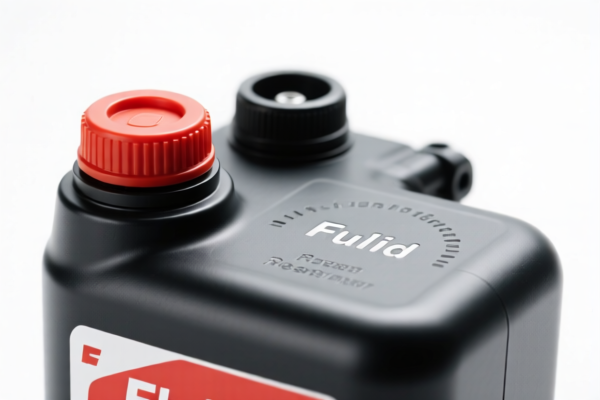
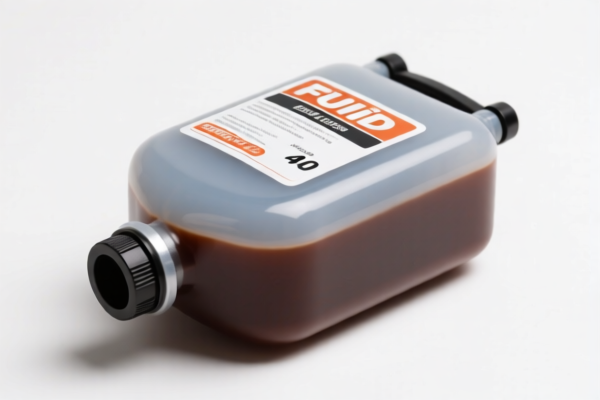
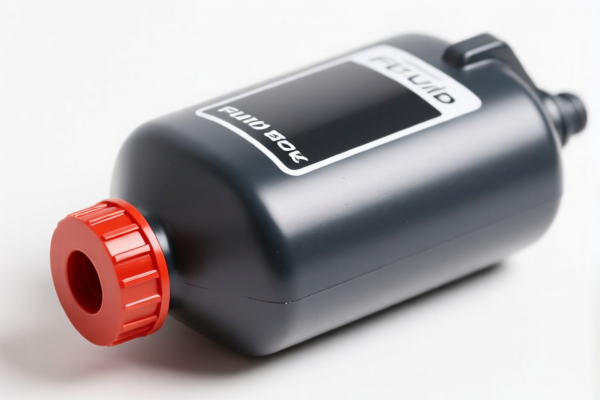

AI分析
🚗 Brake Line Fluid Additive (Brake Fluid Conditioner/Booster)
🌐 HS Code Reference & Customs Clearance Guide | 2026 Latest Tariff Analysis | Professional Entry Strategy for US Imports
📌 I. Product Definition & Classification: What Exactly is "Brake Line Fluid Additive"?
Brake Line Fluid Additive (often marketed as "Brake Fluid Conditioner," "Booster," or "Anti-Squeal Additive") is a chemical compound added to automotive brake systems to enhance performance. It typically aims to: * Increase the boiling point of brake fluid (preventing vapor lock). * Lubricate caliper slides and seals to prevent squeaking or sticking. * Condition rubber seals to prevent leaks and hardening.
Key Classification Ambiguity: In international trade, this product sits at the intersection of chemical additives, lubricants, and auto parts accessories. The critical factor for customs classification is: 1. Primary Function: Is it primarily a lubricant (Chapter 34) or a chemical mixture/additive (Chapter 38)? 2. Composition: Does it contain >70% petroleum-based oil (which might trigger exclusions in certain subheadings)? 3. Physical State: Liquid/Fluid.
⚠️ Critical Distinction: * If the product is primarily a chemical mixture designed to modify the properties of brake fluid (e.g., anti-corrosion, anti-squeal), it leans towards Chapter 38. * If the product is explicitly a lubricating preparation (grease-like or oil-based lubricant for mechanical parts), it leans towards Chapter 34.
📦 II. HS Code Classification Details (2026 Latest Tariff Authority Cross-Check)
Based on the inferred characteristics of "Brake Line Fluid Additive," here are the most likely HS Code classifications and their corresponding tax liabilities.
| HS Code | Product Description | Applicability Scenario | Key Classification Logic |
|---|---|---|---|
3811.19.00.00 |
Anti-knock preparations, benzene preparations, and other preparations consisting of hydrocarbons or other organic substances (Other) | Additives specifically marketed as "fluid conditioners" or "boosters" that modify the chemical properties of the brake fluid itself. | Matches "Additive" in name; assumes it modifies the mineral oil-based brake fluid. No material conflict. |
3403.19.10.00 |
Lubricating preparations containing >70% by weight of petroleum oils | Lubricating preparations not elsewhere specified. | Note: This code is often used for lubricants. However, the logic suggests that if the product is a chemical additive rather than a pure lubricant, it may not fit the "lubricating preparation" definition strictly, or it may be classified here if deemed a lubricant. Caution: Verify if the product meets the >70% oil threshold for exclusion from other codes. |
3403.19.50.00 |
Lubricating preparations containing <70% by weight of petroleum oils | Lubricating preparations not elsewhere specified. | If the additive is primarily viewed as a lubricant (e.g., for caliper pins/slides) but contains less than 70% petroleum oil, this code applies. |
3824.99.29.00 |
Prepared binders for foundry molds or cores; chemical products and preparations not elsewhere specified or included | Chemical mixtures/additives not specifically described in other chapters. | "Additive" implies a chemical preparation. If it doesn't fit neatly into Chapter 34 (lubricants) or Chapter 38.11 (anti-knock/organic additives), it falls under "Chemical Products Not Elsewhere Specified." |
🔍 Analysis: *
3811.19.00.00and3824.99.29.00are strong contenders because the product is an additive (chemical modification). *3403.19.xxcodes are relevant if the product is functionally a lubricant (reducing friction in the brake mechanism). * The distinction often lies in the Statement of Composition and Intended Use declared by the importer.
💰 III. 2026 Latest Tariff Rate Breakdown (Including Surcharges & Policy Add-ons)
✅ Applicable Country: United States (US) ✅ Country of Origin: China (CN) ✅ Effective Date: From November 10, 2025 (and subsequent imports)
🎯 1. 3811.19.00.00 – Anti-knock/Preparations (Other)
| Item | Details |
|---|---|
| Base Tariff | 6.5% (ad valorem) |
| Section 301 Surcharge | +25.0% |
| IEEPA Surcharge | +10.0% (For Chinese/Hong Kong origin) |
| Total Effective Rate | 41.5% |
| Tax Calculation | CIF Value × 41.5% |
| De Minimis Eligibility | ❌ No (Denied) |
| Legal Basis Path | IEEPA:9903.01.25 → USITC:3811.19.00.00 → FOOTNOTE:301 |
📌 Explanation: * The 6.5% is the standard Most Favored Nation (MFN) rate for other prepared binders/chemicals. * The +25% is the Section 301 tariff applicable to most chemical products from China. * The +10% is the IEEPA tariff on Chinese goods. * Total: 41.5%. This is a high-cost classification.
🎯 2. 3403.19.10.00 – Lubricating Preparations (>70% Petroleum Oil)
| Item | Details |
|---|---|
| Base Tariff | 0.2% (ad valorem) |
| Section 301 Surcharge | +25.0% |
| IEEPA Surcharge | +10.0% |
| Total Effective Rate | 35.2% |
| Tax Calculation | CIF Value × 35.2% |
| De Minimis Eligibility | ❌ No (Denied) |
| Legal Basis Path | IEEPA:9903.01.25 → USITC:3403.19.10.00 → FOOTNOTE:301 |
📌 Explanation: * This code benefits from a very low base rate of 0.2% because lubricants often have preferential treatment. * However, the 25% + 10% surcharges still apply heavily. * Total: 35.2%. This is 6.3% cheaper than the
3811classification. * Risk: Customs may challenge this if the product is not predominantly a lubricant (>70% oil) but a chemical additive.
🎯 3. 3403.19.50.00 – Lubricating Preparations (<70% Petroleum Oil)
| Item | Details |
|---|---|
| Base Tariff | 5.8% (ad valorem) |
| Section 301 Surcharge | +25.0% |
| IEEPA Surcharge | +10.0% |
| Total Effective Rate | 40.8% |
| Tax Calculation | CIF Value × 40.8% |
| De Minimis Eligibility | ❌ No (Denied) |
| Legal Basis Path | IEEPA:9903.01.25 → USITC:3403.19.50.00 → FOOTNOTE:301 |
📌 Explanation: * If the product is a lubricant but contains less than 70% petroleum oil, the base rate jumps to 5.8%. * Total: 40.8%. This is nearly identical to the
3811rate.
🎯 4. 3824.99.29.00 – Chemical Products Not Elsewhere Specified
| Item | Details |
|---|---|
| Base Tariff | 6.5% (ad valorem) |
| Section 301 Surcharge | +25.0% |
| IEEPA Surcharge | +10.0% |
| Total Effective Rate | 41.5% |
| Tax Calculation | CIF Value × 41.5% |
| De Minimis Eligibility | ❌ No (Denied) |
| Legal Basis Path | IEEPA:9903.01.25 → USITC:3824.99.29.00 → FOOTNOTE:301 |
📌 Explanation: * This is a "catch-all" for chemical mixtures. * Total: 41.5%. Same as
3811.19.00.00. * Advantage: Often used when the specific chemical nature is complex and doesn't fit neatly into3811(which is specific to anti-knock/organic additives).
🛠️ IV. Customs Clearance Practical Advice (Pitfall Avoidance Guide)
✅ 1. Essential Documentation Checklist (Mandatory)
| Document | Required? | Explanation |
|---|---|---|
| ✅ Product Specification Sheet | ✔️ | Must detail chemical composition (e.g., % of petroleum oil, silicone content, anti-corrosion agents). |
| ✅ Function Statement | ✔️ | Clearly state if it is a Lubricant (for mechanical parts) or Fluid Conditioner (for chemical modification of brake fluid). |
| ✅ Product Photos (Label + Contents) | ✔️ | Show packaging, hazard labels (if flammable), and ingredient list. |
| ✅ Safety Data Sheet (SDS) | ✔️ | Critical for chemical products to determine hazard classification and transport requirements. |
| ✅ Commercial Invoice | ✔️ | Must accurately describe the product as "Brake Fluid Additive" or "Lubricating Preparation," not just "Auto Part." |
| ✅ Certificate of Origin (CO) | ✔️ | To verify Chinese origin for tariff calculations. |
✅ 2. Declaration Strategy (Key Mantras)
🔥 "Clarify Function: Lubricant or Additive? Name Precision Saves Taxes!"
| Scenario | Correct Declaration Approach | Incorrect Approach |
|---|---|---|
| Product is a chemical conditioner (modifies fluid properties) | Declare as 3811.19.00.00 or 3824.99.29.00. Description: "Chemical Additive for Brake Fluid." |
Calling it "Brake Fluid" → Wrong chapter. Calling it "Lubricant" without proof → Risk of misclassification. |
| Product is a lubricant (grease/oil for calipers) | Declare as 3403.19.10.00 (if >70% oil) or 3403.19.50.00 (if <70% oil). Description: "Lubricating Preparation for Automotive Brake Systems." |
Calling it "Chemical Additive" → May miss the lower base rate if it is indeed a lubricant. |
| Ambiguous Product | Provide SDS and Composition. Let Customs determine based on principal function. | Vague description "Auto Accessory" → High risk of audit and penalties. |
✅ 3. Special Considerations
| Situation | Handling Advice |
|---|---|
| SDS Indicates Flammability | Ensure proper UN packaging and hazard labeling. This does not change HS Code but affects shipping costs and safety compliance. |
| OEM vs. Aftermarket | If sold as an OEM part, ensure the invoice reflects the brand and model compatibility. Aftermarket parts are standard. |
| Mixed Containers | If shipping with other auto parts, ensure Brake Fluid Additive is declared separately to avoid misclassification of the entire container. |
| Pre-Ruling Application | Given the ambiguity between Chapter 34 and 38, apply for an Advance Ruling from US Customs (CBP) to secure the correct HS Code before shipping. |
🌍 V. Global Market Comparison (2026 Latest)
| Country/Region | Recommended HS Code | Estimated Duty (China Origin) | Certification Requirements | Notes |
|---|---|---|---|---|
| 🇺🇸 USA | 3811.19.00.00 or 3403.19.10.00 |
35.2% - 41.5% | No specific US certification required for import, but SDS is mandatory. | High tariffs due to 301/IEEPA. |
| 🇨🇳 China | 3811.19.00.00 or 3403.19.10.00 |
5% - 8% | CCC (if applicable), but typically not required for chemicals. | Low duty, no surcharges. |
| 🇪🇺 EU | 3811.10.00 or 3403.90 |
0% - 4.5% | REACH Registration mandatory for chemicals. | Strict chemical regulations. |
| 🇯🇵 Japan | 3811.10.00 or 3403.19 |
0% - 3.2% | JIS standards may apply. | Moderate duties. |
📌 Conclusion: * The USA is the most challenging market due to high surcharges. * Accurate classification between Chapter 34 (Lubricants) and Chapter 38 (Chemicals) can save 6.3% in duty. * Documentation (SDS, Composition) is key to supporting the chosen HS Code.
📌 VI. Common Errors & Pitfalls (Lessons Learned)
❌ Error 1: Declaring as "Brake Fluid" (HS 3819.10.00.00)
👉 Consequence: If it's an additive, not the fluid itself, customs may reclassify it. If reclassified to 3819.10, the rate might differ, but more importantly, it shows inaccurate declaration.
❌ Error 2: Using "Auto Part" (HS 8708.99) for a Chemical Additive
👉 Consequence: Misclassification Penalty. Chemicals are not auto parts. This can lead to fines and delays.
❌ Error 3: Ignoring the "70% Oil" Threshold for Lubricants
👉 Consequence: If you declare 3403.19.10.00 (<70% oil code) but the product is >70% oil, Customs will apply the correct code (3403.19.10.00 vs 3403.19.50.00) and may charge back duties.
✅ Best Practice:
"Chemical Additive for Brake Fluid System, Contains [X]% Petroleum Oil, [Y]% Silicones, SDS Attached."
🎯 VII. Conclusion: Precision is Profit
🎯 Remember the Mantra:
🔹 "Lubricant or Additive? Check the Oil Content!" 🔹 "SDS is Your Shield, Composition is Your Key!" 🔹 "3403 might be cheaper, but 3811 is safer for Additives!"
📌 Pro Tip: If the product is originally from Vietnam, Thailand, or Malaysia, you may be eligible for IEEPA Exemptions, reducing the total duty significantly. Always verify the Country of Origin.
📣 Immediate Action:
📞 Consult with a Customs Broker to apply for an Advance Ruling. 📄 Prepare a detailed Statement of Composition and SDS. 🚀 Ensure smooth clearance and optimized costs for your Brake Line Fluid Additives!
✨ Professional Clearance Starts with Accurate Classification! 💼 Your Bottom Line Depends on Your HS Code!
用户评价
关于 HS 编码归类
协调制度(HS)是由世界海关组织(WCO)制定的国际贸易商品分类标准。全球 200 多个国家采用 HS 系统作为海关关税、贸易统计和进出口监管的基础。
每个 HS 编码遵循以下层级结构:
- 章(2 位)——商品大类(例如:第 84 章:机器和机械设备)
- 品目(4 位)——章内的更具体分类
- 子目(6 位)——国际通用细分,所有 WCO 成员国统一使用
- 本国细分(8-10 位)——各国自行扩展的细分编码,如美国 HTSUS 10 位编码
正确的 HS 编码归类对于顺利通关、准确缴纳关税和遵守贸易法规至关重要。错误归类可能导致海关延误、多缴关税或罚款。
从CN进口到US时,适用的关税税率可能包括:
- 最惠国(MFN)税率——适用于 WTO 成员国的标准关税税率
- 普通税率——适用于无贸易协定国家
- 贸易救济关税——附加关税,如 301 条款(反倾销)、232 条款(国家安全)或反补贴税
本页内容仅供参考。如需正式归类,请咨询当地海关或持牌报关代理。