Brake Line Fluid
CN → US| HS Code | Tariff Rate | Origin | Destination | Doc |
|---|---|---|---|---|
| 3811190000 | 41.5% | CN | US | Official Doc |
| 3403191000 | 35.2% | CN | US | Official Doc |
| 3403195000 | 40.8% | CN | US | Official Doc |
| 3403195000 | 40.8% | CN | US | Official Doc |
| 3824992900 | 41.5% | CN | US | Official Doc |
Product Images
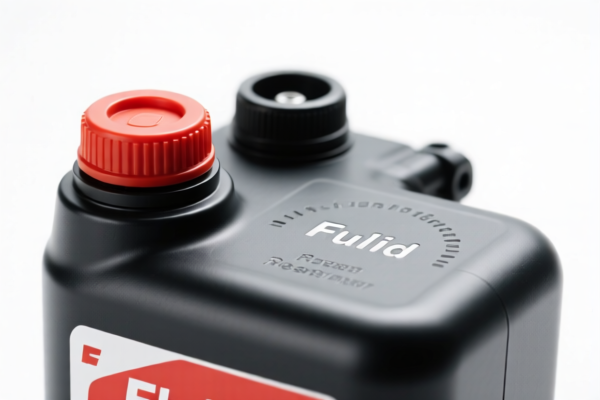
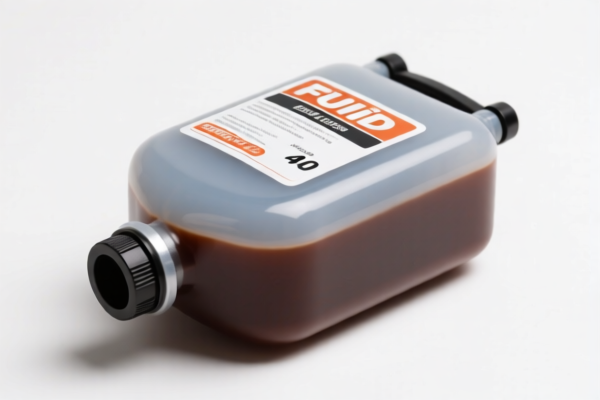
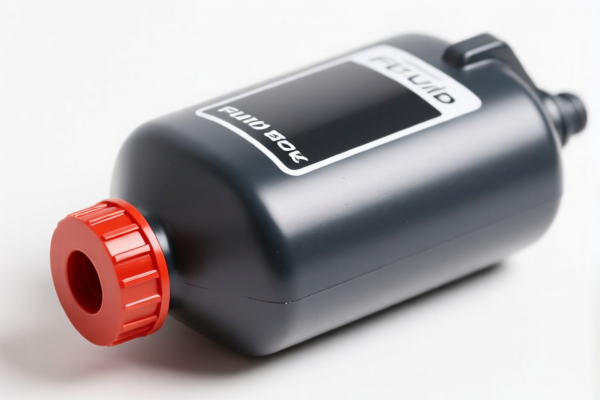

AI Analysis
🚗 Brake Line Fluid Additive (Brake Fluid Conditioner/Booster)
🌐 HS Code Reference & Customs Clearance Guide | 2026 Latest Tariff Analysis | Professional Entry Strategy for US Imports
📌 I. Product Definition & Classification: What Exactly is "Brake Line Fluid Additive"?
Brake Line Fluid Additive (often marketed as "Brake Fluid Conditioner," "Booster," or "Anti-Squeal Additive") is a chemical compound added to automotive brake systems to enhance performance. It typically aims to: * Increase the boiling point of brake fluid (preventing vapor lock). * Lubricate caliper slides and seals to prevent squeaking or sticking. * Condition rubber seals to prevent leaks and hardening.
Key Classification Ambiguity: In international trade, this product sits at the intersection of chemical additives, lubricants, and auto parts accessories. The critical factor for customs classification is: 1. Primary Function: Is it primarily a lubricant (Chapter 34) or a chemical mixture/additive (Chapter 38)? 2. Composition: Does it contain >70% petroleum-based oil (which might trigger exclusions in certain subheadings)? 3. Physical State: Liquid/Fluid.
⚠️ Critical Distinction: * If the product is primarily a chemical mixture designed to modify the properties of brake fluid (e.g., anti-corrosion, anti-squeal), it leans towards Chapter 38. * If the product is explicitly a lubricating preparation (grease-like or oil-based lubricant for mechanical parts), it leans towards Chapter 34.
📦 II. HS Code Classification Details (2026 Latest Tariff Authority Cross-Check)
Based on the inferred characteristics of "Brake Line Fluid Additive," here are the most likely HS Code classifications and their corresponding tax liabilities.
| HS Code | Product Description | Applicability Scenario | Key Classification Logic |
|---|---|---|---|
3811.19.00.00 |
Anti-knock preparations, benzene preparations, and other preparations consisting of hydrocarbons or other organic substances (Other) | Additives specifically marketed as "fluid conditioners" or "boosters" that modify the chemical properties of the brake fluid itself. | Matches "Additive" in name; assumes it modifies the mineral oil-based brake fluid. No material conflict. |
3403.19.10.00 |
Lubricating preparations containing >70% by weight of petroleum oils | Lubricating preparations not elsewhere specified. | Note: This code is often used for lubricants. However, the logic suggests that if the product is a chemical additive rather than a pure lubricant, it may not fit the "lubricating preparation" definition strictly, or it may be classified here if deemed a lubricant. Caution: Verify if the product meets the >70% oil threshold for exclusion from other codes. |
3403.19.50.00 |
Lubricating preparations containing <70% by weight of petroleum oils | Lubricating preparations not elsewhere specified. | If the additive is primarily viewed as a lubricant (e.g., for caliper pins/slides) but contains less than 70% petroleum oil, this code applies. |
3824.99.29.00 |
Prepared binders for foundry molds or cores; chemical products and preparations not elsewhere specified or included | Chemical mixtures/additives not specifically described in other chapters. | "Additive" implies a chemical preparation. If it doesn't fit neatly into Chapter 34 (lubricants) or Chapter 38.11 (anti-knock/organic additives), it falls under "Chemical Products Not Elsewhere Specified." |
🔍 Analysis: *
3811.19.00.00and3824.99.29.00are strong contenders because the product is an additive (chemical modification). *3403.19.xxcodes are relevant if the product is functionally a lubricant (reducing friction in the brake mechanism). * The distinction often lies in the Statement of Composition and Intended Use declared by the importer.
💰 III. 2026 Latest Tariff Rate Breakdown (Including Surcharges & Policy Add-ons)
✅ Applicable Country: United States (US) ✅ Country of Origin: China (CN) ✅ Effective Date: From November 10, 2025 (and subsequent imports)
🎯 1. 3811.19.00.00 – Anti-knock/Preparations (Other)
| Item | Details |
|---|---|
| Base Tariff | 6.5% (ad valorem) |
| Section 301 Surcharge | +25.0% |
| IEEPA Surcharge | +10.0% (For Chinese/Hong Kong origin) |
| Total Effective Rate | 41.5% |
| Tax Calculation | CIF Value × 41.5% |
| De Minimis Eligibility | ❌ No (Denied) |
| Legal Basis Path | IEEPA:9903.01.25 → USITC:3811.19.00.00 → FOOTNOTE:301 |
📌 Explanation: * The 6.5% is the standard Most Favored Nation (MFN) rate for other prepared binders/chemicals. * The +25% is the Section 301 tariff applicable to most chemical products from China. * The +10% is the IEEPA tariff on Chinese goods. * Total: 41.5%. This is a high-cost classification.
🎯 2. 3403.19.10.00 – Lubricating Preparations (>70% Petroleum Oil)
| Item | Details |
|---|---|
| Base Tariff | 0.2% (ad valorem) |
| Section 301 Surcharge | +25.0% |
| IEEPA Surcharge | +10.0% |
| Total Effective Rate | 35.2% |
| Tax Calculation | CIF Value × 35.2% |
| De Minimis Eligibility | ❌ No (Denied) |
| Legal Basis Path | IEEPA:9903.01.25 → USITC:3403.19.10.00 → FOOTNOTE:301 |
📌 Explanation: * This code benefits from a very low base rate of 0.2% because lubricants often have preferential treatment. * However, the 25% + 10% surcharges still apply heavily. * Total: 35.2%. This is 6.3% cheaper than the
3811classification. * Risk: Customs may challenge this if the product is not predominantly a lubricant (>70% oil) but a chemical additive.
🎯 3. 3403.19.50.00 – Lubricating Preparations (<70% Petroleum Oil)
| Item | Details |
|---|---|
| Base Tariff | 5.8% (ad valorem) |
| Section 301 Surcharge | +25.0% |
| IEEPA Surcharge | +10.0% |
| Total Effective Rate | 40.8% |
| Tax Calculation | CIF Value × 40.8% |
| De Minimis Eligibility | ❌ No (Denied) |
| Legal Basis Path | IEEPA:9903.01.25 → USITC:3403.19.50.00 → FOOTNOTE:301 |
📌 Explanation: * If the product is a lubricant but contains less than 70% petroleum oil, the base rate jumps to 5.8%. * Total: 40.8%. This is nearly identical to the
3811rate.
🎯 4. 3824.99.29.00 – Chemical Products Not Elsewhere Specified
| Item | Details |
|---|---|
| Base Tariff | 6.5% (ad valorem) |
| Section 301 Surcharge | +25.0% |
| IEEPA Surcharge | +10.0% |
| Total Effective Rate | 41.5% |
| Tax Calculation | CIF Value × 41.5% |
| De Minimis Eligibility | ❌ No (Denied) |
| Legal Basis Path | IEEPA:9903.01.25 → USITC:3824.99.29.00 → FOOTNOTE:301 |
📌 Explanation: * This is a "catch-all" for chemical mixtures. * Total: 41.5%. Same as
3811.19.00.00. * Advantage: Often used when the specific chemical nature is complex and doesn't fit neatly into3811(which is specific to anti-knock/organic additives).
🛠️ IV. Customs Clearance Practical Advice (Pitfall Avoidance Guide)
✅ 1. Essential Documentation Checklist (Mandatory)
| Document | Required? | Explanation |
|---|---|---|
| ✅ Product Specification Sheet | ✔️ | Must detail chemical composition (e.g., % of petroleum oil, silicone content, anti-corrosion agents). |
| ✅ Function Statement | ✔️ | Clearly state if it is a Lubricant (for mechanical parts) or Fluid Conditioner (for chemical modification of brake fluid). |
| ✅ Product Photos (Label + Contents) | ✔️ | Show packaging, hazard labels (if flammable), and ingredient list. |
| ✅ Safety Data Sheet (SDS) | ✔️ | Critical for chemical products to determine hazard classification and transport requirements. |
| ✅ Commercial Invoice | ✔️ | Must accurately describe the product as "Brake Fluid Additive" or "Lubricating Preparation," not just "Auto Part." |
| ✅ Certificate of Origin (CO) | ✔️ | To verify Chinese origin for tariff calculations. |
✅ 2. Declaration Strategy (Key Mantras)
🔥 "Clarify Function: Lubricant or Additive? Name Precision Saves Taxes!"
| Scenario | Correct Declaration Approach | Incorrect Approach |
|---|---|---|
| Product is a chemical conditioner (modifies fluid properties) | Declare as 3811.19.00.00 or 3824.99.29.00. Description: "Chemical Additive for Brake Fluid." |
Calling it "Brake Fluid" → Wrong chapter. Calling it "Lubricant" without proof → Risk of misclassification. |
| Product is a lubricant (grease/oil for calipers) | Declare as 3403.19.10.00 (if >70% oil) or 3403.19.50.00 (if <70% oil). Description: "Lubricating Preparation for Automotive Brake Systems." |
Calling it "Chemical Additive" → May miss the lower base rate if it is indeed a lubricant. |
| Ambiguous Product | Provide SDS and Composition. Let Customs determine based on principal function. | Vague description "Auto Accessory" → High risk of audit and penalties. |
✅ 3. Special Considerations
| Situation | Handling Advice |
|---|---|
| SDS Indicates Flammability | Ensure proper UN packaging and hazard labeling. This does not change HS Code but affects shipping costs and safety compliance. |
| OEM vs. Aftermarket | If sold as an OEM part, ensure the invoice reflects the brand and model compatibility. Aftermarket parts are standard. |
| Mixed Containers | If shipping with other auto parts, ensure Brake Fluid Additive is declared separately to avoid misclassification of the entire container. |
| Pre-Ruling Application | Given the ambiguity between Chapter 34 and 38, apply for an Advance Ruling from US Customs (CBP) to secure the correct HS Code before shipping. |
🌍 V. Global Market Comparison (2026 Latest)
| Country/Region | Recommended HS Code | Estimated Duty (China Origin) | Certification Requirements | Notes |
|---|---|---|---|---|
| 🇺🇸 USA | 3811.19.00.00 or 3403.19.10.00 |
35.2% - 41.5% | No specific US certification required for import, but SDS is mandatory. | High tariffs due to 301/IEEPA. |
| 🇨🇳 China | 3811.19.00.00 or 3403.19.10.00 |
5% - 8% | CCC (if applicable), but typically not required for chemicals. | Low duty, no surcharges. |
| 🇪🇺 EU | 3811.10.00 or 3403.90 |
0% - 4.5% | REACH Registration mandatory for chemicals. | Strict chemical regulations. |
| 🇯🇵 Japan | 3811.10.00 or 3403.19 |
0% - 3.2% | JIS standards may apply. | Moderate duties. |
📌 Conclusion: * The USA is the most challenging market due to high surcharges. * Accurate classification between Chapter 34 (Lubricants) and Chapter 38 (Chemicals) can save 6.3% in duty. * Documentation (SDS, Composition) is key to supporting the chosen HS Code.
📌 VI. Common Errors & Pitfalls (Lessons Learned)
❌ Error 1: Declaring as "Brake Fluid" (HS 3819.10.00.00)
👉 Consequence: If it's an additive, not the fluid itself, customs may reclassify it. If reclassified to 3819.10, the rate might differ, but more importantly, it shows inaccurate declaration.
❌ Error 2: Using "Auto Part" (HS 8708.99) for a Chemical Additive
👉 Consequence: Misclassification Penalty. Chemicals are not auto parts. This can lead to fines and delays.
❌ Error 3: Ignoring the "70% Oil" Threshold for Lubricants
👉 Consequence: If you declare 3403.19.10.00 (<70% oil code) but the product is >70% oil, Customs will apply the correct code (3403.19.10.00 vs 3403.19.50.00) and may charge back duties.
✅ Best Practice:
"Chemical Additive for Brake Fluid System, Contains [X]% Petroleum Oil, [Y]% Silicones, SDS Attached."
🎯 VII. Conclusion: Precision is Profit
🎯 Remember the Mantra:
🔹 "Lubricant or Additive? Check the Oil Content!" 🔹 "SDS is Your Shield, Composition is Your Key!" 🔹 "3403 might be cheaper, but 3811 is safer for Additives!"
📌 Pro Tip: If the product is originally from Vietnam, Thailand, or Malaysia, you may be eligible for IEEPA Exemptions, reducing the total duty significantly. Always verify the Country of Origin.
📣 Immediate Action:
📞 Consult with a Customs Broker to apply for an Advance Ruling. 📄 Prepare a detailed Statement of Composition and SDS. 🚀 Ensure smooth clearance and optimized costs for your Brake Line Fluid Additives!
✨ Professional Clearance Starts with Accurate Classification! 💼 Your Bottom Line Depends on Your HS Code!
Customer Reviews
About HS Code Classification
The Harmonized System (HS) is an internationally standardized nomenclature developed by the World Customs Organization (WCO) to classify traded products. Over 200 countries use the HS system as the basis for customs tariffs, trade statistics, and import/export regulations.
Each HS code follows a hierarchical structure:
- Chapter (2 digits) — Broad category of goods (e.g., Chapter 84: Machinery and Mechanical Appliances)
- Heading (4 digits) — More specific grouping within the chapter
- Subheading (6 digits) — Internationally standardized breakdown, used by all WCO member countries
- National subdivisions (8-10 digits) — Country-specific extensions for further classification, such as US HTSUS 10-digit codes
Correct HS code classification is essential for smooth customs clearance, accurate duty payment, and compliance with trade regulations. Misclassification can lead to customs delays, overpayment of duties, or penalties.
When importing from CN to US, the applicable tariff rates may include:
- Most-Favored-Nation (MFN) rate — The standard duty rate applied to WTO members
- General rate — Applied to countries without trade agreements
- Trade remedy duties — Additional tariffs such as Section 301 (anti-dumping), Section 232 (national security), or countervailing duties
The information provided on this page is for reference purposes only. For official classification, please consult with your local customs authority or a licensed customs broker.