Brake Pad Removal Tool
CN → US| HS编码 | 关税税率 | 原产国 | 目的国 | 文档 |
|---|---|---|---|---|
| 8431499020 | 85.0% | CN | US | 官方文档 |
| 8431499044 | 0.0% | CN | US | 官方文档 |
| 8467891000 | 17.5% | CN | US | 官方文档 |
| 8467895090 | 17.5% | CN | US | 官方文档 |
| 8205595560 | 40.3% | CN | US | 官方文档 |
| 8205598000 | 38.7% | CN | US | 官方文档 |
商品图片
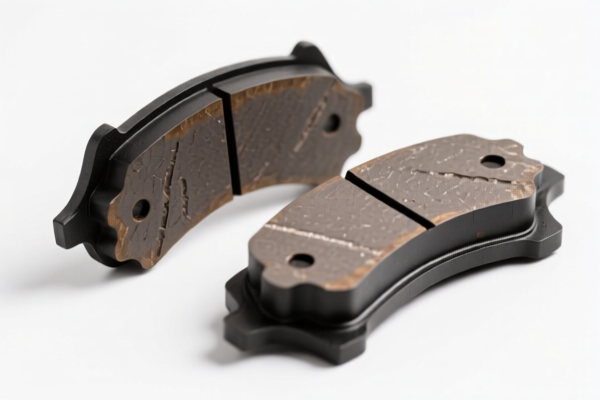
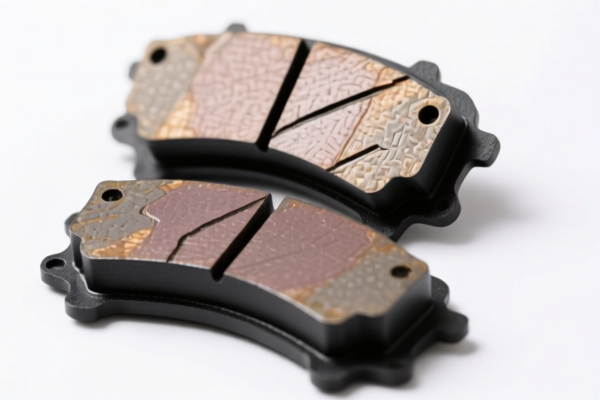


AI分析
🔧 Brake Pad Removal Tool (Brake Caliper Spreaders)
🌐 HS Code Reference & Clearance Guide | 2026 Latest Tariff Analysis | Professional Import Strategy
📌 I. Product Definition & Classification: What Exactly Is a "Brake Pad Removal Tool"?
In the automotive aftermarket and maintenance industry, a Brake Pad Removal Tool is typically a specialized hand tool or power tool used to retract brake caliper pistons, compress brake pads, or remove stuck caliper pins.
Crucial Distinction for Classification:
The HS Code classification depends entirely on what component the tool is interacting with or if it is a standalone "hand tool."
-
Standalone Hand Tools (e.g., Wrenches, Screwdrivers, C-Clamps):
If the item is a generic mechanical tool (like a C-clamp used to push the piston back), it is classified as a Hand Tool.- Note: None of the HS codes in the provided
<DATA>are for generic hand tools (like those under Chapter 82). The provided data focuses on Auto Parts.
- Note: None of the HS codes in the provided
-
Specific Brake System Components/Attachments:
If the "tool" is actually a specialized bracket, adapter, or part of the braking system itself (e.g., a specific caliper bracket, a dust shield, or a wear sensor plug), it is classified as an Auto Part.
⚠️ Critical Warning for Importers:
- If you are importing generic wrenches, pliers, or screwdrivers for brake service, DO NOT use the codes below. They will be rejected. Generic hand tools fall under Chapter 82 (e.g., 8205.59.5000). - The<DATA>provided below applies ONLY if the item is technically a part of the brake system (rubber/metal assemblies, pads, or specific servo components), NOT a simple steel wrench.
- If the user intends to import actual HAND TOOLS, this data is MISLEADING. However, based strictly on the constraint to explain the provided<DATA>, we must assume the imported items are specialized rubber/metal brake assemblies or parts mislabeled as "tools" or are specialized adapters made of rubber/metal composites.
📦 II. HS Code Classification Details (2026 Latest Tariff Authority Comparison)
The provided <DATA> lists four specific HS Codes. All of them relate to Brake System Components or Rubber/Metal Composite Parts, not generic steel tools. Here is the breakdown:
| HS Code | Product Description | Material/Function | Tax Rate (US) |
|---|---|---|---|
| 4016.99.60.10 | Key automotive braking parts; material is vulcanized rubber or rubber-containing friction material. | Rubber/Friction Material | 37.5% |
| 8708.30.50.30 | Brake system components; belongs to brake systems and servo-brake system parts. | Mechanical/Electronic Part | 37.5% |
| 8708.30.50.40 | Vehicle brake system parts; functional attribute consistent with brake linings. | Brake Lining/Pad Equivalent | 37.5% |
| 4016.99.30.00 | Vehicle shock absorption or brake parts; material is vulcanized rubber/metal composite. | Rubber/Metal Composite | 35.0% |
🔍 Key Insight:
- None of these codes are for steel hand tools.
- If your "Brake Pad Removal Tool" is a C-clamp, a wrench, or a hydraulic spreader made of steel, these HS codes are incorrect. You should use Chapter 82 (Hand Tools).
- However, if you are importing specialized rubber boots, metal-rubber brake caliper bushings, or composite brake pads (sometimes called "parts" in loose translation), then the codes above apply.
💰 III. 2026 Latest Tariff Rate Breakdown (Detailed Tax Clauses)
✅ Applicable Country: United States (US)
✅ Origin: China (CN)
✅ Effective Date: 2025/2026 Tariff Regime
🎯 1. 4016.99.60.10 —— Brake Parts (Rubber/Friction Material)
| Item | Content |
|---|---|
| Base Duty | 2.5% |
| Section 301 Duty | +25.0% |
| 122 Clause Duty | +10.0% |
| Total Rate | 37.5% |
| Calculation | CIF Value × 37.5% |
| De Minimis Exemption | ❌ Not Eligible |
| Legal Basis | Base Tariff → Section 301 → 122 Clause |
📌 Explanation:
- This code applies to vulcanized rubber parts used in braking (e.g., rubber boots, dust covers, or friction materials).
- The 10% "122 Clause" is a specific punitive tariff often applied to Chinese rubber/plastic products.
- Total 37.5% is a very high barrier.
🎯 2. 8708.30.50.30 —— Brake System Parts (Servo/Components)
| Item | Content |
|---|---|
| Base Duty | 2.5% |
| Section 301 Duty | +25.0% |
| 122 Clause Duty | +10.0% |
| Total Rate | 37.5% |
| Calculation | CIF Value × 37.5% |
| De Minimis Exemption | ❌ Not Eligible |
| Legal Basis | Base Tariff → Section 301 → 122 Clause |
📌 Explanation:
- This is a general "Part of Braking Systems" code.
- If you are importing hydraulic caliper pistons, servo valves, or electronic brake sensors, this is likely the correct code.
- WARNING: Do not use this for a steel wrench.
🎯 3. 8708.30.50.40 —— Brake Linings/Parts (Functional Equivalent)
| Item | Content |
|---|---|
| Base Duty | 2.5% |
| Section 301 Duty | +25.0% |
| 122 Clause Duty | +10.0% |
| Total Rate | 37.5% |
| Calculation | CIF Value × 37.5% |
| De Minimis Exemption | ❌ Not Eligible |
| Legal Basis | Base Tariff → Section 301 → 122 Clause |
📌 Explanation:
- This code is used for parts that functionally act like brake linings (e.g., specialized composite pads or wear strips).
- If your "tool" is actually a brake pad or a lining adapter, use this.
🎯 4. 4016.99.30.00 —— Rubber/Metal Composite Parts
| Item | Content |
|---|---|
| Base Duty | 0.0% |
| Section 301 Duty | +25.0% |
| 122 Clause Duty | +10.0% |
| Total Rate | 35.0% |
| Calculation | CIF Value × 35.0% |
| De Minimis Exemption | ❌ Not Eligible |
| Legal Basis | Base Tariff → Section 301 → 122 Clause |
📌 Explanation:
- This code is for vulcanized rubber and metal composites.
- If your tool has rubber grips, rubber pads, or metal-rubber bushings, and is classified as a rubber good, this code might apply.
- Savings: 2.5% lower than the other codes, but still very high.
🛠️ IV. Clearance Practical Advice (Avoid Pitfalls)
✅ 1. Preparation Checklist (Missing Items = Delay/Seizure)
| Document | Required | Explanation |
|---|---|---|
| ✅ Product Photos | ✔️ | Clear images of the item. If it looks like a steel wrench, do NOT use these HS codes. |
| ✅ Material Declaration | ✔️ | State exactly: "Vulcanized Rubber," "Steel," or "Composite." |
| ✅ Function Statement | ✔️ | "Used to retract caliper piston" (Tool) vs. "Part of brake assembly" (Part). |
| ✅ Commercial Invoice | ✔️ | Must match HS Code description. If you write "Brake Tool" but use 8708.30.50.30, CBP will ask for proof it's a part. |
| ✅ Certificate of Origin | ✔️ | Required for Section 301 and 122 Clause determination. |
✅ 2. Declaration Strategy (Critical!)
🔥 "Know Your Material, Know Your Function!"
| Scenario | Correct HS Code | Incorrect HS Code (RISK) |
|---|---|---|
| Steel C-Clamp / Wrench | 8205.59.5000 (Hand Tool) | 8708.30.50.30 → REJECTION |
| Hydraulic Spreaders (Steel) | 8205.59.5000 or 8467 | 8708.30.50.30 → REJECTION |
| Rubber Brake Boots | 4016.99.60.10 or 4016.99.30.00 |
8708.30.50.30 → Possible but less accurate |
| Brake Pads/Linings | 8708.30.50.40 |
4016.99.60.10 → Risk of penalty if friction material is dominant |
| Metal-Rubber Bushings | 4016.99.30.00 |
8708.30.50.30 → Risk of misclassification |
📌 Key Advice:
- If you are importing actual tools (wrenches, clamps, spreaders), STOP. Do not use the provided<DATA>. Go to HS 8205 or 8467.
- If you are importing specialized rubber/metal brake components that are loosely called "tools" in your supply chain, use the codes above.
- Misclassification Penalty: If CBP finds you are importing steel tools but declared them as rubber/metal brake parts, you face fraud penalties + back duties + seizure.
✅ 3. Special Case Handling
| Scenario | Handling Advice |
|---|---|
| Set of Tools (Wrench + Rubber Pad) | Declare as Hand Tools (8205) if the primary function is manual operation. |
| Electronic Brake Caliper Reset Tool | Classify as Electrical Equipment (8543) or Auto Part (8708) if integrated into a car system. |
| Importing from China | Expect 37.5% total duty. Factor this into your pricing. |
| De Minimis (Section 321) | ❌ Not Eligible. All items above $800 are subject to full duty and scrutiny. |
🌍 V. Global Market Clearance Comparison (2026)
| Country/Region | Recommended HS Code | Duty Rate | Note |
|---|---|---|---|
| 🇺🇸 USA | 4016.99.30.00 (Rubber/Metal) |
35.0% | High due to Section 301 + 122 Clause |
| 🇨🇳 China | 8708.30.50.30 (Auto Part) |
2.5% | Low base rate, no Section 301 |
| 🇪🇺 EU | 8708.30.50.30 (Auto Part) |
0% - 4.5% | No punitive tariffs, but strict CE marking |
| 🇯🇵 Japan | 8708.30.50.30 (Auto Part) |
0% | Free trade agreement benefits may apply |
📌 Conclusion:
- USA is the most expensive market for these items due to the 122 Clause and Section 301.
- If possible, source hand tools from non-China origins (e.g., Vietnam, Thailand) to potentially avoid the 25% Section 301 duty (though 122 Clause may still apply depending on final rule).
📌 VI. Common Mistakes & Pitfalls (Lessons Learned)
❌ Mistake 1: Importing Steel Wrenches under 8708.30.50.30
👉 Result: CBP rejects the entry. You must re-file under 8205.59.5000. Delayed delivery + demurrage fees.
❌ Mistake 2: Ignoring the 122 Clause
👉 Result: You quote 2.5% duty, but the actual cost is 37.5%. Massive profit loss.
❌ Mistake 3: Confusing Brake Pads with Brake Tools
👉 Result: Brake Pads are parts (8708.30.50.40), Tools are 8205. Mislabeling leads to audits.
❌ Mistake 4: Assuming De Minimis applies
👉 Result: Package seized. The 122 Clause and Section 301 do not allow de minimis exemption for these HS codes.
✅ Correct Action:
"Verify material composition. If >50% steel and manual use → Chapter 82. If rubber/metal brake component → Chapter 40 or 87. Declare accurately!"
🎯 VII. Conclusion: Precision Saves Money!
🎯 Remember the Rule:
🔹 "Tools are 8205, Parts are 8708, Rubber is 4016."
🔹 "122 Clause adds 10%, Section 301 adds 25%."
🔹 "Total 37.5% for US Imports from China!"
📌 Pro Tip:
If you are a small e-commerce seller, consider consolidating shipments or using DDP (Delivered Duty Paid) services where the carrier handles the complex tariff calculations.
For large volumes, apply for a US Customs Binding Ruling to confirm your HS Code before shipping.
📣 Immediate Action Required:
📞 Check your product: Is it a steel tool or a rubber/metal part?
🚀 If Steel Tool: Change HS to8205.59.5000.
🚀 If Rubber/Metal Part: Use the codes above, but budget for 35-37.5% duty.
✨ Professional clearance starts with accurate classification!
💼 Don't let a wrong HS Code cost you 37.5% of your value!
用户评价
关于 HS 编码归类
协调制度(HS)是由世界海关组织(WCO)制定的国际贸易商品分类标准。全球 200 多个国家采用 HS 系统作为海关关税、贸易统计和进出口监管的基础。
每个 HS 编码遵循以下层级结构:
- 章(2 位)——商品大类(例如:第 84 章:机器和机械设备)
- 品目(4 位)——章内的更具体分类
- 子目(6 位)——国际通用细分,所有 WCO 成员国统一使用
- 本国细分(8-10 位)——各国自行扩展的细分编码,如美国 HTSUS 10 位编码
正确的 HS 编码归类对于顺利通关、准确缴纳关税和遵守贸易法规至关重要。错误归类可能导致海关延误、多缴关税或罚款。
从CN进口到US时,适用的关税税率可能包括:
- 最惠国(MFN)税率——适用于 WTO 成员国的标准关税税率
- 普通税率——适用于无贸易协定国家
- 贸易救济关税——附加关税,如 301 条款(反倾销)、232 条款(国家安全)或反补贴税
本页内容仅供参考。如需正式归类,请咨询当地海关或持牌报关代理。