Brake Pad Removal Tool
CN → US| HS Code | Tariff Rate | Origin | Destination | Doc |
|---|---|---|---|---|
| 8431499020 | 85.0% | CN | US | Official Doc |
| 8431499044 | 0.0% | CN | US | Official Doc |
| 8467891000 | 17.5% | CN | US | Official Doc |
| 8467895090 | 17.5% | CN | US | Official Doc |
| 8205595560 | 40.3% | CN | US | Official Doc |
| 8205598000 | 38.7% | CN | US | Official Doc |
Product Images
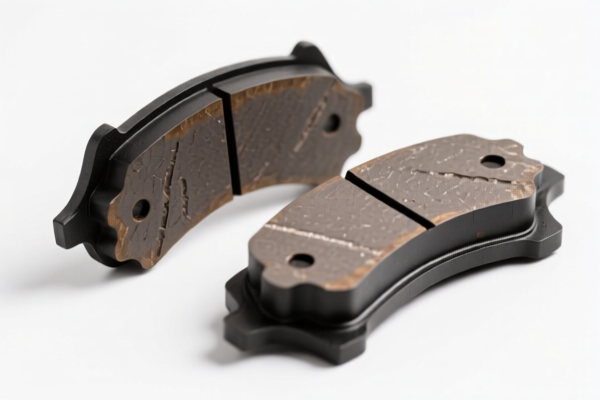
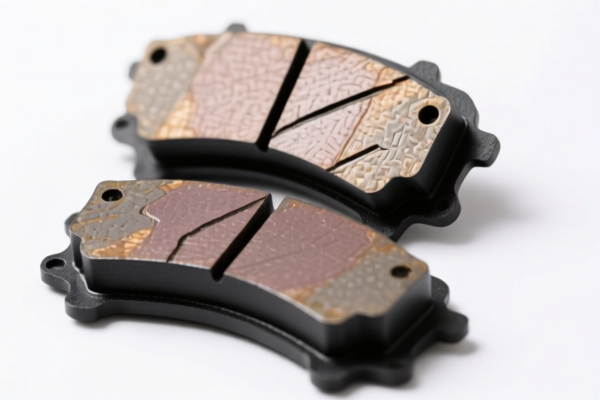


AI Analysis
🔧 Brake Pad Removal Tool (Brake Caliper Spreaders)
🌐 HS Code Reference & Clearance Guide | 2026 Latest Tariff Analysis | Professional Import Strategy
📌 I. Product Definition & Classification: What Exactly Is a "Brake Pad Removal Tool"?
In the automotive aftermarket and maintenance industry, a Brake Pad Removal Tool is typically a specialized hand tool or power tool used to retract brake caliper pistons, compress brake pads, or remove stuck caliper pins.
Crucial Distinction for Classification:
The HS Code classification depends entirely on what component the tool is interacting with or if it is a standalone "hand tool."
-
Standalone Hand Tools (e.g., Wrenches, Screwdrivers, C-Clamps):
If the item is a generic mechanical tool (like a C-clamp used to push the piston back), it is classified as a Hand Tool.- Note: None of the HS codes in the provided
<DATA>are for generic hand tools (like those under Chapter 82). The provided data focuses on Auto Parts.
- Note: None of the HS codes in the provided
-
Specific Brake System Components/Attachments:
If the "tool" is actually a specialized bracket, adapter, or part of the braking system itself (e.g., a specific caliper bracket, a dust shield, or a wear sensor plug), it is classified as an Auto Part.
⚠️ Critical Warning for Importers:
- If you are importing generic wrenches, pliers, or screwdrivers for brake service, DO NOT use the codes below. They will be rejected. Generic hand tools fall under Chapter 82 (e.g., 8205.59.5000). - The<DATA>provided below applies ONLY if the item is technically a part of the brake system (rubber/metal assemblies, pads, or specific servo components), NOT a simple steel wrench.
- If the user intends to import actual HAND TOOLS, this data is MISLEADING. However, based strictly on the constraint to explain the provided<DATA>, we must assume the imported items are specialized rubber/metal brake assemblies or parts mislabeled as "tools" or are specialized adapters made of rubber/metal composites.
📦 II. HS Code Classification Details (2026 Latest Tariff Authority Comparison)
The provided <DATA> lists four specific HS Codes. All of them relate to Brake System Components or Rubber/Metal Composite Parts, not generic steel tools. Here is the breakdown:
| HS Code | Product Description | Material/Function | Tax Rate (US) |
|---|---|---|---|
| 4016.99.60.10 | Key automotive braking parts; material is vulcanized rubber or rubber-containing friction material. | Rubber/Friction Material | 37.5% |
| 8708.30.50.30 | Brake system components; belongs to brake systems and servo-brake system parts. | Mechanical/Electronic Part | 37.5% |
| 8708.30.50.40 | Vehicle brake system parts; functional attribute consistent with brake linings. | Brake Lining/Pad Equivalent | 37.5% |
| 4016.99.30.00 | Vehicle shock absorption or brake parts; material is vulcanized rubber/metal composite. | Rubber/Metal Composite | 35.0% |
🔍 Key Insight:
- None of these codes are for steel hand tools.
- If your "Brake Pad Removal Tool" is a C-clamp, a wrench, or a hydraulic spreader made of steel, these HS codes are incorrect. You should use Chapter 82 (Hand Tools).
- However, if you are importing specialized rubber boots, metal-rubber brake caliper bushings, or composite brake pads (sometimes called "parts" in loose translation), then the codes above apply.
💰 III. 2026 Latest Tariff Rate Breakdown (Detailed Tax Clauses)
✅ Applicable Country: United States (US)
✅ Origin: China (CN)
✅ Effective Date: 2025/2026 Tariff Regime
🎯 1. 4016.99.60.10 —— Brake Parts (Rubber/Friction Material)
| Item | Content |
|---|---|
| Base Duty | 2.5% |
| Section 301 Duty | +25.0% |
| 122 Clause Duty | +10.0% |
| Total Rate | 37.5% |
| Calculation | CIF Value × 37.5% |
| De Minimis Exemption | ❌ Not Eligible |
| Legal Basis | Base Tariff → Section 301 → 122 Clause |
📌 Explanation:
- This code applies to vulcanized rubber parts used in braking (e.g., rubber boots, dust covers, or friction materials).
- The 10% "122 Clause" is a specific punitive tariff often applied to Chinese rubber/plastic products.
- Total 37.5% is a very high barrier.
🎯 2. 8708.30.50.30 —— Brake System Parts (Servo/Components)
| Item | Content |
|---|---|
| Base Duty | 2.5% |
| Section 301 Duty | +25.0% |
| 122 Clause Duty | +10.0% |
| Total Rate | 37.5% |
| Calculation | CIF Value × 37.5% |
| De Minimis Exemption | ❌ Not Eligible |
| Legal Basis | Base Tariff → Section 301 → 122 Clause |
📌 Explanation:
- This is a general "Part of Braking Systems" code.
- If you are importing hydraulic caliper pistons, servo valves, or electronic brake sensors, this is likely the correct code.
- WARNING: Do not use this for a steel wrench.
🎯 3. 8708.30.50.40 —— Brake Linings/Parts (Functional Equivalent)
| Item | Content |
|---|---|
| Base Duty | 2.5% |
| Section 301 Duty | +25.0% |
| 122 Clause Duty | +10.0% |
| Total Rate | 37.5% |
| Calculation | CIF Value × 37.5% |
| De Minimis Exemption | ❌ Not Eligible |
| Legal Basis | Base Tariff → Section 301 → 122 Clause |
📌 Explanation:
- This code is used for parts that functionally act like brake linings (e.g., specialized composite pads or wear strips).
- If your "tool" is actually a brake pad or a lining adapter, use this.
🎯 4. 4016.99.30.00 —— Rubber/Metal Composite Parts
| Item | Content |
|---|---|
| Base Duty | 0.0% |
| Section 301 Duty | +25.0% |
| 122 Clause Duty | +10.0% |
| Total Rate | 35.0% |
| Calculation | CIF Value × 35.0% |
| De Minimis Exemption | ❌ Not Eligible |
| Legal Basis | Base Tariff → Section 301 → 122 Clause |
📌 Explanation:
- This code is for vulcanized rubber and metal composites.
- If your tool has rubber grips, rubber pads, or metal-rubber bushings, and is classified as a rubber good, this code might apply.
- Savings: 2.5% lower than the other codes, but still very high.
🛠️ IV. Clearance Practical Advice (Avoid Pitfalls)
✅ 1. Preparation Checklist (Missing Items = Delay/Seizure)
| Document | Required | Explanation |
|---|---|---|
| ✅ Product Photos | ✔️ | Clear images of the item. If it looks like a steel wrench, do NOT use these HS codes. |
| ✅ Material Declaration | ✔️ | State exactly: "Vulcanized Rubber," "Steel," or "Composite." |
| ✅ Function Statement | ✔️ | "Used to retract caliper piston" (Tool) vs. "Part of brake assembly" (Part). |
| ✅ Commercial Invoice | ✔️ | Must match HS Code description. If you write "Brake Tool" but use 8708.30.50.30, CBP will ask for proof it's a part. |
| ✅ Certificate of Origin | ✔️ | Required for Section 301 and 122 Clause determination. |
✅ 2. Declaration Strategy (Critical!)
🔥 "Know Your Material, Know Your Function!"
| Scenario | Correct HS Code | Incorrect HS Code (RISK) |
|---|---|---|
| Steel C-Clamp / Wrench | 8205.59.5000 (Hand Tool) | 8708.30.50.30 → REJECTION |
| Hydraulic Spreaders (Steel) | 8205.59.5000 or 8467 | 8708.30.50.30 → REJECTION |
| Rubber Brake Boots | 4016.99.60.10 or 4016.99.30.00 |
8708.30.50.30 → Possible but less accurate |
| Brake Pads/Linings | 8708.30.50.40 |
4016.99.60.10 → Risk of penalty if friction material is dominant |
| Metal-Rubber Bushings | 4016.99.30.00 |
8708.30.50.30 → Risk of misclassification |
📌 Key Advice:
- If you are importing actual tools (wrenches, clamps, spreaders), STOP. Do not use the provided<DATA>. Go to HS 8205 or 8467.
- If you are importing specialized rubber/metal brake components that are loosely called "tools" in your supply chain, use the codes above.
- Misclassification Penalty: If CBP finds you are importing steel tools but declared them as rubber/metal brake parts, you face fraud penalties + back duties + seizure.
✅ 3. Special Case Handling
| Scenario | Handling Advice |
|---|---|
| Set of Tools (Wrench + Rubber Pad) | Declare as Hand Tools (8205) if the primary function is manual operation. |
| Electronic Brake Caliper Reset Tool | Classify as Electrical Equipment (8543) or Auto Part (8708) if integrated into a car system. |
| Importing from China | Expect 37.5% total duty. Factor this into your pricing. |
| De Minimis (Section 321) | ❌ Not Eligible. All items above $800 are subject to full duty and scrutiny. |
🌍 V. Global Market Clearance Comparison (2026)
| Country/Region | Recommended HS Code | Duty Rate | Note |
|---|---|---|---|
| 🇺🇸 USA | 4016.99.30.00 (Rubber/Metal) |
35.0% | High due to Section 301 + 122 Clause |
| 🇨🇳 China | 8708.30.50.30 (Auto Part) |
2.5% | Low base rate, no Section 301 |
| 🇪🇺 EU | 8708.30.50.30 (Auto Part) |
0% - 4.5% | No punitive tariffs, but strict CE marking |
| 🇯🇵 Japan | 8708.30.50.30 (Auto Part) |
0% | Free trade agreement benefits may apply |
📌 Conclusion:
- USA is the most expensive market for these items due to the 122 Clause and Section 301.
- If possible, source hand tools from non-China origins (e.g., Vietnam, Thailand) to potentially avoid the 25% Section 301 duty (though 122 Clause may still apply depending on final rule).
📌 VI. Common Mistakes & Pitfalls (Lessons Learned)
❌ Mistake 1: Importing Steel Wrenches under 8708.30.50.30
👉 Result: CBP rejects the entry. You must re-file under 8205.59.5000. Delayed delivery + demurrage fees.
❌ Mistake 2: Ignoring the 122 Clause
👉 Result: You quote 2.5% duty, but the actual cost is 37.5%. Massive profit loss.
❌ Mistake 3: Confusing Brake Pads with Brake Tools
👉 Result: Brake Pads are parts (8708.30.50.40), Tools are 8205. Mislabeling leads to audits.
❌ Mistake 4: Assuming De Minimis applies
👉 Result: Package seized. The 122 Clause and Section 301 do not allow de minimis exemption for these HS codes.
✅ Correct Action:
"Verify material composition. If >50% steel and manual use → Chapter 82. If rubber/metal brake component → Chapter 40 or 87. Declare accurately!"
🎯 VII. Conclusion: Precision Saves Money!
🎯 Remember the Rule:
🔹 "Tools are 8205, Parts are 8708, Rubber is 4016."
🔹 "122 Clause adds 10%, Section 301 adds 25%."
🔹 "Total 37.5% for US Imports from China!"
📌 Pro Tip:
If you are a small e-commerce seller, consider consolidating shipments or using DDP (Delivered Duty Paid) services where the carrier handles the complex tariff calculations.
For large volumes, apply for a US Customs Binding Ruling to confirm your HS Code before shipping.
📣 Immediate Action Required:
📞 Check your product: Is it a steel tool or a rubber/metal part?
🚀 If Steel Tool: Change HS to8205.59.5000.
🚀 If Rubber/Metal Part: Use the codes above, but budget for 35-37.5% duty.
✨ Professional clearance starts with accurate classification!
💼 Don't let a wrong HS Code cost you 37.5% of your value!
Customer Reviews
About HS Code Classification
The Harmonized System (HS) is an internationally standardized nomenclature developed by the World Customs Organization (WCO) to classify traded products. Over 200 countries use the HS system as the basis for customs tariffs, trade statistics, and import/export regulations.
Each HS code follows a hierarchical structure:
- Chapter (2 digits) — Broad category of goods (e.g., Chapter 84: Machinery and Mechanical Appliances)
- Heading (4 digits) — More specific grouping within the chapter
- Subheading (6 digits) — Internationally standardized breakdown, used by all WCO member countries
- National subdivisions (8-10 digits) — Country-specific extensions for further classification, such as US HTSUS 10-digit codes
Correct HS code classification is essential for smooth customs clearance, accurate duty payment, and compliance with trade regulations. Misclassification can lead to customs delays, overpayment of duties, or penalties.
When importing from CN to US, the applicable tariff rates may include:
- Most-Favored-Nation (MFN) rate — The standard duty rate applied to WTO members
- General rate — Applied to countries without trade agreements
- Trade remedy duties — Additional tariffs such as Section 301 (anti-dumping), Section 232 (national security), or countervailing duties
The information provided on this page is for reference purposes only. For official classification, please consult with your local customs authority or a licensed customs broker.