Buffalo Full Grain Dry Leather
CN → US| HS编码 | 关税税率 | 原产国 | 目的国 | 文档 |
|---|---|---|---|---|
| 4114100000 | 38.2% | CN | US | 官方文档 |
| 4114207000 | 36.6% | CN | US | 官方文档 |
| 4104113060 | 12.4% | CN | US | 官方文档 |
| 4107114000 | 12.5% | CN | US | 官方文档 |
| 4104413060 | 12.4% | CN | US | 官方文档 |
商品图片
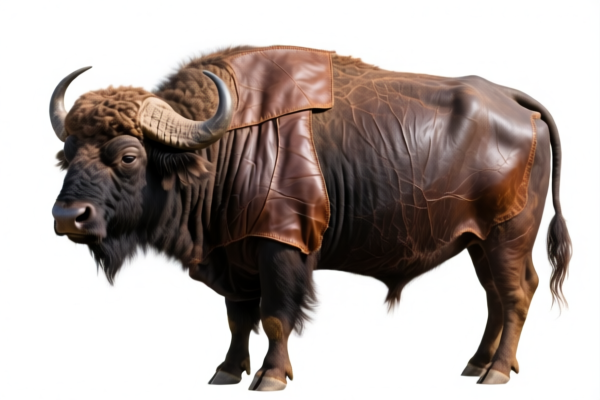
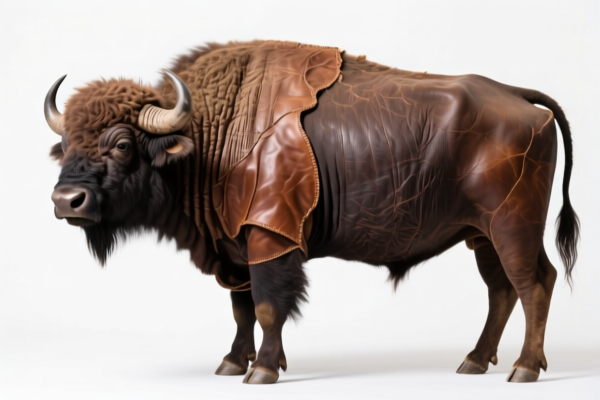
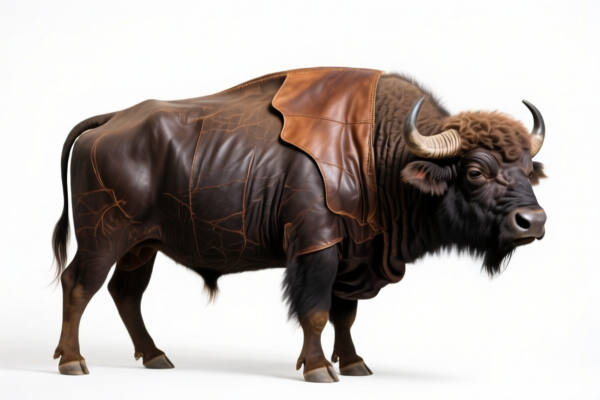
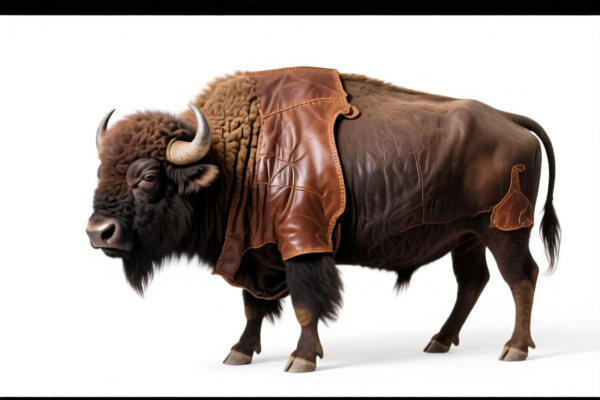
AI分析
🐃 Buffalo Full Grain Dry Leather (Water Buffalo Leather)
🌐 HS Code Reference & Customs Clearance Guide | 2026 Tariff Analysis | Professional Entry Strategies
📌 Part 1: Product Definition & Classification — Do You Truly Understand "Leather"?
Buffalo Full Grain Dry Leather, specifically from water buffalo (Bubalus bubalis), is a premium raw material widely used in craftsmanship, high-end accessories, and artisanal goods. In international trade, its classification is not monolithic. It depends heavily on the specific finish (paint/metallized vs. plain) and the degree of processing.
Key Distinction: * Tanned/Retanned Leather (Chapter 41.04/41.07): Most common "dry leather" used for crafts. It is tanned but may or may not be further processed (e.g., pigmented, corrected grain). * Lacquer/Metallized Leather (Chapter 41.14): If the leather has a surface coating of lacquer or is metallized, it falls into a different, often higher-tariff category.
⚠️ Critical Classification Point:
- If it is plain tanned leather (even if full grain), it typically falls under 4104 or 4107.
- If it has a specific lacquer or metal layer, it falls under 4114.
- The tariff impact varies drastically from 12.4% to 38.2% based on this single feature.
📦 Part 2: HS Code Classification Matrix (2026 Authoritative Mapping)
Based on the provided data for Water Buffalo Full Grain Dry Leather, here are the valid HS Codes and their corresponding tax structures.
| HS Code | Product Description & Match Criteria | Total Tax Rate | Tax Composition (US Import from CN) |
|---|---|---|---|
4104.11.30.60 |
Water Buffalo Full Grain Leather Matches "Unmanufactured or minimally processed leather." Ideal for plain tanned, no heavy coating. |
12.4% | Base: 2.4% Section 301: 0.0% 122-Clause: 10% |
4107.11.40.00 |
Water Buffalo Full Grain Leather Matches "Fully processed, full grain, hair-off." Standard tanned leather for general craft use. |
12.5% | Base: 2.5% Section 301: 0.0% 122-Clause: 10% |
4104.41.30.60 |
Water Buffalo Full Grain Leather Matches "Other Bovine Leather" (Excluding sheep/goat). Broad category for tanned buffalo hides. |
12.4% | Base: 2.4% Section 301: 0.0% 122-Clause: 10% |
4114.10.00.00 |
Water Buffalo Full Grain Leather Matches "Leather with surface coating." Used if painted, pigmented, or heavily finished. |
38.2% | Base: 3.2% Section 301: 25.0% 122-Clause: 10% |
4114.20.70.00 |
Water Buffalo Full Grain Leather Matches "Lacquered or Metallized Leather." Used if shiny, plastic-coated, or metalized. |
36.6% | Base: 1.6% Section 301: 25.0% 122-Clause: 10% |
🔍 Key Insight:
- The 12.4%–12.5% tier applies to standard tanned leather.
- The 36.6%–38.2% tier applies if the leather is finished with lacquer, metal, or heavy paint.
- Section 301 Tariff (25%) is the deciding factor: It is waived (0%) for plain leather but active (25%) for coated/lacquered leather.
💰 Part 3: Tariff Rate Breakdown (Detailed Tax Clauses)
✅ Applicable Market: United States (US)
✅ Origin: China (CN)
✅ Product: Buffalo Full Grain Dry Leather
🎯 Tier 1: Standard Tanned Leather (Codes 4104.11.30.60, 4107.11.40.00, 4104.41.30.60)
| Item | Detail |
|---|---|
| Base Duty | 2.4% – 2.5% (Ad Valorem, per USITC Section 9903.01.00) |
| Section 301 Tariff | 0.0% (Exempt for plain tanned leather under specific subheadings) |
| Section 122 Tariff | 10.0% (Applicable to specific leather articles under US Trade Promotion Authority) |
| Total Effective Rate | 12.4% – 12.5% |
| Calculation | CIF Value × 12.4% (or 12.5%) |
| De Minimis Eligibility | ❌ No (Leather goods are generally excluded from de minimis treatment under current enforcement) |
📌 Explanation:
- The 0% Section 301 rate is a significant advantage. This exemption applies because the leather is not "processed" in a way that triggers the 301 list for coated articles.
- The 10% Section 122 rate is a legacy trade remedy tariff that remains applicable to certain leather products.
🎯 Tier 2: Coated/Lacquered/Metallized Leather (Codes 4114.10.00.00, 4114.20.70.00)
| Item | Detail |
|---|---|
| Base Duty | 1.6% – 3.2% (Varies by lacquer/metallized subtype) |
| Section 301 Tariff | 25.0% (Full 301 tariff applies to lacquered/metallized leather) |
| Section 122 Tariff | 10.0% |
| Total Effective Rate | 36.6% – 38.2% |
| Calculation | CIF Value × 36.6% (or 38.2%) |
| De Minimis Eligibility | ❌ No |
📌 Explanation:
- The 25% Section 301 tariff is the primary cost driver.
- Any surface coating (paint, polyurethane, metallic finish) shifts the product from Chapter 41.04/41.07 to Chapter 41.14, triggering the full 301 penalty.
- Cost Difference: A $10,000 shipment could cost $1,240 vs. $3,820 in duties depending on the finish.
🛠️ Part 4: Customs Clearance Practical Advice
✅ 1. Essential Documentation Checklist
| Document | Required? | Purpose |
|---|---|---|
| Commercial Invoice | ✅ Yes | Must clearly state: "Water Buffalo Full Grain Leather," material composition, and tanning method. |
| Product Specifications | ✅ Yes | Detail the finish: Is it plain, pigmented, lacquered, or metallized? This determines the HS Code. |
| Photos of Surface | ✅ Yes | High-res photos to prove whether there is a coating. Critical for avoiding misclassification. |
| Tanning Certificate | ✅ Yes | Proves the leather is tanned (not raw hide) and specifies the type (vegetable, chrome, etc.). |
| Packing List | ✅ Yes | Weight, dimensions, and number of hides/sheets. |
✅ 2. Classification Strategy (The "Coating" Test)
🔥 Golden Rule: "No Coating = 12.5% | Coating = 38.2%"
| Scenario | Recommended HS Code | Tariff Risk | Action |
|---|---|---|---|
| Plain Full Grain (Natural texture, no paint/metal) |
4107.11.40.00 or 4104.41.30.60 |
Low (12.5%) | Use these codes to save ~25% in duties. |
| Pigmented/Painted (Uniform color, no grain visible) |
4114.10.00.00 |
High (38.2%) | Declare accurately. Do not try to "hide" the coating. |
| Lacquered/Metallic (Shiny, plastic-like, foil) |
4114.20.70.00 |
High (36.6%) | Must declare as coated leather. |
| Corrected Grain (Embossed, sanded surface) |
4104.11.30.60 |
Low (12.4%) | If no heavy lacquer, still falls under 41.04. |
✅ 3. Common Pitfalls & Warnings
❌ Pitfall 1: Misclassifying Coated Leather as Plain
👉 Risk: If you declare 4107.11.40.00 for lacquered leather, customs will assess 38.2% - 12.5% = 25.7% additional duty + penalties.
👉 Solution: Provide surface photos and specification sheets proving the finish type.
❌ Pitfall 2: Using "Raw Hide" Terminology
👉 Risk: "Dry leather" implies tanned. If declared as "raw," it may be flagged for biological contamination checks (USDA/APHIS).
👉 Solution: Use terms like "Tanned Buffalo Leather" or "Full Grain Leather."
❌ Pitfall 3: Ignoring Section 122 Tariff
👉 Risk: Some brokers forget the 10% Section 122 duty, leading to underpayment.
👉 Solution: Ensure the broker applies the 10% add-on to all leather HS codes in this dataset.
🌍 Part 5: Global Market Comparison (Brief)
| Market | HS Code | Estimated Tariff (China Origin) | Notes |
|---|---|---|---|
| 🇺🇸 USA | 4107.11.40.00 |
12.5% | Low duty due to 301 exemption on plain leather. |
| 🇺🇸 USA | 4114.10.00.00 |
38.2% | High duty due to 301 tax on coated leather. |
| 🇪🇺 EU | Various | 4% – 12% | No Section 301. Check specific EU TARIC codes. |
| 🇨🇳 China | Various | 8% – 10% | Import tariff for leather into China. |
📌 Conclusion:
- The US market is highly sensitive to the "finish" of the leather.
- Plain Full Grain is tariff-efficient (~12.5%).
- Coated/Lacquered is tariff-punitive (~38%).
📌 Part 6: Final Recommendations for Importers
- Verify the Finish: Before shipping, confirm with your supplier if the leather has any lacquer, metal layer, or heavy pigment. If it’s "natural" or "pigmented only" (without plastic coating), aim for 4107.11.40.00.
- Pre-Ruling Application: If your leather is on the borderline (e.g., lightly pigmented), apply for a US CBP Advance Ruling. This provides legal certainty and protects against retroactive duties.
- Document the Tanning Process: Keep records of the tanning method (chrome vs. vegetable) to support your classification under Chapter 41.04/41.07.
- Avoid "De Minimis" Claims: Do not attempt to split shipments into small packages to avoid duties. Leather is generally not eligible for de minimis treatment in current US enforcement.
🎯 Summary: The Bottom Line
🎯 Remember:
🔹 Plain Buffalo Leather → HS 4107.11.40.00 → 12.5% Total Tax
🔹 Lacquered/Metal Buffalo Leather → HS 4114.10.00.00 → 38.2% Total Tax
🚀 Pro Tip:
If you are using buffalo leather for crafts where appearance is critical, consider if the 25.7% duty difference justifies the cost of a premium finish. For raw material processing, plain leather is significantly more cost-effective.
✨ Professional Clearance Starts with Precise Classification!
💼 Your Cost Margin Depends on This HS Code Choice!
用户评价
关于 HS 编码归类
协调制度(HS)是由世界海关组织(WCO)制定的国际贸易商品分类标准。全球 200 多个国家采用 HS 系统作为海关关税、贸易统计和进出口监管的基础。
每个 HS 编码遵循以下层级结构:
- 章(2 位)——商品大类(例如:第 84 章:机器和机械设备)
- 品目(4 位)——章内的更具体分类
- 子目(6 位)——国际通用细分,所有 WCO 成员国统一使用
- 本国细分(8-10 位)——各国自行扩展的细分编码,如美国 HTSUS 10 位编码
正确的 HS 编码归类对于顺利通关、准确缴纳关税和遵守贸易法规至关重要。错误归类可能导致海关延误、多缴关税或罚款。
从CN进口到US时,适用的关税税率可能包括:
- 最惠国(MFN)税率——适用于 WTO 成员国的标准关税税率
- 普通税率——适用于无贸易协定国家
- 贸易救济关税——附加关税,如 301 条款(反倾销)、232 条款(国家安全)或反补贴税
本页内容仅供参考。如需正式归类,请咨询当地海关或持牌报关代理。