Buffalo Full Grain Dry Leather
CN → US| HS Code | Tariff Rate | Origin | Destination | Doc |
|---|---|---|---|---|
| 4114100000 | 38.2% | CN | US | Official Doc |
| 4114207000 | 36.6% | CN | US | Official Doc |
| 4104113060 | 12.4% | CN | US | Official Doc |
| 4107114000 | 12.5% | CN | US | Official Doc |
| 4104413060 | 12.4% | CN | US | Official Doc |
Product Images
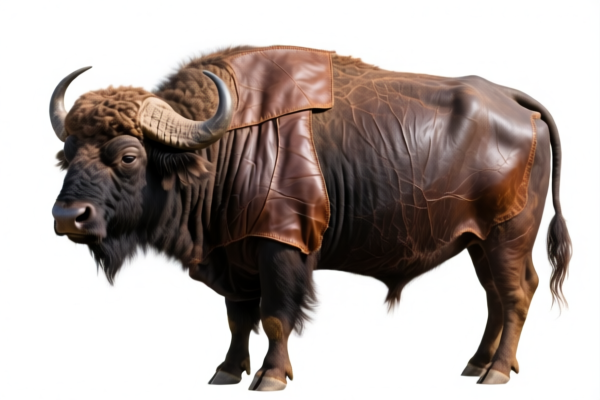
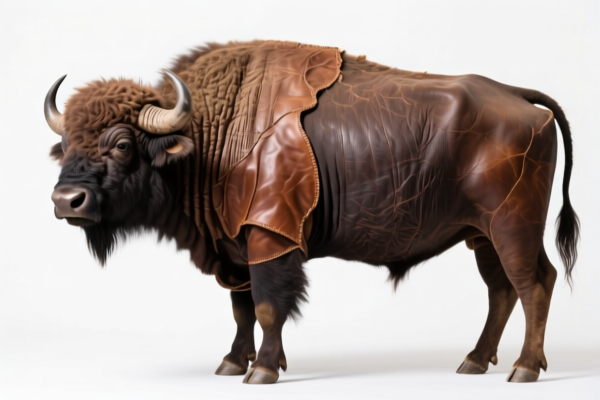
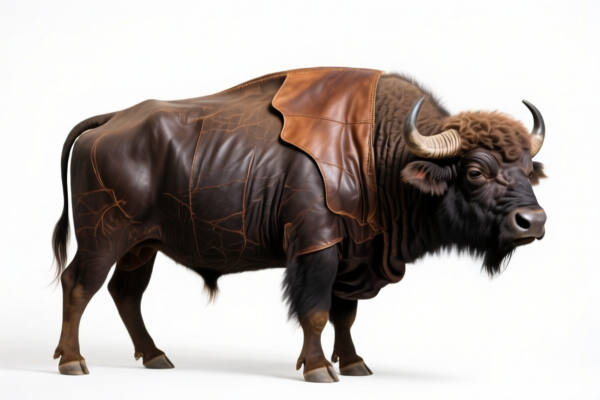
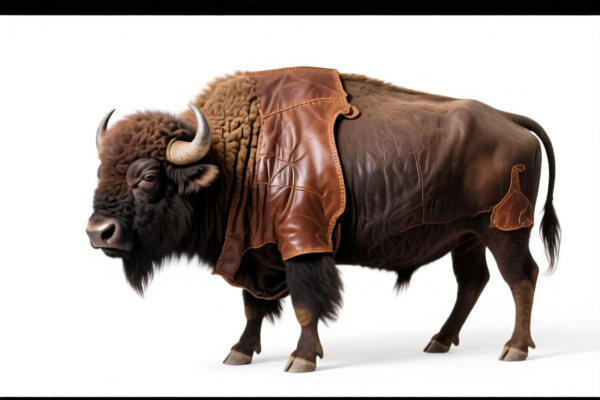
AI Analysis
🐃 Buffalo Full Grain Dry Leather (Water Buffalo Leather)
🌐 HS Code Reference & Customs Clearance Guide | 2026 Tariff Analysis | Professional Entry Strategies
📌 Part 1: Product Definition & Classification — Do You Truly Understand "Leather"?
Buffalo Full Grain Dry Leather, specifically from water buffalo (Bubalus bubalis), is a premium raw material widely used in craftsmanship, high-end accessories, and artisanal goods. In international trade, its classification is not monolithic. It depends heavily on the specific finish (paint/metallized vs. plain) and the degree of processing.
Key Distinction: * Tanned/Retanned Leather (Chapter 41.04/41.07): Most common "dry leather" used for crafts. It is tanned but may or may not be further processed (e.g., pigmented, corrected grain). * Lacquer/Metallized Leather (Chapter 41.14): If the leather has a surface coating of lacquer or is metallized, it falls into a different, often higher-tariff category.
⚠️ Critical Classification Point:
- If it is plain tanned leather (even if full grain), it typically falls under 4104 or 4107.
- If it has a specific lacquer or metal layer, it falls under 4114.
- The tariff impact varies drastically from 12.4% to 38.2% based on this single feature.
📦 Part 2: HS Code Classification Matrix (2026 Authoritative Mapping)
Based on the provided data for Water Buffalo Full Grain Dry Leather, here are the valid HS Codes and their corresponding tax structures.
| HS Code | Product Description & Match Criteria | Total Tax Rate | Tax Composition (US Import from CN) |
|---|---|---|---|
4104.11.30.60 |
Water Buffalo Full Grain Leather Matches "Unmanufactured or minimally processed leather." Ideal for plain tanned, no heavy coating. |
12.4% | Base: 2.4% Section 301: 0.0% 122-Clause: 10% |
4107.11.40.00 |
Water Buffalo Full Grain Leather Matches "Fully processed, full grain, hair-off." Standard tanned leather for general craft use. |
12.5% | Base: 2.5% Section 301: 0.0% 122-Clause: 10% |
4104.41.30.60 |
Water Buffalo Full Grain Leather Matches "Other Bovine Leather" (Excluding sheep/goat). Broad category for tanned buffalo hides. |
12.4% | Base: 2.4% Section 301: 0.0% 122-Clause: 10% |
4114.10.00.00 |
Water Buffalo Full Grain Leather Matches "Leather with surface coating." Used if painted, pigmented, or heavily finished. |
38.2% | Base: 3.2% Section 301: 25.0% 122-Clause: 10% |
4114.20.70.00 |
Water Buffalo Full Grain Leather Matches "Lacquered or Metallized Leather." Used if shiny, plastic-coated, or metalized. |
36.6% | Base: 1.6% Section 301: 25.0% 122-Clause: 10% |
🔍 Key Insight:
- The 12.4%–12.5% tier applies to standard tanned leather.
- The 36.6%–38.2% tier applies if the leather is finished with lacquer, metal, or heavy paint.
- Section 301 Tariff (25%) is the deciding factor: It is waived (0%) for plain leather but active (25%) for coated/lacquered leather.
💰 Part 3: Tariff Rate Breakdown (Detailed Tax Clauses)
✅ Applicable Market: United States (US)
✅ Origin: China (CN)
✅ Product: Buffalo Full Grain Dry Leather
🎯 Tier 1: Standard Tanned Leather (Codes 4104.11.30.60, 4107.11.40.00, 4104.41.30.60)
| Item | Detail |
|---|---|
| Base Duty | 2.4% – 2.5% (Ad Valorem, per USITC Section 9903.01.00) |
| Section 301 Tariff | 0.0% (Exempt for plain tanned leather under specific subheadings) |
| Section 122 Tariff | 10.0% (Applicable to specific leather articles under US Trade Promotion Authority) |
| Total Effective Rate | 12.4% – 12.5% |
| Calculation | CIF Value × 12.4% (or 12.5%) |
| De Minimis Eligibility | ❌ No (Leather goods are generally excluded from de minimis treatment under current enforcement) |
📌 Explanation:
- The 0% Section 301 rate is a significant advantage. This exemption applies because the leather is not "processed" in a way that triggers the 301 list for coated articles.
- The 10% Section 122 rate is a legacy trade remedy tariff that remains applicable to certain leather products.
🎯 Tier 2: Coated/Lacquered/Metallized Leather (Codes 4114.10.00.00, 4114.20.70.00)
| Item | Detail |
|---|---|
| Base Duty | 1.6% – 3.2% (Varies by lacquer/metallized subtype) |
| Section 301 Tariff | 25.0% (Full 301 tariff applies to lacquered/metallized leather) |
| Section 122 Tariff | 10.0% |
| Total Effective Rate | 36.6% – 38.2% |
| Calculation | CIF Value × 36.6% (or 38.2%) |
| De Minimis Eligibility | ❌ No |
📌 Explanation:
- The 25% Section 301 tariff is the primary cost driver.
- Any surface coating (paint, polyurethane, metallic finish) shifts the product from Chapter 41.04/41.07 to Chapter 41.14, triggering the full 301 penalty.
- Cost Difference: A $10,000 shipment could cost $1,240 vs. $3,820 in duties depending on the finish.
🛠️ Part 4: Customs Clearance Practical Advice
✅ 1. Essential Documentation Checklist
| Document | Required? | Purpose |
|---|---|---|
| Commercial Invoice | ✅ Yes | Must clearly state: "Water Buffalo Full Grain Leather," material composition, and tanning method. |
| Product Specifications | ✅ Yes | Detail the finish: Is it plain, pigmented, lacquered, or metallized? This determines the HS Code. |
| Photos of Surface | ✅ Yes | High-res photos to prove whether there is a coating. Critical for avoiding misclassification. |
| Tanning Certificate | ✅ Yes | Proves the leather is tanned (not raw hide) and specifies the type (vegetable, chrome, etc.). |
| Packing List | ✅ Yes | Weight, dimensions, and number of hides/sheets. |
✅ 2. Classification Strategy (The "Coating" Test)
🔥 Golden Rule: "No Coating = 12.5% | Coating = 38.2%"
| Scenario | Recommended HS Code | Tariff Risk | Action |
|---|---|---|---|
| Plain Full Grain (Natural texture, no paint/metal) |
4107.11.40.00 or 4104.41.30.60 |
Low (12.5%) | Use these codes to save ~25% in duties. |
| Pigmented/Painted (Uniform color, no grain visible) |
4114.10.00.00 |
High (38.2%) | Declare accurately. Do not try to "hide" the coating. |
| Lacquered/Metallic (Shiny, plastic-like, foil) |
4114.20.70.00 |
High (36.6%) | Must declare as coated leather. |
| Corrected Grain (Embossed, sanded surface) |
4104.11.30.60 |
Low (12.4%) | If no heavy lacquer, still falls under 41.04. |
✅ 3. Common Pitfalls & Warnings
❌ Pitfall 1: Misclassifying Coated Leather as Plain
👉 Risk: If you declare 4107.11.40.00 for lacquered leather, customs will assess 38.2% - 12.5% = 25.7% additional duty + penalties.
👉 Solution: Provide surface photos and specification sheets proving the finish type.
❌ Pitfall 2: Using "Raw Hide" Terminology
👉 Risk: "Dry leather" implies tanned. If declared as "raw," it may be flagged for biological contamination checks (USDA/APHIS).
👉 Solution: Use terms like "Tanned Buffalo Leather" or "Full Grain Leather."
❌ Pitfall 3: Ignoring Section 122 Tariff
👉 Risk: Some brokers forget the 10% Section 122 duty, leading to underpayment.
👉 Solution: Ensure the broker applies the 10% add-on to all leather HS codes in this dataset.
🌍 Part 5: Global Market Comparison (Brief)
| Market | HS Code | Estimated Tariff (China Origin) | Notes |
|---|---|---|---|
| 🇺🇸 USA | 4107.11.40.00 |
12.5% | Low duty due to 301 exemption on plain leather. |
| 🇺🇸 USA | 4114.10.00.00 |
38.2% | High duty due to 301 tax on coated leather. |
| 🇪🇺 EU | Various | 4% – 12% | No Section 301. Check specific EU TARIC codes. |
| 🇨🇳 China | Various | 8% – 10% | Import tariff for leather into China. |
📌 Conclusion:
- The US market is highly sensitive to the "finish" of the leather.
- Plain Full Grain is tariff-efficient (~12.5%).
- Coated/Lacquered is tariff-punitive (~38%).
📌 Part 6: Final Recommendations for Importers
- Verify the Finish: Before shipping, confirm with your supplier if the leather has any lacquer, metal layer, or heavy pigment. If it’s "natural" or "pigmented only" (without plastic coating), aim for 4107.11.40.00.
- Pre-Ruling Application: If your leather is on the borderline (e.g., lightly pigmented), apply for a US CBP Advance Ruling. This provides legal certainty and protects against retroactive duties.
- Document the Tanning Process: Keep records of the tanning method (chrome vs. vegetable) to support your classification under Chapter 41.04/41.07.
- Avoid "De Minimis" Claims: Do not attempt to split shipments into small packages to avoid duties. Leather is generally not eligible for de minimis treatment in current US enforcement.
🎯 Summary: The Bottom Line
🎯 Remember:
🔹 Plain Buffalo Leather → HS 4107.11.40.00 → 12.5% Total Tax
🔹 Lacquered/Metal Buffalo Leather → HS 4114.10.00.00 → 38.2% Total Tax
🚀 Pro Tip:
If you are using buffalo leather for crafts where appearance is critical, consider if the 25.7% duty difference justifies the cost of a premium finish. For raw material processing, plain leather is significantly more cost-effective.
✨ Professional Clearance Starts with Precise Classification!
💼 Your Cost Margin Depends on This HS Code Choice!
Customer Reviews
About HS Code Classification
The Harmonized System (HS) is an internationally standardized nomenclature developed by the World Customs Organization (WCO) to classify traded products. Over 200 countries use the HS system as the basis for customs tariffs, trade statistics, and import/export regulations.
Each HS code follows a hierarchical structure:
- Chapter (2 digits) — Broad category of goods (e.g., Chapter 84: Machinery and Mechanical Appliances)
- Heading (4 digits) — More specific grouping within the chapter
- Subheading (6 digits) — Internationally standardized breakdown, used by all WCO member countries
- National subdivisions (8-10 digits) — Country-specific extensions for further classification, such as US HTSUS 10-digit codes
Correct HS code classification is essential for smooth customs clearance, accurate duty payment, and compliance with trade regulations. Misclassification can lead to customs delays, overpayment of duties, or penalties.
When importing from CN to US, the applicable tariff rates may include:
- Most-Favored-Nation (MFN) rate — The standard duty rate applied to WTO members
- General rate — Applied to countries without trade agreements
- Trade remedy duties — Additional tariffs such as Section 301 (anti-dumping), Section 232 (national security), or countervailing duties
The information provided on this page is for reference purposes only. For official classification, please consult with your local customs authority or a licensed customs broker.