Buffalo Leather for Upholstery
CN → US| HS编码 | 关税税率 | 原产国 | 目的国 | 文档 |
|---|---|---|---|---|
| 4113903000 | 38.3% | CN | US | 官方文档 |
| 4205008000 | 35.0% | CN | US | 官方文档 |
| 4205001000 | 35.0% | CN | US | 官方文档 |
| 4107125000 | 12.8% | CN | US | 官方文档 |
| 4104415000 | 13.3% | CN | US | 官方文档 |
商品图片
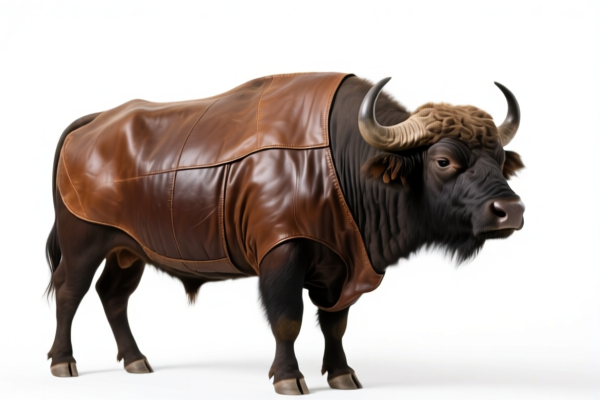
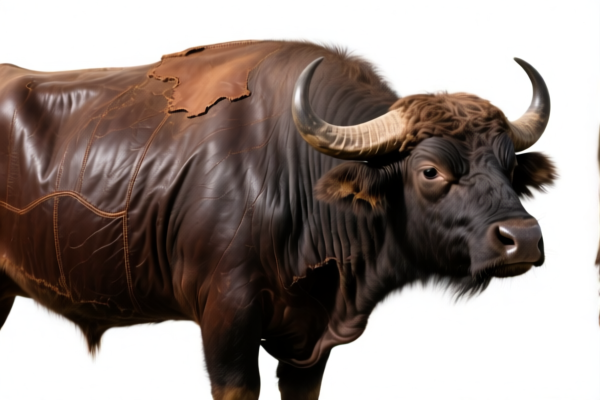
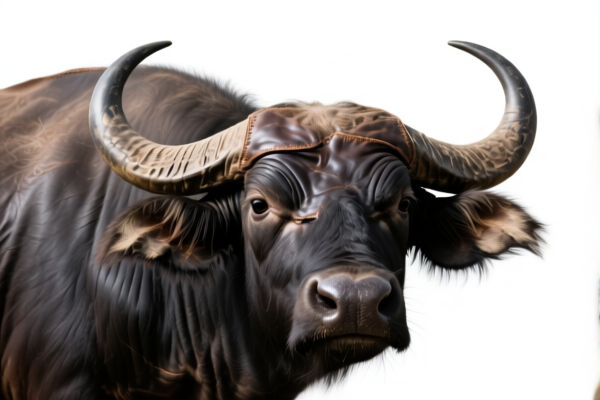
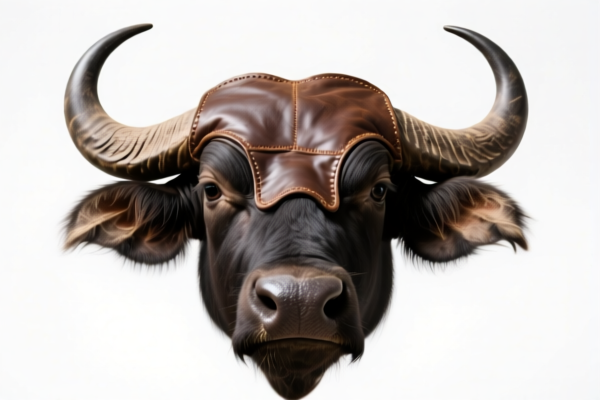
AI分析
🦬 Buffalo Leather for Upholstery (Auto Interior Components)
🌐 HS Code Reference & Customs Clearance Guide | 2026 Latest Tariff Analysis | Professional Clearance Strategy
📌 I. Product Definition & Classification: What Exactly is "Buffalo Leather for Upholstery"?
Buffalo Leather for Upholstery, particularly when destined for automotive interiors, represents a high-value material in the global trade of automotive parts. In international trade, it is broadly categorized based on its state of processing (tanned vs. finished) and form (raw hide/split vs. finished upholstery piece).
Key Distinctions: * Tanned/Split Leather (Raw Material): Unfinished buffalo leather splits or layers, intended for further processing (cutting, stitching, finishing) by the manufacturer. * Likely HS Codes: 4107 (Tanned leather) or 4113 (Prepared leather). * Finished Upholstery Parts (Ready-to-Install): Pre-cut, pre-stitched, or fully finished leather components specifically shaped for car seats, dashboards, or door panels. * Likely HS Codes: 4205 (Other articles of leather) or 4113 (Prepared leather for specific uses).
⚠️ Critical Classification Point:
- If the product is semi-finished material (e.g., split layers, raw tanned hide) → Often falls under Chapter 41 (4107, 4113).
- If the product is a finished article (e.g., stitched seat cover, dashboard panel) → Often falls under Chapter 42 (4205).
- Misclassification Risk: Declaring a finished leather seat cover as "raw leather" (HS 4107) may lead to lower duty but is incorrect and can trigger audits. Conversely, declaring raw leather as a "finished article" (HS 4205) may incur higher duties.
📦 II. HS Code Classification Details (2026 Latest Tariff Authority Mapping)
Based on the provided data, here are the exact HS codes, summaries, and tax structures for "Buffalo Leather for Upholstery."
| HS Code | Product Description & Summary | Match Basis | Total Tax Rate | Tax Detail Breakdown |
|---|---|---|---|---|
| 4113.90.30.00 | Buffalo leather upholstery components | Material matches & Form matches | 38.3% | Base Tariff: 3.3% + Section 301 Tariff: 25.0% + Section 122 Tariff: 10% |
| 4205.00.80.00 | Buffalo leather upholstery components | Explicitly contains buffalo leather & classified as other leather articles | 35.0% | Base Tariff: 0.0% + Section 301 Tariff: 25.0% + Section 122 Tariff: 10% |
| 4205.00.10.00 | Buffalo leather upholstery components | Contains buffalo leather & classified as other articles | 35.0% | Base Tariff: 0.0% + Section 301 Tariff: 25.0% + Section 122 Tariff: 10% |
| 4107.12.50.00 | Buffalo leather split leather for auto interior accessories | Material, Form, and Use match | 12.8% | Base Tariff: 2.8% + Section 301 Tariff: 0.0% + Section 122 Tariff: 10% |
| 4104.41.50.00 | Buffalo leather split leather for auto interior accessories | Material is buffalo leather & Form is split leather | 13.3% | Base Tariff: 3.3% + Section 301 Tariff: 0.0% + Section 122 Tariff: 10% |
| 4107.92.50.00 | Buffalo leather split leather for auto interior accessories | Material, Form, and Use match | 12.8% | Base Tariff: 2.8% + Section 301 Tariff: 0.0% + Section 122 Tariff: 10% |
🔍 Key Insight:
- Chapter 41 (4107, 4113) codes represent raw/semi-finished leather (e.g., splits, tanned hides). These have lower base tariffs but are subject to the 122 Tariff (10%) and potentially Section 301 (25%) depending on the specific subheading.
- Chapter 42 (4205) codes represent finished leather articles (e.g., stitched parts). These have 0% base tariff but are subject to the same Section 301 (25%) and 122 Tariff (10%), resulting in a 35% total rate.
- Critical Note: Some Chapter 41 codes (4107.12.50.00, 4107.92.50.00) show 0% Section 301 Tariff, leading to a much lower total rate (12.8%). This suggests these specific split leather imports may be exempt from Section 301, likely due to specific trade agreements or exclusions. Always verify exemption status.
💰 III. 2026 Latest Tariff Rate Breakdown (Including Surcharges & Policy Additions)
✅ Applicable Country: United States (US)
✅ Country of Origin: China (CN)
✅ Effective Date: As per 2026 tariff rules (including subsequent imports)
🎯 1. 4107.12.50.00 & 4107.92.50.00 — Buffalo Leather Split Leather for Auto Interior Accessories (Lowest Tax Option)
| Item | Content |
|---|---|
| Base Tariff | 2.8% (ad valorem) |
| USITC Surcharge (Section 301) | 0.0% (Exempt or not applicable for this specific split leather category) |
| Section 122 Surcharge | +10% (Targeting China/Hong Kong products) |
| Total Tax Rate | 12.8% |
| Tax Calculation | CIF Value × 12.8% |
| De Minimis Eligibility | ❌ No (deny_de_minimis) |
| Legal Basis Path | USITC:4107.12.50.00 → FOOTNOTE:122 → IEEPA:122 |
📌 Explanation:
- The 0% Section 301 tariff is a crucial advantage. This likely applies to split leather (layered hides) rather than full grain or finished leather articles.
- The 10% Section 122 tariff is mandatory for China-origin goods.
- Total 12.8% is significantly lower than the 35%+ rates for finished leather articles.
🎯 2. 4104.41.50.00 — Buffalo Leather Split Leather for Auto Interior Accessories
| Item | Content |
|---|---|
| Base Tariff | 3.3% (ad valorem) |
| USITC Surcharge (Section 301) | 0.0% |
| Section 122 Surcharge | +10% |
| Total Tax Rate | 13.3% |
| Tax Calculation | CIF Value × 13.3% |
| De Minimis Eligibility | ❌ No |
| Legal Basis Path | USITC:4104.41.50.00 → FOOTNOTE:122 → IEEPA:122 |
📌 Note:
- Slightly higher base tariff (3.3% vs. 2.8%) due to specific subheading classification.
- Still enjoys 0% Section 301 tariff, making it highly competitive.
🎯 3. 4113.90.30.00 — Buffalo Leather Upholstery Components (Higher Tax Option)
| Item | Content |
|---|---|
| Base Tariff | 3.3% (ad valorem) |
| USITC Surcharge (Section 301) | +25% |
| Section 122 Surcharge | +10% |
| Total Tax Rate | 38.3% |
| Tax Calculation | CIF Value × 38.3% |
| De Minimis Eligibility | ❌ No |
| Legal Basis Path | USITC:4113.90.30.00 → FOOTNOTE:301 → IEEPA:9903.01.25 → FOOTNOTE:122 |
📌 Warning:
- This code incurs the full 25% Section 301 tariff.
- Total rate of 38.3% is among the highest.
- Likely applies to finished or partially finished leather articles rather than raw splits.
🎯 4. 4205.00.80.00 & 4205.00.10.00 — Other Leather Articles (High Tax Option)
| Item | Content |
|---|---|
| Base Tariff | 0.0% |
| USITC Surcharge (Section 301) | +25% |
| Section 122 Surcharge | +10% |
| Total Tax Rate | 35.0% |
| Tax Calculation | CIF Value × 35.0% |
| De Minimis Eligibility | ❌ No |
| Legal Basis Path | USITC:4205.00.80.00 → FOOTNOTE:301 → IEEPA:9903.01.25 → FOOTNOTE:122 |
📌 Note:
- Despite 0% base tariff, the 25% Section 301 + 10% Section 122 results in 35% total.
- Applies to finished leather articles (e.g., stitched seat covers, bags, belts).
🛠️ IV. Customs Clearance Practical Advice (Pitfall Avoidance Guide)
✅ 1. Documentation Checklist (All Mandatory)
| Document | Required | Description |
|---|---|---|
| ✅ Product Specifications | ✔️ | Detailed description: Type of leather (split, full grain), tanning method, thickness, color. |
| ✅ Photos & Samples | ✔️ | Clear images of the leather’s surface, backside (if split), and any stitching. |
| ✅ Commercial Invoice | ✔️ | Must clearly state "Buffalo Leather for Auto Upholstery" and specify HS Code. |
| ✅ Packing List | ✔️ | Itemize by HS code if multiple codes are used. |
| ✅ Certificate of Origin (CO) | ✔️ | Essential for verifying China origin and applying Section 122/301 duties. |
| ✅ Third-Party Test Report | ✔️ | If applicable, provide leather quality reports (e.g., abrasion resistance, tear strength). |
✅ 2. Declaration Strategy (Key Principles)
🔥 "Material First, Form Second, Use Third!"
| Scenario | Correct Declaration | Error to Avoid |
|---|---|---|
| Raw Split Leather (Unstitched, no finishing) | 4107.12.50.00 or 4107.92.50.00 |
Misdeclare as "finished upholstery" → 35-38% tax |
| Finished Leather Parts (Stitched, shaped for car seats) | 4205.00.80.00 or 4205.00.10.00 |
Misdeclare as "raw leather" → Audit risk, penalties |
| Prepared Leather for Upholstery (Not yet stitched, but finished surface) | 4113.90.30.00 |
Misdeclare as "raw split" → 38.3% vs 12.8% |
✅ 3. Special Cases & Tips
| Situation | Recommendation |
|---|---|
| OEM Custom Leather | Provide design specs and customer orders. Clearly state if it’s "for specific auto model." |
| Mixed Shipments | Declare raw splits and finished articles separately. Do not mix under one HS code. |
| Section 301 Exclusion | Verify if your specific HS code (e.g., 4107.12.50.00) is excluded from Section 301. If yes, you pay only 10-13%. |
| Section 122 Tariff | This is always applicable to China-origin leather articles. Budget for 10% surcharge regardless of HS code. |
🌍 V. Global Market Customs Comparison (2026 Latest)
| Country/Region | Recommended HS Code | Tariff Rate | Certification Requirements | Notes |
|---|---|---|---|---|
| 🇺🇸 United States | 4107.12.50.00 |
12.8% | None specific for leather | Lowest tax if declared as split leather. 35-38% for finished goods. |
| 🇨🇳 China | 4107.12.50.00 |
~10-15% | CCC (if applicable) | Import duties vary; often lower than US. |
| 🇪🇺 European Union | 4107.12.50.00 |
6-10% | REACH Compliance | No Section 301/122. Standard EU duty applies. |
| 🇬🇧 United Kingdom | 4107.12.50.00 |
6-10% | UKCA Marking | Post-Brexit rules; similar to EU but independent. |
| 🇯🇵 Japan | 4107.12.50.00 |
6-10% | JIS Standards | No Section 301/122. Competitive. |
📌 Conclusion:
- The US is the most expensive market due to Section 301 (25%) and Section 122 (10%) surcharges.
- Chapter 41 codes (raw/semi-finished leather) offer a lower tax burden (12.8-13.3%) if they qualify for Section 301 exemption.
- Chapter 42 codes (finished leather articles) face 35% total tax.
- Strategy: If possible, import split leather (Chapter 41) and perform finishing/stitching locally or in a third country to avoid high duties.
📌 VI. Common Mistakes & Pitfall Guide (Lessons Learned)
❌ Mistake 1: Declaring finished leather seat covers as raw leather splits
👉 Consequence: Customs inspection reveals stitching/shape → Penalty, retroactive tax (38.3%), and potential seizure.
❌ Mistake 2: Ignoring Section 122 Tariff (10%)
👉 Consequence: Underpayment → Back taxes + interest. This tariff is mandatory for China-origin goods.
❌ Mistake 3: Mixing raw leather and finished articles in one shipment under one HS code
👉 Consequence: Customs rejection, delays, and mandatory unloading/repackaging.
❌ Mistake 4: Assuming all Chapter 41 codes are exempt from Section 301
👉 Consequence: 4113.90.30.00 is NOT exempt (38.3% total). Verify each subheading’s exemption status.
✅ Correct Practice:
"Buffalo Leather, Split, Tanned, for Automotive Upholstery, Unfinished, Model XYZ, China Origin"
🎯 VII. Conclusion: Professional Declaration Saves Money!
🎯 Remember These Key Points:
🔹 "Split Leather (4107) = 12.8% | Finished Article (4205) = 35.0%"
🔹 "Section 301 (25%) applies to finished goods and some leather articles, but NOT to specific split leathers."
🔹 "Section 122 (10%) applies to ALL China-origin leather goods."
🔹 "HS Code determines your duty. Choose wisely!"
📌 Pro Tip:
If your buffalo leather is imported from Vietnam, Mexico, or Thailand, you may qualify for IEEPA Exemptions, reducing tariffs to 0-5%.
Consider applying for an Advance Ruling (Pre-classification) from US Customs to confirm the correct HS code and duty rate before shipping.
📣 Immediate Action:
📞 Contact a professional customs broker + Provide product photos + Apply for HS Code Pre-classification
🚀 Let your buffalo leather clear customs smoothly, efficiently, and cost-effectively!
✨ Professional Customs Clearance Starts with Accurate Classification!
💼 Every percentage point of duty matters to your bottom line!
用户评价
关于 HS 编码归类
协调制度(HS)是由世界海关组织(WCO)制定的国际贸易商品分类标准。全球 200 多个国家采用 HS 系统作为海关关税、贸易统计和进出口监管的基础。
每个 HS 编码遵循以下层级结构:
- 章(2 位)——商品大类(例如:第 84 章:机器和机械设备)
- 品目(4 位)——章内的更具体分类
- 子目(6 位)——国际通用细分,所有 WCO 成员国统一使用
- 本国细分(8-10 位)——各国自行扩展的细分编码,如美国 HTSUS 10 位编码
正确的 HS 编码归类对于顺利通关、准确缴纳关税和遵守贸易法规至关重要。错误归类可能导致海关延误、多缴关税或罚款。
从CN进口到US时,适用的关税税率可能包括:
- 最惠国(MFN)税率——适用于 WTO 成员国的标准关税税率
- 普通税率——适用于无贸易协定国家
- 贸易救济关税——附加关税,如 301 条款(反倾销)、232 条款(国家安全)或反补贴税
本页内容仅供参考。如需正式归类,请咨询当地海关或持牌报关代理。