Buffalo Leather for Upholstery
CN → US| HS Code | Tariff Rate | Origin | Destination | Doc |
|---|---|---|---|---|
| 4113903000 | 38.3% | CN | US | Official Doc |
| 4205008000 | 35.0% | CN | US | Official Doc |
| 4205001000 | 35.0% | CN | US | Official Doc |
| 4107125000 | 12.8% | CN | US | Official Doc |
| 4104415000 | 13.3% | CN | US | Official Doc |
Product Images
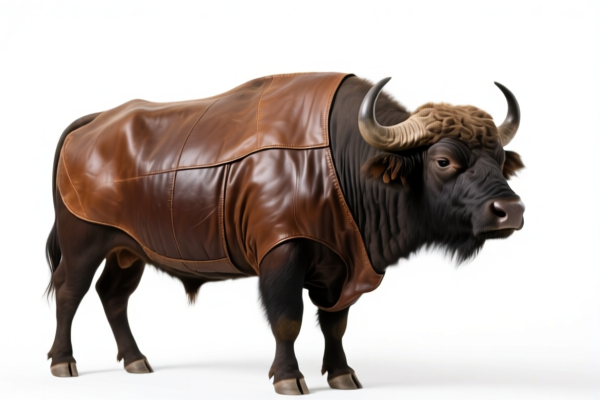
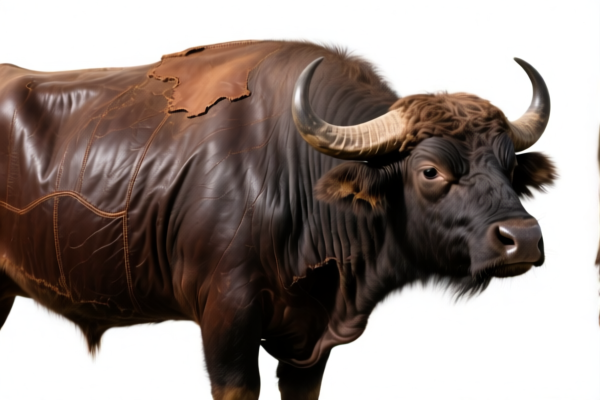
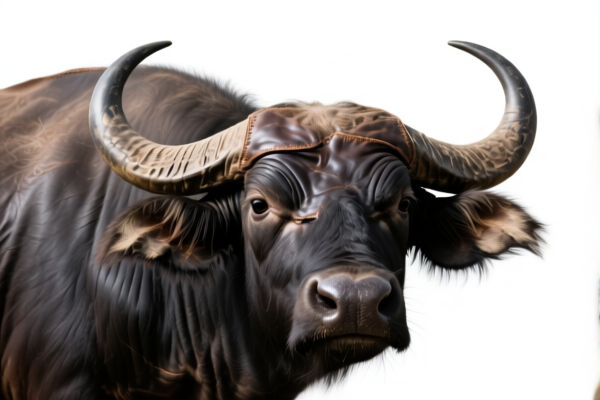
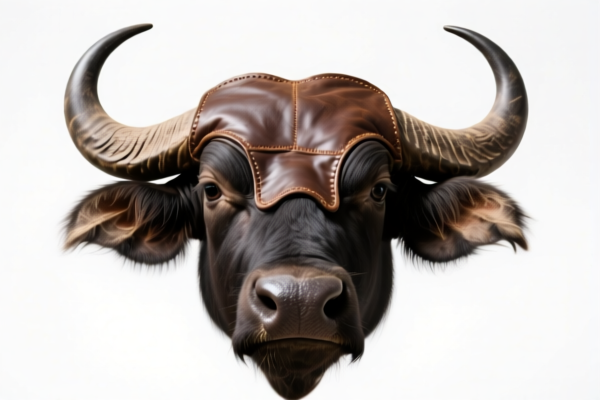
AI Analysis
🦬 Buffalo Leather for Upholstery (Auto Interior Components)
🌐 HS Code Reference & Customs Clearance Guide | 2026 Latest Tariff Analysis | Professional Clearance Strategy
📌 I. Product Definition & Classification: What Exactly is "Buffalo Leather for Upholstery"?
Buffalo Leather for Upholstery, particularly when destined for automotive interiors, represents a high-value material in the global trade of automotive parts. In international trade, it is broadly categorized based on its state of processing (tanned vs. finished) and form (raw hide/split vs. finished upholstery piece).
Key Distinctions: * Tanned/Split Leather (Raw Material): Unfinished buffalo leather splits or layers, intended for further processing (cutting, stitching, finishing) by the manufacturer. * Likely HS Codes: 4107 (Tanned leather) or 4113 (Prepared leather). * Finished Upholstery Parts (Ready-to-Install): Pre-cut, pre-stitched, or fully finished leather components specifically shaped for car seats, dashboards, or door panels. * Likely HS Codes: 4205 (Other articles of leather) or 4113 (Prepared leather for specific uses).
⚠️ Critical Classification Point:
- If the product is semi-finished material (e.g., split layers, raw tanned hide) → Often falls under Chapter 41 (4107, 4113).
- If the product is a finished article (e.g., stitched seat cover, dashboard panel) → Often falls under Chapter 42 (4205).
- Misclassification Risk: Declaring a finished leather seat cover as "raw leather" (HS 4107) may lead to lower duty but is incorrect and can trigger audits. Conversely, declaring raw leather as a "finished article" (HS 4205) may incur higher duties.
📦 II. HS Code Classification Details (2026 Latest Tariff Authority Mapping)
Based on the provided data, here are the exact HS codes, summaries, and tax structures for "Buffalo Leather for Upholstery."
| HS Code | Product Description & Summary | Match Basis | Total Tax Rate | Tax Detail Breakdown |
|---|---|---|---|---|
| 4113.90.30.00 | Buffalo leather upholstery components | Material matches & Form matches | 38.3% | Base Tariff: 3.3% + Section 301 Tariff: 25.0% + Section 122 Tariff: 10% |
| 4205.00.80.00 | Buffalo leather upholstery components | Explicitly contains buffalo leather & classified as other leather articles | 35.0% | Base Tariff: 0.0% + Section 301 Tariff: 25.0% + Section 122 Tariff: 10% |
| 4205.00.10.00 | Buffalo leather upholstery components | Contains buffalo leather & classified as other articles | 35.0% | Base Tariff: 0.0% + Section 301 Tariff: 25.0% + Section 122 Tariff: 10% |
| 4107.12.50.00 | Buffalo leather split leather for auto interior accessories | Material, Form, and Use match | 12.8% | Base Tariff: 2.8% + Section 301 Tariff: 0.0% + Section 122 Tariff: 10% |
| 4104.41.50.00 | Buffalo leather split leather for auto interior accessories | Material is buffalo leather & Form is split leather | 13.3% | Base Tariff: 3.3% + Section 301 Tariff: 0.0% + Section 122 Tariff: 10% |
| 4107.92.50.00 | Buffalo leather split leather for auto interior accessories | Material, Form, and Use match | 12.8% | Base Tariff: 2.8% + Section 301 Tariff: 0.0% + Section 122 Tariff: 10% |
🔍 Key Insight:
- Chapter 41 (4107, 4113) codes represent raw/semi-finished leather (e.g., splits, tanned hides). These have lower base tariffs but are subject to the 122 Tariff (10%) and potentially Section 301 (25%) depending on the specific subheading.
- Chapter 42 (4205) codes represent finished leather articles (e.g., stitched parts). These have 0% base tariff but are subject to the same Section 301 (25%) and 122 Tariff (10%), resulting in a 35% total rate.
- Critical Note: Some Chapter 41 codes (4107.12.50.00, 4107.92.50.00) show 0% Section 301 Tariff, leading to a much lower total rate (12.8%). This suggests these specific split leather imports may be exempt from Section 301, likely due to specific trade agreements or exclusions. Always verify exemption status.
💰 III. 2026 Latest Tariff Rate Breakdown (Including Surcharges & Policy Additions)
✅ Applicable Country: United States (US)
✅ Country of Origin: China (CN)
✅ Effective Date: As per 2026 tariff rules (including subsequent imports)
🎯 1. 4107.12.50.00 & 4107.92.50.00 — Buffalo Leather Split Leather for Auto Interior Accessories (Lowest Tax Option)
| Item | Content |
|---|---|
| Base Tariff | 2.8% (ad valorem) |
| USITC Surcharge (Section 301) | 0.0% (Exempt or not applicable for this specific split leather category) |
| Section 122 Surcharge | +10% (Targeting China/Hong Kong products) |
| Total Tax Rate | 12.8% |
| Tax Calculation | CIF Value × 12.8% |
| De Minimis Eligibility | ❌ No (deny_de_minimis) |
| Legal Basis Path | USITC:4107.12.50.00 → FOOTNOTE:122 → IEEPA:122 |
📌 Explanation:
- The 0% Section 301 tariff is a crucial advantage. This likely applies to split leather (layered hides) rather than full grain or finished leather articles.
- The 10% Section 122 tariff is mandatory for China-origin goods.
- Total 12.8% is significantly lower than the 35%+ rates for finished leather articles.
🎯 2. 4104.41.50.00 — Buffalo Leather Split Leather for Auto Interior Accessories
| Item | Content |
|---|---|
| Base Tariff | 3.3% (ad valorem) |
| USITC Surcharge (Section 301) | 0.0% |
| Section 122 Surcharge | +10% |
| Total Tax Rate | 13.3% |
| Tax Calculation | CIF Value × 13.3% |
| De Minimis Eligibility | ❌ No |
| Legal Basis Path | USITC:4104.41.50.00 → FOOTNOTE:122 → IEEPA:122 |
📌 Note:
- Slightly higher base tariff (3.3% vs. 2.8%) due to specific subheading classification.
- Still enjoys 0% Section 301 tariff, making it highly competitive.
🎯 3. 4113.90.30.00 — Buffalo Leather Upholstery Components (Higher Tax Option)
| Item | Content |
|---|---|
| Base Tariff | 3.3% (ad valorem) |
| USITC Surcharge (Section 301) | +25% |
| Section 122 Surcharge | +10% |
| Total Tax Rate | 38.3% |
| Tax Calculation | CIF Value × 38.3% |
| De Minimis Eligibility | ❌ No |
| Legal Basis Path | USITC:4113.90.30.00 → FOOTNOTE:301 → IEEPA:9903.01.25 → FOOTNOTE:122 |
📌 Warning:
- This code incurs the full 25% Section 301 tariff.
- Total rate of 38.3% is among the highest.
- Likely applies to finished or partially finished leather articles rather than raw splits.
🎯 4. 4205.00.80.00 & 4205.00.10.00 — Other Leather Articles (High Tax Option)
| Item | Content |
|---|---|
| Base Tariff | 0.0% |
| USITC Surcharge (Section 301) | +25% |
| Section 122 Surcharge | +10% |
| Total Tax Rate | 35.0% |
| Tax Calculation | CIF Value × 35.0% |
| De Minimis Eligibility | ❌ No |
| Legal Basis Path | USITC:4205.00.80.00 → FOOTNOTE:301 → IEEPA:9903.01.25 → FOOTNOTE:122 |
📌 Note:
- Despite 0% base tariff, the 25% Section 301 + 10% Section 122 results in 35% total.
- Applies to finished leather articles (e.g., stitched seat covers, bags, belts).
🛠️ IV. Customs Clearance Practical Advice (Pitfall Avoidance Guide)
✅ 1. Documentation Checklist (All Mandatory)
| Document | Required | Description |
|---|---|---|
| ✅ Product Specifications | ✔️ | Detailed description: Type of leather (split, full grain), tanning method, thickness, color. |
| ✅ Photos & Samples | ✔️ | Clear images of the leather’s surface, backside (if split), and any stitching. |
| ✅ Commercial Invoice | ✔️ | Must clearly state "Buffalo Leather for Auto Upholstery" and specify HS Code. |
| ✅ Packing List | ✔️ | Itemize by HS code if multiple codes are used. |
| ✅ Certificate of Origin (CO) | ✔️ | Essential for verifying China origin and applying Section 122/301 duties. |
| ✅ Third-Party Test Report | ✔️ | If applicable, provide leather quality reports (e.g., abrasion resistance, tear strength). |
✅ 2. Declaration Strategy (Key Principles)
🔥 "Material First, Form Second, Use Third!"
| Scenario | Correct Declaration | Error to Avoid |
|---|---|---|
| Raw Split Leather (Unstitched, no finishing) | 4107.12.50.00 or 4107.92.50.00 |
Misdeclare as "finished upholstery" → 35-38% tax |
| Finished Leather Parts (Stitched, shaped for car seats) | 4205.00.80.00 or 4205.00.10.00 |
Misdeclare as "raw leather" → Audit risk, penalties |
| Prepared Leather for Upholstery (Not yet stitched, but finished surface) | 4113.90.30.00 |
Misdeclare as "raw split" → 38.3% vs 12.8% |
✅ 3. Special Cases & Tips
| Situation | Recommendation |
|---|---|
| OEM Custom Leather | Provide design specs and customer orders. Clearly state if it’s "for specific auto model." |
| Mixed Shipments | Declare raw splits and finished articles separately. Do not mix under one HS code. |
| Section 301 Exclusion | Verify if your specific HS code (e.g., 4107.12.50.00) is excluded from Section 301. If yes, you pay only 10-13%. |
| Section 122 Tariff | This is always applicable to China-origin leather articles. Budget for 10% surcharge regardless of HS code. |
🌍 V. Global Market Customs Comparison (2026 Latest)
| Country/Region | Recommended HS Code | Tariff Rate | Certification Requirements | Notes |
|---|---|---|---|---|
| 🇺🇸 United States | 4107.12.50.00 |
12.8% | None specific for leather | Lowest tax if declared as split leather. 35-38% for finished goods. |
| 🇨🇳 China | 4107.12.50.00 |
~10-15% | CCC (if applicable) | Import duties vary; often lower than US. |
| 🇪🇺 European Union | 4107.12.50.00 |
6-10% | REACH Compliance | No Section 301/122. Standard EU duty applies. |
| 🇬🇧 United Kingdom | 4107.12.50.00 |
6-10% | UKCA Marking | Post-Brexit rules; similar to EU but independent. |
| 🇯🇵 Japan | 4107.12.50.00 |
6-10% | JIS Standards | No Section 301/122. Competitive. |
📌 Conclusion:
- The US is the most expensive market due to Section 301 (25%) and Section 122 (10%) surcharges.
- Chapter 41 codes (raw/semi-finished leather) offer a lower tax burden (12.8-13.3%) if they qualify for Section 301 exemption.
- Chapter 42 codes (finished leather articles) face 35% total tax.
- Strategy: If possible, import split leather (Chapter 41) and perform finishing/stitching locally or in a third country to avoid high duties.
📌 VI. Common Mistakes & Pitfall Guide (Lessons Learned)
❌ Mistake 1: Declaring finished leather seat covers as raw leather splits
👉 Consequence: Customs inspection reveals stitching/shape → Penalty, retroactive tax (38.3%), and potential seizure.
❌ Mistake 2: Ignoring Section 122 Tariff (10%)
👉 Consequence: Underpayment → Back taxes + interest. This tariff is mandatory for China-origin goods.
❌ Mistake 3: Mixing raw leather and finished articles in one shipment under one HS code
👉 Consequence: Customs rejection, delays, and mandatory unloading/repackaging.
❌ Mistake 4: Assuming all Chapter 41 codes are exempt from Section 301
👉 Consequence: 4113.90.30.00 is NOT exempt (38.3% total). Verify each subheading’s exemption status.
✅ Correct Practice:
"Buffalo Leather, Split, Tanned, for Automotive Upholstery, Unfinished, Model XYZ, China Origin"
🎯 VII. Conclusion: Professional Declaration Saves Money!
🎯 Remember These Key Points:
🔹 "Split Leather (4107) = 12.8% | Finished Article (4205) = 35.0%"
🔹 "Section 301 (25%) applies to finished goods and some leather articles, but NOT to specific split leathers."
🔹 "Section 122 (10%) applies to ALL China-origin leather goods."
🔹 "HS Code determines your duty. Choose wisely!"
📌 Pro Tip:
If your buffalo leather is imported from Vietnam, Mexico, or Thailand, you may qualify for IEEPA Exemptions, reducing tariffs to 0-5%.
Consider applying for an Advance Ruling (Pre-classification) from US Customs to confirm the correct HS code and duty rate before shipping.
📣 Immediate Action:
📞 Contact a professional customs broker + Provide product photos + Apply for HS Code Pre-classification
🚀 Let your buffalo leather clear customs smoothly, efficiently, and cost-effectively!
✨ Professional Customs Clearance Starts with Accurate Classification!
💼 Every percentage point of duty matters to your bottom line!
Customer Reviews
About HS Code Classification
The Harmonized System (HS) is an internationally standardized nomenclature developed by the World Customs Organization (WCO) to classify traded products. Over 200 countries use the HS system as the basis for customs tariffs, trade statistics, and import/export regulations.
Each HS code follows a hierarchical structure:
- Chapter (2 digits) — Broad category of goods (e.g., Chapter 84: Machinery and Mechanical Appliances)
- Heading (4 digits) — More specific grouping within the chapter
- Subheading (6 digits) — Internationally standardized breakdown, used by all WCO member countries
- National subdivisions (8-10 digits) — Country-specific extensions for further classification, such as US HTSUS 10-digit codes
Correct HS code classification is essential for smooth customs clearance, accurate duty payment, and compliance with trade regulations. Misclassification can lead to customs delays, overpayment of duties, or penalties.
When importing from CN to US, the applicable tariff rates may include:
- Most-Favored-Nation (MFN) rate — The standard duty rate applied to WTO members
- General rate — Applied to countries without trade agreements
- Trade remedy duties — Additional tariffs such as Section 301 (anti-dumping), Section 232 (national security), or countervailing duties
The information provided on this page is for reference purposes only. For official classification, please consult with your local customs authority or a licensed customs broker.