Calendered Plastic Sheet
CN → US| HS编码 | 关税税率 | 原产国 | 目的国 | 文档 |
|---|---|---|---|---|
| 3920200055 | 39.2% | CN | US | 官方文档 |
| 3920992000 | 39.2% | CN | US | 官方文档 |
| 3921905050 | 39.8% | CN | US | 官方文档 |
| 3921904010 | 39.2% | CN | US | 官方文档 |
商品图片

AI分析
🧱 Calendered Plastic Sheet (Calendar Plastic Sheets)
🌐 HS Code Reference & Customs Clearance Guide | 2026 Latest Tariff Analysis | Professional Clearance Strategy
📌 I. Product Definition & Classification: What Exactly is "Calendered Plastic Sheet"?
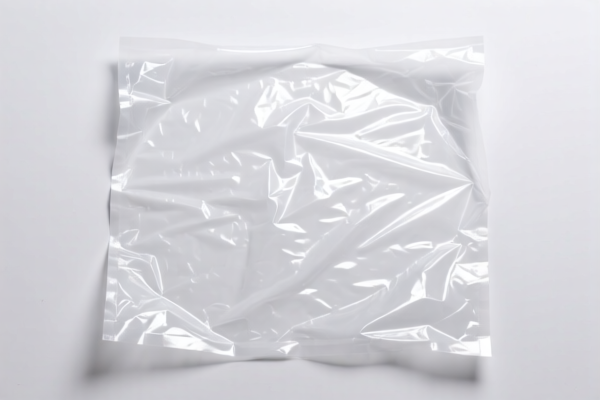
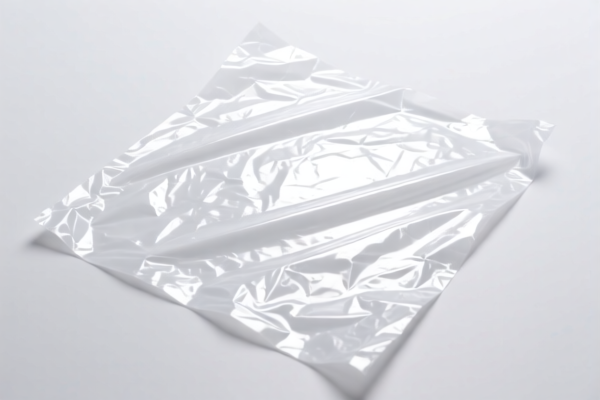
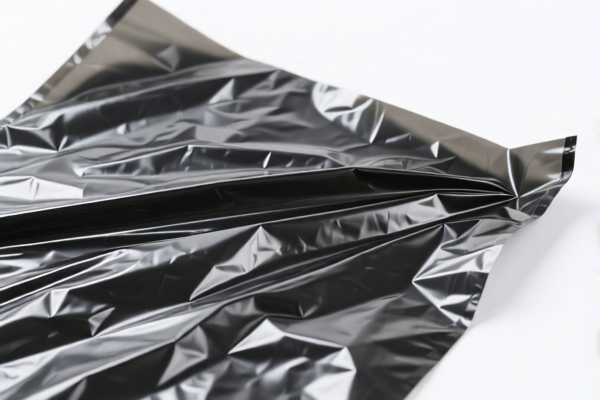
Calendered Plastic Sheets are flat plastic products manufactured using a calendering process. In this process, heated plastic materials (such as PVC, PP, PE, or blends) are passed through a series of rotating rollers (calenders) to achieve a uniform thickness, smooth surface, and specific physical properties.
Unlike extruded sheets (which are pushed through a die), calendered sheets typically offer: * Better surface finish (glossy or matte); * Higher dimensional stability; * Uniform thickness for wide webs.
Key Application Scenarios: * Packaging films and blister packs; * Advertising banners and vinyl covers; * Floor coverings (PVC tiles); * Protective overlays and laminates.
⚠️ Critical Distinction in Classification:
- Flexible Sheets/Films (≤ 1mm or non-rigid): Usually classified under Chapter 39, Heading 3920 (non-cellular, not reinforced) or 3921 (reinforced/laminated).
- Rigid Plates/Sheets: May fall under other subheadings depending on material.
- Reinforcement Matters: If the sheet is laminated with paper, fabric, or metal, it shifts from 3920 to 3921.
📦 II. HS Code Classification Details (2026 Latest Tariff Authority Mapping)
Based on the provided <DATA>, here are the specific HS Codes and their descriptions for Calendered Plastic Sheets. Note that the classification depends heavily on the material composition and structural integrity (flexible vs. reinforced).
| HS Code | Product Description | Application Scenario | Reinforced/Combined? |
|---|---|---|---|
3920.20.00.55 |
Of polymers of propylene (PP) | Calendered PP films/sheets, non-cellular, not reinforced | ❌ No |
3920.99.20.00 |
Of other plastics: Film, strip, sheets (flexible) | Calendered sheets of PVC, PE, etc., flexible, non-cellular | ❌ No |
3921.90.40.10 |
Flexible Reinforced with paper | Calendered sheets laminated with paper (e.g., paper-backed vinyl) | ✅ Yes (Paper) |
3921.90.50.50 |
Other: Other: Other | Calendered sheets with other reinforcement/lamination (not paper) | ✅ Yes (Other) |
🔍 Key Interpretation for Calendered Sheets:
- Step 1: Identify Material. Is it Polypropylene (PP)? → Go to3920.20. Is it PVC/PE/Others? → Go to3920.99.
- Step 2: Check Structure. Is it pure plastic? → Go to Chapter 39.20.
- Step 3: Check Reinforcement. Is it combined with paper, metal, or fabric? → It moves to Chapter 39.21.
- If combined with paper only →3921.90.40.10.
- If combined with other materials or is "other" →3921.90.50.50.
💰 III. 2026 Latest Tariff Rate Breakdown (Including Supplementary Duties)
✅ Applicable Country: United States (US)
✅ Origin: China (CN)
✅ Effective Date: Current rates apply (Base Tariff + Section 301/Additional Duties)
🎯 1. 3920.20.00.55 – Calendered Polypropylene (PP) Sheets/Films
| Item | Detail |
|---|---|
| Base Tariff Rate | 4.2% |
| Additional Tariff (Section 301/Other) | 25.0% |
| Total Effective Tariff Rate | 29.2% |
| Calculation Basis | Ad Valorem (on CIF Value) |
| De Minimis Exemption? | ❌ No (High total rate excludes small parcel exemptions) |
| Legal Basis Path | HTSUS:3920.20.00.55 → Additional Duty Footnote |
📌 Explanation:
- Base 4.2%: Standard Most Favored Nation (MFN) rate for non-cellular PP sheets.
- Additional 25%: Likely due to Section 301 tariffs on Chinese plastic products.
- Total 29.2%: A significant cost factor. Ensure your invoice value is accurate to avoid penalties.
🎯 2. 3920.99.20.00 – Calendered Sheets of Other Plastics (e.g., PVC, PE)
| Item | Detail |
|---|---|
| Base Tariff Rate | 4.2% |
| Additional Tariff (Section 301/Other) | 25.0% |
| Total Effective Tariff Rate | 29.2% |
| Calculation Basis | Ad Valorem (on CIF Value) |
| De Minimis Exemption? | ❌ No |
| Legal Basis Path | HTSUS:3920.99.20.00 → Additional Duty Footnote |
📌 Explanation:
- Covers flexible films/sheets made of plastics other than PP, PS, PC, etc.
- Common for PVC calendar sheets used in signage or packaging.
- Same 29.2% total duty applies.
🎯 3. 3921.90.40.10 – Calendered Sheets Flexible & Reinforced with Paper
| Item | Detail |
|---|---|
| Base Tariff Rate | 4.2% |
| Additional Tariff (Section 301/Other) | 25.0% |
| Total Effective Tariff Rate | 29.2% |
| Calculation Basis | Ad Valorem (on CIF Value) |
| De Minimis Exemption? | ❌ No |
| Legal Basis Path | HTSUS:3921.90.40.10 → Additional Duty Footnote |
📌 Explanation:
- Applies when the plastic sheet is laminated with paper (e.g., paper-backed vinyl for wall covering or label backing).
- The presence of paper changes the chapter to 39.21, but the rate remains similar due to additional duties.
🎯 4. 3921.90.50.50 – Other Calendered Sheets (Reinforced/Laminated)
| Item | Detail |
|---|---|
| Base Tariff Rate | 4.8% |
| Additional Tariff (Section 301/Other) | 25.0% |
| Total Effective Tariff Rate | 29.8% |
| Calculation Basis | Ad Valorem (on CIF Value) |
| De Minimis Exemption? | ❌ No |
| Legal Basis Path | HTSUS:3921.90.50.50 → Additional Duty Footnote |
📌 Explanation:
- This is a "catch-all" for reinforced/laminated sheets not covered by the paper-specific code.
- Examples: Plastic sheets laminated with fabric, metal foil, or other plastic layers.
- Highest Total Rate (29.8%) among the listed codes. Be precise in description to avoid misclassification to a higher duty bracket.
🛠️ IV. Customs Clearance Practical Advice (Real-World Pitfall Avoidance)
✅ 1. Documentation Checklist (Mandatory)
| Document | Must Provide? | Notes |
|---|---|---|
| Product Specification Sheet | ✔️ | Must state: Calendered vs. Extruded, Material (PP/PVC/etc.), Thickness, Width. |
| Photos of Product & Label | ✔️ | Show cross-section to prove "non-cellular" (solid) structure. |
| Commercial Invoice | ✔️ | Clearly state: "Calendered Plastic Sheet, [Material], Reinforced/Unreinforced". |
| Packing List | ✔️ | Include net/gross weight. Reinforced sheets may have different density. |
| Certificate of Origin | ✔️ | Required for origin determination; not eligible for preferential tariff under current US-China trade policy. |
| Process Description | ✔️ | If challenged, provide a brief note on the calendering process to distinguish from extrusion (though HTS may not differ, it helps avoid misclassification as "cellular" or "rigid"). |
✅ 2. Declaration Tips (Key Mnemonics)
🔥 “Material First, Structure Second, Reinforcement Defines Chapter!”
| Scenario | Correct HS Code | Risk if Misdeclared |
|---|---|---|
| Pure PP Sheet (Calendered) | 3920.20.00.55 |
If declared as PVC → 3920.99.20.00 (Same rate, but documentation mismatch) |
| PVC Film (Flexible, Pure) | 3920.99.20.00 |
If declared as "Rigid Plate" → Wrong Heading (e.g., 3925) |
| Paper-Backed Vinyl | 3921.90.40.10 |
If declared as Pure Plastic → Under-declare duty if paper adds value? (Rate is same, but legal risk) |
| Fabric-Reinforced Sheet | 3921.90.50.50 |
If declared as Pure Plastic → Major classification error; potential penalties |
⚠️ Critical Note:
- Calendered vs. Extruded: While the HS Code for plain sheets (3920) often covers both, the process helps define the product characteristics. If the sheet is cellular (foamed), it goes to a different subheading (not listed in<DATA>). Ensure your sheets are non-cellular (solid). - Reinforcement: If the sheet has any permanent lamination (paper, metal, fabric), it must go to 39.21. Do not try to classify as 39.20 to "simplify," as customs may inspect and penalize.
✅ 3. Special Handling
| Situation | Recommendation |
|---|---|
| Mixed Containers | Clearly separate pure sheets from reinforced sheets in packing list. Mixed HS codes in one shipment require precise item-level description. |
| Sample Shipments | Even samples are subject to 29.2–29.8% duty. Do not use "gift" or "no value" invoices; use nominal value. |
| Origin Marking | Ensure products are marked "Made in China" if exported from China. Failure to mark can lead to refusal of entry. |
🌍 V. Global Market Clearance Comparison (2026 Outlook)
| Market | Recommended HS Code | Approx. Duty (China Origin) | Notes |
|---|---|---|---|
| 🇺🇸 USA | 3920.20.00.55 etc. |
29.2% – 29.8% | High additional tariffs apply. |
| 🇨🇳 China (Import) | 3920.20.00.55 etc. |
~5–7% | Lower base rates; no Section 301. |
| 🇪🇺 EU | 3920.20.00.55 etc. |
~6.5% | Standard EU duty; no US-style add-ons. |
| 🇦🇺 Australia | 3920.20.00.55 etc. |
~5% | Low duty; GST applies separately. |
📌 Conclusion for US Importers:
- The 29.2–29.8% duty is a fixed cost. No preferential rates available for Chinese-origin calendered sheets.
- Cost Optimization: Consider sourcing from Vietnam, Thailand, or India if possible, as some countries may have lower or zero additional duties under current trade policies (verify latest FTAs).
📌 VI. Common Errors & Pitfalls (Lessons Learned)
❌ Error 1: Calling "Calendered Sheet" just "Plastic Sheet" without specifying material or reinforcement.
👉 Result: Customs may assign a default higher rate or demand extensive inspection.
❌ Error 2: Misclassifying a Paper-Reinforced Sheet as 3920 (Pure Plastic).
👉 Result: Classification error. While the rate is similar (29.2% vs 29.2%), it violates the legal description of 39.20 (which excludes reinforced materials).
❌ Error 3: Declaring Foamed/Cellular sheets as 3920 (Non-cellular).
👉 Result: Wrong code. Cellular sheets have different HS codes (e.g., 3920.10.xx). If caught, penalties apply.
❌ Error 4: Ignoring Section 301 Tariffs.
👉 Result: Underpayment of 25%. Customs will audit and demand back payment + interest.
✅ Correct Declaration Example:
"Calendered Polypropylene Sheets, Non-cellular, Flexible, 0.5mm Thick, Unreinforced, Made in China"
→ HS Code:3920.20.00.55
🎯 VII. Conclusion: Precision Saves Money!
🎯 Remember the Rules:
🔹 "PP goes to 3920.20, Others to 3920.99."
🔹 "Paper Lamination? Move to 3921.40.10."
🔹 "Other Reinforcement? Move to 3921.90.50.50."
🔹 "Total Duty ~29%! Plan Your Price Accordingly!"
📌 Pro Tip:
If your calendered sheets are thin films (< 0.15mm), double-check if they qualify as "Films" under different subheadings, though in this <DATA>, they are grouped broadly. Always provide thickness specs in commercial invoices.
📣 Immediate Action:
📞 Confirm Material Composition (PP vs. PVC/PE).
📞 Verify Reinforcement (None, Paper, or Other).
📞 Select Correct HS Code from the table above.
🚀 Avoid Clearance Delays and Unexpected 29%+ Duties!
✨ Professional Customs Clearance Starts with Accurate Classification!
💼 Every Percent of Duty Counts – Get It Right the First Time!
用户评价
关于 HS 编码归类
协调制度(HS)是由世界海关组织(WCO)制定的国际贸易商品分类标准。全球 200 多个国家采用 HS 系统作为海关关税、贸易统计和进出口监管的基础。
每个 HS 编码遵循以下层级结构:
- 章(2 位)——商品大类(例如:第 84 章:机器和机械设备)
- 品目(4 位)——章内的更具体分类
- 子目(6 位)——国际通用细分,所有 WCO 成员国统一使用
- 本国细分(8-10 位)——各国自行扩展的细分编码,如美国 HTSUS 10 位编码
正确的 HS 编码归类对于顺利通关、准确缴纳关税和遵守贸易法规至关重要。错误归类可能导致海关延误、多缴关税或罚款。
从CN进口到US时,适用的关税税率可能包括:
- 最惠国(MFN)税率——适用于 WTO 成员国的标准关税税率
- 普通税率——适用于无贸易协定国家
- 贸易救济关税——附加关税,如 301 条款(反倾销)、232 条款(国家安全)或反补贴税
本页内容仅供参考。如需正式归类,请咨询当地海关或持牌报关代理。