Calendered Plastic Sheet
CN → US| HS Code | Tariff Rate | Origin | Destination | Doc |
|---|---|---|---|---|
| 3920200055 | 39.2% | CN | US | Official Doc |
| 3920992000 | 39.2% | CN | US | Official Doc |
| 3921905050 | 39.8% | CN | US | Official Doc |
| 3921904010 | 39.2% | CN | US | Official Doc |
Product Images
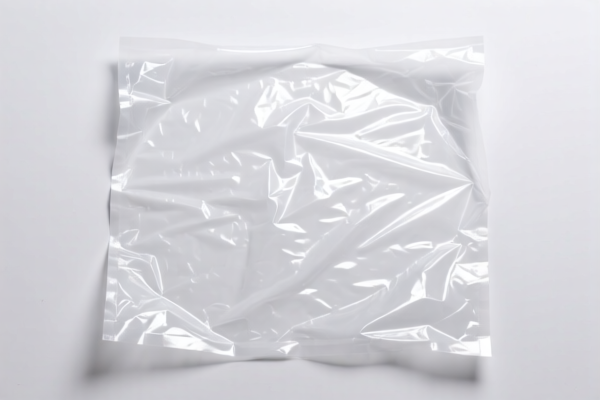

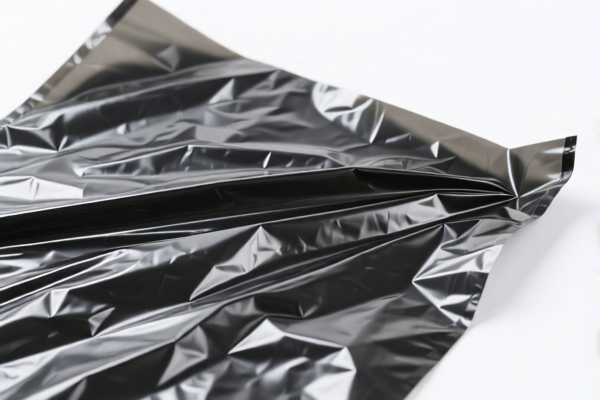

AI Analysis
🧱 Calendered Plastic Sheet (Calendar Plastic Sheets)
🌐 HS Code Reference & Customs Clearance Guide | 2026 Latest Tariff Analysis | Professional Clearance Strategy
📌 I. Product Definition & Classification: What Exactly is "Calendered Plastic Sheet"?
Calendered Plastic Sheets are flat plastic products manufactured using a calendering process. In this process, heated plastic materials (such as PVC, PP, PE, or blends) are passed through a series of rotating rollers (calenders) to achieve a uniform thickness, smooth surface, and specific physical properties.
Unlike extruded sheets (which are pushed through a die), calendered sheets typically offer: * Better surface finish (glossy or matte); * Higher dimensional stability; * Uniform thickness for wide webs.
Key Application Scenarios: * Packaging films and blister packs; * Advertising banners and vinyl covers; * Floor coverings (PVC tiles); * Protective overlays and laminates.
⚠️ Critical Distinction in Classification:
- Flexible Sheets/Films (≤ 1mm or non-rigid): Usually classified under Chapter 39, Heading 3920 (non-cellular, not reinforced) or 3921 (reinforced/laminated).
- Rigid Plates/Sheets: May fall under other subheadings depending on material.
- Reinforcement Matters: If the sheet is laminated with paper, fabric, or metal, it shifts from 3920 to 3921.
📦 II. HS Code Classification Details (2026 Latest Tariff Authority Mapping)
Based on the provided <DATA>, here are the specific HS Codes and their descriptions for Calendered Plastic Sheets. Note that the classification depends heavily on the material composition and structural integrity (flexible vs. reinforced).
| HS Code | Product Description | Application Scenario | Reinforced/Combined? |
|---|---|---|---|
3920.20.00.55 |
Of polymers of propylene (PP) | Calendered PP films/sheets, non-cellular, not reinforced | ❌ No |
3920.99.20.00 |
Of other plastics: Film, strip, sheets (flexible) | Calendered sheets of PVC, PE, etc., flexible, non-cellular | ❌ No |
3921.90.40.10 |
Flexible Reinforced with paper | Calendered sheets laminated with paper (e.g., paper-backed vinyl) | ✅ Yes (Paper) |
3921.90.50.50 |
Other: Other: Other | Calendered sheets with other reinforcement/lamination (not paper) | ✅ Yes (Other) |
🔍 Key Interpretation for Calendered Sheets:
- Step 1: Identify Material. Is it Polypropylene (PP)? → Go to3920.20. Is it PVC/PE/Others? → Go to3920.99.
- Step 2: Check Structure. Is it pure plastic? → Go to Chapter 39.20.
- Step 3: Check Reinforcement. Is it combined with paper, metal, or fabric? → It moves to Chapter 39.21.
- If combined with paper only →3921.90.40.10.
- If combined with other materials or is "other" →3921.90.50.50.
💰 III. 2026 Latest Tariff Rate Breakdown (Including Supplementary Duties)
✅ Applicable Country: United States (US)
✅ Origin: China (CN)
✅ Effective Date: Current rates apply (Base Tariff + Section 301/Additional Duties)
🎯 1. 3920.20.00.55 – Calendered Polypropylene (PP) Sheets/Films
| Item | Detail |
|---|---|
| Base Tariff Rate | 4.2% |
| Additional Tariff (Section 301/Other) | 25.0% |
| Total Effective Tariff Rate | 29.2% |
| Calculation Basis | Ad Valorem (on CIF Value) |
| De Minimis Exemption? | ❌ No (High total rate excludes small parcel exemptions) |
| Legal Basis Path | HTSUS:3920.20.00.55 → Additional Duty Footnote |
📌 Explanation:
- Base 4.2%: Standard Most Favored Nation (MFN) rate for non-cellular PP sheets.
- Additional 25%: Likely due to Section 301 tariffs on Chinese plastic products.
- Total 29.2%: A significant cost factor. Ensure your invoice value is accurate to avoid penalties.
🎯 2. 3920.99.20.00 – Calendered Sheets of Other Plastics (e.g., PVC, PE)
| Item | Detail |
|---|---|
| Base Tariff Rate | 4.2% |
| Additional Tariff (Section 301/Other) | 25.0% |
| Total Effective Tariff Rate | 29.2% |
| Calculation Basis | Ad Valorem (on CIF Value) |
| De Minimis Exemption? | ❌ No |
| Legal Basis Path | HTSUS:3920.99.20.00 → Additional Duty Footnote |
📌 Explanation:
- Covers flexible films/sheets made of plastics other than PP, PS, PC, etc.
- Common for PVC calendar sheets used in signage or packaging.
- Same 29.2% total duty applies.
🎯 3. 3921.90.40.10 – Calendered Sheets Flexible & Reinforced with Paper
| Item | Detail |
|---|---|
| Base Tariff Rate | 4.2% |
| Additional Tariff (Section 301/Other) | 25.0% |
| Total Effective Tariff Rate | 29.2% |
| Calculation Basis | Ad Valorem (on CIF Value) |
| De Minimis Exemption? | ❌ No |
| Legal Basis Path | HTSUS:3921.90.40.10 → Additional Duty Footnote |
📌 Explanation:
- Applies when the plastic sheet is laminated with paper (e.g., paper-backed vinyl for wall covering or label backing).
- The presence of paper changes the chapter to 39.21, but the rate remains similar due to additional duties.
🎯 4. 3921.90.50.50 – Other Calendered Sheets (Reinforced/Laminated)
| Item | Detail |
|---|---|
| Base Tariff Rate | 4.8% |
| Additional Tariff (Section 301/Other) | 25.0% |
| Total Effective Tariff Rate | 29.8% |
| Calculation Basis | Ad Valorem (on CIF Value) |
| De Minimis Exemption? | ❌ No |
| Legal Basis Path | HTSUS:3921.90.50.50 → Additional Duty Footnote |
📌 Explanation:
- This is a "catch-all" for reinforced/laminated sheets not covered by the paper-specific code.
- Examples: Plastic sheets laminated with fabric, metal foil, or other plastic layers.
- Highest Total Rate (29.8%) among the listed codes. Be precise in description to avoid misclassification to a higher duty bracket.
🛠️ IV. Customs Clearance Practical Advice (Real-World Pitfall Avoidance)
✅ 1. Documentation Checklist (Mandatory)
| Document | Must Provide? | Notes |
|---|---|---|
| Product Specification Sheet | ✔️ | Must state: Calendered vs. Extruded, Material (PP/PVC/etc.), Thickness, Width. |
| Photos of Product & Label | ✔️ | Show cross-section to prove "non-cellular" (solid) structure. |
| Commercial Invoice | ✔️ | Clearly state: "Calendered Plastic Sheet, [Material], Reinforced/Unreinforced". |
| Packing List | ✔️ | Include net/gross weight. Reinforced sheets may have different density. |
| Certificate of Origin | ✔️ | Required for origin determination; not eligible for preferential tariff under current US-China trade policy. |
| Process Description | ✔️ | If challenged, provide a brief note on the calendering process to distinguish from extrusion (though HTS may not differ, it helps avoid misclassification as "cellular" or "rigid"). |
✅ 2. Declaration Tips (Key Mnemonics)
🔥 “Material First, Structure Second, Reinforcement Defines Chapter!”
| Scenario | Correct HS Code | Risk if Misdeclared |
|---|---|---|
| Pure PP Sheet (Calendered) | 3920.20.00.55 |
If declared as PVC → 3920.99.20.00 (Same rate, but documentation mismatch) |
| PVC Film (Flexible, Pure) | 3920.99.20.00 |
If declared as "Rigid Plate" → Wrong Heading (e.g., 3925) |
| Paper-Backed Vinyl | 3921.90.40.10 |
If declared as Pure Plastic → Under-declare duty if paper adds value? (Rate is same, but legal risk) |
| Fabric-Reinforced Sheet | 3921.90.50.50 |
If declared as Pure Plastic → Major classification error; potential penalties |
⚠️ Critical Note:
- Calendered vs. Extruded: While the HS Code for plain sheets (3920) often covers both, the process helps define the product characteristics. If the sheet is cellular (foamed), it goes to a different subheading (not listed in<DATA>). Ensure your sheets are non-cellular (solid). - Reinforcement: If the sheet has any permanent lamination (paper, metal, fabric), it must go to 39.21. Do not try to classify as 39.20 to "simplify," as customs may inspect and penalize.
✅ 3. Special Handling
| Situation | Recommendation |
|---|---|
| Mixed Containers | Clearly separate pure sheets from reinforced sheets in packing list. Mixed HS codes in one shipment require precise item-level description. |
| Sample Shipments | Even samples are subject to 29.2–29.8% duty. Do not use "gift" or "no value" invoices; use nominal value. |
| Origin Marking | Ensure products are marked "Made in China" if exported from China. Failure to mark can lead to refusal of entry. |
🌍 V. Global Market Clearance Comparison (2026 Outlook)
| Market | Recommended HS Code | Approx. Duty (China Origin) | Notes |
|---|---|---|---|
| 🇺🇸 USA | 3920.20.00.55 etc. |
29.2% – 29.8% | High additional tariffs apply. |
| 🇨🇳 China (Import) | 3920.20.00.55 etc. |
~5–7% | Lower base rates; no Section 301. |
| 🇪🇺 EU | 3920.20.00.55 etc. |
~6.5% | Standard EU duty; no US-style add-ons. |
| 🇦🇺 Australia | 3920.20.00.55 etc. |
~5% | Low duty; GST applies separately. |
📌 Conclusion for US Importers:
- The 29.2–29.8% duty is a fixed cost. No preferential rates available for Chinese-origin calendered sheets.
- Cost Optimization: Consider sourcing from Vietnam, Thailand, or India if possible, as some countries may have lower or zero additional duties under current trade policies (verify latest FTAs).
📌 VI. Common Errors & Pitfalls (Lessons Learned)
❌ Error 1: Calling "Calendered Sheet" just "Plastic Sheet" without specifying material or reinforcement.
👉 Result: Customs may assign a default higher rate or demand extensive inspection.
❌ Error 2: Misclassifying a Paper-Reinforced Sheet as 3920 (Pure Plastic).
👉 Result: Classification error. While the rate is similar (29.2% vs 29.2%), it violates the legal description of 39.20 (which excludes reinforced materials).
❌ Error 3: Declaring Foamed/Cellular sheets as 3920 (Non-cellular).
👉 Result: Wrong code. Cellular sheets have different HS codes (e.g., 3920.10.xx). If caught, penalties apply.
❌ Error 4: Ignoring Section 301 Tariffs.
👉 Result: Underpayment of 25%. Customs will audit and demand back payment + interest.
✅ Correct Declaration Example:
"Calendered Polypropylene Sheets, Non-cellular, Flexible, 0.5mm Thick, Unreinforced, Made in China"
→ HS Code:3920.20.00.55
🎯 VII. Conclusion: Precision Saves Money!
🎯 Remember the Rules:
🔹 "PP goes to 3920.20, Others to 3920.99."
🔹 "Paper Lamination? Move to 3921.40.10."
🔹 "Other Reinforcement? Move to 3921.90.50.50."
🔹 "Total Duty ~29%! Plan Your Price Accordingly!"
📌 Pro Tip:
If your calendered sheets are thin films (< 0.15mm), double-check if they qualify as "Films" under different subheadings, though in this <DATA>, they are grouped broadly. Always provide thickness specs in commercial invoices.
📣 Immediate Action:
📞 Confirm Material Composition (PP vs. PVC/PE).
📞 Verify Reinforcement (None, Paper, or Other).
📞 Select Correct HS Code from the table above.
🚀 Avoid Clearance Delays and Unexpected 29%+ Duties!
✨ Professional Customs Clearance Starts with Accurate Classification!
💼 Every Percent of Duty Counts – Get It Right the First Time!
Customer Reviews
About HS Code Classification
The Harmonized System (HS) is an internationally standardized nomenclature developed by the World Customs Organization (WCO) to classify traded products. Over 200 countries use the HS system as the basis for customs tariffs, trade statistics, and import/export regulations.
Each HS code follows a hierarchical structure:
- Chapter (2 digits) — Broad category of goods (e.g., Chapter 84: Machinery and Mechanical Appliances)
- Heading (4 digits) — More specific grouping within the chapter
- Subheading (6 digits) — Internationally standardized breakdown, used by all WCO member countries
- National subdivisions (8-10 digits) — Country-specific extensions for further classification, such as US HTSUS 10-digit codes
Correct HS code classification is essential for smooth customs clearance, accurate duty payment, and compliance with trade regulations. Misclassification can lead to customs delays, overpayment of duties, or penalties.
When importing from CN to US, the applicable tariff rates may include:
- Most-Favored-Nation (MFN) rate — The standard duty rate applied to WTO members
- General rate — Applied to countries without trade agreements
- Trade remedy duties — Additional tariffs such as Section 301 (anti-dumping), Section 232 (national security), or countervailing duties
The information provided on this page is for reference purposes only. For official classification, please consult with your local customs authority or a licensed customs broker.