Cannabis Pulp Filter Paper
CN → US| HS编码 | 关税税率 | 原产国 | 目的国 | 文档 |
|---|---|---|---|---|
| 4823201000 | 35.0% | CN | US | 官方文档 |
| 4823209000 | 35.0% | CN | US | 官方文档 |
商品图片
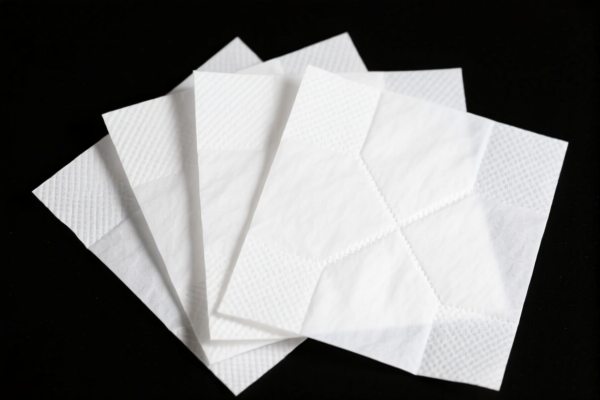


AI分析
🍃 Cannabis Pulp Filter Paper (Pharmaceutical/Industrial Grade)
🌐 HS Code Reference & Customs Clearance Guide | 2026 Latest Tariff Analysis | Professional Strategy for Cannabis-Derived Paper
📌 Part 1: Product Definition & Classification: Is "Cannabis" a Red Flag or a Raw Material?
Cannabis Pulp Filter Paper is a specialized filtration medium manufactured from cellulose fibers derived from hemp/cannabis plants. In international trade, the origin of the cellulose (cannabis vs. wood vs. cotton) rarely changes the HS Code for standard filter paper, provided it is not a finished pharmaceutical product or a drug itself.
It is categorized under "Paper and Paperboard; Articles of Paper Pulp, Paper or Paperboard".
Key Distinction: * Filter Paper (The Product): If the paper is specifically manufactured for filtration purposes (permeability, thickness, ash content specified), it falls under HS 4823.20. * General Filter Medium: If it does not meet specific "filter paper" standards (e.g., generic paper used for straining but not certified as laboratory/industrial filter paper), it might fall under HS 4823.20 (Other) or even 4823.90.
⚠️ Critical Compliance Note:
- Zero THC: Ensure the final paper product contains 0% THC (Tetrahydrocannabinol). If any detectable THC remains, it may be classified as a Controlled Substance (Narcotic), leading to confiscation and legal action.
- Cannabis vs. Hemp: Clarify if the pulp is from industrial hemp (legal in most jurisdictions) or marijuana. Industrial hemp pulp is treated as standard cellulose.
- Documentation: You must provide a Certificate of Analysis (CoA) proving the absence of psychoactive compounds.
📦 Part 2: HS Code Classification Details (2026 Latest Tariff Authority)
Based on the provided data, the product is classified into two sub-categories depending on its specific application or technical specification.
| HS Code | Product Description | Application Scenario | Key Differentiator | |--------|--------------------------|--------------------------| | 4823.20.10.00 | Paint filters and strainers | Used in industrial painting, coating industries, or laboratory testing of paint viscosity/color. | Specifically designed for paint/liquid coating filtration. Must meet specific porosity standards for viscous liquids. | | 4823.20.90.00 | Other | General laboratory filtration, food/beverage straining (hemp-derived cellulose is food-safe), or industrial fluid filtration not specific to paint. | General purpose filter paper or paperboard. Does not fit the strict definition of "paint filter." |
🔍 Classification Logic:
- Why 4823.20? This heading covers "Filter paper and paperboard."
- Why not 4803/4804? Those are toilet tissue or kraft paper. Filter paper requires specific processing (cross-linking, sizing) to control permeability and strength, placing it in 4823.
- Why Cannabis Pulp? The raw material (cannabis fiber) does not change the HS code from standard wood-pulp filter paper. The function (filtering) dictates the code.
💰 Part 3: 2026 Tariff Rate Breakdown (Detailed Tax Clauses)
✅ Applicable Country: United States (US)
✅ Origin: China (CN) (Assuming origin based on typical supply chain context; adjust if from other origins)
✅ Effective Time: Current 2025/2026 Trade Regulations
🎯 1. 4823.20.10.00 — Paint Filters and Strainers
| Item | Details |
|---|---|
| Base Tariff | 0.0% (Ad Valorem) |
| Section 301 Surcharge | +25.0% |
| Total Tax Rate | 25.0% |
| Tax Calculation | CIF Value × 25% |
| De Minimis Exemption | ❌ Not Applicable (For this HS Code, typically below $800 threshold may still be scrutinized if deemed high-risk, but generally, small packages might pass. However, bulk commercial imports are fully taxed.) |
| Legal Basis Path | HTSUS: 4823.20.10.00 → Section 301 Footnote |
📌 Explanation:
- The Base Rate is 0%, meaning filter paper is not naturally protected by US tariffs.
- The 25% Surcharge is applied due to the product's origin (China) under the Section 301 Trade Act.
- No Additional IEPA Tariff: Unlike electronics or panels, paper products do not currently face the additional 10% IEEPA tariff in this specific sub-heading data provided.
🎯 2. 4823.20.90.00 — Other Filter Paper and Paperboard
| Item | Details |
|---|---|
| Base Tariff | 0.0% (Ad Valorem) |
| Section 301 Surcharge | +25.0% |
| Total Tax Rate | 25.0% |
| Tax Calculation | CIF Value × 25% |
| De Minimis Exemption | ❌ Not Applicable (Commercial shipments) |
| Legal Basis Path | HTSUS: 4823.20.90.00 → Section 301 Footnote |
📌 Note:
- Identical tax treatment to the paint filter category.
- This is the catch-all for any filter paper that isn't specifically for paint. If your cannabis pulp filter is for coffee, juice, or lab reagents, use this code.
🛠️ Part 4: Customs Clearance Practical Advice (Avoid Pitfalls)
✅ 1. Documentation Checklist (Non-Negotiable)
| Document | Required? | Purpose |
|---|---|---|
| ✅ Product Specification Sheet | ✔️ | Must state: "Cellulose Filter Paper," "No Active Pharmaceutical Ingredients," "THC < 0.3% (or 0.0%)." |
| ✅ Certificate of Analysis (CoA) | ✔️ | Critical: Must be issued by a 3rd party lab showing THC content is below detectable limits. |
| ✅ Commercial Invoice | ✔️ | Describe as "Filter Paper made from Hemp Cellulose" — DO NOT use "Cannabis" prominently unless clarifying it is industrial hemp fiber. Use "Hemp-Derived Cellulose." |
| ✅ Bill of Lading / Air Waybill | ✔️ | Standard shipping docs. |
| ✅ Customs Bond | ✔️ | Required for commercial entry > $2,500. |
⚠️ Red Flag Warning:
If the HS Code is misclassified as 1302.19.90 (Vegetable Saps/Extracts) or 3004.90 (Pharmaceuticals), it triggers FDA and DEA scrutiny. Keep it strictly as Paper (4823).
✅ 2. Declaration Tips (Key Phrases)
🔥 "Hemp Cellulose Filter Paper, Non-Pharmaceutical, THC-Free"
| Scenario | Correct Declaration | Wrong Declaration |
|---|---|---|
| Lab Use | "Filter Paper, Hemp Cellulose, for Laboratory Filtration" | "Cannabis Paper" (Triggers DEA alert) |
| Industrial Use | "Paint Filter, Cellulose Pulp, Industrial Grade" | "Hemp Strainer" |
| Food Grade | "Filter Paper Board, Food Safe, Hemp Fiber" | "Marijuana Filter Paper" |
✅ 3. Special Situations
| Situation | Handling Advice |
|---|---|
| Small Samples (< $800) | May enter via Section 321 (De Minimis). Still, ensure CoA is available for customs inspection. |
| Bulk Commercial (> $2,500) | Must file Entry Summary (CBP Form 7501). Pay 25% duty. Prepare for potential inspection at port of entry. |
| FDA Registered Facility? | If the paper is intended for food contact or pharmaceutical processing, the manufacturer must be FDA-registered. |
| Cross-Border E-commerce | If selling directly to consumers, ensure packaging clearly states "Not for Consumption" and "THC-Free" to avoid retail platform bans. |
🌍 Part 5: Global Market Comparison (2026)
| Country/Region | HS Code | Tariff Rate | Key Requirement | Notes |
|---|---|---|---|---|
| 🇺🇸 USA | 4823.20.10/90 |
25% (China Origin) | THC-Free Cert | High duty due to Section 301. |
| 🇪🇺 EU | 4823.20 |
0% - 4.7% | REACH Compliance | Lower duties. Ensure hemp cultivation complies with EU regulations. |
| 🇨🇦 Canada | 4823.20 |
0% | NDA License? | If hemp-derived, may require reporting to Health Canada if used in controlled contexts. |
| 🇬🇧 UK | 4823.20 |
0% - 4.5% | Post-Brexit Rules | Check UK Integrated Tariff for specific hemp fiber rules. |
| 🇯🇵 Japan | 4823.20 |
0% | JIS Standard | Low duty, but strict on THC detection limits. |
📌 Conclusion:
- USA is the most expensive market for Chinese-origin cannabis pulp filter paper due to the 25% additional tariff.
- EU and Japan offer more favorable duty rates, but have stricter THC testing protocols.
📌 Part 6: Common Errors & Pitfalls (Lessons Learned)
❌ Mistake 1: Declaring as "Cannabis Plant Material"
👉 Consequence: Shipment held by DEA/FBI. Treated as illegal drug import.
✅ Fix: Declare as "Cellulose Filter Paper (Hemp-Derived)".
❌ Mistake 2: Missing THC Certificate
👉 Consequence: Customs detention for "Suspicious Substance." Lab testing delays shipment by weeks.
✅ Fix: Always attach a COA showing THC < 0.01% (or local legal limit).
❌ Mistake 3: Misusing HS Code 4811 (Coated Paper)
👉 Consequence: Incorrect duty rate. If filter paper is impregnated with chemicals for filtration, it might fall here, but 4823 is more specific for "Filter Paper."
✅ Fix: Use 4823.20 for standard filter paper.
❌ Mistake 4: Using "Marijuana" in Description
👉 Consequence: Triggered automatic flags in customs software.
✅ Fix: Use "Industrial Hemp" or "Cannabis Sativa Fiber" (non-psychoactive).
🎯 Part 7: Conclusion: Smart Clearance for Hemp-Derived Paper
🎯 Remember:
🔹 "Function over Origin": The HS Code is based on use (filtering), not the plant source.
🔹 "THC is King": Zero tolerance for THC in documentation.
🔹 "Paper is Paper": Treat it as industrial/consumer paper, not a drug.
📌 Pro Tip:
If you are exporting to the USA, budget for 25% extra duty. Consider tariff engineering:
- If you can prove the paper is "Specialized for Paint" (4823.20.10.00), it still has 25% tax.
- If you can export via Canada or Mexico (with sufficient transformation), you may avoid Section 301 tariffs. Check USMCA rules of origin.
📣 Immediate Action:
📞 Contact a Customs Broker: Pre-clear your HS Code with a US broker.
📄 Prepare CoA: Get THC tests done before shipping.
📝 Label Correctly: "Manufactured from Industrial Hemp Cellulose. Contains No THC."
✨ Professional Clearance Starts with Accurate Classification!
💼 Protect your shipment from DEA/Customs alerts with precise documentation.
用户评价
关于 HS 编码归类
协调制度(HS)是由世界海关组织(WCO)制定的国际贸易商品分类标准。全球 200 多个国家采用 HS 系统作为海关关税、贸易统计和进出口监管的基础。
每个 HS 编码遵循以下层级结构:
- 章(2 位)——商品大类(例如:第 84 章:机器和机械设备)
- 品目(4 位)——章内的更具体分类
- 子目(6 位)——国际通用细分,所有 WCO 成员国统一使用
- 本国细分(8-10 位)——各国自行扩展的细分编码,如美国 HTSUS 10 位编码
正确的 HS 编码归类对于顺利通关、准确缴纳关税和遵守贸易法规至关重要。错误归类可能导致海关延误、多缴关税或罚款。
从CN进口到US时,适用的关税税率可能包括:
- 最惠国(MFN)税率——适用于 WTO 成员国的标准关税税率
- 普通税率——适用于无贸易协定国家
- 贸易救济关税——附加关税,如 301 条款(反倾销)、232 条款(国家安全)或反补贴税
本页内容仅供参考。如需正式归类,请咨询当地海关或持牌报关代理。