Cannabis Pulp Filter Paper
CN → US| HS Code | Tariff Rate | Origin | Destination | Doc |
|---|---|---|---|---|
| 4823201000 | 35.0% | CN | US | Official Doc |
| 4823209000 | 35.0% | CN | US | Official Doc |
Product Images
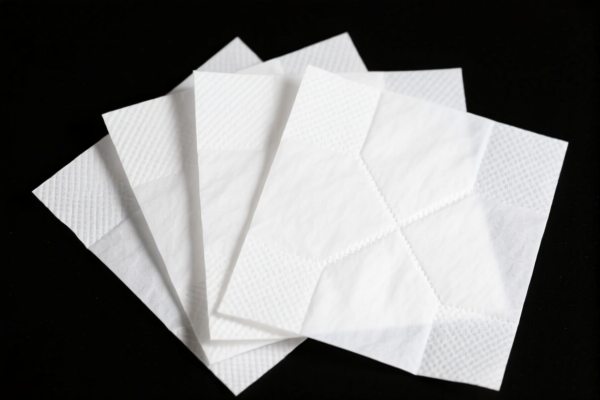


AI Analysis
🍃 Cannabis Pulp Filter Paper (Pharmaceutical/Industrial Grade)
🌐 HS Code Reference & Customs Clearance Guide | 2026 Latest Tariff Analysis | Professional Strategy for Cannabis-Derived Paper
📌 Part 1: Product Definition & Classification: Is "Cannabis" a Red Flag or a Raw Material?
Cannabis Pulp Filter Paper is a specialized filtration medium manufactured from cellulose fibers derived from hemp/cannabis plants. In international trade, the origin of the cellulose (cannabis vs. wood vs. cotton) rarely changes the HS Code for standard filter paper, provided it is not a finished pharmaceutical product or a drug itself.
It is categorized under "Paper and Paperboard; Articles of Paper Pulp, Paper or Paperboard".
Key Distinction: * Filter Paper (The Product): If the paper is specifically manufactured for filtration purposes (permeability, thickness, ash content specified), it falls under HS 4823.20. * General Filter Medium: If it does not meet specific "filter paper" standards (e.g., generic paper used for straining but not certified as laboratory/industrial filter paper), it might fall under HS 4823.20 (Other) or even 4823.90.
⚠️ Critical Compliance Note:
- Zero THC: Ensure the final paper product contains 0% THC (Tetrahydrocannabinol). If any detectable THC remains, it may be classified as a Controlled Substance (Narcotic), leading to confiscation and legal action.
- Cannabis vs. Hemp: Clarify if the pulp is from industrial hemp (legal in most jurisdictions) or marijuana. Industrial hemp pulp is treated as standard cellulose.
- Documentation: You must provide a Certificate of Analysis (CoA) proving the absence of psychoactive compounds.
📦 Part 2: HS Code Classification Details (2026 Latest Tariff Authority)
Based on the provided data, the product is classified into two sub-categories depending on its specific application or technical specification.
| HS Code | Product Description | Application Scenario | Key Differentiator | |--------|--------------------------|--------------------------| | 4823.20.10.00 | Paint filters and strainers | Used in industrial painting, coating industries, or laboratory testing of paint viscosity/color. | Specifically designed for paint/liquid coating filtration. Must meet specific porosity standards for viscous liquids. | | 4823.20.90.00 | Other | General laboratory filtration, food/beverage straining (hemp-derived cellulose is food-safe), or industrial fluid filtration not specific to paint. | General purpose filter paper or paperboard. Does not fit the strict definition of "paint filter." |
🔍 Classification Logic:
- Why 4823.20? This heading covers "Filter paper and paperboard."
- Why not 4803/4804? Those are toilet tissue or kraft paper. Filter paper requires specific processing (cross-linking, sizing) to control permeability and strength, placing it in 4823.
- Why Cannabis Pulp? The raw material (cannabis fiber) does not change the HS code from standard wood-pulp filter paper. The function (filtering) dictates the code.
💰 Part 3: 2026 Tariff Rate Breakdown (Detailed Tax Clauses)
✅ Applicable Country: United States (US)
✅ Origin: China (CN) (Assuming origin based on typical supply chain context; adjust if from other origins)
✅ Effective Time: Current 2025/2026 Trade Regulations
🎯 1. 4823.20.10.00 — Paint Filters and Strainers
| Item | Details |
|---|---|
| Base Tariff | 0.0% (Ad Valorem) |
| Section 301 Surcharge | +25.0% |
| Total Tax Rate | 25.0% |
| Tax Calculation | CIF Value × 25% |
| De Minimis Exemption | ❌ Not Applicable (For this HS Code, typically below $800 threshold may still be scrutinized if deemed high-risk, but generally, small packages might pass. However, bulk commercial imports are fully taxed.) |
| Legal Basis Path | HTSUS: 4823.20.10.00 → Section 301 Footnote |
📌 Explanation:
- The Base Rate is 0%, meaning filter paper is not naturally protected by US tariffs.
- The 25% Surcharge is applied due to the product's origin (China) under the Section 301 Trade Act.
- No Additional IEPA Tariff: Unlike electronics or panels, paper products do not currently face the additional 10% IEEPA tariff in this specific sub-heading data provided.
🎯 2. 4823.20.90.00 — Other Filter Paper and Paperboard
| Item | Details |
|---|---|
| Base Tariff | 0.0% (Ad Valorem) |
| Section 301 Surcharge | +25.0% |
| Total Tax Rate | 25.0% |
| Tax Calculation | CIF Value × 25% |
| De Minimis Exemption | ❌ Not Applicable (Commercial shipments) |
| Legal Basis Path | HTSUS: 4823.20.90.00 → Section 301 Footnote |
📌 Note:
- Identical tax treatment to the paint filter category.
- This is the catch-all for any filter paper that isn't specifically for paint. If your cannabis pulp filter is for coffee, juice, or lab reagents, use this code.
🛠️ Part 4: Customs Clearance Practical Advice (Avoid Pitfalls)
✅ 1. Documentation Checklist (Non-Negotiable)
| Document | Required? | Purpose |
|---|---|---|
| ✅ Product Specification Sheet | ✔️ | Must state: "Cellulose Filter Paper," "No Active Pharmaceutical Ingredients," "THC < 0.3% (or 0.0%)." |
| ✅ Certificate of Analysis (CoA) | ✔️ | Critical: Must be issued by a 3rd party lab showing THC content is below detectable limits. |
| ✅ Commercial Invoice | ✔️ | Describe as "Filter Paper made from Hemp Cellulose" — DO NOT use "Cannabis" prominently unless clarifying it is industrial hemp fiber. Use "Hemp-Derived Cellulose." |
| ✅ Bill of Lading / Air Waybill | ✔️ | Standard shipping docs. |
| ✅ Customs Bond | ✔️ | Required for commercial entry > $2,500. |
⚠️ Red Flag Warning:
If the HS Code is misclassified as 1302.19.90 (Vegetable Saps/Extracts) or 3004.90 (Pharmaceuticals), it triggers FDA and DEA scrutiny. Keep it strictly as Paper (4823).
✅ 2. Declaration Tips (Key Phrases)
🔥 "Hemp Cellulose Filter Paper, Non-Pharmaceutical, THC-Free"
| Scenario | Correct Declaration | Wrong Declaration |
|---|---|---|
| Lab Use | "Filter Paper, Hemp Cellulose, for Laboratory Filtration" | "Cannabis Paper" (Triggers DEA alert) |
| Industrial Use | "Paint Filter, Cellulose Pulp, Industrial Grade" | "Hemp Strainer" |
| Food Grade | "Filter Paper Board, Food Safe, Hemp Fiber" | "Marijuana Filter Paper" |
✅ 3. Special Situations
| Situation | Handling Advice |
|---|---|
| Small Samples (< $800) | May enter via Section 321 (De Minimis). Still, ensure CoA is available for customs inspection. |
| Bulk Commercial (> $2,500) | Must file Entry Summary (CBP Form 7501). Pay 25% duty. Prepare for potential inspection at port of entry. |
| FDA Registered Facility? | If the paper is intended for food contact or pharmaceutical processing, the manufacturer must be FDA-registered. |
| Cross-Border E-commerce | If selling directly to consumers, ensure packaging clearly states "Not for Consumption" and "THC-Free" to avoid retail platform bans. |
🌍 Part 5: Global Market Comparison (2026)
| Country/Region | HS Code | Tariff Rate | Key Requirement | Notes |
|---|---|---|---|---|
| 🇺🇸 USA | 4823.20.10/90 |
25% (China Origin) | THC-Free Cert | High duty due to Section 301. |
| 🇪🇺 EU | 4823.20 |
0% - 4.7% | REACH Compliance | Lower duties. Ensure hemp cultivation complies with EU regulations. |
| 🇨🇦 Canada | 4823.20 |
0% | NDA License? | If hemp-derived, may require reporting to Health Canada if used in controlled contexts. |
| 🇬🇧 UK | 4823.20 |
0% - 4.5% | Post-Brexit Rules | Check UK Integrated Tariff for specific hemp fiber rules. |
| 🇯🇵 Japan | 4823.20 |
0% | JIS Standard | Low duty, but strict on THC detection limits. |
📌 Conclusion:
- USA is the most expensive market for Chinese-origin cannabis pulp filter paper due to the 25% additional tariff.
- EU and Japan offer more favorable duty rates, but have stricter THC testing protocols.
📌 Part 6: Common Errors & Pitfalls (Lessons Learned)
❌ Mistake 1: Declaring as "Cannabis Plant Material"
👉 Consequence: Shipment held by DEA/FBI. Treated as illegal drug import.
✅ Fix: Declare as "Cellulose Filter Paper (Hemp-Derived)".
❌ Mistake 2: Missing THC Certificate
👉 Consequence: Customs detention for "Suspicious Substance." Lab testing delays shipment by weeks.
✅ Fix: Always attach a COA showing THC < 0.01% (or local legal limit).
❌ Mistake 3: Misusing HS Code 4811 (Coated Paper)
👉 Consequence: Incorrect duty rate. If filter paper is impregnated with chemicals for filtration, it might fall here, but 4823 is more specific for "Filter Paper."
✅ Fix: Use 4823.20 for standard filter paper.
❌ Mistake 4: Using "Marijuana" in Description
👉 Consequence: Triggered automatic flags in customs software.
✅ Fix: Use "Industrial Hemp" or "Cannabis Sativa Fiber" (non-psychoactive).
🎯 Part 7: Conclusion: Smart Clearance for Hemp-Derived Paper
🎯 Remember:
🔹 "Function over Origin": The HS Code is based on use (filtering), not the plant source.
🔹 "THC is King": Zero tolerance for THC in documentation.
🔹 "Paper is Paper": Treat it as industrial/consumer paper, not a drug.
📌 Pro Tip:
If you are exporting to the USA, budget for 25% extra duty. Consider tariff engineering:
- If you can prove the paper is "Specialized for Paint" (4823.20.10.00), it still has 25% tax.
- If you can export via Canada or Mexico (with sufficient transformation), you may avoid Section 301 tariffs. Check USMCA rules of origin.
📣 Immediate Action:
📞 Contact a Customs Broker: Pre-clear your HS Code with a US broker.
📄 Prepare CoA: Get THC tests done before shipping.
📝 Label Correctly: "Manufactured from Industrial Hemp Cellulose. Contains No THC."
✨ Professional Clearance Starts with Accurate Classification!
💼 Protect your shipment from DEA/Customs alerts with precise documentation.
Customer Reviews
About HS Code Classification
The Harmonized System (HS) is an internationally standardized nomenclature developed by the World Customs Organization (WCO) to classify traded products. Over 200 countries use the HS system as the basis for customs tariffs, trade statistics, and import/export regulations.
Each HS code follows a hierarchical structure:
- Chapter (2 digits) — Broad category of goods (e.g., Chapter 84: Machinery and Mechanical Appliances)
- Heading (4 digits) — More specific grouping within the chapter
- Subheading (6 digits) — Internationally standardized breakdown, used by all WCO member countries
- National subdivisions (8-10 digits) — Country-specific extensions for further classification, such as US HTSUS 10-digit codes
Correct HS code classification is essential for smooth customs clearance, accurate duty payment, and compliance with trade regulations. Misclassification can lead to customs delays, overpayment of duties, or penalties.
When importing from CN to US, the applicable tariff rates may include:
- Most-Favored-Nation (MFN) rate — The standard duty rate applied to WTO members
- General rate — Applied to countries without trade agreements
- Trade remedy duties — Additional tariffs such as Section 301 (anti-dumping), Section 232 (national security), or countervailing duties
The information provided on this page is for reference purposes only. For official classification, please consult with your local customs authority or a licensed customs broker.